Kai Resolve by Gleap
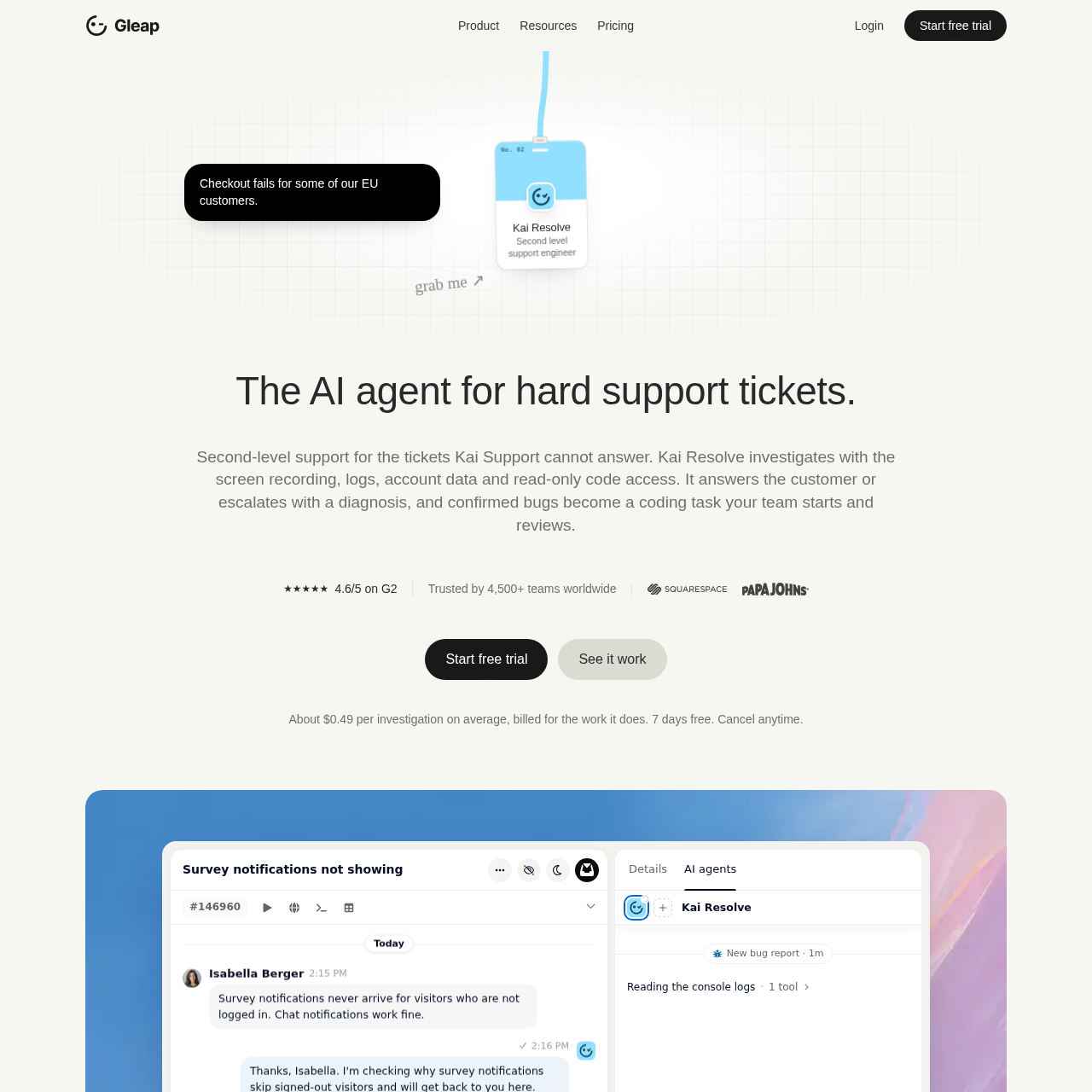
Kai Resolve by Gleap is an AI second-level support agent that investigates software issues using session recordings, logs, and read-only code sandboxes to diagnose root causes and prepare coding tasks.
What the product does and how it is positioned
Kai Resolve operates as a second-level (tier 2) support agent within the Gleap platform ecosystem. When first-tier support systems or human agents encounter complex software tickets, Kai Resolve investigates the issue by correlating customer communication, telemetry captured by the Gleap SDK, and application source code.
The system clones designated repositories into sandboxed environments with read-only access to isolate defect causes down to specific files. Depending on the investigation outcome, Kai Resolve provides grounded explanations directly to customers, asks human teammates for directional input via decision cards, or formats detailed coding tasks for development teams.
Source-supported ways to use the product
Analyzes newly reported bugs before team inbox arrival, tagging each ticket with confidence levels, category classifications, and relevant diagnostic evidence.
Takes over customer inquiries when first-tier agents cannot answer, using network logs, console errors, and session replays to determine the root problem.
Traces customer-reported behavior across sandboxed source repositories to pinpoint the exact file paths and code logic responsible for the defect.
The documented workflow, where available
Kai Resolve ingests the conversation history, device and SDK versions, network errors, console traces, click trails, screenshots, and screen recordings captured by the Gleap SDK.
The system clones designated repositories into a secure sandbox in read-only mode, tracing the reported issue through relevant application files without writing code.
Kai Resolve produces an outcome based on its findings, which may include a customer-facing explanation, a decision prompt for the team, or a coding task with file citations.
Engineering teams review and merge any resulting code fixes, and upon confirmation that the fix is live, the platform sends an update to the customer.
Kai Resolve conducts second-level technical triage by isolating code analysis inside dedicated sandbox environments. The agent operates strictly with read-only permissions across connected source repositories and external database connections via Model Context Protocol servers.
Write actions, record deletions, and billing operations are prevented by platform security controls. When an investigation confirms a bug, the tool generates diagnostic tasks citing specific files and line numbers, leaving code generation, pull request creation, and deployment reviews to engineering agents and human developers.
Checks to run with your own material and workflow
What was checked and when
Answers based on the source-checked product record
No. Kai Resolve inspects source code exclusively through read-only sandboxed clones. It identifies defects and creates coding tasks with file citations, but it never commits or pushes changes to repositories.
Kai Resolve examines ticket text, device and SDK versions, network requests, console logs, click trails, screenshots, and screen recordings from the Gleap SDK, along with read-only source code and MCP data sources.
Kai Resolve marks the result as inconclusive rather than dismissing the issue. It attempts a single re-investigation from an alternative angle, asks the customer for missing details, or presents an option card to human teammates.
The agent can reply directly to the customer explaining an expected setting, present decision cards to teammates, link and subscribe the user to a roadmap request, or produce a coding task for developer review.
Investigations can be run on tickets originating from the Gleap chat widget, email, Slack, or connected integrations, with maximum telemetry available on reports captured via the Gleap SDK.