Human Behavior
Human Behavior is an automated product monitoring platform that combines DOM-level session replays with AI agents to detect and report software issues.
What the product does and how it is positioned
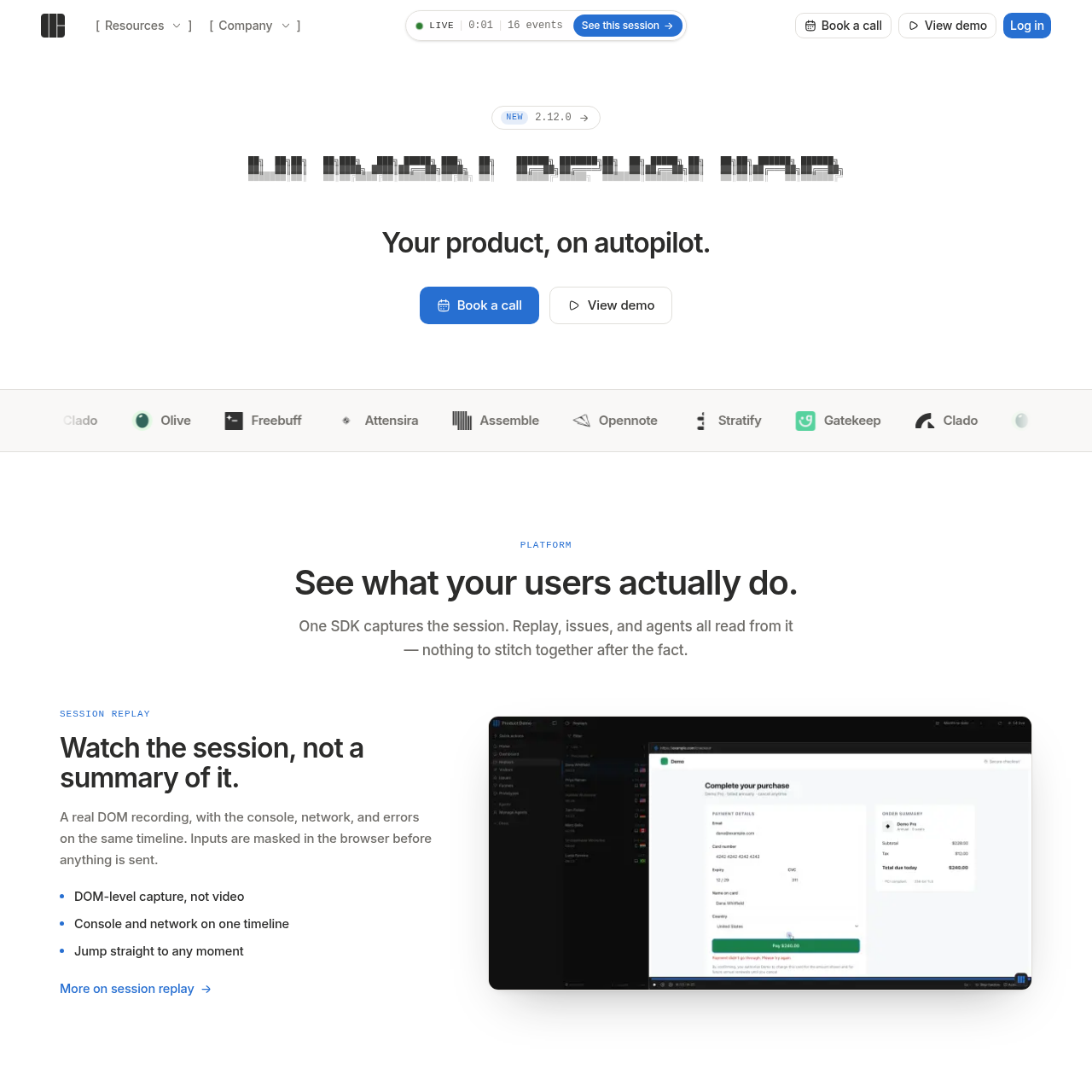
Human Behavior provides a unified platform for session replay and issue tracking using a single SDK. It records user interactions at the DOM level, so that technical data like console logs and network requests are perfectly synchronized with the visual replay.
The platform features autonomous agents designed to monitor user sessions without manual supervision. These agents analyze recordings and technical breadcrumbs to identify pain points, subsequently filing issues and notifying teams through integrated communication channels.
Source-supported ways to use the product
Agents monitor sessions to catch bugs and send notifications to communication channels before users report them.
The platform generates daily summary emails that highlight which features were used and which bugs appeared during sessions.
The documented workflow, where available
Install the single SDK into the web application to begin capturing session and technical data.
The system automatically records DOM changes, network requests, and console logs while masking sensitive inputs.
Define monitoring jobs for AI agents to perform scheduled, unattended reviews of user sessions.
Analyze grouped exceptions alongside their corresponding session replays and source-mapped stack traces.
Receive findings via integrated tools or daily summary emails highlighting usage and errors.
Human Behavior utilizes AI agents to bridge the gap between data capture and actionable insights. These agents are designed to perform the labor-intensive task of watching session replays and analyzing technical logs. By running on a schedule, they can identify issues that might otherwise go unnoticed by human developers.
When an agent identifies a problem, it does not simply flag it; it cites the specific moment in the recording and provides the relevant technical context. This information is then pushed directly to the team's existing workflow tools, such as Slack, rather than requiring constant monitoring of a central dashboard.
Checks to run with your own material and workflow
What was checked and when
Answers based on the source-checked product record
It uses DOM-level capture to record actual page elements and changes, synchronizing them with console and network logs on one timeline.
Yes, sensitive inputs are masked directly in the browser before any data is sent to the platform's servers.
Reports include fingerprinted exception groups, breadcrumbs, source-mapped stack traces, and a link to the specific session replay.
Agents autonomously review sessions and recordings to find issues, then file reports and notify the team through external tools like Slack.
The daily summary email provides an overview of which features were used and which bugs appeared during the monitored sessions.