AI Manga Translator
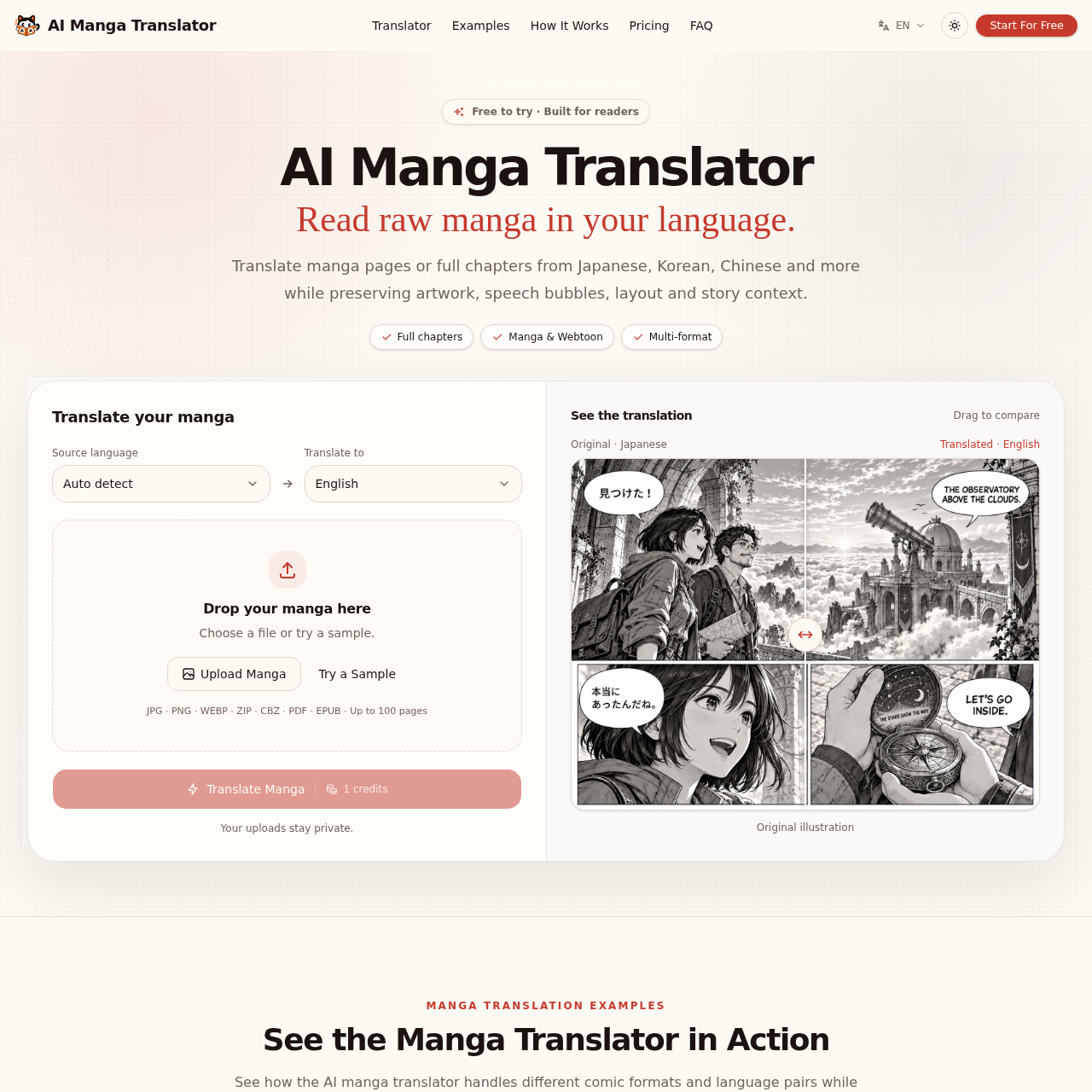
AI Manga Translator is a web-based translation tool that detects and translates text in manga, manhwa, manhua, and webtoons, rendering translated dialogue directly into speech bubbles while preserving artwork and layout.
What the product does and how it is positioned
AI Manga Translator is an online AI-powered tool designed to help readers translate raw manga without losing the original reading experience. Users can upload individual manga pages, multiple images or complete chapter files and translate them into their preferred language. The tool detects dialogue, narration and other text inside the page, translates it, and places the translated content back into the original layout while preserving characters, artwork, speech bubbles and panel composition. AI Manga Translator supports Japanese manga, Korean manhwa, Chinese manhua and vertical webtoons. It also supports common image and chapter formats including JPG, PNG, WEBP, ZIP, CBZ, PDF and EPUB. For longer chapters, pages can be processed together and kept in the correct reading order, allowing readers to move from raw manga to a translated chapter without manually cropping speech bubbles, copying text or rebuilding page layouts.
AI Manga Translator provides an automated comic translation workflow that processes single images, multi-page sets, and chapter archives. It recognizes Japanese, Korean, and Chinese text, including vertical dialogue and narration, and translates it into target languages such as English, Spanish, and Portuguese.
Rather than exporting disconnected text, the tool places translated text back onto the page, fitting dialogue into speech bubbles while maintaining underlying linework, colors, and panel composition. It includes a browser-based continuous reader that retains page order and allows users to compare original and translated pages.
Source-supported ways to use the product
Readers upload multi-page manga or manhwa archives to read untranslated chapters continuously with translated speech bubbles and preserved visual artwork.
Translating Japanese, Korean, or Chinese webtoons and manhua into languages such as English, Spanish, or Portuguese while keeping original panel pacing.
The documented workflow, where available
Add manga images, multiple pages, or chapter archives in formats such as JPG, PNG, WEBP, ZIP, CBZ, PDF, or EPUB.
Select the target language and either manually set or auto-detect the comic source language.
Run the translation to view the processed pages in the continuous reader, compare original panels, and download the output.
AI Manga Translator processes comic pages by detecting text across narration boxes and speech bubbles, removing the source language, and placing translated dialogue into the designated areas. The system is designed to retain panel composition, backgrounds, and character linework rather than masking entire scenes.
To maintain coherence across multi-page chapters, the platform applies contextual tracking to handle character names, recurring terminology, and speech style preferences consistently across panels.
Human-maintained commercial information
Pricing can change. Confirm the current plan and billing terms on the official site before purchasing.
Checks to run with your own material and workflow
What was checked and when
Answers based on the source-checked product record
The platform supports Japanese manga, Korean manhwa, Chinese manhua, and vertical webtoons, accommodating both horizontal and vertical text layouts.
Users can upload individual or multiple files in JPG, PNG, WEBP, ZIP, CBZ, PDF, and EPUB formats, with a maximum upload capacity of 100 pages per job.
The system supports source languages including Japanese, Korean, and Chinese, with automatic detection available, and can translate into English, Spanish, Portuguese, and Chinese.
The tool preserves character linework, colors, backgrounds, and panel structures, fitting the translated text directly inside the original speech bubbles.
Yes, the reading interface provides comparison tools, allowing readers to toggle or drag between the original source pages and the translated results.