AI Image Humanizer
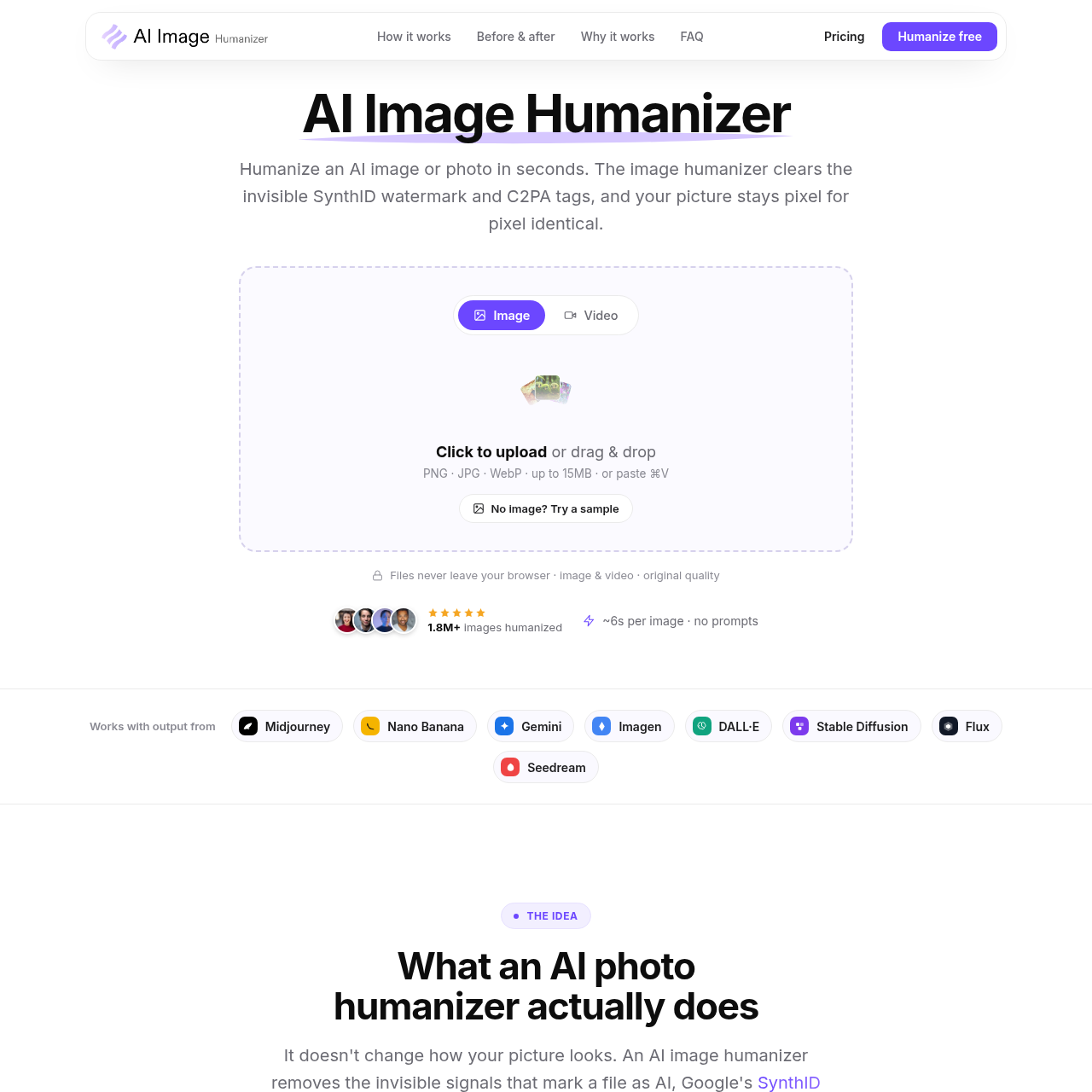
AI Image Humanizer is a privacy-focused browser utility that strips invisible SynthID watermarks and C2PA metadata from AI-generated media while preserving original visual quality.
What the product does and how it is positioned
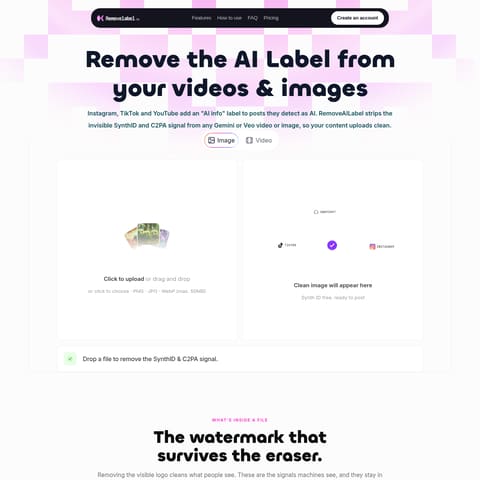
AI Image Humanizer is designed to remove the technical markers that identify images and videos as machine-generated. By targeting invisible pixel watermarks and metadata tags, the tool helps creators prevent automated platform labeling while keeping the visual content identical to the original export.
The application operates entirely within the user's browser session, meaning media files are handled locally rather than being uploaded to a server. This architecture supports high-speed processing and data privacy, as files are deleted immediately after the session ends.
Source-supported ways to use the product
Designers use the tool to deliver AI visuals that are not flagged as machine-made during professional client reviews.
Content creators use the tool to post video frames without platforms applying automated AI-info labels.
Ecommerce leads use the software to list AI-generated product shots without marketplaces tagging them as AI.
The documented workflow, where available
The user drops a PNG, JPG, or WebP file into the browser-based engine, where it loads locally without a server upload.
The engine scans the file's pixels for Google's SynthID watermark and reads the C2PA provenance records in the metadata.
The software rewrites the SynthID watermark and clears the C2PA tags without altering any visible pixels or the original resolution.
The user downloads the processed file, which retains the original color and quality but no longer contains the hidden AI identifiers.
The tool addresses the primary methods used by platforms to detect AI content: pixel-level watermarking and metadata credentials. By specifically targeting Google's SynthID and the C2PA standard, the engine removes the data points that trigger automated labeling systems. This process is designed to be non-destructive, meaning the visible image remains byte-for-appearance identical to the source file.
Privacy is maintained through a local execution model. Because the processing engine runs in the user's browser, the original media and the humanized output never leave the local environment. This approach eliminates the risks associated with cloud storage and ensures that user content is not harvested for training data.
Human-maintained commercial information
Pricing can change. Confirm the current plan and billing terms on the official site before purchasing.
Checks to run with your own material and workflow
What was checked and when
Answers based on the source-checked product record
The tool removes Google's SynthID invisible pixel watermarks and signed C2PA metadata credentials in a single processing pass.
No, the image remains pixel-for-pixel identical to the original. The tool only alters hidden data and does not change the visible appearance, resolution, or color.
The engine supports any image exported as PNG, JPG, or WebP, including those from Midjourney, DALL·E, Gemini, Stable Diffusion, and Flux.
Yes, the engine handles video content by tracking and removing signals across frames to prevent flickering between the processed segments.
Files are processed entirely within your web browser and are never uploaded to a server, stored, used for training, or shared with third parties.