AI News on April 9, 2026

Google AI Edge Gallery: A New Repository for On-Device Machine Learning and Generative AI Use Cases
Open Source

Google AI Edge Gallery: A New Repository for On-Device Machine Learning and Generative AI Use Cases

Google AI Edge has launched 'Gallery,' a dedicated repository hosted on GitHub designed to showcase on-device Machine Learning (ML) and Generative AI (GenAI) applications. This initiative allows developers and users to explore, test, and implement various models directly on local hardware. By focusing on edge computing, the project emphasizes the growing trend of running sophisticated AI models locally rather than relying solely on cloud-based infrastructure. The repository serves as a practical resource for those looking to integrate AI capabilities into edge devices, providing a centralized location for diverse use cases and experimental models maintained by the google-ai-edge team.

GitHub Trending
DeepTutor: An Agent-Native Personalized Learning Assistant Developed by HKUDS Research Team
Open Source

DeepTutor: An Agent-Native Personalized Learning Assistant Developed by HKUDS Research Team

DeepTutor, a new agent-native personalized learning assistant, has been introduced by the HKUDS research group. Emerging as a trending project on GitHub, this tool represents a shift toward intelligent, agent-driven educational technology. The project focuses on providing a personalized learning experience by leveraging agent-native architectures. While specific technical specifications and extensive performance data remain limited to the repository's current documentation, the release marks a significant entry into the AI-driven tutoring space by the University of Hong Kong's Data Science Lab (HKUDS). The project aims to redefine how students interact with educational content through autonomous agent capabilities.

GitHub Trending
RedditVideoMakerBot: Automating Viral Video Creation with a Single Command via GitHub Innovation
Open Source

RedditVideoMakerBot: Automating Viral Video Creation with a Single Command via GitHub Innovation

RedditVideoMakerBot, a new open-source tool developed by Lewis Menelaws and the team at TMRRW Inc, has emerged on GitHub Trending for its ability to automate the creation of Reddit-style videos. The tool simplifies the entire production process, allowing users to generate content using a single command without the need for manual video editing or resource compilation. By leveraging what the creators describe as "programming magic," the bot streamlines the workflow for content creators looking to transform Reddit threads into visual formats. This innovation highlights a growing trend in the AI and automation space where complex creative tasks are being replaced by efficient, code-driven solutions, making high-volume content production more accessible to developers and creators alike.

GitHub Trending
Optimizing Claude Code Performance: A New Implementation Guide Inspired by Andrej Karpathy’s LLM Insights
Open Source

Optimizing Claude Code Performance: A New Implementation Guide Inspired by Andrej Karpathy’s LLM Insights

A new technical resource has emerged on GitHub, providing a specialized CLAUDE.md configuration file designed to enhance the behavior of Claude Code. Developed by user forrestchang, this guide draws direct inspiration from Andrej Karpathy’s documented observations regarding Large Language Model (LLM) programming. By implementing a single configuration file, developers can align Claude's coding outputs with the high-level strategies advocated by Karpathy. The project serves as a bridge between theoretical LLM best practices and practical application within the Claude ecosystem, focusing on improving the efficiency and reliability of AI-assisted software development through structured instruction sets.

GitHub Trending
QMD: A Local-First CLI Search Engine for Markdown Documents and Knowledge Bases
Open Source

QMD: A Local-First CLI Search Engine for Markdown Documents and Knowledge Bases

QMD, short for Query Markdown Documents, is a newly released micro command-line interface (CLI) search engine designed for personal knowledge management. Developed by user 'tobi' and hosted on GitHub, the tool allows users to index and search through documents, meeting notes, and knowledge bases entirely on-device. By focusing on local execution, QMD ensures data privacy while implementing state-of-the-art (SOTA) search methodologies. The project aims to provide a streamlined way for users to retrieve information they need to remember from their local Markdown files without relying on cloud-based services.

GitHub Trending
NVIDIA Releases PersonaPlex: Advanced Voice and Character Control for Full-Duplex Conversational Speech Models
Product Launch

NVIDIA Releases PersonaPlex: Advanced Voice and Character Control for Full-Duplex Conversational Speech Models

NVIDIA has introduced PersonaPlex, a specialized framework designed to enhance voice and character control within full-duplex conversational speech models. Released via GitHub and Hugging Face, the project includes the PersonaPlex-7B-v1 model weights, signaling a significant step forward in creating more realistic and controllable AI-driven vocal interactions. The repository provides the necessary code to implement sophisticated persona management in real-time, two-way communication systems. By focusing on full-duplex capabilities, PersonaPlex aims to bridge the gap between static text-to-speech and dynamic, interactive conversational agents that require consistent character identity and vocal nuance. This release highlights NVIDIA's ongoing commitment to advancing generative AI in the audio and speech synthesis domain.

GitHub Trending
Google Launches LiteRT-LM: A High-Performance Open-Source Framework for On-Device Large Language Model Inference
Product Launch

Google Launches LiteRT-LM: A High-Performance Open-Source Framework for On-Device Large Language Model Inference

Google has officially introduced LiteRT-LM, a production-ready and high-performance open-source inference framework specifically designed for deploying Large Language Models (LLMs) on edge devices. Developed by the google-ai-edge team, this framework aims to bridge the gap between complex AI models and resource-constrained hardware. By focusing on performance and production readiness, LiteRT-LM provides developers with the necessary tools to implement sophisticated language processing capabilities directly on local devices, ensuring faster response times and enhanced privacy. The project is now available via GitHub and Google's dedicated AI edge developer portal, marking a significant step forward in the democratization of on-device AI technology.

GitHub Trending
Meta Superintelligence Labs Debuts Muse Spark: The First Frontier Model Built on a New Technology Stack
Product Launch

Meta Superintelligence Labs Debuts Muse Spark: The First Frontier Model Built on a New Technology Stack

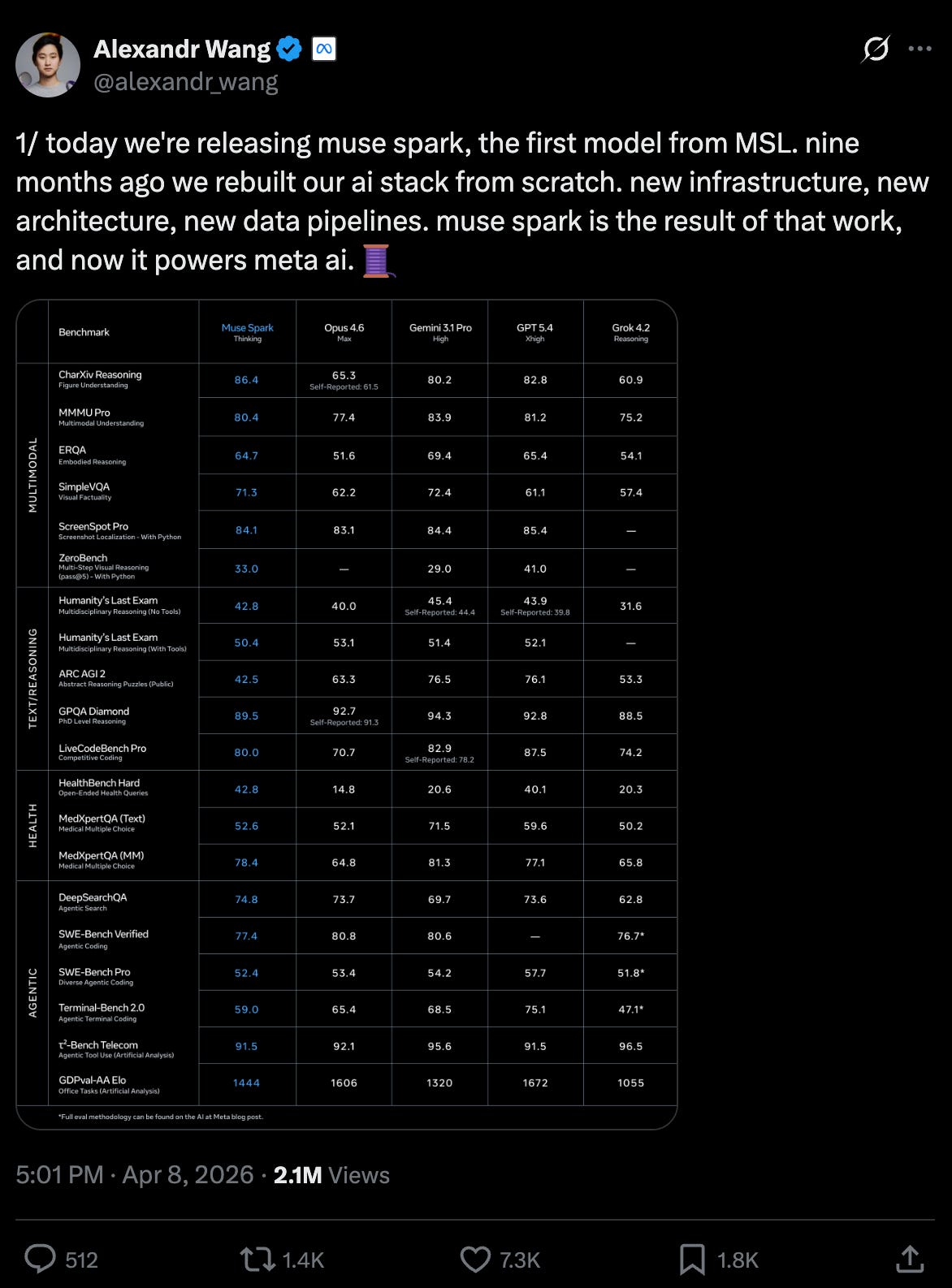
Meta Superintelligence Labs (MSL) has officially announced the release of Muse Spark, marking a significant milestone as the first frontier model developed on the organization's entirely new technology stack. The launch follows a period of anticipation, with the industry observing MSL's progress toward shipping this foundational update. While specific technical specifications remain closely guarded, the transition to a completely new stack suggests a fundamental shift in how MSL approaches large-scale model architecture and deployment. This release represents the culmination of internal development efforts aimed at establishing a fresh baseline for frontier AI capabilities, signaling a new chapter for Meta Superintelligence Labs' contributions to the evolving AI landscape.

Latent Space
Netflix Unveils VOID: A Physics-Based Approach to Video Editing and Object Removal
Research Breakthrough

Netflix Unveils VOID: A Physics-Based Approach to Video Editing and Object Removal

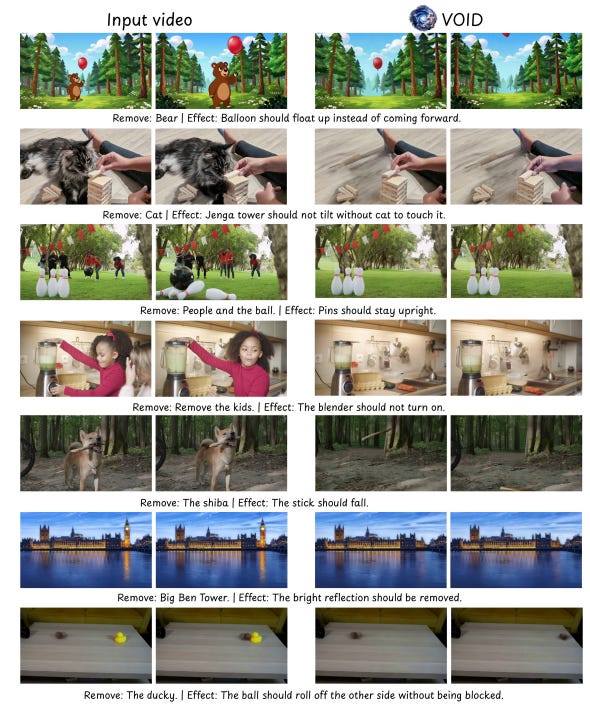
Netflix has introduced VOID, a groundbreaking video editing technology that shifts the paradigm of object removal from traditional pixel-patching to causal simulation. By treating the editing process as a simulation of physical laws, VOID effectively eliminates the common issue of "ghost" physics—visual artifacts or inconsistencies that often remain after an object is digitally removed from a scene. This development signifies a major leap in video post-production, ensuring that edited footage maintains the structural and physical integrity of the original environment. The technology focuses on understanding the underlying physics of a scene to create more realistic and seamless transitions, marking a significant departure from previous generative AI methods that relied solely on visual pattern matching.

AIModels.fyi
Nava Secures $22 Million in Funding to Address Asia’s Growing AI Compute Infrastructure Gap
Funding

Nava Secures $22 Million in Funding to Address Asia’s Growing AI Compute Infrastructure Gap

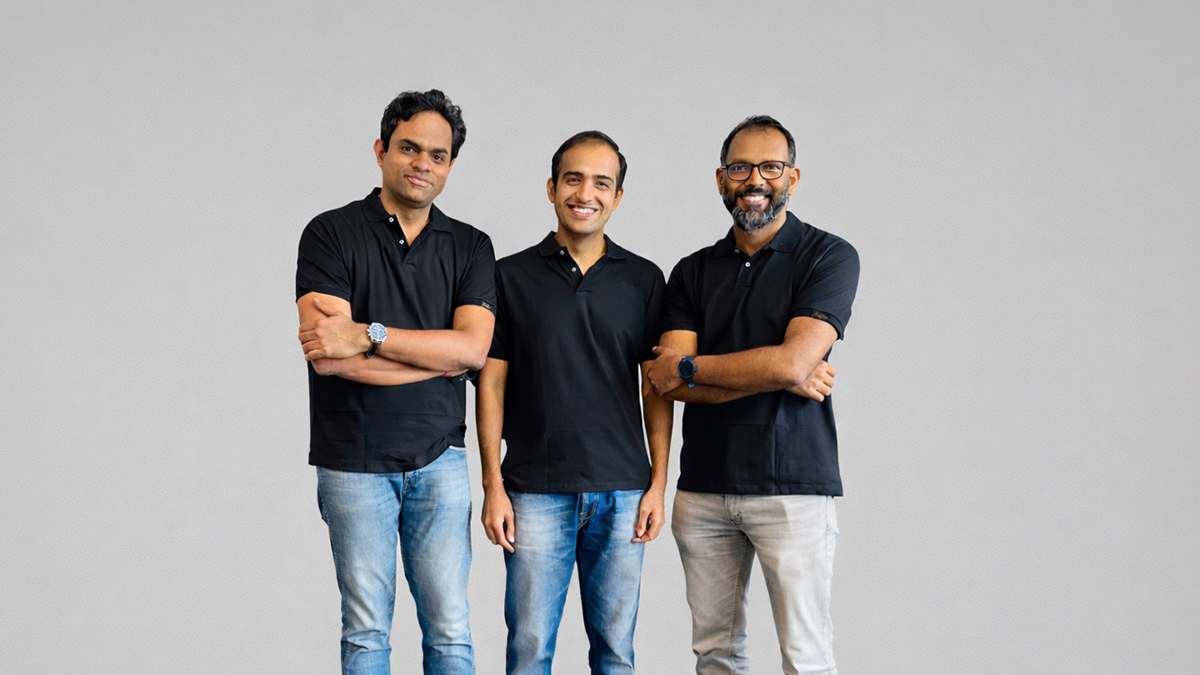
Indian startup Nava has successfully raised $22 million in a recent funding round aimed at tackling the critical shortage of AI computing resources across Asia. The company intends to utilize this capital to fuel its expansion into Southeast Asia, focusing on the development of specialized AI data centers and GPU infrastructure. As the demand for high-performance computing continues to surge due to the rapid adoption of artificial intelligence, Nava's strategic move seeks to bridge the infrastructure gap in the region. By building localized facilities, the startup aims to provide the necessary hardware foundations required for modern AI workloads, positioning itself as a key player in the regional technology landscape.

Tech in Asia
Poke Launches AI Agent Platform to Simplify Task Automation via Standard Text Messaging
Product Launch

Poke Launches AI Agent Platform to Simplify Task Automation via Standard Text Messaging

Poke has introduced a new AI agent platform designed to democratize automation for everyday users. By leveraging a simple text message interface, Poke allows users to manage tasks and set up automations without the need for complex technical configurations, specialized applications, or prior programming knowledge. The service aims to bridge the gap between advanced AI capabilities and the average consumer by removing the traditional barriers to entry associated with digital automation tools. According to the report from TechCrunch AI, the primary value proposition of Poke lies in its accessibility, enabling seamless task handling through a medium as familiar as a standard SMS or text conversation, effectively streamlining personal and professional workflows for a broader audience.

TechCrunch AI
AWS CEO Addresses Strategic Billions Invested in Rivals Anthropic and OpenAI Despite Market Competition
Industry News

AWS CEO Addresses Strategic Billions Invested in Rivals Anthropic and OpenAI Despite Market Competition

Amazon Web Services (AWS) leadership has addressed the strategic rationale behind investing billions of dollars into both Anthropic and OpenAI, despite the inherent competitive nature of these relationships. According to the AWS boss, this dual investment strategy is manageable due to the company's long-standing corporate culture of navigating complex partnerships. AWS frequently operates in a landscape where it simultaneously collaborates with and competes against the same entities. This approach allows the cloud giant to maintain its market position while fostering innovation through key industry players, treating the potential conflict as a standard operational reality within the cloud and AI ecosystem.

TechCrunch AI
Google Research Introduces AI Agents Designed to Enhance Academic Figures and Peer Review Workflows
Product Launch

Google Research Introduces AI Agents Designed to Enhance Academic Figures and Peer Review Workflows

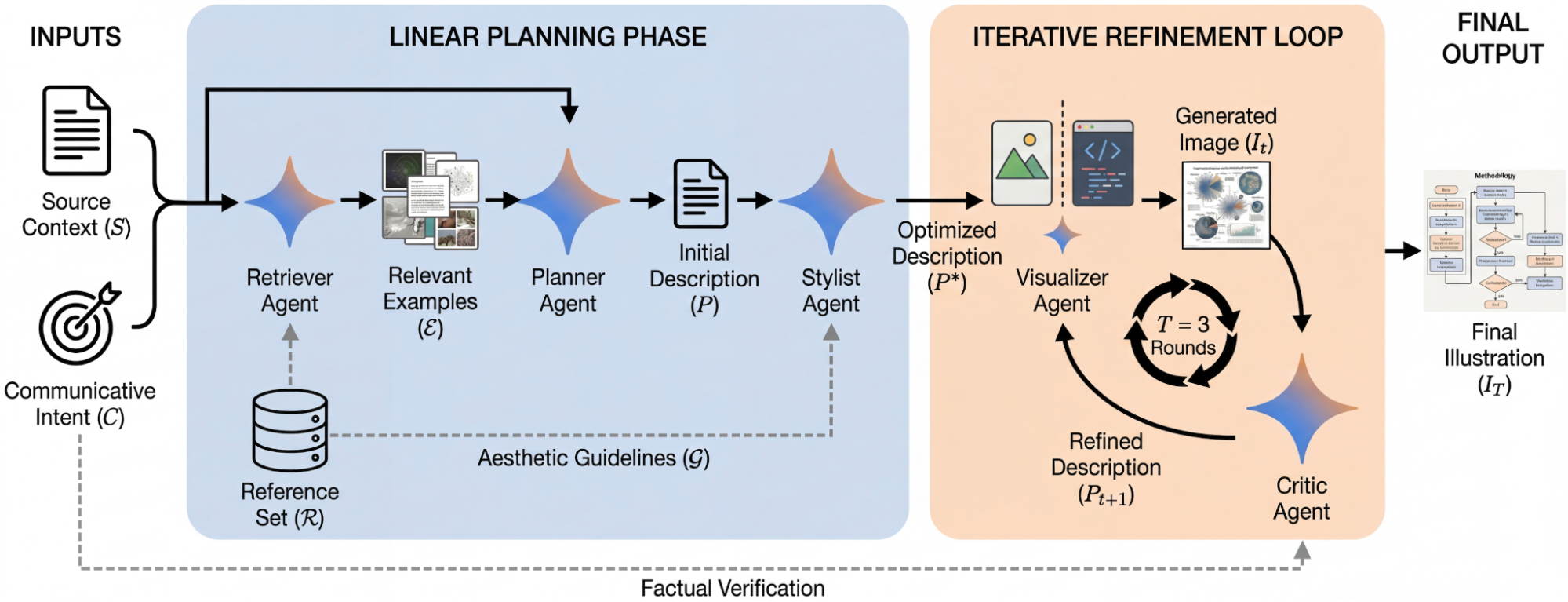
Google Research has announced the introduction of two specialized AI agents aimed at streamlining the academic workflow. These generative AI tools are specifically designed to assist researchers in creating better scientific figures and improving the peer review process. By leveraging advanced generative AI capabilities, these agents address critical pain points in scholarly publishing, helping academics produce high-quality visual data representations and navigate the complexities of peer evaluation. This development marks a significant step in integrating AI into the formal scientific research cycle, focusing on increasing efficiency and quality in academic outputs.

Google Research Blog
Skyrocketing SSD Prices: How the AI RAM Shortage is Driving Storage Costs to Record Highs
Industry News

Skyrocketing SSD Prices: How the AI RAM Shortage is Driving Storage Costs to Record Highs

The technology market is witnessing an unprecedented surge in storage pricing, with high-performance SSDs seeing costs nearly quadruple in a matter of months. A primary driver behind this trend is the ongoing AI RAM shortage, which has created a ripple effect across the hardware industry. For instance, the WD Black SN850X 2TB SSD, which retailed for approximately $173 in 2024, has seen its price balloon to a staggering $649 as of April 2026. This price hike means that a single storage component can now cost more than the combined price of most other PC parts. This analysis explores the direct correlation between the demand for AI-related memory components and the escalating costs of consumer-grade solid-state drives.

The Verge
Better Harness: LangChain's Recipe for Improving AI Agents Through Eval-Driven Hill-Climbing
Industry News

Better Harness: LangChain's Recipe for Improving AI Agents Through Eval-Driven Hill-Climbing

LangChain Product Manager Vivek Trivedy introduces a strategic approach to building superior AI agents by focusing on the development of better harnesses. The core thesis suggests that the path to autonomous harness improvement requires a robust learning signal, which LangChain identifies as 'evals.' By utilizing evaluations as a signal for 'hill-climbing,' developers can iteratively refine the environment and constraints within which an agent operates. This methodology emphasizes the importance of design decisions and evaluation metrics in the pursuit of more capable and reliable autonomous systems, providing a framework for systematic agent optimization based on measurable performance data.

LangChain
Expanding Swift IDE Support: Official Extension Now Available on Open VSX Registry for Cursor and More
Product Launch

Expanding Swift IDE Support: Official Extension Now Available on Open VSX Registry for Cursor and More

Apple has announced a significant expansion of Swift's IDE support, making the official Swift extension available on the Open VSX Registry. This move enables first-class language support for a wider range of popular editors, including Cursor, VSCodium, AWS’s Kiro, and Google’s Antigravity. By leveraging VS Code extension compatibility, these platforms can now offer seamless cross-platform development across macOS, Linux, and Windows. The extension provides essential features such as code completion, refactoring, full debugging, and a test explorer. This development is particularly notable for the rise of agentic IDEs, allowing tools like Cursor to automatically install Swift support and integrate it into AI-driven workflows, further solidifying Swift's versatility across diverse development environments.

Hacker News
Tubi Makes History as the First Streaming Service to Launch a Native App Integration Within ChatGPT
Product Launch

Tubi Makes History as the First Streaming Service to Launch a Native App Integration Within ChatGPT

In a significant move for the streaming industry, Tubi has officially become the first streaming service to launch a native app integration within OpenAI's ChatGPT. This partnership allows millions of ChatGPT users to interact with Tubi's services directly through the AI chatbot interface. By positioning itself within one of the world's most popular AI platforms, Tubi aims to streamline how users discover and access content. The integration marks a new era of AI-driven media consumption, where users can transition from conversational queries to streaming entertainment without leaving the chatbot environment. This development highlights the growing trend of major media platforms seeking deeper technical integrations with generative AI tools to enhance user engagement and accessibility.

TechCrunch AI
Demystifying the Kalman Filter: A Practical Guide to State Estimation and Noise Reduction Through Real-World Examples
Technical Tutorial

Demystifying the Kalman Filter: A Practical Guide to State Estimation and Noise Reduction Through Real-World Examples

The Kalman Filter is a vital algorithm used for estimating and predicting system states amidst uncertainty, such as measurement noise and external influences. While essential for fields like robotics, navigation, and financial analysis, it is often perceived as overly complex due to math-heavy educational resources. This new guide aims to simplify the concept using hands-on numerical examples and simple explanations. It covers practical applications ranging from stabilizing computer mouse trajectories to tracking objects in radar systems. By exploring both successful implementations and failure scenarios, the guide provides a comprehensive learning path—from high-level overviews to deep mathematical understanding—enabling users to design and implement their own Kalman Filter solutions effectively.

Hacker News
Meta Launches Muse Spark: A New AI Model Powering the Meta AI Ecosystem Following Massive Investment
Product Launch

Meta Launches Muse Spark: A New AI Model Powering the Meta AI Ecosystem Following Massive Investment

Meta Superintelligence Labs has officially introduced Muse Spark, the first major AI model released following Mark Zuckerberg's multi-billion dollar strategic overhaul of the company's artificial intelligence division. Currently live on the Meta AI app and website for users in the United States, Muse Spark represents a significant milestone in Meta's efforts to regain momentum in the competitive AI landscape. The company has confirmed that the model will soon be integrated across its entire suite of social platforms, including WhatsApp, Instagram, Facebook, and Messenger. This rollout marks a critical step in Meta's long-term vision to embed advanced AI capabilities directly into its global communication and social networking infrastructure.

The Verge
Meta Introduces Muse Spark: A Natively Multimodal Model Scaling Towards Personal Superintelligence
Product Launch

Meta Introduces Muse Spark: A Natively Multimodal Model Scaling Towards Personal Superintelligence

Meta Superintelligence Labs has officially unveiled Muse Spark, the inaugural model in the Muse family designed to advance the goal of personal superintelligence. As a natively multimodal reasoning model, Muse Spark integrates tool-use, visual chain of thought, and multi-agent orchestration. The launch marks a significant overhaul of Meta's AI strategy, supported by infrastructure investments like the Hyperion data center. A standout feature, 'Contemplating mode,' allows for parallel agent reasoning, enabling the model to compete with frontier systems in complex tasks. Currently available on meta.ai and the Meta AI app, Muse Spark demonstrates competitive performance in multimodal perception and health, while Meta continues to scale the stack for future, larger models and improved coding workflows.

Hacker News
Astropad Launches Workbench: A New Remote Desktop Solution Designed Specifically for Monitoring AI Agents
Product Launch

Astropad Launches Workbench: A New Remote Desktop Solution Designed Specifically for Monitoring AI Agents

Astropad has introduced Workbench, a specialized remote desktop tool designed to shift the focus from traditional IT support to the management of AI agents. The platform allows users to remotely monitor and control AI agents running on Mac Mini hardware directly from mobile devices like iPhones and iPads. By leveraging low-latency streaming technology, Workbench provides a seamless mobile access experience, ensuring that users can maintain oversight of their automated processes regardless of their location. This release marks a strategic pivot for Astropad, reimagining remote access technology to meet the specific needs of the growing AI agent ecosystem rather than conventional technical troubleshooting.

TechCrunch AI