AI News on April 8, 2026

Shannon Lite: An Autonomous White-Box AI Pentester for Web Applications and API Security
Product Launch

Shannon Lite: An Autonomous White-Box AI Pentester for Web Applications and API Security

KeygraphHQ has introduced Shannon Lite, an innovative autonomous AI pentesting tool designed specifically for web applications and APIs. Operating as a white-box solution, Shannon Lite distinguishes itself by analyzing source code directly to identify potential attack vectors. Unlike traditional scanners, this AI-driven system goes a step further by executing real exploits to validate and prove vulnerabilities before code reaches the production environment. By bridging the gap between static analysis and active exploitation, Shannon Lite aims to provide developers and security teams with a proactive method for securing their digital assets, ensuring that vulnerabilities are not just theorized but actively demonstrated and remediated during the development lifecycle.

GitHub Trending
QMD: A New Local-First CLI Search Engine for Personal Documentation and Knowledge Bases
Open Source

QMD: A New Local-First CLI Search Engine for Personal Documentation and Knowledge Bases

QMD (Query Markup Documents) has emerged as a specialized command-line interface (CLI) search engine designed for personal knowledge management. Developed by user 'tobi' and gaining traction on GitHub, the tool allows users to index and search through various document types, including meeting notes and markdown files, entirely on-device. By focusing on local execution, QMD aims to implement state-of-the-art (SOTA) search approaches while ensuring data privacy. The project positions itself as a solution for users needing a fast, private way to query everything they need to remember without relying on cloud-based indexing services.

GitHub Trending
Immich: A High-Performance Self-Hosted Open Source Solution for Photo and Video Management
Open Source

Immich: A High-Performance Self-Hosted Open Source Solution for Photo and Video Management

Immich has emerged as a prominent open-source project on GitHub, offering a high-performance, self-hosted solution for managing personal photo and video collections. Licensed under the GNU Affero General Public License v3 (AGPL-v3), the platform prioritizes user privacy and data sovereignty by allowing individuals to host their media on their own hardware. Designed as a robust alternative to centralized cloud storage services, Immich focuses on delivering a seamless user experience without compromising on speed or efficiency. The project's presence on GitHub Trending highlights a growing demand for decentralized media management tools that provide professional-grade performance while remaining accessible to the open-source community.

GitHub Trending
Google Launches LiteRT-LM: A High-Performance Open-Source Framework for Edge Device LLM Inference
Open Source

Google Launches LiteRT-LM: A High-Performance Open-Source Framework for Edge Device LLM Inference

Google has officially introduced LiteRT-LM, a production-ready and high-performance open-source inference framework specifically designed for deploying Large Language Models (LLMs) on edge devices. Developed by the google-ai-edge team, this framework aims to bridge the gap between complex AI models and resource-constrained hardware. LiteRT-LM provides developers with the necessary tools to implement efficient local AI processing, ensuring high performance without relying on cloud infrastructure. By focusing on edge deployment, the framework addresses critical needs for latency reduction and privacy in AI applications. The project is now accessible via GitHub and its dedicated product website, marking a significant step in Google's strategy to democratize on-device machine learning capabilities for developers worldwide.

GitHub Trending
Google AI Edge Gallery: A New Hub for On-Device Machine Learning and Generative AI Use Cases
Open Source

Google AI Edge Gallery: A New Hub for On-Device Machine Learning and Generative AI Use Cases

Google AI Edge has launched 'Gallery,' a dedicated repository on GitHub designed to showcase the practical applications of on-device Machine Learning (ML) and Generative AI (GenAI). The project serves as a central hub where developers and enthusiasts can explore various use cases and interact with models locally. By focusing on edge computing, the gallery highlights the growing trend of running sophisticated AI models directly on hardware rather than relying solely on cloud-based infrastructure. This initiative aims to provide a hands-on environment for testing and implementing local AI solutions, offering a streamlined path for developers to integrate advanced AI capabilities into their own edge-based applications and devices.

GitHub Trending
GitNexus: A Zero-Server Client-Side Knowledge Graph Engine for Local Code Intelligence and Graph RAG
Open Source

GitNexus: A Zero-Server Client-Side Knowledge Graph Engine for Local Code Intelligence and Graph RAG

GitNexus has emerged as a specialized tool designed for code exploration, functioning as a zero-server code intelligence engine. Developed by abhigyanpatwari, the platform operates entirely within the user's browser, ensuring that data processing remains client-side. Users can input GitHub repositories or ZIP files to generate interactive knowledge graphs. A standout feature of GitNexus is its integrated Graph RAG (Retrieval-Augmented Generation) Agent, which assists in navigating and understanding complex codebases. By eliminating the need for server-side infrastructure, GitNexus provides a streamlined, private, and efficient environment for developers to visualize code structures and perform intelligent queries directly through their web browser.

GitHub Trending
NousResearch Unveils Hermes Agent: A New Evolution in Adaptive AI Agent Technology
Product Launch

NousResearch Unveils Hermes Agent: A New Evolution in Adaptive AI Agent Technology

NousResearch has introduced Hermes Agent, a new development in the AI agent space characterized by its ability to grow alongside the user. Hosted on GitHub, the project represents a significant step forward for the Hermes ecosystem, moving beyond static models toward dynamic, agentic behavior. While specific technical specifications remain focused on the core philosophy of adaptive growth, the release highlights a shift in how AI entities are designed to interact and evolve. As a product of NousResearch, Hermes Agent leverages the reputation of the Hermes series to provide a framework for more personalized and scalable artificial intelligence interactions, signaling a new era of user-centric AI development.

GitHub Trending
Arcee: The 26-Person Startup Behind a High-Performing Massive Open Source LLM Gaining Traction
Industry News

Arcee: The 26-Person Startup Behind a High-Performing Massive Open Source LLM Gaining Traction

Arcee, a small U.S.-based startup with a team of only 26 employees, is making significant waves in the artificial intelligence sector. Despite its modest size, the company has successfully developed a massive, high-performing open-source Large Language Model (LLM). This model is currently experiencing a surge in popularity among users of OpenClaw, signaling a growing interest in independent, open-source alternatives within the AI ecosystem. As the industry continues to be dominated by tech giants, Arcee's ability to produce competitive, large-scale technology with a lean team highlights a potential shift in how high-performance AI is developed and distributed.

TechCrunch AI
Spotify Expands AI-Powered Prompted Playlists to Include Podcasts for Premium Users
Product Launch

Spotify Expands AI-Powered Prompted Playlists to Include Podcasts for Premium Users

Spotify has officially announced the expansion of its Prompted Playlists feature to include podcasts, marking a significant update for its Premium subscriber base. Originally launched as a beta feature in December with a focus solely on music, this tool now allows users to generate customized discovery lists for spoken-word content. By utilizing text-based prompts, listeners can effectively curate and find new shows tailored to specific interests or moods. This move represents Spotify's ongoing effort to integrate advanced discovery tools into its platform, bridging the gap between its massive music library and its growing podcast ecosystem. The feature remains exclusive to Premium members, serving as a value-add for the platform's paid tier.

The Verge
S3 Files and the Evolution of Data Management: Insights from Andy Warfield and the S3 Team
Industry News

S3 Files and the Evolution of Data Management: Insights from Andy Warfield and the S3 Team

In a detailed exploration of data management challenges, Andy Warfield discusses the development of 'S3 Files,' a solution designed to address the persistent frustrations of moving and managing massive datasets. Drawing from early experiences with genomics researchers at UBC, Warfield highlights how scientists and engineers often spend excessive time on the mechanics of data transport rather than analysis. The article traces the evolution of Amazon S3, moving from a simple storage service to a more sophisticated system capable of handling the complex workflows required by modern industries, including genomics and machine learning. By focusing on the 'changing face of S3,' the narrative provides a behind-the-scenes look at the technical lessons and real-world problems that led to the creation of S3 Files.

Hacker News
Gemma 4 Multimodal Fine-Tuner for Apple Silicon: Training Text, Image, and Audio Locally
Open Source

Gemma 4 Multimodal Fine-Tuner for Apple Silicon: Training Text, Image, and Audio Locally

A new open-source toolkit, Gemma Multimodal Fine-Tuner, has been released to enable fine-tuning of Gemma 4 and 3n models directly on Apple Silicon. The tool supports Low-Rank Adaptation (LoRA) for text, image, and audio modalities, filling a gap in the current ecosystem where audio-text fine-tuning is often restricted to CUDA-based systems. Key features include the ability to stream training data from Google Cloud Storage or BigQuery, allowing users to train on terabyte-scale datasets without local storage constraints. By utilizing Metal Performance Shaders (MPS), the tool eliminates the need for NVIDIA GPUs, providing a native path for Mac users to develop domain-specific applications like medical ASR or visual question answering.

Hacker News
Google Launches Auto-Spatialization Feature to Transform 2D Apps into 3D Experiences on Samsung Galaxy XR
Product Launch

Google Launches Auto-Spatialization Feature to Transform 2D Apps into 3D Experiences on Samsung Galaxy XR

Google has officially launched an experimental feature called "auto-spatialization" for the Android XR platform, specifically targeting the Samsung Galaxy XR headset. Initially announced last year, this technology allows users to convert traditional 2D content—including applications, websites, images, and videos—into immersive 3D experiences. This development marks a significant step in bridging the gap between conventional mobile software and spatial computing environments. By enabling existing 2D assets to function within a 3D space, Google and Samsung aim to enhance the utility of XR hardware without requiring developers to rebuild their applications from scratch. The feature is rolling out as an experimental tool, signaling a new phase in the evolution of the Android XR ecosystem and its integration with Samsung's hardware.

The Verge
Nvidia-Backed AI Data Center Provider Firmus Reaches $5.5 Billion Valuation Following Rapid Funding Rounds
Funding

Nvidia-Backed AI Data Center Provider Firmus Reaches $5.5 Billion Valuation Following Rapid Funding Rounds

Firmus, an Asia-based AI data center provider known for its 'Southgate' projects and strategic backing from Nvidia, has achieved a significant valuation of $5.5 billion. This milestone follows an aggressive capital raising period where the company secured $1.35 billion in funding over just six months. As a key player in the infrastructure sector for artificial intelligence, Firmus is positioning itself as a major builder of the physical foundations required for high-performance computing. The involvement of Nvidia highlights the critical nature of specialized data centers in the current AI landscape, where demand for specialized hardware and cooling solutions continues to drive massive investment into infrastructure providers across the Asian market.

TechCrunch AI
Intel Joins Elon Musk’s Terafab Project to Develop New Semiconductor Factory in Texas
Industry News

Intel Joins Elon Musk’s Terafab Project to Develop New Semiconductor Factory in Texas

Intel has officially signed on to participate in Elon Musk’s ambitious Terafab chips project, joining forces with SpaceX and Tesla. The collaboration aims to establish a new semiconductor manufacturing facility located in Texas. While the partnership marks a significant alignment between the legacy chipmaker and Musk’s high-tech ventures, the specific scope and nature of Intel's contributions to the project have not yet been disclosed. This move represents a strategic effort to bolster domestic chip production within the United States, though detailed technical and financial commitments remain under wraps as the project begins to take shape in the Texas tech corridor.

TechCrunch AI
Industry News

Project Glasswing: Anthropic Partners with Tech Giants to Secure Critical Software Against AI-Driven Cyber Threats

Anthropic has announced Project Glasswing, a major cybersecurity initiative involving industry leaders such as Amazon Web Services, Apple, Google, Microsoft, and NVIDIA. The project is a response to the capabilities of Claude Mythos Preview, a new unreleased frontier model that has demonstrated the ability to surpass most humans in finding and exploiting software vulnerabilities. Mythos Preview has already identified thousands of high-severity vulnerabilities across major operating systems and web browsers. To combat the potential risks of AI-driven exploits, Anthropic is committing $100 million in usage credits and $4 million in donations to open-source security organizations. The initiative aims to leverage these advanced AI capabilities for defensive purposes, securing both first-party and open-source infrastructure before such tools proliferate to malicious actors.

Hacker News
Anthropic Debuts Project Glasswing AI Model to Detect Vulnerabilities Across Major Operating Systems and Browsers
Industry News

Anthropic Debuts Project Glasswing AI Model to Detect Vulnerabilities Across Major Operating Systems and Browsers

Anthropic has introduced a specialized AI model under the initiative "Project Glasswing," developed through a high-profile cybersecurity partnership with tech giants including Nvidia, Google, Amazon Web Services, Apple, and Microsoft. This new model is designed to identify security flaws across every major operating system and web browser. Positioned as an automated defense tool, Project Glasswing enables large corporations and potentially government entities to detect and flag system vulnerabilities with virtually no human intervention. The project represents a significant collaborative effort among industry leaders to leverage artificial intelligence for proactive cybersecurity defense at scale.

The Verge
Anthropic Debuts Preview of Powerful New AI Model Mythos for Advanced Cybersecurity Initiatives
Product Launch

Anthropic Debuts Preview of Powerful New AI Model Mythos for Advanced Cybersecurity Initiatives

Anthropic has officially introduced a preview of its latest high-performance AI model, dubbed Mythos, specifically designed for the cybersecurity sector. According to reports, this new model is currently being deployed to a select group of high-profile organizations. The primary objective of this initiative is to leverage Mythos for defensive cybersecurity operations, marking a strategic move by Anthropic to integrate advanced AI capabilities into critical digital infrastructure protection. While the full scope of the model's capabilities remains under preview, its initial application focuses on strengthening the defensive postures of major corporate entities against evolving digital threats.

TechCrunch AI
OpenAI's First Dark Factory Revealed: Extreme Harness Engineering for Token Billionaires and Billion-Token Daily Outputs
Industry News

OpenAI's First Dark Factory Revealed: Extreme Harness Engineering for Token Billionaires and Billion-Token Daily Outputs

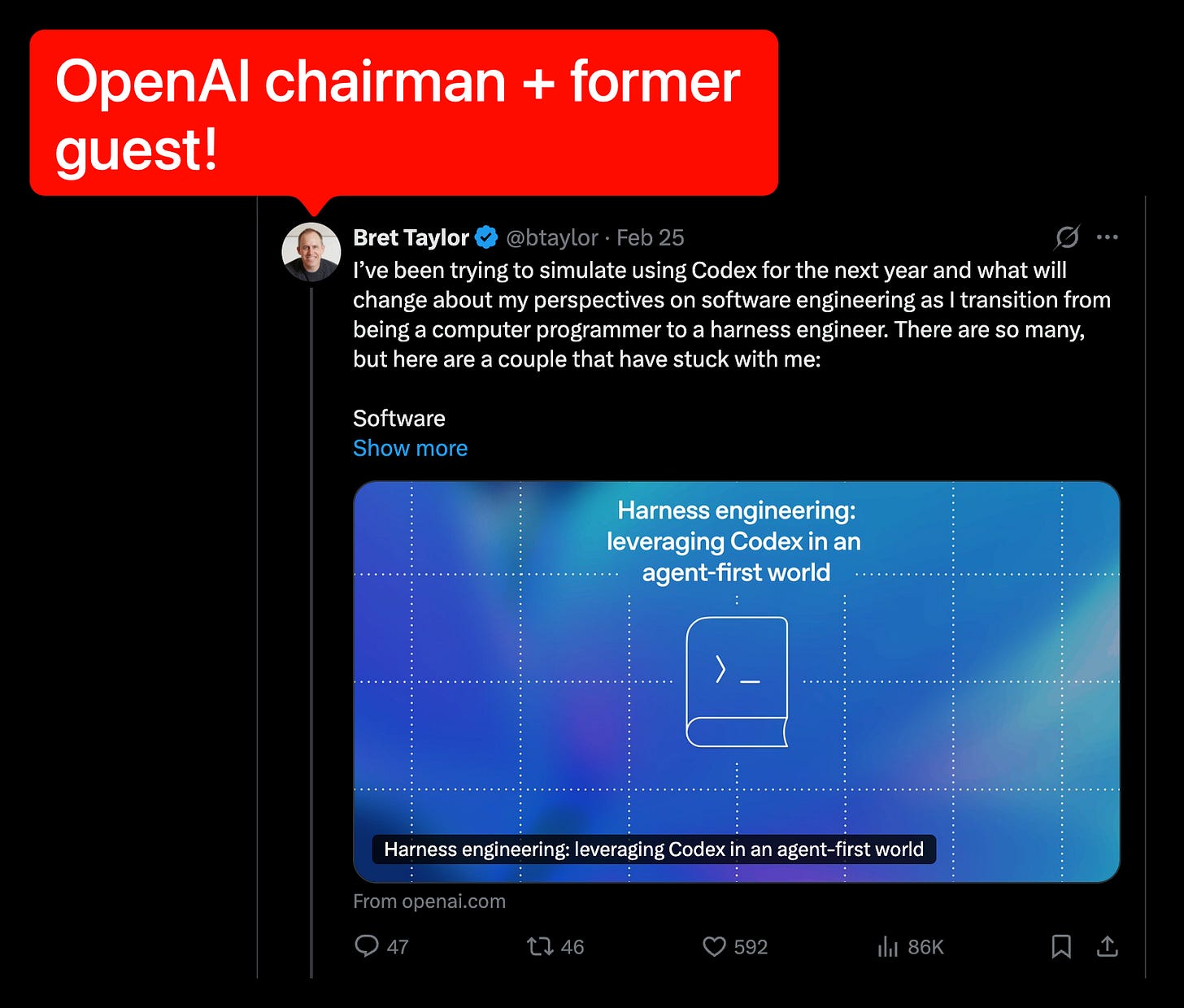
A groundbreaking report from Latent Space provides the first look into OpenAI's 'Dark Factory,' a revolutionary approach to software development led by Ryan Lopopolo of OpenAI Frontier & Symphony. This 'Extreme Harness Engineering' initiative manages a codebase of 1 million lines of code (LOC) and processes 1 billion tokens per day. Remarkably, the system operates with 0% human-written code and 0% human review, marking a significant shift toward fully autonomous AI-driven engineering. The project represents a new frontier for 'Token Billionaires,' focusing on high-scale automated systems that eliminate human intervention in the development lifecycle, fundamentally changing how large-scale AI infrastructure is built and maintained.

Latent Space
LangChain Releases Deep Agents v0.5 Featuring Async Subagents and Expanded Multi-Modal Filesystem Support
Product Launch

LangChain Releases Deep Agents v0.5 Featuring Async Subagents and Expanded Multi-Modal Filesystem Support

LangChain has officially announced the release of Deep Agents v0.5 and deepagentsjs v0.5, introducing significant updates to its agentic framework. The primary highlight of this release is the introduction of async (non-blocking) subagents, allowing Deep Agents to delegate tasks to remote agents that operate in the background. This marks a shift from previous synchronous execution models, enabling more efficient task management. Additionally, the update includes expanded multi-modal filesystem support, enhancing how agents interact with diverse data types. These updates aim to provide developers with more flexible tools for building complex, distributed agent architectures. Detailed changes are documented in the official changelog provided by the LangChain team.

LangChain
Uber Expands AWS Partnership to Leverage Amazon's Custom AI Chips for Ride-Sharing Features
Industry News

Uber Expands AWS Partnership to Leverage Amazon's Custom AI Chips for Ride-Sharing Features

Uber has announced an expansion of its existing contract with Amazon Web Services (AWS) to integrate Amazon's proprietary AI chips into its core operations. By utilizing Amazon's specialized hardware, Uber aims to power more of its ride-sharing features, marking a strategic shift in its cloud infrastructure utilization. This move is seen as a competitive pivot away from other major cloud providers, specifically Oracle and Google, as Uber doubles down on Amazon's silicon technology to enhance its service delivery and computational efficiency within the ride-hailing ecosystem.

TechCrunch AI
Product Launch

GLM-5.1: Towards Long-Horizon Tasks - Latest Developments in AI Model Evolution

The release of GLM-5.1 marks a significant step forward in the development of artificial intelligence models specifically designed to handle long-horizon tasks. Published on April 7, 2026, this update focuses on enhancing the model's ability to manage complex, multi-step processes over extended periods. While detailed technical specifications remain limited to the initial announcement, the shift toward long-horizon capabilities suggests a strategic move to improve AI reasoning and persistence in sophisticated workflows. This development is currently being discussed within the tech community, highlighting the industry's growing interest in models that can maintain coherence and accuracy across lengthy operational cycles.

Hacker News
Suno and Major Music Labels Clash Over Licensing Terms for AI-Generated Content Sharing
Industry News

Suno and Major Music Labels Clash Over Licensing Terms for AI-Generated Content Sharing

A significant rift has emerged between the AI music creation platform Suno and industry giants Universal Music Group and Sony Music Entertainment. According to reports from the Financial Times, negotiations for licensing deals have stalled due to a fundamental disagreement regarding user rights. While Suno aims to allow users to share their AI-generated compositions, major labels are pushing for stricter controls. Specifically, Universal Music Group reportedly advocates for AI-generated tracks to remain confined within the applications where they were created. This conflict highlights the growing tension between generative AI innovation and traditional music industry copyright protections, as both parties struggle to define the boundaries of distribution for AI-assisted creative works.

The Verge
Anthropic Expands Compute Partnership with Google and Broadcom as Revenue Hits $30 Billion Run-Rate
Industry News

Anthropic Expands Compute Partnership with Google and Broadcom as Revenue Hits $30 Billion Run-Rate

AI startup Anthropic has significantly expanded its compute infrastructure agreement with Google and Broadcom. This strategic move comes as the company experiences a massive surge in demand, with its annual run-rate revenue reportedly reaching $30 billion. By strengthening its ties with Google and Broadcom, Anthropic aims to secure the necessary hardware and processing power to sustain its rapid growth and meet the increasing computational needs of its AI models. The deal highlights the critical importance of specialized hardware and cloud partnerships in the current competitive AI landscape, where scaling capabilities are directly tied to infrastructure availability.

TechCrunch AI