SignWith
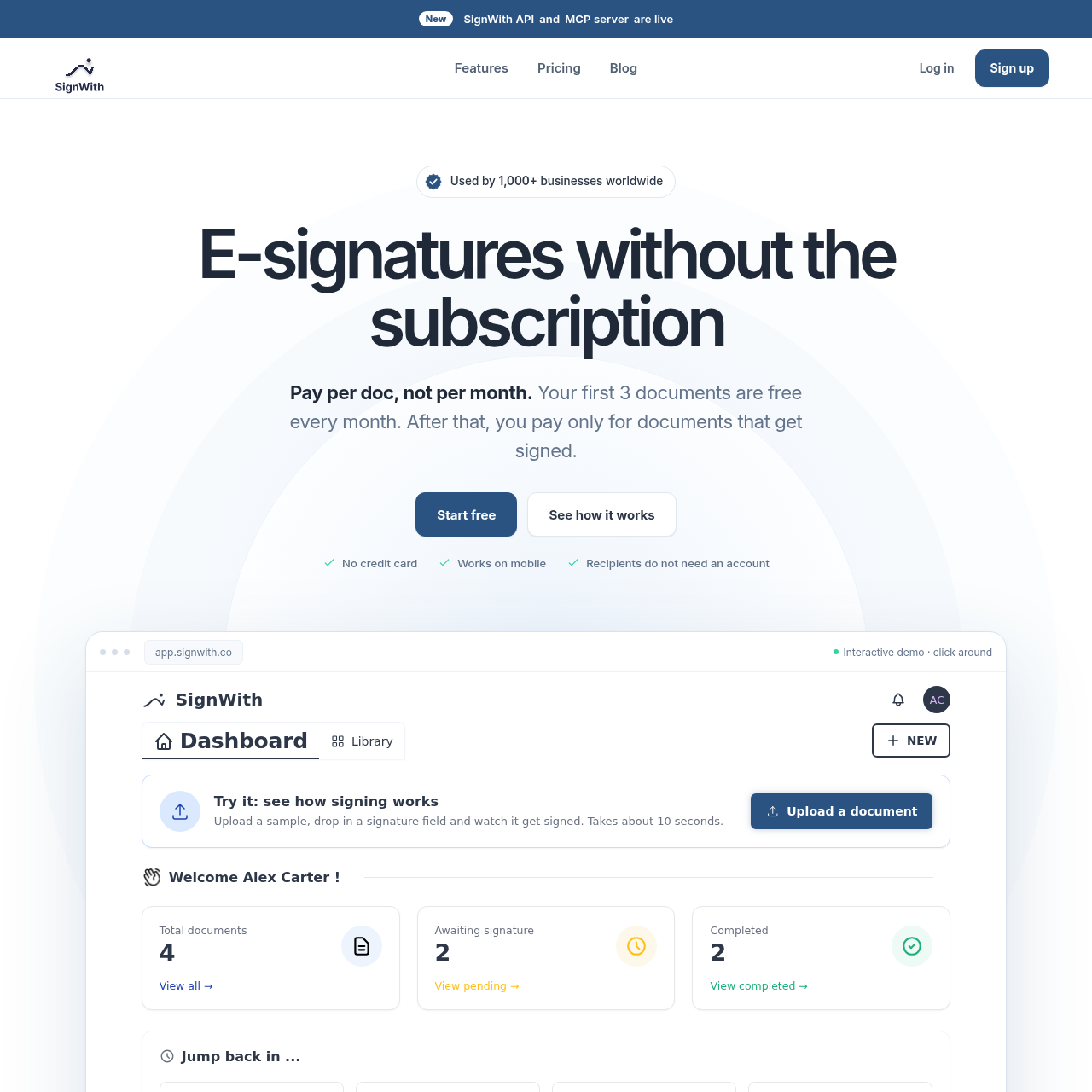
SignWith is an electronic signature tool that enables users to prepare, dispatch, and track documents with multi-signer workflows, audit logging, and Model Context Protocol assistant integrations.
What the product does and how it is positioned
SignWith provides electronic signature capabilities for uploading existing documents, placing recipient fields, and orchestrating sequential or multi-party signing workflows. Signers can review and sign agreements on desktop or mobile browsers without creating an account.
The platform captures an audit trail containing IP addresses, timestamps, and browser details for every signing interaction, culminating in a Certificate of Completion. In addition to a REST API and signed webhooks, SignWith features a Model Context Protocol server that connects AI assistants directly to document-management operations.
Source-supported ways to use the product
The official customer story reports using SignWith to export agreements as PDFs, upload them, and route them to clients for execution without requiring client accounts.
Teams configure signature, date, and text fields on offer letters, confidentiality agreements, and team onboarding paperwork with designated sequential signing orders.
The documented workflow, where available
Drag and drop a PDF, JPEG, or PNG file into the interface without needing to reconstruct the document.
Assign recipients, configure signing order, and position signature, initials, date, text, number, or checkbox fields.
Monitor real-time status updates showing when each signer opens, views, and signs the document.
Download the completed document accompanied by an audit trail and a Certificate of Completion.
SignWith incorporates identity verification and non-repudiation controls designed to adhere to electronic signature frameworks like the ESIGN Act and UETA. Senders can enable email one-time password verification, which requires signers to input a six-digit code received via email before accessing the document.
Every transition in the document lifecycle is logged with relevant metadata, including event timestamps, IP addresses, and user-agent browser details. Upon completion of all required signatures, the platform produces a Certificate of Completion featuring SHA-256 cryptographic verification.
For programmatic document workflows, SignWith offers a REST API with signed webhook callbacks that fire when documents are sent, viewed, signed, declined, or completed. Developers can generate signature requests from predefined templates using standard HTTP requests.
SignWith also provides a remote Model Context Protocol server exposing eighteen tools. This allows AI assistants in environments such as Claude, ChatGPT, Cursor, and VS Code to draft agreements, place fields, initiate signing requests, and report document status.
Checks to run with your own material and workflow
What was checked and when
Answers based on the source-checked product record
No, signers do not need to create an account or install an application. They access the document through a link and can review and sign on either desktop or mobile browsers.
SignWith supports uploading documents in PDF, JPEG, and PNG formats directly into the platform without requiring users to rebuild them.
Users can place six distinct field types on documents: signature, initials, date, text, number, and checkbox fields for each assigned signer.
When email verification is enabled, signers must enter a six-digit one-time password sent to their email inbox before the document can be opened and viewed.
SignWith operates a remote Model Context Protocol server with eighteen tools, enabling connected clients such as Claude, ChatGPT, Cursor, and VS Code to draft documents, position fields, and check signing status.