Raycast 2.0 favicon

Raycast 2.0

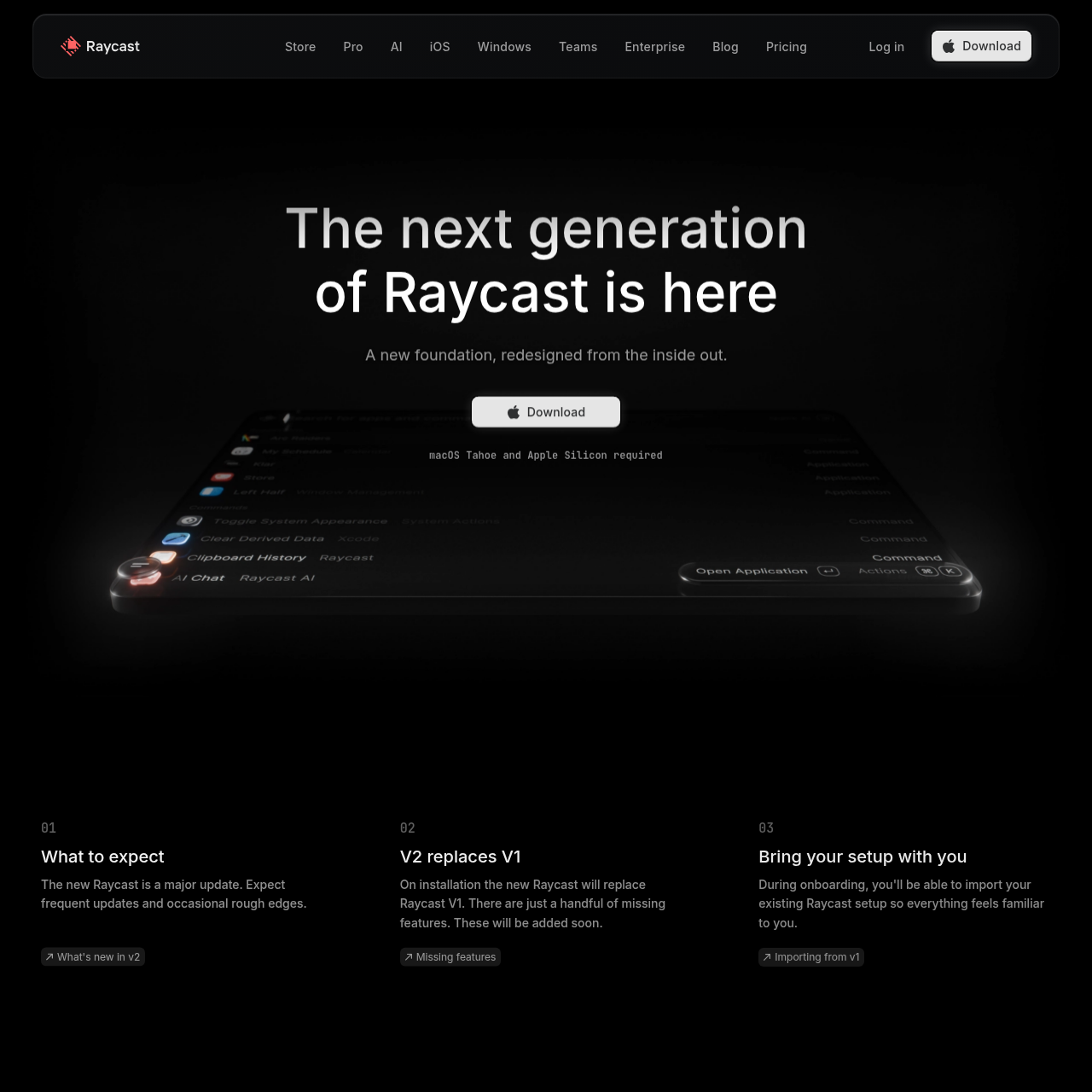
Raycast 2.0 is a rebuilt desktop command launcher for macOS Tahoe and Apple Silicon, introducing root file search, dictation, and updated AI tooling.

ProductivityFind files from the primary root search…Dictate text using native voice input.Interact with AI models using skills,…Configure hotkeys and command aliases…
Raycast 2.0 product interface screenshot
Estimated monthly visits
773K
Data period:
Listed on AIToolly

What Is Raycast 2.0? Product Overview

What the product does and how it is positioned

Raycast 2.0 is a rebuilt release of the Raycast desktop launcher, redesigned from the inside out to integrate with macOS Tahoe. The release introduces structural updates to system navigation, including locating files directly inside the primary root search and assigning command hotkeys or aliases inline.

In addition to interface refinements, the update introduces native voice dictation and consolidates AI interactions into a centralized chat interface supporting skills, agents, and memory. Raycast 2.0 replaces existing v1 installations while providing automatic and manual migration paths for user settings, shortcuts, and custom extensions.

What Can You Use Raycast 2.0 For?

Source-supported ways to use the product

Direct Desktop File Search

Users locate documents and system files immediately from the root command bar without navigating to a separate file search command.

Voice-to-Text Input

Users compose text and issue inputs across desktop workflows using the built-in dictation engine.

Centralized AI Assistance

Users execute tasks, run agents, and hold contextual conversations within an AI interface equipped with persistent memory and skills.

Architecture Updates and Migration from Raycast v1

Raycast 2.0 establishes a new foundation built specifically for Apple Silicon hardware running macOS Tahoe. Installing the new version directly replaces Raycast v1, carrying over configurations while initially omitting a small number of legacy features planned for subsequent updates.

To ease the transition, the launcher includes an automated onboarding migration process alongside fallback manual import commands. The migration transfers configuration options, shortcuts, clipboard history, emoji picker preferences, and developer extensions, while disabling v1 hotkeys to eliminate keyboard shortcut collisions.

  • Direct replacement of Raycast v1 upon installation.
  • Automated and manual migration options using configuration files.
  • Automatic migration of custom extensions when updating from v1.104.16 or newer.
  • Shortcut deactivation in v1 to eliminate hotkey conflicts.

What to Test Before Choosing Raycast 2.0

Checks to run with your own material and workflow

  • Confirm that host hardware is powered by Apple Silicon and runs macOS Tahoe before attempting installation.
  • Verify that the existing Raycast v1 installation is updated to at least version 1.104.16 to ensure custom extension migration functions properly.
  • Check whether existing daily workflows depend on any features temporarily omitted from the initial 2.0 release.

Raycast 2.0 Sources and Last Checked

What was checked and when

Last checked
Category
Productivity

Raycast 2.0 Frequently Asked Questions

Answers based on the source-checked product record

What is new in Raycast 2.0?

Raycast 2.0 includes a refreshed interface, improved hotkey handling, a revised AI experience with skills and memory, built-in dictation, faster file search directly in root search, quicklinks, and snippet tagging.

What are the minimum system requirements for Raycast 2.0?

Raycast 2.0 requires macOS Tahoe and Apple Silicon hardware. Users on macOS Sequoia or earlier must upgrade their operating system before installing the application.

What happens to Raycast v1 when installing Raycast 2.0?

On installation, Raycast 2.0 replaces Raycast v1. The update launches with a handful of missing features from the previous generation that are scheduled to be added later.

How can users migrate settings and data from Raycast v1?

Users can migrate automatically during onboarding or via the Migrate from Raycast v1 command, which moves settings, shortcuts, clipboard history, wrapped data, and the emoji picker. Alternatively, users can perform a manual import using a rayconfig file.

How do custom extensions import into the new version?

Custom extensions import automatically if Raycast v1 is updated to at least version 1.104.16. Developers can also import them manually using the extension development command line interface.

Explore other recently added tools in the same category.