Google Research Unveils TimesFM-3: A Revolutionary Zero-Shot Foundation Model for Multivariate Forecasting and Data Management
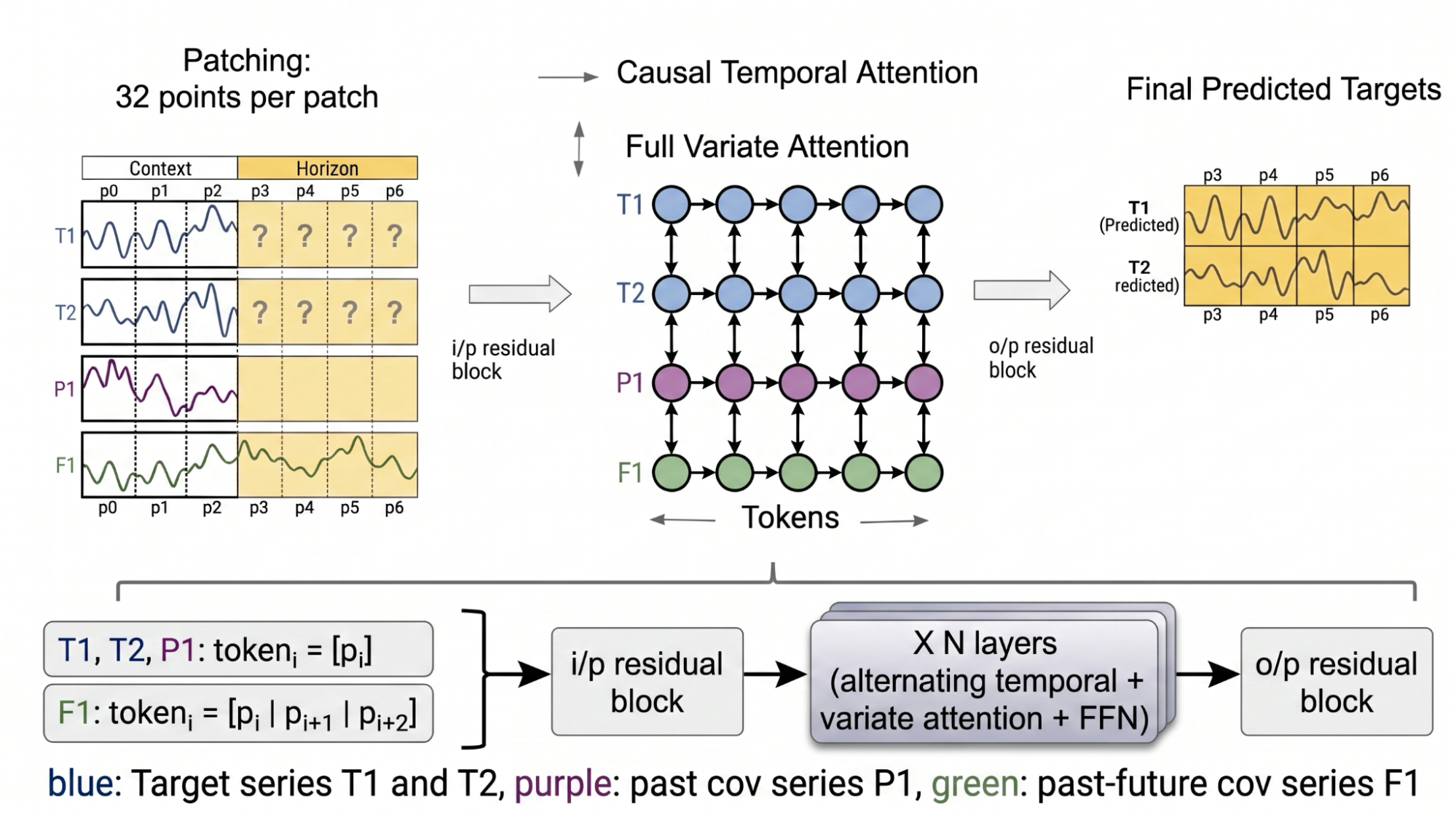
Google Research has announced the release of TimesFM-3, a cutting-edge foundation model specifically engineered for multivariate time-series forecasting. Unlike traditional models that require extensive retraining for specific datasets, TimesFM-3 utilizes a zero-shot approach, allowing it to perform accurate predictions on unseen data immediately. This development marks a significant milestone in the field of predictive analytics, focusing on the complexities of multivariate data where multiple interdependent variables must be analyzed simultaneously. The core of this breakthrough lies in advanced data management techniques that enable the model to handle diverse and large-scale datasets efficiently. By providing a robust framework for zero-shot learning, TimesFM-3 aims to streamline forecasting workflows across various industries, reducing the need for specialized model development while maintaining high levels of accuracy and reliability in complex data environments.
Key Takeaways
- Zero-Shot Capability: TimesFM-3 is designed to perform multivariate forecasting on new datasets without the need for task-specific fine-tuning or training.
- Multivariate Focus: The model specifically addresses multivariate time-series, allowing for the analysis of multiple correlated variables simultaneously.
- Foundation Model Architecture: As a foundation model, it provides a scalable and versatile base for a wide range of forecasting applications.
- Advanced Data Management: The announcement highlights the critical role of data management in the development and deployment of large-scale forecasting models.
- Google Research Innovation: Developed by Google Research, this model represents the latest iteration in the TimesFM series, pushing the boundaries of time-series AI.
In-Depth Analysis
The Shift to Zero-Shot Multivariate Forecasting
The introduction of TimesFM-3 by Google Research signifies a major shift in how time-series forecasting is approached in the AI industry. Traditionally, forecasting models, especially those dealing with multivariate data, required extensive historical data and significant computational resources for training and fine-tuning to a specific domain. TimesFM-3 disrupts this paradigm by implementing a zero-shot foundation model approach. This means the model has been pre-trained on a vast array of time-series data, enabling it to recognize patterns and dependencies across multiple variables without needing to be "re-taught" for every new scenario.
The "multivariate" aspect is particularly crucial. In real-world applications, variables rarely exist in isolation. For instance, in retail, sales figures are influenced by weather, holidays, and economic indicators. TimesFM-3 is built to ingest these multiple streams of data and understand their interdependencies. By leveraging a foundation model architecture, Google Research provides a tool that is not only powerful but also highly adaptable, allowing users to apply sophisticated forecasting to diverse fields such as finance, logistics, and environmental monitoring with minimal setup.
Data Management as the Core Pillar
A central theme in the announcement of TimesFM-3 is the emphasis on data management. For a foundation model to achieve effective zero-shot performance in multivariate forecasting, the underlying data management infrastructure must be exceptionally robust. This involves the curation, cleaning, and structuring of massive amounts of time-series data from varied sources. The success of TimesFM-3 is predicated on its ability to handle the noise and irregularities inherent in multivariate datasets.
Effective data management in this context refers to how the model processes input sequences and manages the relationships between different time-series variables. Because the model is designed for zero-shot applications, the data management protocols must ensure that the model can generalize its learned patterns to new, unseen data structures. This requires a sophisticated understanding of data normalization and feature alignment across different temporal scales. By focusing on data management, Google Research ensures that TimesFM-3 can maintain high fidelity in its predictions even when faced with the high dimensionality and complexity of modern industrial data.
Scaling Foundation Models for Time-Series
TimesFM-3 represents the third iteration of Google's Time-series Foundation Model (TimesFM) series, reflecting a continuous evolution in model scale and capability. The transition from univariate to multivariate forecasting in a zero-shot context is a significant technical hurdle. Foundation models for natural language or vision have seen rapid growth, but time-series data presents unique challenges, such as varying frequencies, seasonalities, and the lack of a universal "vocabulary."
Google Research's approach with TimesFM-3 involves scaling the model's capacity to internalize these temporal dynamics. By treating time-series forecasting as a large-scale pre-training problem, TimesFM-3 can capture the underlying "physics" of data movement. This allows the model to act as a general-purpose engine for predictive analytics. The focus on multivariate data management ensures that as the model scales, it remains capable of distinguishing between causal relationships and mere correlations, a vital distinction for accurate long-term forecasting in complex systems.
Industry Impact
The release of TimesFM-3 is poised to have a profound impact on several key sectors of the AI and data science industry:
- Operational Efficiency: Organizations can now deploy high-accuracy forecasting models without the time-consuming process of data labeling and model training, significantly reducing the time-to-market for predictive insights.
- Democratization of Advanced Analytics: By providing a zero-shot foundation model, Google enables smaller enterprises with limited machine learning expertise to leverage state-of-the-art multivariate forecasting capabilities.
- Standardization of Time-Series Tasks: TimesFM-3 could set a new standard for how time-series data is managed and processed, encouraging the industry to move toward foundation-model-based architectures rather than bespoke, siloed solutions.
- Enhanced Decision Making: In sectors like supply chain and energy management, the ability to forecast multiple interdependent variables accurately can lead to more resilient and optimized decision-making processes.
Frequently Asked Questions
Question: What makes TimesFM-3 different from previous forecasting models?
TimesFM-3 is a zero-shot foundation model, meaning it can perform multivariate forecasting on new datasets without requiring specific training or fine-tuning. Unlike traditional models that are often univariate or require extensive local data, TimesFM-3 is designed to handle multiple variables and generalize across different domains immediately.
Question: Why is multivariate forecasting important for businesses?
Most real-world scenarios involve multiple factors that influence an outcome. Multivariate forecasting allows businesses to see the "big picture" by analyzing how different variables—such as price, demand, and external market conditions—interact with each other over time, leading to more accurate and actionable predictions.
Question: How does data management play a role in TimesFM-3?
Data management is critical for TimesFM-3 as it governs how the model handles complex, high-dimensional multivariate data. Proper data management ensures that the model can effectively process diverse data types and maintain its zero-shot predictive accuracy across various industrial and scientific applications.