Google Research Explores Improving Breast Cancer Screening Workflows Through Machine Learning Integration
A recent update from Google Research highlights ongoing efforts to enhance breast cancer screening workflows using machine learning. Categorized under Health and Bioscience, the initiative focuses on leveraging advanced computational models to refine the processes involved in detecting breast cancer. By integrating machine learning into clinical workflows, the research aims to address current challenges in screening efficiency and accuracy. While the specific technical parameters of the models remain proprietary to the ongoing research phase, the focus remains steadfast on the intersection of healthcare technology and diagnostic optimization. This development underscores the increasing role of artificial intelligence in supporting medical professionals and improving patient outcomes through more streamlined and data-driven screening methodologies.
Key Takeaways
- Workflow Optimization: The research focuses on utilizing machine learning to improve the efficiency of breast cancer screening processes.
- Health & Bioscience Focus: This initiative is a core part of Google’s Health and Bioscience research division.
- Technological Integration: The project emphasizes the practical application of AI models within existing medical screening frameworks.
In-Depth Analysis
Machine Learning in Clinical Workflows
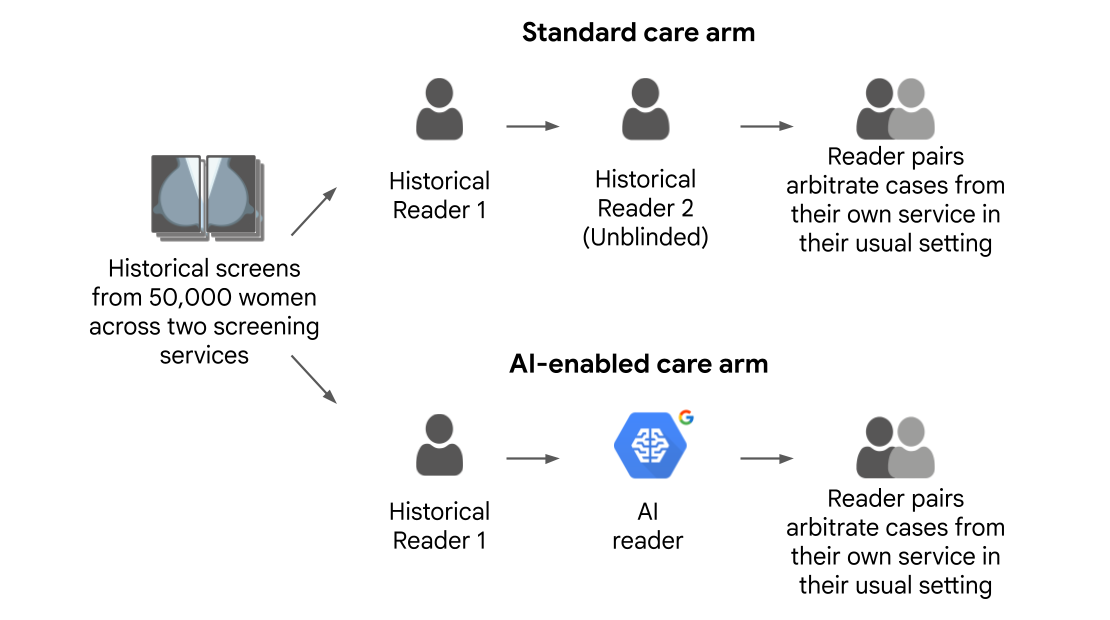
According to the Google Research Blog, the application of machine learning is being directed toward the refinement of breast cancer screening workflows. Rather than focusing solely on isolated image recognition, the research explores how these models can be integrated into the broader operational sequence of screening. This involves analyzing how data flows from initial imaging to final diagnosis, identifying bottlenecks where machine learning can provide the most significant support to radiologists and healthcare providers.
Advancing Health and Bioscience
The project sits at the intersection of Health and Bioscience, representing a shift toward more specialized AI applications. By focusing on breast cancer—a critical area of diagnostic medicine—the research aims to validate the utility of machine learning in high-stakes medical environments. The documentation suggests that the goal is to create a more seamless interaction between automated systems and human expertise, ensuring that technological advancements translate into tangible improvements in the screening pipeline.
Industry Impact
The move to improve screening workflows with machine learning signals a significant trend in the AI industry toward operational healthcare solutions. By addressing the workflow itself, Google Research is tackling the practical barriers to AI adoption in hospitals and clinics. This approach not only enhances the potential for earlier detection but also sets a precedent for how machine learning can be used to manage the increasing workload of diagnostic professionals. As these workflows become more data-driven, the industry can expect a shift toward more standardized, AI-assisted screening protocols globally.
Frequently Asked Questions
Question: What is the primary goal of this machine learning research?
The primary goal is to improve the efficiency and effectiveness of breast cancer screening workflows by integrating machine learning models into the diagnostic process.
Question: Which department at Google is responsible for this research?
This research is conducted by the Google Research team, specifically within the Health and Bioscience category.
Question: How does this impact current breast cancer screening methods?
It aims to optimize the existing workflows, potentially reducing the time required for screening and assisting medical professionals in making more accurate diagnostic decisions through computational support.