Google Research Announces GlucoFM: A Specialized Foundation Model for Continuous Glucose Monitoring
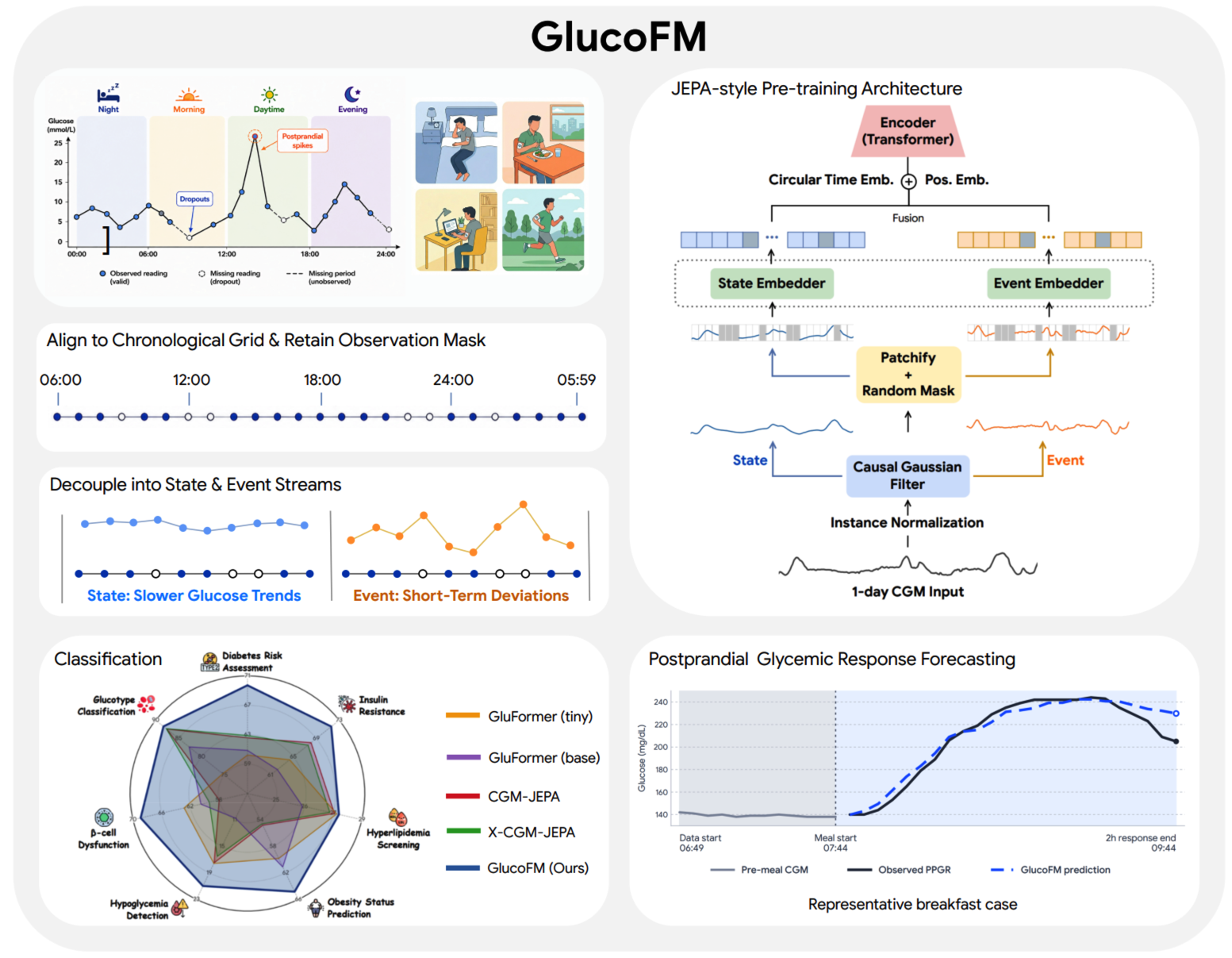
Google Research has unveiled GlucoFM, a groundbreaking foundation model specifically engineered for continuous glucose monitoring (CGM). Categorized under Health & Bioscience, this development signifies a major leap in applying large-scale artificial intelligence to physiological data. GlucoFM represents the adaptation of foundation model architectures—which have revolutionized natural language processing—to the specialized field of metabolic health. By focusing on the continuous streams of data generated by CGM devices, Google Research aims to enhance the precision and utility of glucose tracking. This initiative underscores the increasing role of specialized AI in chronic disease management and the broader evolution of personalized healthcare technology.
Key Takeaways
- Introduction of GlucoFM: Google Research has developed a dedicated foundation model named GlucoFM specifically for the analysis of continuous glucose monitoring (CGM) data.
- Focus on Health & Bioscience: The project is a core part of Google’s ongoing efforts to integrate advanced AI into the bioscience sector, focusing on practical medical applications.
- Foundation Model Architecture: Unlike traditional narrow AI, GlucoFM utilizes a foundation model approach, suggesting a broad capability to interpret complex physiological patterns.
- Advancing CGM Technology: The model is designed to process the high-frequency data streams inherent in modern glucose monitoring systems, potentially improving diagnostic and predictive accuracy.
In-Depth Analysis
The Evolution of Foundation Models in Healthcare
The announcement of GlucoFM by Google Research marks a significant shift in how artificial intelligence is applied to medical data. Traditionally, AI in healthcare has relied on task-specific models trained on limited datasets for narrow purposes, such as detecting a specific anomaly in an image. However, the introduction of a "foundation model" for continuous glucose monitoring suggests a move toward more versatile and robust systems. Foundation models are typically trained on vast amounts of data and can be adapted to a wide range of downstream tasks. By applying this logic to CGM, GlucoFM is positioned to handle the inherent variability and complexity of human metabolic data more effectively than previous iterations of medical software.
Continuous glucose monitoring generates a massive volume of time-series data. For patients with diabetes, these devices provide real-time insights into how food, exercise, and medication affect blood sugar levels. However, the raw data can be noisy and difficult to interpret without sophisticated analytical tools. GlucoFM represents Google's attempt to provide a standardized, powerful backbone for interpreting these data streams, potentially allowing for better trend recognition and more personalized health recommendations.
Google Research and the Bioscience Frontier
Google Research’s focus on "Health & Bioscience" through the GlucoFM project highlights the tech giant's commitment to becoming a leader in medical AI. The development of GlucoFM is not just about tracking blood sugar; it is about demonstrating that the same principles that power large language models (LLMs) can be applied to biological signals. This approach requires a deep understanding of both machine learning and human physiology.
By labeling GlucoFM as a foundation model, Google is signaling that this tool could serve as a platform for other researchers and developers. In the context of bioscience, a foundation model for glucose could eventually be integrated with other health metrics—such as heart rate, sleep patterns, and physical activity—to create a holistic view of a patient's health. The focus on CGM specifically addresses one of the most data-rich areas of modern medicine, providing a fertile testing ground for AI-driven health interventions.
Industry Impact
The introduction of GlucoFM is poised to have a significant impact on the medical device and digital health industries. For manufacturers of CGM hardware, the existence of a high-level foundation model from Google Research could lead to new partnerships and the integration of more advanced software features into consumer devices. This could accelerate the transition from simple data logging to proactive health management.
Furthermore, the move sets a precedent for other tech companies to develop foundation models for specific medical niches. As AI becomes more specialized, we may see the emergence of a "Model-as-a-Service" (MaaS) layer in healthcare, where specialized models like GlucoFM provide the intelligence for a variety of third-party health apps and clinical tools. This could lower the barrier to entry for smaller health-tech startups while raising the standard for data analysis across the industry. Ultimately, the success of GlucoFM could lead to more accurate glucose predictions, reducing the burden of disease management for millions of individuals worldwide.
Frequently Asked Questions
Question: What is GlucoFM?
Answer: GlucoFM is a foundation model developed by Google Research specifically designed for continuous glucose monitoring (CGM). It applies advanced AI architectures to analyze and interpret the continuous data streams generated by glucose tracking devices.
Question: Why is a foundation model important for glucose monitoring?
Answer: Foundation models are capable of learning complex patterns from large datasets and can be adapted for various specific tasks. In glucose monitoring, this means the model can potentially provide more accurate predictions and deeper insights into a patient's metabolic health compared to traditional, narrower AI models.
Question: How does GlucoFM fit into the broader field of bioscience?
Answer: GlucoFM represents the intersection of AI and bioscience, demonstrating how large-scale machine learning can be used to solve complex biological problems. It is part of a trend toward using specialized AI to improve chronic disease management and personalized medicine.