AI News on March 18, 2026

Superpowers Framework: A New Methodology and Workflow for Building Advanced AI Coding Agents
Open Source

Superpowers Framework: A New Methodology and Workflow for Building Advanced AI Coding Agents

Superpowers has emerged as a specialized software development methodology and framework designed specifically for building intelligent coding agents. Developed by author 'obra' and hosted on GitHub, the project introduces a structured workflow that moves away from traditional development patterns toward an agent-centric approach. The core of the Superpowers framework is built upon a foundation of composable 'skills' and initial building blocks, allowing developers to assemble complex agent capabilities systematically. By providing a proven set of workflows and a dedicated development methodology, Superpowers aims to streamline the creation of AI agents that can effectively handle coding tasks, offering a robust alternative to ad-hoc agent construction.
GitHub Trending
Learn Claude Code: Building a Nano-Scale AI Agent Using Only Bash Scripts
Open Source

Learn Claude Code: Building a Nano-Scale AI Agent Using Only Bash Scripts

The 'learn-claude-code' project, developed by shareAI-lab, has emerged as a trending repository on GitHub. This initiative demonstrates how to construct a nano-scale intelligent agent, similar to Claude Code, starting from scratch using only Bash scripts. By focusing on the 'Bash is enough' philosophy, the project provides a foundational guide for developers to understand the mechanics of AI agents without complex dependencies. The repository includes documentation in both Chinese and English, offering a step-by-step approach to building functional AI tools from the ground up. This minimalist approach highlights the power of shell scripting in the modern AI development landscape, providing a transparent look at how autonomous agents interact with systems.

GitHub Trending
Claude-Mem: A New Claude Code Plugin for Automated Action Capture and Context Compression
Open Source

Claude-Mem: A New Claude Code Plugin for Automated Action Capture and Context Compression

Claude-mem is a specialized plugin designed for Claude Code, developed by thedotmack. The tool focuses on enhancing the coding workflow by automatically capturing all actions performed by Claude during development sessions. Utilizing Claude's agent-sdk, the plugin employs AI to compress this captured data, ensuring that only the most relevant information is retained. This compressed context is then strategically injected into future sessions, allowing for a more seamless and context-aware coding experience. By bridging the gap between separate sessions, claude-mem aims to maintain continuity in complex programming tasks. The project is currently hosted on GitHub and includes an official $CMEM link, signaling its integration into the broader Claude ecosystem.

GitHub Trending
Heretic: A New Tool for the Fully Automated Censorship and Removal of Language Models
Open Source

Heretic: A New Tool for the Fully Automated Censorship and Removal of Language Models

The open-source project 'Heretic,' developed by user p-e-w and hosted on GitHub, has emerged as a specialized tool designed for the fully automated censorship and removal of language models. As AI development continues to scale, the project addresses the complex challenge of managing model outputs and existence through automated protocols. While the original documentation remains concise, the project's primary focus is the systematic identification and elimination of specific language model instances. This development highlights a growing niche in the AI ecosystem centered on model governance, automated oversight, and the technical mechanisms required to enforce content or model restrictions without manual intervention.

GitHub Trending
Lightpanda: A Specialized Headless Browser Engineered for Artificial Intelligence and Automation Tasks
Product Launch

Lightpanda: A Specialized Headless Browser Engineered for Artificial Intelligence and Automation Tasks

Lightpanda has introduced a specialized headless browser specifically designed to meet the rigorous demands of artificial intelligence and automation. Developed by lightpanda-io, this tool aims to provide a streamlined environment for developers and AI researchers who require efficient web interaction without a graphical user interface. By focusing on the intersection of AI and web automation, Lightpanda positions itself as a niche solution for high-performance data extraction and automated workflows. The project, hosted on GitHub, emphasizes its identity as a dedicated browser for the modern AI era, offering a robust foundation for building complex automated systems that interact seamlessly with web content.

GitHub Trending
GitNexus: A Serverless Client-Side Knowledge Graph Engine for Local Code Intelligence and Exploration
Product Launch

GitNexus: A Serverless Client-Side Knowledge Graph Engine for Local Code Intelligence and Exploration

GitNexus has emerged as a specialized tool designed to transform the way developers explore and understand source code. Functioning as a zero-server code intelligence engine, it operates entirely within the user's browser. By processing GitHub repositories or uploaded ZIP files, GitNexus generates interactive knowledge graphs that visualize complex code structures. A standout feature is its integrated Graph RAG (Retrieval-Augmented Generation) agent, which provides intelligent insights directly from the generated graph. This client-side approach ensures that code exploration is both accessible and efficient, allowing for deep technical analysis without the need for external server infrastructure or complex backend setups.

GitHub Trending
DeepAgents: A Powerful New Framework Built on LangChain and LangGraph for Complex Autonomous Tasks
Open Source

DeepAgents: A Powerful New Framework Built on LangChain and LangGraph for Complex Autonomous Tasks

LangChain-AI has introduced DeepAgents, a sophisticated agentic framework designed to handle complex tasks through advanced orchestration. Built on the foundations of LangChain and LangGraph, this framework integrates essential components such as planning tools and a dedicated file system backend. One of its standout features is the ability to generate sub-agents, allowing for hierarchical task management and delegation. By leveraging the robust ecosystem of LangChain, DeepAgents provides developers with the necessary infrastructure to build, manage, and scale intelligent agents capable of navigating intricate workflows. This release marks a significant step in the evolution of autonomous agent development, focusing on modularity and the practical requirements of modern AI applications.

GitHub Trending
NVIDIA Nemotron 3 Nano 4B: Introducing a Compact Hybrid Model for Efficient Local AI Performance
Product Launch

NVIDIA Nemotron 3 Nano 4B: Introducing a Compact Hybrid Model for Efficient Local AI Performance

The NVIDIA Nemotron 3 Nano 4B has been introduced as a compact hybrid model designed specifically for efficient local AI processing. Featured on the Hugging Face Blog, this 4-billion parameter model represents a strategic shift toward smaller, high-performance architectures that can run directly on local hardware. By balancing model size with computational efficiency, the Nemotron 3 Nano 4B aims to provide developers and users with a versatile tool for local deployment, reducing reliance on cloud-based infrastructure. This release highlights the ongoing industry trend of optimizing large language models for edge computing and private environments, ensuring that high-quality AI capabilities are accessible without the latency or privacy concerns often associated with remote server processing.

Hugging Face Blog
OpenAI Reportedly Eyes IPO by Late 2026 as ChatGPT Reaches 900 Million Weekly Active Users
Industry News

OpenAI Reportedly Eyes IPO by Late 2026 as ChatGPT Reaches 900 Million Weekly Active Users

OpenAI is reportedly preparing for an Initial Public Offering (IPO) by the end of 2026, marking a significant milestone for the artificial intelligence leader. Since the launch of ChatGPT in 2022, the platform has seen explosive growth, now supporting over 900 million weekly active users according to recent reports. This move toward the public market follows years of rapid development and massive user adoption. While the company has transitioned from a research-focused entity to a global service provider, the potential IPO signals a new chapter in its corporate evolution. The scale of its user base highlights the dominant position OpenAI holds in the generative AI landscape as it approaches this reported financial transition.

Tech in Asia
Nvidia CEO Confirms Receipt of Orders for China Shipments Following Regulatory Clearance for H200 Chips
Industry News

Nvidia CEO Confirms Receipt of Orders for China Shipments Following Regulatory Clearance for H200 Chips

Nvidia CEO Jensen Huang has confirmed that the company is now receiving orders for shipments to China. In a recent statement to CNBC, Huang revealed that Nvidia has successfully obtained the necessary clearance from both United States and Chinese authorities to proceed with specific exports. The authorization specifically covers shipments of the H200 chips, marking a significant development in the company's trade relations within the region. This clearance resolves previous regulatory hurdles that had impacted the delivery of high-end hardware to the Chinese market. The announcement underscores a pivotal moment for Nvidia as it navigates complex international trade policies while maintaining its supply chain for advanced AI hardware in one of the world's largest technology markets.

Tech in Asia
Mistral AI Unveils Forge: A Specialized System for Building Enterprise-Grade Frontier Models on Proprietary Data
Product Launch

Mistral AI Unveils Forge: A Specialized System for Building Enterprise-Grade Frontier Models on Proprietary Data

Mistral AI has officially launched Forge, a new system designed to help enterprises develop frontier-grade AI models grounded in their own proprietary knowledge. While most current AI models rely on public data, Forge allows organizations to bridge the gap by training models on internal engineering standards, compliance policies, codebases, and operational processes. By internalizing institutional knowledge, these models can understand specific reasoning patterns and terminology unique to an organization. Mistral AI is already collaborating with global leaders such as ASML, Ericsson, and the European Space Agency to implement this technology. The system supports various stages of the model lifecycle, including pre-training, post-training, and reinforcement learning, ensuring that AI agents are perfectly aligned with internal workflows and evaluation criteria.

Hacker News
Mistral Forge Debuts: Challenging OpenAI and Anthropic with Custom Enterprise AI Model Training from Scratch
Product Launch

Mistral Forge Debuts: Challenging OpenAI and Anthropic with Custom Enterprise AI Model Training from Scratch

Mistral AI has launched Mistral Forge, a new platform designed to empower enterprises to build and train custom artificial intelligence models from the ground up using their own proprietary data. Announced at NVIDIA GTC, this move positions Mistral as a direct competitor to industry leaders like OpenAI and Anthropic. Unlike traditional methods that rely heavily on fine-tuning existing models or utilizing Retrieval-Augmented Generation (RAG), Mistral Forge focuses on full-scale training from scratch. This strategic shift aims to provide businesses with deeper customization and control over their AI infrastructure, marking a significant evolution in how the enterprise sector approaches large-scale language model development and deployment.

TechCrunch AI
Garry Tan's Claude Code Setup on GitHub Sparks Intense Debate Across the AI Community
Industry News

Garry Tan's Claude Code Setup on GitHub Sparks Intense Debate Across the AI Community

A recent GitHub repository featuring Garry Tan's specific setup for Claude Code has become a focal point of discussion within the technology sector. The configuration, which has been accessed and tested by thousands of users, has elicited a wide range of reactions from developers and industry observers alike. Interestingly, the discourse surrounding this setup extends beyond human users, as major artificial intelligence models including Claude, ChatGPT, and Gemini have also generated opinions on the configuration. The polarized response highlights the growing interest in optimized AI development environments and the influence of prominent tech figures like Tan in shaping current coding workflows and tool integration strategies.

TechCrunch AI
Pentagon to Replace Anthropic AI Tools Following Risk Label Classification for Cloud Operations
Industry News

Pentagon to Replace Anthropic AI Tools Following Risk Label Classification for Cloud Operations

The Pentagon has announced plans to replace AI tools provided by Anthropic PBC, a prominent US-based artificial intelligence company specializing in large language models. This decision follows the application of a risk label to the company's technology. Notably, Anthropic had previously held a unique position as the sole AI provider cleared to operate within the Pentagon's specialized cloud environment. The shift marks a significant change in the Department of Defense's procurement strategy for large language models, highlighting evolving security assessments and operational requirements within the United States military's cloud infrastructure. The move underscores the rigorous vetting processes applied to AI vendors serving high-stakes government sectors.

Tech in Asia
Get Shit Done: A New Meta-Prompting and Spec-Driven Development System for AI-Powered Coding
Product Launch

Get Shit Done: A New Meta-Prompting and Spec-Driven Development System for AI-Powered Coding

Get Shit Done (GSD) is a lightweight yet powerful development system designed to enhance AI coding tools like Claude Code, Gemini CLI, and Copilot. Developed by a solo creator, the system addresses the common issue of 'context rot'—the degradation of output quality as AI context windows fill up. By utilizing context engineering, XML prompt formatting, and spec-driven development, GSD aims to provide a reliable alternative to 'vibecoding.' It focuses on technical efficiency over enterprise-style project management, offering a streamlined workflow that has gained traction among engineers at major tech firms such as Google and Amazon. The system is cross-platform, supporting Mac, Windows, and Linux via npx.

Hacker News
Google Research at The Check Up: Advancing Healthcare Innovation and Real-World Care Settings
Industry News

Google Research at The Check Up: Advancing Healthcare Innovation and Real-World Care Settings

The latest announcement from Google Research at 'The Check Up' event highlights the organization's ongoing commitment to Health and Bioscience. The update focuses on the transition of healthcare innovations from theoretical research into practical, real-world care settings. By bridging the gap between laboratory development and clinical application, Google Research aims to enhance how technology supports health outcomes. This brief update underscores the strategic focus on bioscience and the integration of advanced research into the broader healthcare ecosystem, ensuring that technological breakthroughs translate into tangible benefits for patients and providers alike.

Google Research Blog
Product Launch

Kita Launches AI-Powered Credit Review Automation for Emerging Markets via Y Combinator W26

Founders Carmel and Rhea have introduced Kita, a Y Combinator-backed startup (W26) designed to automate credit review for lenders in emerging markets like the Philippines and Mexico. Addressing the challenges of weak credit infrastructure and unreliable bureaus, Kita utilizes Vision Language Models (VLMs) to process highly unstandardized financial documents, including PDFs, images, and screenshots. Unlike traditional OCR and document AI tools that often fail on messy, real-world data, Kita focuses on specific lending workflows such as verification, fraud detection, and risk extraction. By automating these manual processes, the platform aims to solve the primary pain point of fintech operators: slow, expensive, and error-prone document-based underwriting in regions where open finance remains nascent.

Hacker News
Product Launch

Edge.js Unveiled: Running Node.js Applications Securely Within a WebAssembly Sandbox for AI and Edge Computing

Wasmer has announced the open-sourcing of Edge.js, a new JavaScript runtime designed to execute Node.js workloads within a WebAssembly sandbox. Unlike existing edge runtimes like Deno or Cloudflare Workers that introduce new APIs, Edge.js focuses on full Node.js compatibility, allowing existing applications and native modules to run unmodified. By leveraging WASIX to sandbox system calls and native modules, Edge.js achieves high density and rapid startup times that surpass traditional container technology. The runtime features a pluggable architecture supporting engines like V8, JavaScriptCore, or QuickJS. This development aims to provide a secure environment for JS-based apps, Model Context Protocols (MCPs), and AI agents without the overhead of Docker, bridging the gap between full compatibility and high-performance serverless execution.

Hacker News
Nvidia Unveils DLSS 5: A New AI Graphics Breakthrough Facing Early Criticism Over Visual Quality
Product Launch

Nvidia Unveils DLSS 5: A New AI Graphics Breakthrough Facing Early Criticism Over Visual Quality

Nvidia has officially introduced DLSS 5, its latest advancement in upscaling technology. The company has positioned this release as its most significant milestone in computer graphics since the 2018 introduction of real-time ray tracing. According to Nvidia, DLSS 5 is designed to infuse pixels with photorealistic lighting and materials through advanced AI processing. However, early reception has been mixed, with critics comparing the visual output to the controversial 'motion smoothing' effect found on televisions. While the technology aims to revolutionize how games are rendered, the initial reveal has sparked a debate regarding whether the AI-driven enhancements truly improve the gaming experience or introduce unwanted visual artifacts.

The Verge
NVIDIA and Apple Collaborate to Bring RTX-Accelerated Graphics and CloudXR 6.0 to Apple Vision Pro
Industry News

NVIDIA and Apple Collaborate to Bring RTX-Accelerated Graphics and CloudXR 6.0 to Apple Vision Pro

NVIDIA has announced a significant technical integration that connects NVIDIA RTX-accelerated computers directly to the Apple Vision Pro. Through the native integration of NVIDIA CloudXR 6.0 into Apple's visionOS, users can now securely stream high-fidelity simulators and professional 3D graphics applications. This collaboration enables the delivery of demanding workloads, such as Immersive for Autodesk VRED via Innoactive’s XR streaming solutions, onto the Apple Vision Pro headset. By leveraging NVIDIA's powerful RTX technology and the CloudXR framework, the partnership bridges the gap between high-end workstation performance and the portable spatial computing capabilities of visionOS, marking a major milestone for professional XR workflows and industrial simulation.

NVIDIA Newsroom
NVIDIA and Global Telecom Leaders Launch Distributed AI Grids to Optimize Network Inference
Industry News

NVIDIA and Global Telecom Leaders Launch Distributed AI Grids to Optimize Network Inference

At NVIDIA GTC 2026, NVIDIA and prominent telecommunications operators from the United States and Asia announced the development of AI grids. These grids represent a geographically distributed and interconnected AI infrastructure designed to leverage existing network footprints. As AI-native applications expand across users, agents, and devices, the telecommunications network is emerging as a critical frontier for AI distribution. By utilizing these distributed networks, operators aim to optimize AI inference, bringing computational power closer to the end-user. This collaboration marks a significant shift in how AI infrastructure is deployed, moving from centralized data centers to a more dispersed, network-integrated model that supports the scaling of next-generation AI technologies.

NVIDIA Newsroom
Google Research Explores Improving Breast Cancer Screening Workflows Through Machine Learning Integration
Research Breakthrough

Google Research Explores Improving Breast Cancer Screening Workflows Through Machine Learning Integration

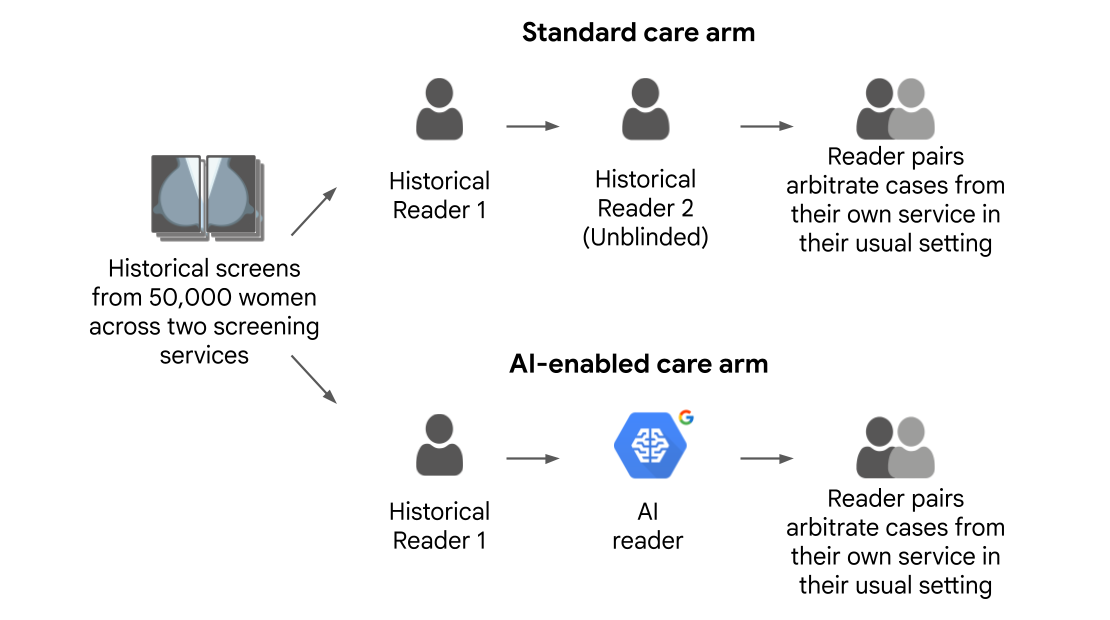
A recent update from Google Research highlights ongoing efforts to enhance breast cancer screening workflows using machine learning. Categorized under Health and Bioscience, the initiative focuses on leveraging advanced computational models to refine the processes involved in detecting breast cancer. By integrating machine learning into clinical workflows, the research aims to address current challenges in screening efficiency and accuracy. While the specific technical parameters of the models remain proprietary to the ongoing research phase, the focus remains steadfast on the intersection of healthcare technology and diagnostic optimization. This development underscores the increasing role of artificial intelligence in supporting medical professionals and improving patient outcomes through more streamlined and data-driven screening methodologies.

Google Research Blog
State of Open Source on Hugging Face: Spring 2026 Report Released by Hugging Face Blog
Industry News

State of Open Source on Hugging Face: Spring 2026 Report Released by Hugging Face Blog

The Hugging Face Blog has officially released its 'State of Open Source on Hugging Face: Spring 2026' report. Published on March 17, 2026, this latest update provides a snapshot of the current landscape within the open-source AI community. While the specific metrics and detailed findings of the report were not disclosed in the initial announcement, the publication serves as a primary source for understanding the evolution of the Hugging Face ecosystem during the first half of 2026. As a central hub for machine learning models, datasets, and demo applications, Hugging Face continues to document the trends and shifts within the open-source movement through these seasonal state-of-the-industry updates.

Hugging Face Blog
Google Expands Personal Intelligence Access: Gemini AI Personalization Now Available to All US Users
Product Launch

Google Expands Personal Intelligence Access: Gemini AI Personalization Now Available to All US Users

Google has officially announced a significant expansion of its Gemini AI capabilities, making its 'Personal Intelligence' feature available to all users within the United States. Previously restricted to premium subscribers under the Google AI Pro and AI Ultra tiers, this feature allows the AI to integrate with various Google apps to provide more contextualized and personalized responses. By connecting different services within the Google ecosystem, Gemini can now offer tailored suggestions based on a user's specific data and app usage. This move marks a strategic shift in Google's AI distribution, bringing advanced personalization tools to free-tier users and broadening the reach of its generative AI ecosystem across the American market.

The Verge
Google Expands Personal Intelligence Features Across Search, Gemini App, and Chrome Browser
Product Launch

Google Expands Personal Intelligence Features Across Search, Gemini App, and Chrome Browser

Google has announced a significant expansion of its Personal Intelligence capabilities, integrating these advanced AI features into three of its core platforms. According to the latest update from the Google AI Blog, the rollout will specifically target AI Mode in Search, the standalone Gemini app, and the Gemini integration within the Chrome browser. This strategic move aims to bring the power of personalized AI assistance to a broader user base, streamlining the user experience across mobile and desktop environments. By embedding Personal Intelligence into these high-traffic tools, Google continues to evolve its ecosystem, focusing on more tailored and context-aware interactions for users globally. The expansion marks a key milestone in making sophisticated AI tools more accessible and functional within everyday digital workflows.

Google AI Blog
Google Announces New Strategic Investments in Open Source Security for the AI Era
Industry News

Google Announces New Strategic Investments in Open Source Security for the AI Era

Google has officially announced a new wave of investments aimed at bolstering open source security as the industry transitions into the AI era. According to the latest update from the Google AI Blog, the tech giant is focusing on three primary pillars: financial investment, the development of innovative tools, and the enhancement of code security. These initiatives are designed to improve the overall resilience of the open source ecosystem, which serves as the foundation for much of today's AI development. By prioritizing code-level security and building specialized tools, Google aims to address the evolving security challenges posed by modern technological advancements.

Google AI Blog