LFM2.5-VL-3B: Advancing High-Performance Vision-Language Capabilities for Edge Computing Environments
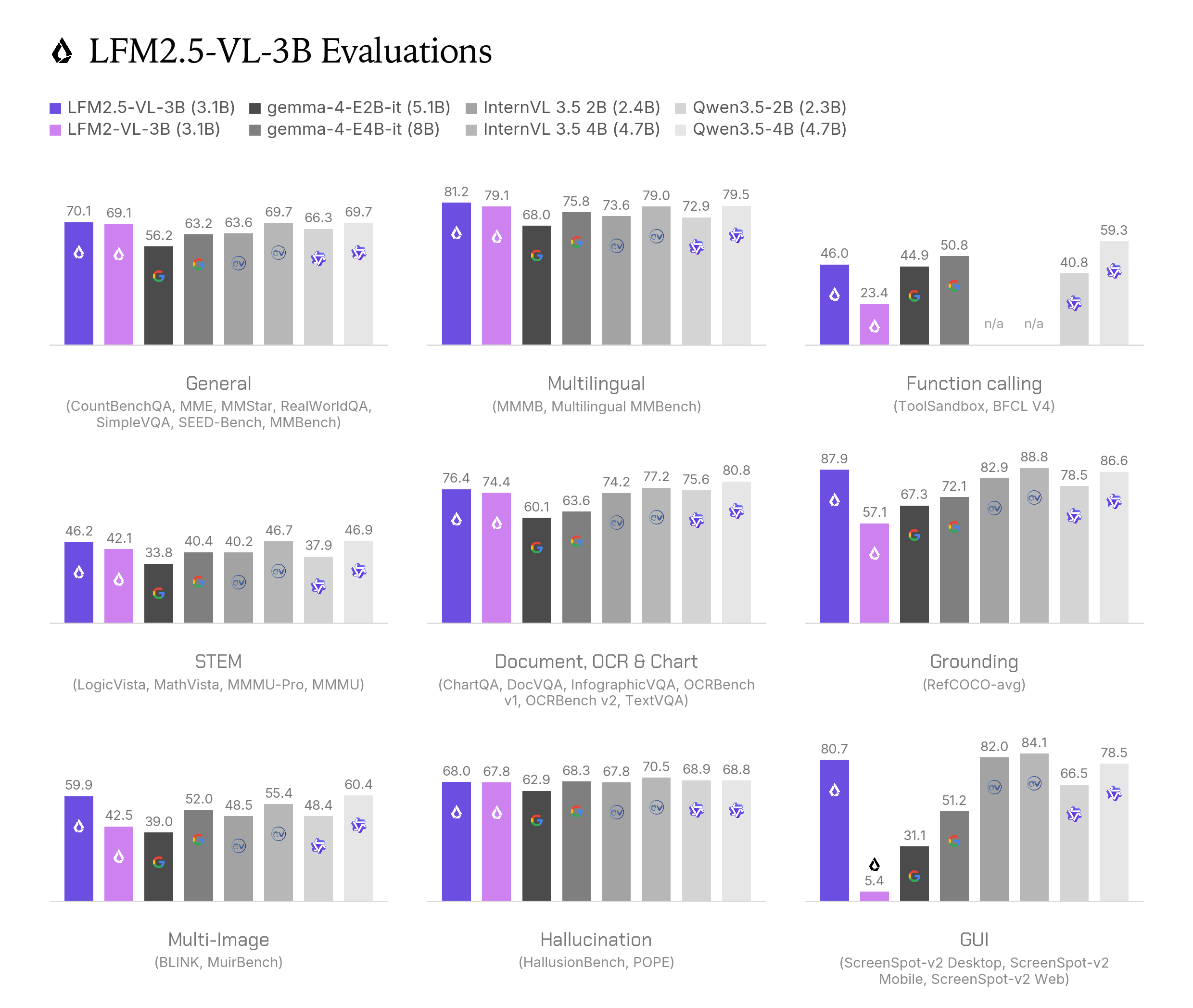
LiquidAI has announced the release of LFM2.5-VL-3B, a specialized vision-language model designed to deliver superior speed and enhanced vision capabilities for edge devices. Featuring a 3-billion parameter architecture, this model represents a significant step forward in the Liquid Foundation Model (LFM) lineage, focusing on the optimization of multimodal tasks in resource-constrained environments. By prioritizing local processing, the LFM2.5-VL-3B addresses the growing demand for real-time, efficient AI that does not rely on cloud-based infrastructure. This launch, hosted on the Hugging Face platform, highlights a strategic move toward high-performance 'small' models that maintain sophisticated visual reasoning while maximizing operational velocity. The model's design emphasizes the 'better and faster' promise, aiming to redefine the standards for vision-centric AI at the edge.
Key Takeaways
- Edge-Optimized Performance: The LFM2.5-VL-3B is specifically engineered for edge deployment, ensuring that high-level vision capabilities can function locally with minimal latency.
- 3-Billion Parameter Scale: The model utilizes a 3B parameter count, which is widely considered the 'sweet spot' for balancing complex reasoning with the hardware limitations of edge devices.
- Vision-Language (VL) Integration: As a multimodal model, it seamlessly integrates visual and linguistic processing, enabling more intuitive interactions and analysis of visual data.
- Speed and Efficiency: A core focus of the LFM2.5-VL-3B is its ability to process information faster than previous iterations, making it suitable for real-time applications.
- Liquid Foundation Model Architecture: The model is part of the LFM family, which is known for its unique approach to foundational AI architecture, emphasizing adaptability and efficiency.
In-Depth Analysis
The Strategic Importance of the 3B Parameter Scale
The announcement of the LFM2.5-VL-3B highlights a critical trend in the artificial intelligence industry: the shift toward highly optimized, smaller-scale models. While the industry initially focused on massive models with hundreds of billions of parameters, the emergence of the 3B parameter class represents a strategic pivot. A 3-billion parameter model like the LFM2.5-VL-3B is large enough to capture the nuances of complex vision-language tasks but small enough to be deployed on local hardware, such as mobile devices, drones, and industrial sensors. This scale allows for sophisticated pattern recognition and natural language understanding without the prohibitive computational costs associated with larger foundation models.
By focusing on this specific scale, LiquidAI is targeting the 'Edge AI' market, where power consumption and memory bandwidth are primary constraints. The LFM2.5-VL-3B is designed to maximize the utility of every parameter, ensuring that the 'better and faster' vision capabilities mentioned in the announcement are not just theoretical but practically applicable in real-world scenarios. This efficiency is vital for industries that require immediate feedback from AI systems, such as autonomous navigation or real-time security monitoring.
Advancing Vision Capabilities at the Edge
The 'VL' in LFM2.5-VL-3B stands for Vision-Language, indicating that this model is not merely a computer vision tool but a multimodal system capable of understanding the relationship between visual inputs and textual descriptions. In the context of edge computing, this capability is transformative. Traditional edge vision systems often relied on simple object detection; however, a vision-language model can perform more complex tasks, such as describing a scene, answering questions about an image, or following text-based instructions to identify specific visual anomalies.
The LFM2.5-VL-3B's emphasis on being 'faster' is particularly relevant here. In edge environments, speed is often synonymous with safety and reliability. For instance, in a robotic application, the ability to process a visual frame and correlate it with a command in milliseconds can be the difference between a successful operation and a collision. By optimizing the vision capabilities specifically for the edge, LiquidAI is addressing the latency issues that have historically plagued cloud-dependent AI systems. This local processing also enhances privacy and security, as sensitive visual data does not need to be transmitted to a central server for analysis.
The Evolution of Liquid Foundation Models (LFM)
The LFM2.5-VL-3B is a continuation of the Liquid Foundation Model series, which has gained attention for its departure from standard transformer-based architectures. While the specific architectural details of the 2.5 version focus on vision, the underlying philosophy of LFMs remains centered on efficiency and dynamic adaptability. The 'Liquid' aspect of these models typically refers to their ability to handle sequential data and varying time-steps more effectively than traditional models. By applying this philosophy to vision-language tasks, LiquidAI is positioning the LFM2.5-VL-3B as a highly versatile tool for any application where visual data is processed over time.
Industry Impact
The introduction of the LFM2.5-VL-3B has significant implications for the broader AI industry, particularly in the realm of decentralized intelligence. By providing a model that is both 'better' in terms of capability and 'faster' in terms of execution, LiquidAI is challenging the dominance of cloud-only AI providers. This release empowers developers to build more sophisticated applications that can run entirely offline, which is a critical requirement for remote industrial sites, healthcare applications involving sensitive patient data, and consumer electronics where user privacy is paramount.
Furthermore, the availability of this model on Hugging Face democratizes access to high-performance vision-language tools. It allows a wider range of researchers and companies to experiment with edge AI, potentially accelerating the development of autonomous systems and smart infrastructure. As more organizations look to reduce their cloud computing costs and improve the responsiveness of their AI features, models like the LFM2.5-VL-3B will likely become the blueprint for the next generation of on-device intelligence.
Frequently Asked Questions
Question: What makes the LFM2.5-VL-3B different from standard vision models?
The LFM2.5-VL-3B is a Vision-Language (VL) model, meaning it can process and relate both visual and textual information simultaneously. Unlike standard vision models that might only label objects, this model can engage in complex reasoning about visual scenes. Additionally, it is specifically optimized for 'Edge' performance, focusing on speed and efficiency on local hardware rather than relying on the cloud.
Question: Why is the 3B parameter size important for edge devices?
A 3-billion (3B) parameter size is considered an optimal balance for edge computing. It provides enough complexity to handle sophisticated AI tasks while remaining small enough to fit within the memory and processing limits of devices like smartphones, tablets, and embedded systems. This allows for high-quality AI performance without the need for massive server clusters.
Question: How does the LFM2.5-VL-3B improve speed in AI applications?
The model is designed to be 'faster' by optimizing its internal architecture for quick inference. By running locally on edge hardware, it eliminates the 'round-trip' time required to send data to the cloud and wait for a response. This makes it ideal for real-time applications where every millisecond of processing time is critical.