
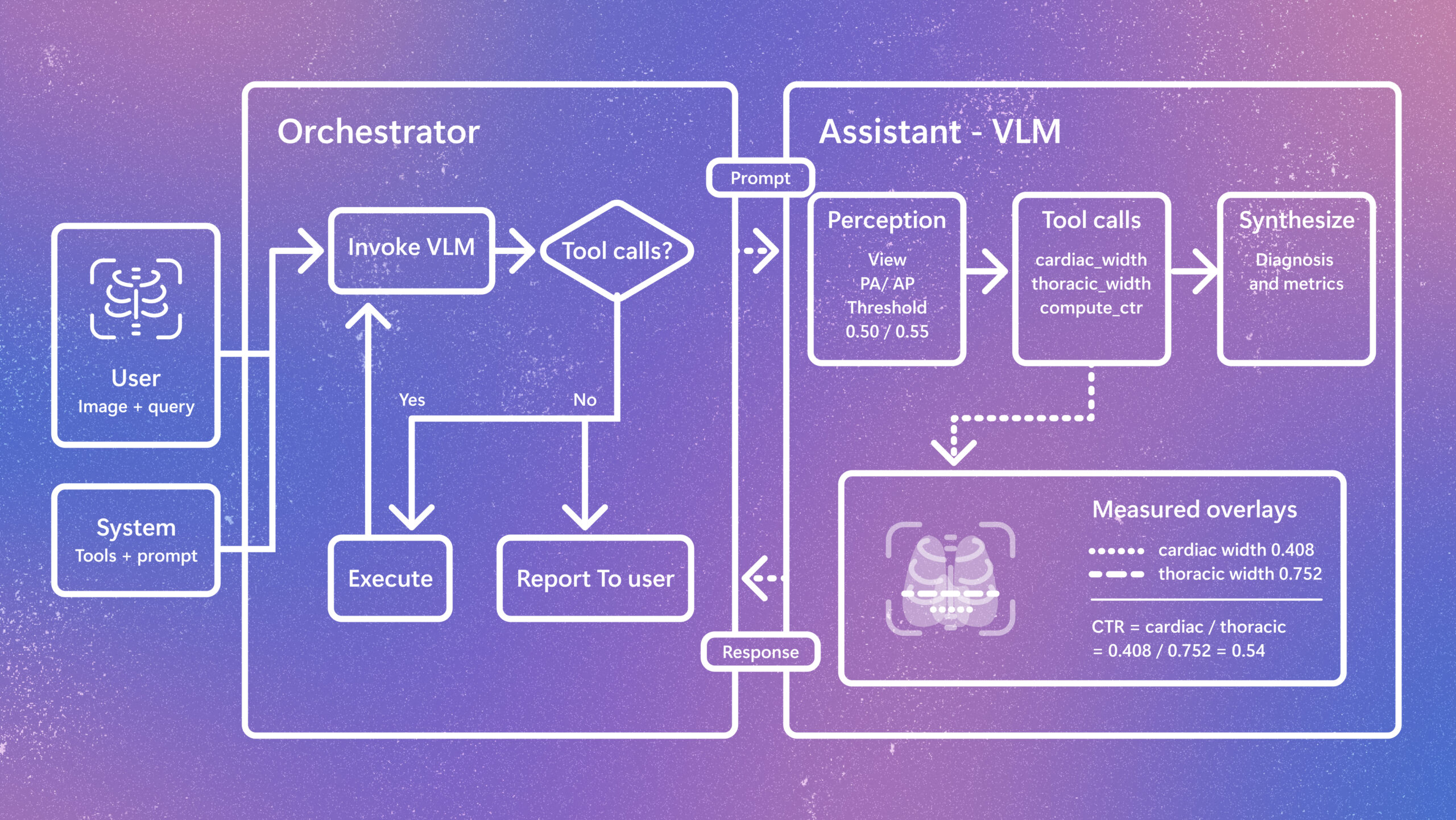
Microsoft Research Unveils CARE-X: A New Frontier for Clinically Useful Radiology Vision-Language Models
Microsoft Research has introduced CARE-X, a sophisticated framework designed to bridge the gap between general Vision-Language Models (VLMs) and the specialized requirements of clinical radiology. Developed by a team including Mercy Ranjit and Dr. Abhyuday Kumara Swamy, CARE-X utilizes a three-pronged approach: auxiliary supervision, reward-aligned learning, and tool-augmented measurement. This initiative aims to enhance the precision and reliability of AI in interpreting medical imagery, ensuring that model outputs are not only technically accurate but also clinically relevant. By focusing on alignment with medical standards and utilizing advanced measurement tools, CARE-X represents a significant step toward integrating AI more effectively into the radiological workflow, addressing long-standing challenges in model supervision and performance evaluation within the healthcare sector.
Key Takeaways
- Introduction of CARE-X: A specialized framework developed by Microsoft Research to improve the clinical utility of Radiology Vision-Language Models (VLMs).
- Three-Pillar Methodology: The system integrates auxiliary supervision, reward-aligned learning, and tool-augmented measurement to refine model performance.
- Focus on Clinical Relevance: Unlike general-purpose AI, CARE-X is specifically designed to meet the rigorous standards required for medical imaging and radiological reporting.
- Expert Authorship: The research is led by a multidisciplinary team including Mercy Ranjit, Nikhilesh E, Dr. Abhyuday Kumara Swamy, and Tanuja Ganu.
- Enhanced Measurement: The framework introduces tool-augmented measurement to provide more accurate assessments of model capabilities in a clinical context.
In-Depth Analysis
The Framework of CARE-X in Radiology
Microsoft Research's introduction of CARE-X marks a pivotal shift in the development of Vision-Language Models (VLMs) for the medical field. The title of the research, "Towards Clinically Useful Radiology VLMs," suggests a move away from purely experimental AI toward systems that can be practically applied in a hospital or diagnostic setting. The core of CARE-X lies in its ability to process complex radiological data while maintaining a high degree of clinical accuracy. By focusing on "Clinically Useful" outcomes, the researchers acknowledge that standard AI metrics often fail to capture the nuances required for medical diagnosis, where the cost of error is exceptionally high.
Methodological Innovations: Supervision and Alignment
The CARE-X framework is built upon three specific technical innovations mentioned in the research announcement. First, Auxiliary Supervision implies the use of additional data streams or secondary tasks during the training process to guide the model toward more accurate interpretations of medical images. This likely involves leveraging structured medical knowledge to supplement the raw image-text pairs typically used in VLM training.
Second, Reward-Aligned Learning suggests a reinforcement learning approach where the model is incentivized to produce outputs that align with expert clinical judgment. In the context of radiology, this means the AI is trained to prioritize findings that are medically significant, reducing the likelihood of "hallucinations" or irrelevant observations. This alignment is crucial for building trust between medical professionals and AI systems.
Finally, Tool-Augmented Measurement addresses the evaluation gap in medical AI. Traditional metrics like BLEU or ROUGE, often used in natural language processing, are frequently inadequate for assessing the factual correctness of a radiology report. By using specialized tools to measure performance, CARE-X ensures that the model's outputs are evaluated based on their clinical validity and precision, rather than just their linguistic fluency.
Addressing the Challenges of Medical VLMs
The development of CARE-X by Mercy Ranjit and the team at Microsoft Research highlights the specific challenges inherent in radiology. Medical images are high-dimensional and require expert knowledge to interpret. General VLMs often struggle with the specific vocabulary and the critical nature of small visual details in X-rays, CT scans, or MRIs. CARE-X attempts to solve these issues by embedding clinical logic directly into the learning and measurement phases of the model's lifecycle. This structured approach ensures that the AI acts as a reliable assistant to radiologists, providing insights that are grounded in established medical practice.
Industry Impact
The introduction of CARE-X has significant implications for the healthcare and AI industries. By providing a framework for "Clinically Useful" models, Microsoft Research is setting a new standard for how medical AI should be developed and evaluated. The shift toward reward-aligned learning and tool-augmented measurement could lead to a new generation of diagnostic tools that are more accurate and easier for clinicians to adopt. Furthermore, this research emphasizes the importance of multidisciplinary collaboration—combining computer science expertise with clinical insights—to solve the most pressing problems in medical technology. As VLMs become more integrated into healthcare, frameworks like CARE-X will be essential for ensuring patient safety and diagnostic reliability.
Frequently Asked Questions
Question: What is the primary goal of the CARE-X framework?
The primary goal of CARE-X is to develop Radiology Vision-Language Models (VLMs) that are "clinically useful." This means the models are designed to provide accurate, reliable, and relevant interpretations of medical images that align with the professional standards of radiologists.
Question: How does Reward-Aligned Learning benefit radiology AI?
Reward-aligned learning ensures that the AI model is trained to prioritize outputs that are clinically correct and valuable. By aligning the model's learning process with expert medical rewards, it reduces errors and ensures the AI focuses on the most important diagnostic features of a radiological study.
Question: Who are the key contributors to the CARE-X research?
The research was conducted by a team at Microsoft Research, including authors Mercy Ranjit, Nikhilesh E, Dr. Abhyuday Kumara Swamy, and Tanuja Ganu.

