AI News on August 12, 2026

Addy Osmani Introduces Agent-Skills: A Framework for Production-Grade Engineering in AI Coding Agents
Open Source

Addy Osmani Introduces Agent-Skills: A Framework for Production-Grade Engineering in AI Coding Agents

Renowned engineer Addy Osmani has released a new project titled 'agent-skills,' aimed at elevating AI coding agents to production-grade standards. The project focuses on encoding essential engineering workflows, quality gates, and industry best practices directly into the operational logic of AI agents. By providing a structured approach to how AI interacts with codebases, agent-skills seeks to ensure that autonomous agents do not just generate code, but adhere to the rigorous standards required in professional software development environments. This initiative marks a significant step toward making AI-driven development more reliable, maintainable, and integrated into existing high-stakes production pipelines, addressing the gap between experimental AI outputs and enterprise-level engineering requirements.


GitHub Trending
Code-Graph-RAG: Leveraging AI and Knowledge Graphs for Advanced Multilingual Monorepo Management
Open Source

Code-Graph-RAG: Leveraging AI and Knowledge Graphs for Advanced Multilingual Monorepo Management

Code-Graph-RAG, a new open-source project developed by vitali87, has gained significant attention on GitHub Trending for its specialized approach to managing large-scale codebases. Positioned as a Retrieval-Augmented Generation (RAG) solution tailored for monorepos, the tool integrates artificial intelligence with knowledge graph technology. This combination allows developers to query, comprehend, and edit multilingual codebases with a high degree of contextual accuracy. By addressing the complexities inherent in massive repositories, Code-Graph-RAG aims to bridge the gap between simple text-based searches and deep architectural understanding. The project represents a growing trend in AI-driven development tools that focus on structural relationships within code rather than just isolated snippets, offering a more holistic way to interact with complex software systems.

GitHub Trending
Anthropic Releases Public Repository for Agent Skills to Enhance Claude's Capabilities
Open Source

Anthropic Releases Public Repository for Agent Skills to Enhance Claude's Capabilities

Anthropic has officially launched a public GitHub repository dedicated to 'Agent Skills,' specifically featuring implementations designed for its Claude AI model. This repository serves as a practical extension of the Agent Skills standard, a framework aimed at regularizing how artificial intelligence agents interact with tools and execute complex tasks. By providing these implementations openly, Anthropic is facilitating a more standardized approach to agentic AI development. The repository also directs developers to agentskills.io for comprehensive information regarding the overarching standards. This move highlights Anthropic's commitment to fostering an interoperable ecosystem where AI agents can perform specialized functions with greater consistency and transparency, marking a significant step in the evolution of autonomous AI tool usage.

GitHub Trending
LLM-Driven Multi-Market Stock Intelligent Analysis System: A Deep Dive into the daily_stock_analysis Project
Open Source

LLM-Driven Multi-Market Stock Intelligent Analysis System: A Deep Dive into the daily_stock_analysis Project

The daily_stock_analysis project, authored by ZhuLinsen and recently featured on GitHub Trending, introduces a sophisticated stock intelligence system powered by Large Language Models (LLMs). This open-source tool is designed to provide comprehensive financial insights by integrating multi-source market data and real-time news. Its core functionality revolves around a decision-making dashboard that facilitates automated analysis across various markets. A standout feature of the system is its support for zero-cost scheduled operations, allowing users to receive automatic push notifications without incurring high infrastructure expenses. By leveraging the analytical capabilities of LLMs, the project aims to transform raw financial data into actionable intelligence, streamlining the workflow for investors and developers seeking a cost-effective, automated solution for multi-market monitoring.

GitHub Trending
Semantica: Building Graph-Native Infrastructure for Context-Aware and Traceable AI Systems
Industry News

Semantica: Building Graph-Native Infrastructure for Context-Aware and Traceable AI Systems

Semantica, a new project from semantica-agi, introduces a graph-native infrastructure specifically designed to address the critical needs of context-awareness and traceability in artificial intelligence. By moving away from traditional data structures and embracing a graph-based foundation, Semantica aims to provide AI systems with a more nuanced understanding of complex relationships and a transparent audit trail for decision-making. This development represents a significant step toward creating more explainable and contextually grounded AI models, offering a robust framework for developers who prioritize transparency and relational data integrity in their AI applications.

GitHub Trending
Agency-Agents: A Comprehensive Open-Source Framework for Specialized AI Agency Workflows
Open Source

Agency-Agents: A Comprehensive Open-Source Framework for Specialized AI Agency Workflows

Agency-agents, a new project by developer msitarzewski, introduces a structured approach to AI automation by providing a complete 'AI agency' framework. Unlike generic AI tools, this project features a suite of specialized agents, ranging from 'frontend wizards' to 'Reddit community ninjas.' Each agent is designed with a distinct personality, specific operational processes, and a focus on producing mature, professional-grade deliverables. By incorporating unique roles such as 'whim injectors' for creativity and 'reality checkers' for validation, the framework aims to bridge the gap between abstract AI generation and practical, industry-standard output. This development signals a shift toward more nuanced, role-based AI systems that prioritize specialized expertise over general-purpose assistance.

GitHub Trending
WorldClaw: Tencent Hunyuan Unveils Agentic 3D Open-World Generation at Scale
Research Breakthrough

WorldClaw: Tencent Hunyuan Unveils Agentic 3D Open-World Generation at Scale

Tencent Hunyuan has introduced WorldClaw, a pioneering system designed for agentic 3D open-world generation. This technology enables the transformation of a single, open-ended prompt into a comprehensive, explicit, explorable, and editable 3D environment. By leveraging an agentic approach, WorldClaw addresses the complexities of large-scale world-building, moving beyond simple object generation to create vast, interactive spaces. The system emphasizes scalability, allowing for the creation of detailed 3D worlds that are not only visually explicit but also fully functional for exploration and modification. This development represents a significant advancement in generative AI, providing a streamlined workflow for developers to generate complex 3D landscapes from minimal input, potentially transforming how virtual environments are designed and deployed.

Hacker News
Compression is Prediction: Exploring the Fundamentals of Quantization in Large Language Models
Technical Tutorial

Compression is Prediction: Exploring the Fundamentals of Quantization in Large Language Models

This analytical report examines the intrinsic relationship between data compression and predictive modeling within the field of Artificial Intelligence. Based on recent insights regarding the mechanics of quantization, the article explores how reducing the precision of model weights serves as a critical pathway for compressing Large Language Models (LLMs). By treating compression as a form of prediction, developers can optimize model efficiency and deployment. The discussion focuses on the foundational principles of quantization, moving from basic concepts to its practical application in modern AI architectures. This deep dive provides a structured overview of why compression is not merely a storage solution but a fundamental aspect of how language models function and predict information in a resource-constrained environment.

Hacker News
AI Milestone: Google Gemini and OpenAI ChatGPT Surpass One Billion Monthly Active Users
Industry News

AI Milestone: Google Gemini and OpenAI ChatGPT Surpass One Billion Monthly Active Users

Google's AI platform, Gemini, has officially reached the one-billion-user milestone, joining an elite group of Google products. CEO Sundar Pichai announced the achievement on X, noting that Gemini is now the fastest-growing product in the company's history. While a significant feat for Google, Gemini follows OpenAI's ChatGPT in reaching this massive scale. This milestone marks a turning point in the mainstream adoption of generative AI, as two of the world's leading platforms now command audiences comparable to established digital services. The rapid growth of these tools highlights the accelerating pace of AI integration into daily life and the competitive landscape between tech giants.

The Verge
NVIDIA Launches Nemotron 3.5 Lightning and NeMo Switchyard to Power High-Efficiency Autonomous AI Agent Systems
Product Launch

NVIDIA Launches Nemotron 3.5 Lightning and NeMo Switchyard to Power High-Efficiency Autonomous AI Agent Systems

NVIDIA has announced the expansion of its Nemotron 3 model family with the release of Nemotron 3.5 Lightning and the NeMo Switchyard open-source library. Nemotron 3.5 Lightning is a 30-billion-parameter mixture-of-experts (MoE) model specifically engineered for high-efficiency, long-running agentic AI workloads. Complementing this, NeMo Switchyard provides a smart routing mechanism that allows enterprises to direct AI requests to the most appropriate models—whether open, proprietary, or NVIDIA-hosted—without the need for application rewrites. These tools are designed to support a "system of models" architecture, where specialized models handle targeted tasks like code review and security monitoring, while frontier models orchestrate workflows. This release emphasizes NVIDIA's commitment to providing developers with greater control over AI deployment across PCs, workstations, data centers, and the cloud.

Hacker News
OpenAI Special Projects Lead Brad Lightcap Announces Departure After Eight-Year Tenure to Pursue New Venture
Industry News

OpenAI Special Projects Lead Brad Lightcap Announces Departure After Eight-Year Tenure to Pursue New Venture

Brad Lightcap, a prominent executive at OpenAI, has officially announced his departure from the artificial intelligence research lab after an eight-year tenure. Having previously served as the company's Chief Operating Officer (COO) before transitioning to his most recent role as the special projects lead, Lightcap's exit marks the conclusion of a significant chapter in his career. In an internal memo later shared on the social media platform X, Lightcap informed his colleagues that he has spent the past several months contemplating the "next horizon" and intends to start "something new." This leadership transition comes as Lightcap moves on from his long-standing position at the forefront of the AI industry to explore independent opportunities.

The Verge
Advancing AMIE: Google Research Targets Expert-Level Audio-Visual Clinical Consultations
Research Breakthrough

Advancing AMIE: Google Research Targets Expert-Level Audio-Visual Clinical Consultations

Google Research has announced a significant evolution in its Articulate Medical Intelligence Explorer (AMIE) project, moving the system toward expert-level audio-visual clinical consultations. This development, situated within the Health & Bioscience sector, marks a transition from text-based medical AI interactions to a more complex multi-modal approach. By integrating audio and visual capabilities, the research aims to replicate the depth and nuance of face-to-face clinical encounters. The advancement focuses on achieving a standard of performance comparable to human experts in medical consultations, potentially transforming how AI systems interact with patients and healthcare providers. This move underscores the industry's shift toward comprehensive, multi-sensory AI models designed for high-stakes medical environments.

Google Research Blog
Made by Google 2026: Pixel 11 Lineup Set to Debut with New Pro Features and Color Options
Product Launch

Made by Google 2026: Pixel 11 Lineup Set to Debut with New Pro Features and Color Options

Google is preparing for its highly anticipated 'Made by Google' event scheduled for August 12, 2026. The event is expected to serve as the official launch platform for the Pixel 11 series. According to recent leaks and official teasers, the new lineup will emphasize aesthetic variety through a broad array of color options. A significant hardware highlight for the Pixel 11 Pro models includes the addition of a built-in light, a feature that has surfaced in pre-event leaks. As the tech industry looks toward Google's latest hardware iterations, this analysis examines the confirmed details and the strategic implications of the Pixel 11's upcoming features based on the latest reports.

The Verge
Google Research Unveils AMIE: A Breakthrough in Real-Time AI-Powered Clinical Video Consultations
Industry News

Google Research Unveils AMIE: A Breakthrough in Real-Time AI-Powered Clinical Video Consultations

Google Research has introduced AMIE (Articulate Medical Intelligence Explorer), a pioneering medical AI system designed to conduct real-time clinical video consultations. In a first-of-its-kind study, AMIE demonstrated its ability to engage in clinical dialogues within simulated settings, marking a significant transition from text-based interfaces to interactive, multimodal communication. The research focuses on the system's capacity to handle the complexities of medical consultations in a live video format. By utilizing simulated environments, the study provides a controlled framework to evaluate how AI can mimic the diagnostic and communicative nuances of healthcare professionals. This development represents a major step forward in the integration of conversational AI into the clinical workflow, emphasizing real-time interaction and the potential for future healthcare applications.

Google AI Blog
Why Go is the Ideal Programming Language for the Era of AI-Assisted Software Engineering and Code Review
Industry News

Why Go is the Ideal Programming Language for the Era of AI-Assisted Software Engineering and Code Review

As AI coding assistants and agents become standard tools in software development, the focus of engineering is shifting from writing code to reviewing and verifying AI-generated output. Google developers Cameron Balahan and Richard Seroter argue that Go is uniquely positioned for this shift. Originally designed at Google to prioritize software engineering over mere language features, Go’s emphasis on readability and team-driven development aligns perfectly with the needs of human-AI collaboration. Since AI often lacks full context, humans must act as supervisors, ensuring safety and reliability. Go's simplicity facilitates this oversight, making it a superior choice for maintaining large-scale, AI-generated codebases where the human role has transitioned from primary author to critical reviewer and architect.

Hacker News
Mojo 1.0 Official Launch: Modular Delivers a Stable and Production-Ready Foundation for the AI Ecosystem
Product Launch

Mojo 1.0 Official Launch: Modular Delivers a Stable and Production-Ready Foundation for the AI Ecosystem

Modular has officially announced the release of Mojo 1.0, marking a historic milestone for the programming language since its initial debut in 2023. This release transitions Mojo from a rapidly evolving project into a stable, general-purpose language designed for long-term production use. By establishing a stable foundation, Modular addresses the previous challenges of frequent breaking changes that hindered community-led projects. Mojo 1.0 is already a critical component of Modular’s own commercial infrastructure, powering platforms like MAX and Modular Cloud. The milestone is also a celebration of community collaboration, with nearly 200 contributors helping to shape the language through the open-sourced standard library. Moving forward, Mojo will follow a mature evolution path, focusing on additive changes to ensure developer confidence and ecosystem growth.

Hacker News
Apple Developing Apple Reference Image System in iOS 27 to Combat Deepfakes via Provenance Metadata
Industry News

Apple Developing Apple Reference Image System in iOS 27 to Combat Deepfakes via Provenance Metadata

Apple is reportedly developing a new security feature for iOS 27 designed to verify the authenticity of photographs taken on iPhones. According to reports from 9to5Mac, the iOS 27 beta 5 contains code references for an "Apple Reference Image" system. This technology aims to embed provenance metadata directly into images at the point of capture, allowing users to provide definitive proof of where and when a photo was taken. As AI-generated content and deepfakes become increasingly prevalent, this initiative represents a significant step by Apple to ensure digital integrity. By establishing a clear record of an image's origin, the system helps users maintain the credibility of their visual content and provides a defense against digital manipulation in an era of sophisticated artificial intelligence.

The Verge
Microsoft Research Unveils CARE-X: A New Frontier for Clinically Useful Radiology Vision-Language Models
Research Breakthrough

Microsoft Research Unveils CARE-X: A New Frontier for Clinically Useful Radiology Vision-Language Models

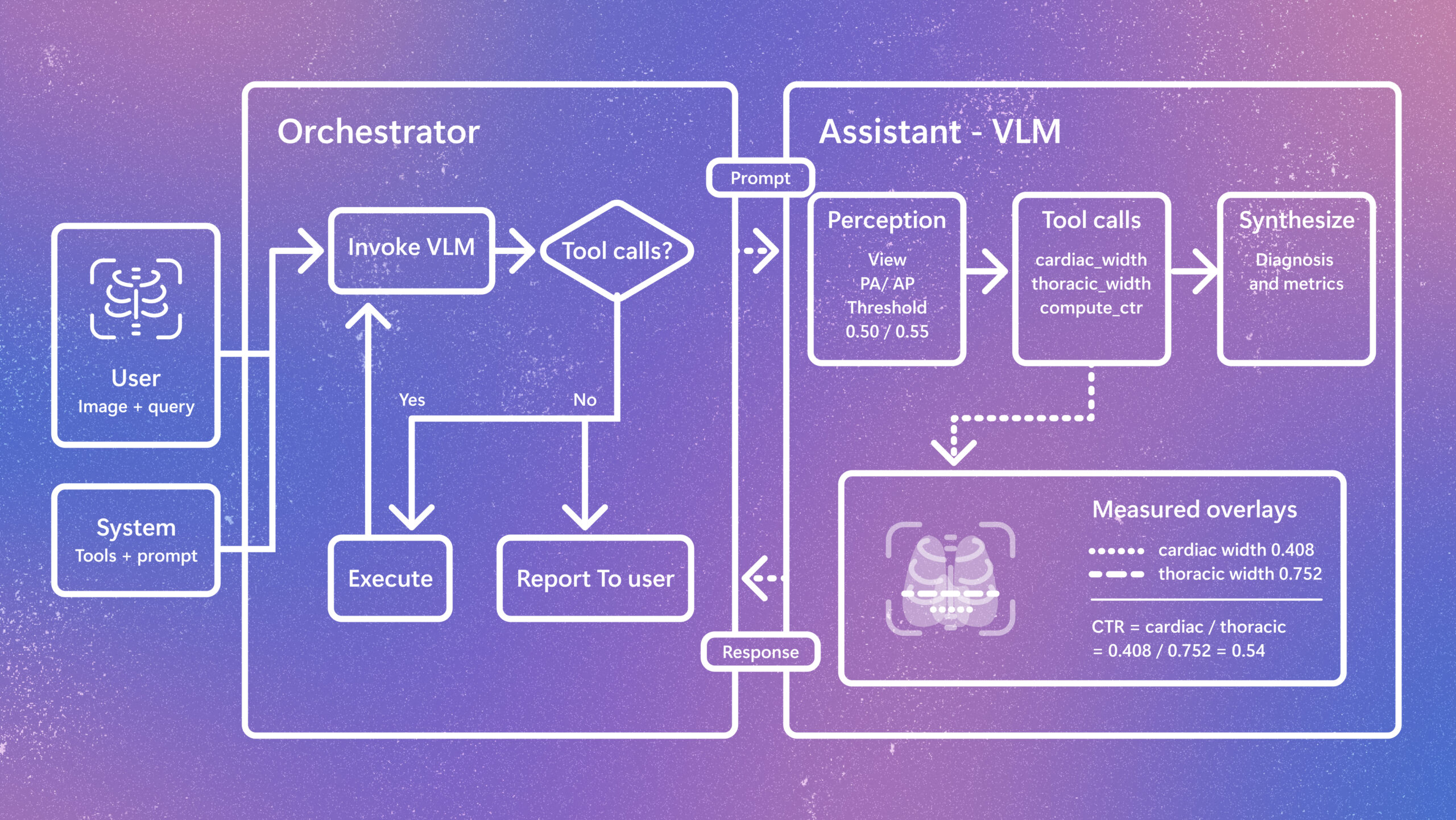
Microsoft Research has introduced CARE-X, a sophisticated framework designed to bridge the gap between general Vision-Language Models (VLMs) and the specialized requirements of clinical radiology. Developed by a team including Mercy Ranjit and Dr. Abhyuday Kumara Swamy, CARE-X utilizes a three-pronged approach: auxiliary supervision, reward-aligned learning, and tool-augmented measurement. This initiative aims to enhance the precision and reliability of AI in interpreting medical imagery, ensuring that model outputs are not only technically accurate but also clinically relevant. By focusing on alignment with medical standards and utilizing advanced measurement tools, CARE-X represents a significant step toward integrating AI more effectively into the radiological workflow, addressing long-standing challenges in model supervision and performance evaluation within the healthcare sector.

Microsoft Research
Why Scaling AI Compute Performance Requires a New Power Architecture
Industry News

Why Scaling AI Compute Performance Requires a New Power Architecture

As the demand for accelerated computing reaches unprecedented levels, traditional power delivery systems are becoming a critical bottleneck. NVIDIA highlights that scaling AI performance is no longer just about increasing total wattage, but about revolutionizing how power is distributed from the grid to the GPU. With every new generation of AI hardware requiring higher rack density and more efficient energy management, the industry is shifting toward advanced architectures, such as 800-VDC systems. This transition is essential to overcome the limitations of traditional alternating current (AC) distribution and to support the massive infrastructure needs of modern AI factories.

NVIDIA Newsroom
IBM Research Announces Token-Efficient Alternative to ACE Framework via Hugging Face
Research Breakthrough

IBM Research Announces Token-Efficient Alternative to ACE Framework via Hugging Face

IBM Research has unveiled a significant advancement in AI efficiency, focusing on the ACE framework. In a recent publication on the Hugging Face Blog titled "Thinking of ACE? We Can Do It with Fewer Tokens," the research team demonstrates that the complex "thinking" capabilities associated with ACE can be replicated using a substantially reduced number of tokens. This development addresses one of the primary challenges in modern large language models: the high computational and financial cost of long-sequence processing. By optimizing token usage, IBM Research aims to streamline AI inference, making advanced reasoning processes more sustainable and faster. The announcement marks a pivotal shift toward resource-efficient AI architectures that do not compromise on the depth of analysis or output quality.

Hugging Face Blog
Industry News

Security Vulnerability Exposed: Researchers Extract Hidden Reasoning Traces from Proprietary LLM APIs

A significant security vulnerability has been identified in proprietary Large Language Model (LLM) APIs, allowing for the extraction of hidden reasoning traces. Researchers discovered that model providers return reasoning as encrypted blocks to clients, which are intended to be portable for conversation continuity. However, by replaying these blocks within weaker, jailbroken models from the same provider, the raw reasoning of stronger models—such as Claude Opus—can be extracted verbatim. This technique, demonstrated across OpenAI, Anthropic, and Google models, has led to the leakage of technical identifiers, personally identifiable information (PII), and credentials. The study analyzed 120 Codeforces problems, showing a direct correlation between reported hidden thinking tokens and the decoded reasoning length.

Hacker News
NVIDIA Collaborates with Open Source Communities to Advance Local AI Models and Intelligent Agent Development
Industry News

NVIDIA Collaborates with Open Source Communities to Advance Local AI Models and Intelligent Agent Development

NVIDIA has announced a month-long initiative throughout August to celebrate and support the open-source ecosystem and local AI development. By partnering with various communities, NVIDIA aims to simplify the process for developers and AI enthusiasts to build, customize, and deploy increasingly capable intelligent agents on local hardware. This initiative highlights NVIDIA’s latest open models, including the Nemotron series, alongside a suite of software and tools designed to enhance the local AI experience. The focus remains on empowering the community with the necessary resources to move local AI forward, emphasizing the accessibility of powerful AI tools outside of traditional cloud environments.

NVIDIA Newsroom
US AI Lab Pathway Discloses Performance Metrics for OpenAI’s GPT-5.6 Luna (Low) Model
Industry News

US AI Lab Pathway Discloses Performance Metrics for OpenAI’s GPT-5.6 Luna (Low) Model

Pathway, a prominent US-based AI laboratory, has released new performance data regarding OpenAI's GPT-5.6 Luna (Low) model. The disclosure reveals that the model achieved a score of 34.2% on a specific performance evaluation. This report is particularly significant as it highlights the industry's growing focus on "cheaper model performance," suggesting a strategic pivot toward balancing cost-efficiency with functional capabilities. By providing a concrete benchmark for the "Low" tier of the GPT-5.6 Luna series, Pathway offers critical insights into the trade-offs inherent in tiered AI model architectures. This data serves as a vital reference point for developers and enterprises seeking to understand the efficacy of more affordable AI solutions in the current competitive landscape.

Tech in Asia
Industry News

OpenAI Begins Testing Advertisements in ChatGPT to Sustain Free Access for Global Users

OpenAI has officially announced the commencement of advertisement testing within its ChatGPT platform. This strategic initiative is primarily designed to support and maintain continued free access for its extensive user base. According to the announcement from the OpenAI Blog, the implementation of ads is built upon four foundational pillars: clear labeling of all promotional content, the strict independence of AI-generated answers from advertising influence, robust privacy protections for all users, and the provision of user control over the advertising experience. This move marks a significant evolution in OpenAI's business model, as the company seeks a sustainable path to provide high-level AI capabilities to the public without requiring a mandatory subscription fee for basic access.

OpenAI Blog
Product Launch

OpenAI Daybreak Cybersecurity Models Now Available via Amazon Bedrock for Enterprise Security

OpenAI and Amazon Web Services (AWS) have announced that Daybreak cybersecurity capabilities are now accessible through Amazon Bedrock. This collaboration is specifically designed to support and enhance enterprise security workflows by integrating OpenAI's specialized models into the AWS cloud infrastructure. By making Daybreak available on Bedrock, the two companies are providing organizations with a streamlined way to deploy advanced AI-driven security measures. This integration allows enterprises to leverage specialized cybersecurity tools within their existing AWS environments, focusing on improving the efficiency and effectiveness of digital defense strategies across various business operations.

OpenAI Blog