AI News on August 4, 2026

Deel Acquires Deepfake Technology Startup Clarity to Enhance Global HR Security
Industry News

Deel Acquires Deepfake Technology Startup Clarity to Enhance Global HR Security

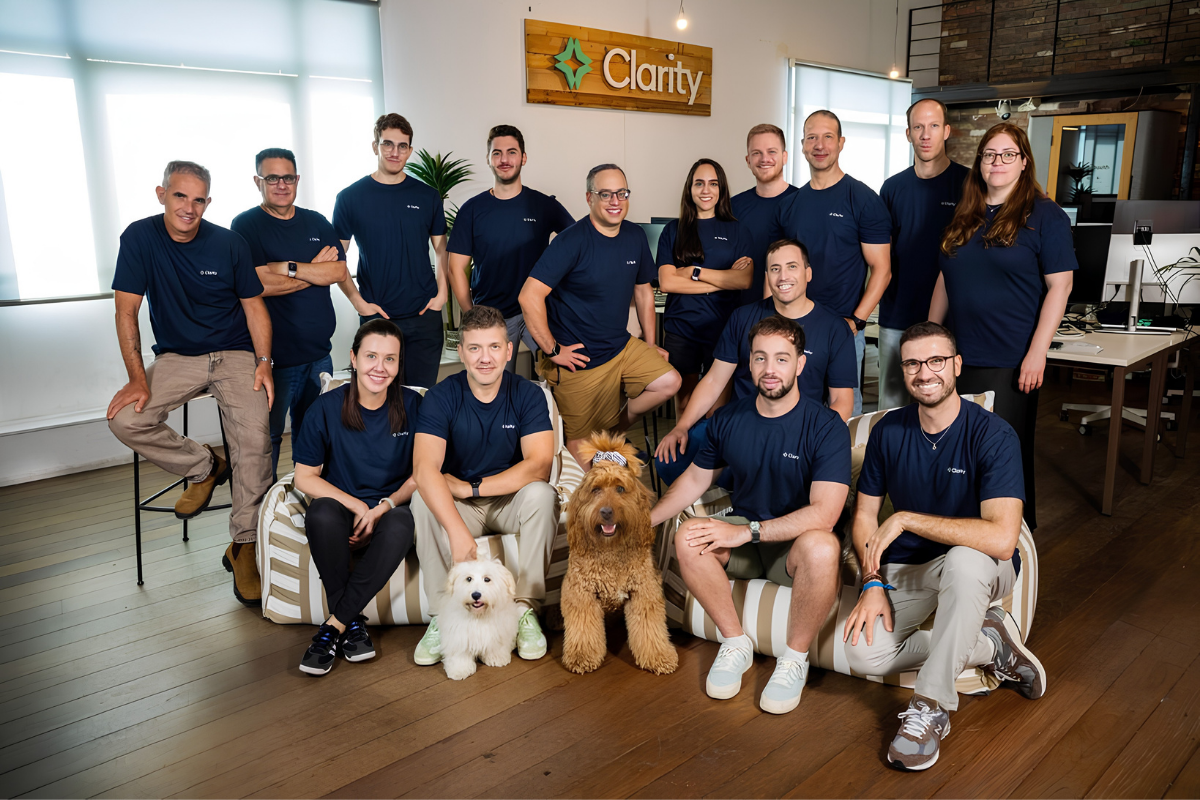
US-based HR and payroll platform Deel has announced the acquisition of Clarity, a startup specializing in deepfake technology. Founded in 2022, Clarity had quickly gained traction in the tech space, securing $16 million in funding from investors prior to the acquisition. This strategic move by Deel highlights the growing importance of addressing synthetic media and identity verification challenges within the human resources and remote work sectors. By integrating Clarity’s specialized capabilities, Deel aims to bolster its security infrastructure against the rising threat of deepfakes in digital hiring and corporate communications. The acquisition underscores a significant trend of HR platforms investing in advanced AI-driven security tools to protect global operations.

Tech in Asia
Indian AI Startup Kily Secures $3.1 Million in Funding to Scale Operations and Brand Partnerships
Industry News

Indian AI Startup Kily Secures $3.1 Million in Funding to Scale Operations and Brand Partnerships

Kily, an emerging Indian AI startup founded in 2025, has successfully raised $3.1 million in its latest funding round. Despite being a relatively new player in the technology sector, the company has already demonstrated significant market traction by securing strategic partnerships with major industry leaders, most notably the Indian conglomerate ITC. This capital injection marks a pivotal milestone for the young firm as it seeks to establish its presence in the rapidly evolving artificial intelligence landscape. The funding highlights strong investor confidence in Kily's potential and its ability to deliver value to high-profile enterprise clients within a short period since its inception.

Tech in Asia
Baseten Secures $13 Billion Series F Funding to Lead the Global AI Inference Engineering Market
Funding

Baseten Secures $13 Billion Series F Funding to Lead the Global AI Inference Engineering Market

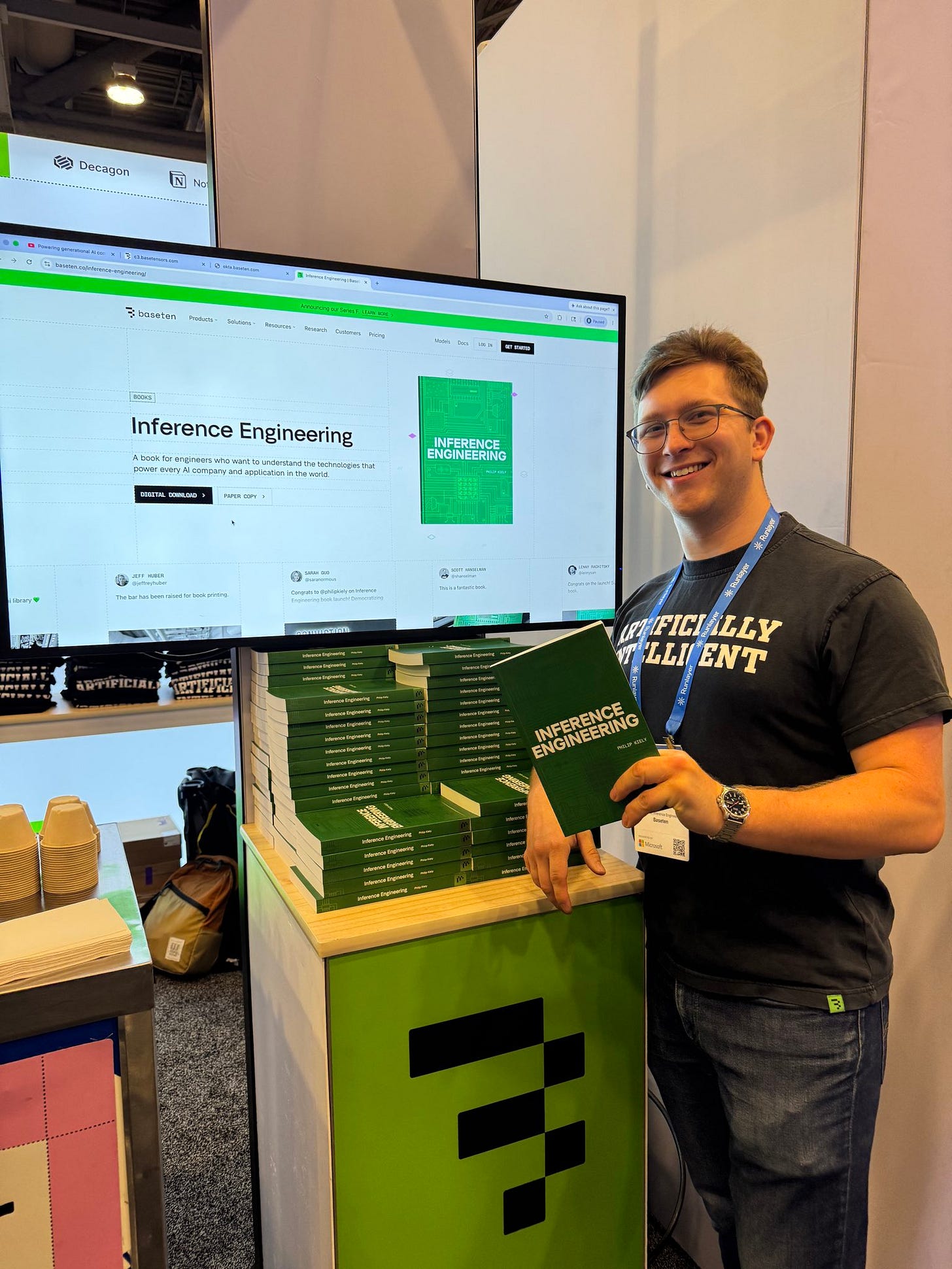
Baseten has reached a historic milestone in the artificial intelligence sector by raising $13 billion in a Series F funding round. This massive capital injection solidifies Baseten's position as a dominant leader in inference engineering, a critical component of the AI lifecycle. The company, represented by experts Philip Kiely and Ali Taha, is focusing its technical prowess on the complexities of autoregressive and diffusion engineering. As the industry shifts from model training to large-scale deployment, Baseten's expertise provides the necessary infrastructure for high-performance AI applications. This funding round highlights the immense market value placed on the engineering side of AI, specifically the optimization of model performance and cost-effective inference at scale for the next generation of generative models.

Latent Space
Why Domain Expertise is the Ultimate Skill for Mastering Large Language Models and Prompting
Industry News

Why Domain Expertise is the Ultimate Skill for Mastering Large Language Models and Prompting

While Large Language Models (LLMs) have democratized technical tasks, turning many users into generalists, a common misconception persists that prompting requires little specialized skill. However, recent analysis suggests that domain expertise remains the critical factor in achieving high-level results. By examining world-class mathematician Terence Tao’s interactions with GPT-5.6 Sol regarding the Jacobian Conjecture, it becomes clear that expert-level prompting involves concise communication, signaling deep knowledge to trigger specialized model responses, and maintaining control over the direction of the inquiry. Unlike amateurs who may follow the model's lead, experts like Tao use LLMs as tools to refine their own insights, proving that the value of an LLM is directly proportional to the user's existing knowledge in the field. Ultimately, LLMs do not replace expertise; they reward it.

Hacker News
AWS Partners with Superblocks to Enable Vibe-Coding in Private Clouds: A Shift Toward Decoupling Apps from Models
Industry News

AWS Partners with Superblocks to Enable Vibe-Coding in Private Clouds: A Shift Toward Decoupling Apps from Models

Amazon Web Services (AWS) has announced a significant integration with Superblocks, a startup specializing in "vibe-coding" tools. This partnership allows Superblocks to be embedded directly into the private clouds of AWS customers. The move represents a strategic shift in the cloud computing and AI landscape, facilitating the decoupling of applications from the underlying AI models. By hosting these tools within private environments, AWS addresses security and architectural needs for enterprise clients, signaling a broader trend in how generative AI applications are built and deployed. This development highlights the growing importance of flexible, model-agnostic development environments that prioritize data privacy while leveraging the speed of natural language-driven programming.

TechCrunch AI
Design Arena Creators Secure $7.9 Million Funding to Enhance AI Models with Human Taste and Evaluation
Funding

Design Arena Creators Secure $7.9 Million Funding to Enhance AI Models with Human Taste and Evaluation

Design Arena, a platform boasting a global user base of 5.3 million people, has successfully raised $7.9 million in a recent funding round. The investment is specifically aimed at solving one of the most complex challenges in artificial intelligence: the integration of human "taste" into AI models. By providing critical human evaluations to frontier AI labs, Design Arena acts as a bridge between raw algorithmic output and the nuanced preferences of human users. This funding highlights the growing importance of qualitative human feedback in the development of next-generation AI systems, ensuring that frontier models are not only functional but also aligned with human aesthetic and qualitative standards.

TechCrunch AI
OpenAI Faces Public Backlash Following the Launch of Its First Luxury Influencer Brand Trip Amid AI Tensions
Industry News

OpenAI Faces Public Backlash Following the Launch of Its First Luxury Influencer Brand Trip Amid AI Tensions

OpenAI has initiated its first-ever luxury brand trip specifically for influencers, a move that has quickly drawn significant online backlash. This reaction comes at a time of heightened public and industry tension regarding the widespread use and implications of artificial intelligence. While the trip marks a new marketing direction for the AI giant, it has highlighted the growing friction between AI development companies and the public's perception of the technology. The controversy underscores the sensitive nature of AI promotion in the current social climate, where the ethics and impact of AI remain under intense scrutiny. The event serves as a focal point for broader discussions about how AI companies engage with the public and the optics of luxury branding in a field fraught with societal concerns.

TechCrunch AI
Apple's Long-Awaited Siri AI Overhaul Arrives: Why the Fix Feels Anticlimactic in Today's Competitive AI Landscape
Industry News

Apple's Long-Awaited Siri AI Overhaul Arrives: Why the Fix Feels Anticlimactic in Today's Competitive AI Landscape

Apple has officially delivered a comprehensive AI overhaul for Siri, finally transforming the voice assistant into the capable tool it was originally envisioned to be. While this update addresses long-standing functional gaps and fulfills the original promise of the assistant, the industry reception has been notably muted. The primary reason for this "anticlimactic" feeling is the timing of the release; the broader AI landscape has evolved so rapidly that simply possessing a functional and capable AI assistant is no longer considered a revolutionary achievement. This analysis examines the transition of Siri from a lagging service to a competent one and explores why meeting original expectations may no longer be enough to capture the market's imagination in the current era of artificial intelligence.

TechCrunch AI
EU AI Act Transparency Obligations: Mandatory Labeling for Chatbots and Deepfakes Now in Effect
Industry News

EU AI Act Transparency Obligations: Mandatory Labeling for Chatbots and Deepfakes Now in Effect

The European Union has officially implemented new transparency rules under the landmark AI Act as of August 2, 2026. These regulations mandate that companies provide clear disclosures when users are interacting with AI systems and require the explicit labeling of AI-generated content, including deepfakes. Designed to enhance digital transparency and assist the public in identifying synthetic media, these obligations represent a critical phase in the EU's regulatory framework. The rules aim to mitigate the risks of misinformation by ensuring that the distinction between human-led and machine-generated interactions is clearly communicated to the end-user, marking a significant shift in how AI technologies are deployed and identified within the bloc.

The Verge
Scaling High-Performance AI: How Cloudflare Optimizes Kimi and GLM Models for Workers AI
Industry News

Scaling High-Performance AI: How Cloudflare Optimizes Kimi and GLM Models for Workers AI

Cloudflare has unveiled advanced optimization techniques to run demanding large-scale models, specifically Moonshot's Kimi K-series and Z.ai's GLM, on its Workers AI platform. These Mixture-of-Experts (MoE) models are known for their long-context capabilities but present significant memory challenges. To address this, Cloudflare utilizes a combination of KV cache quantization, model weight compression, and cache protection. A key breakthrough involves transitioning the KV cache from 16-bit precision (BF16) to 8-bit floating point (FP8), which effectively doubles the context capacity for models like Kimi K2.6 from 686,000 to 1.37 million tokens. By leveraging the open-source SGLang framework, Cloudflare achieves higher efficiency and lower costs while maintaining model accuracy, ensuring high-performance inference is accessible closer to the end-user.

Hacker News
Industry News

AI Scraping Protections and the Evolution of Web Hosting Security: An Analysis of the Anubis System

The provided report details the implementation of 'Anubis,' a specialized security layer designed to protect web servers from the aggressive scraping practices of AI companies. As the web marks the 45th anniversary of Kermit with its first new C-Kermit release in 15 years, the infrastructure hosting such historical milestones faces unprecedented challenges. Anubis utilizes a Proof-of-Work (PoW) scheme, inspired by Hashcash, to impose computational costs on mass scrapers while remaining unobtrusive for individual users. The text highlights a significant shift in the 'social contract' of web hosting, necessitating advanced browser fingerprinting—such as font rendering analysis—and mandatory JavaScript execution to distinguish legitimate human traffic from automated headless browsers. This transition reflects a broader industry movement toward active defense against data harvesting that threatens website stability and accessibility.

Hacker News
Evaluating the Efficiency of MiniMax Agent: An In-Depth Look at Architecture and Real-World API Performance
Product Launch

Evaluating the Efficiency of MiniMax Agent: An In-Depth Look at Architecture and Real-World API Performance

This analysis explores the practical utility of the MiniMax Agent, focusing on its internal architecture and its performance during real-world task execution. Based on a technical review by Shittu Olumide, the article delves into the specific components of the MiniMax ecosystem that were not addressed during its initial launch. By testing the agent directly against its actual API, the evaluation provides a transparent look at how the system handles functional requirements. The discussion highlights the importance of moving beyond marketing materials to understand the structural design and operational capabilities of AI agents. This deep dive aims to determine whether the MiniMax Agent truly simplifies professional workflows or if its architecture presents unique challenges for developers and end-users seeking to integrate it into their daily tasks.

KDnuggets
Microsoft Research Unveils Orchard: A New Open Framework for Scalable Agentic AI Systems
Research Breakthrough

Microsoft Research Unveils Orchard: A New Open Framework for Scalable Agentic AI Systems

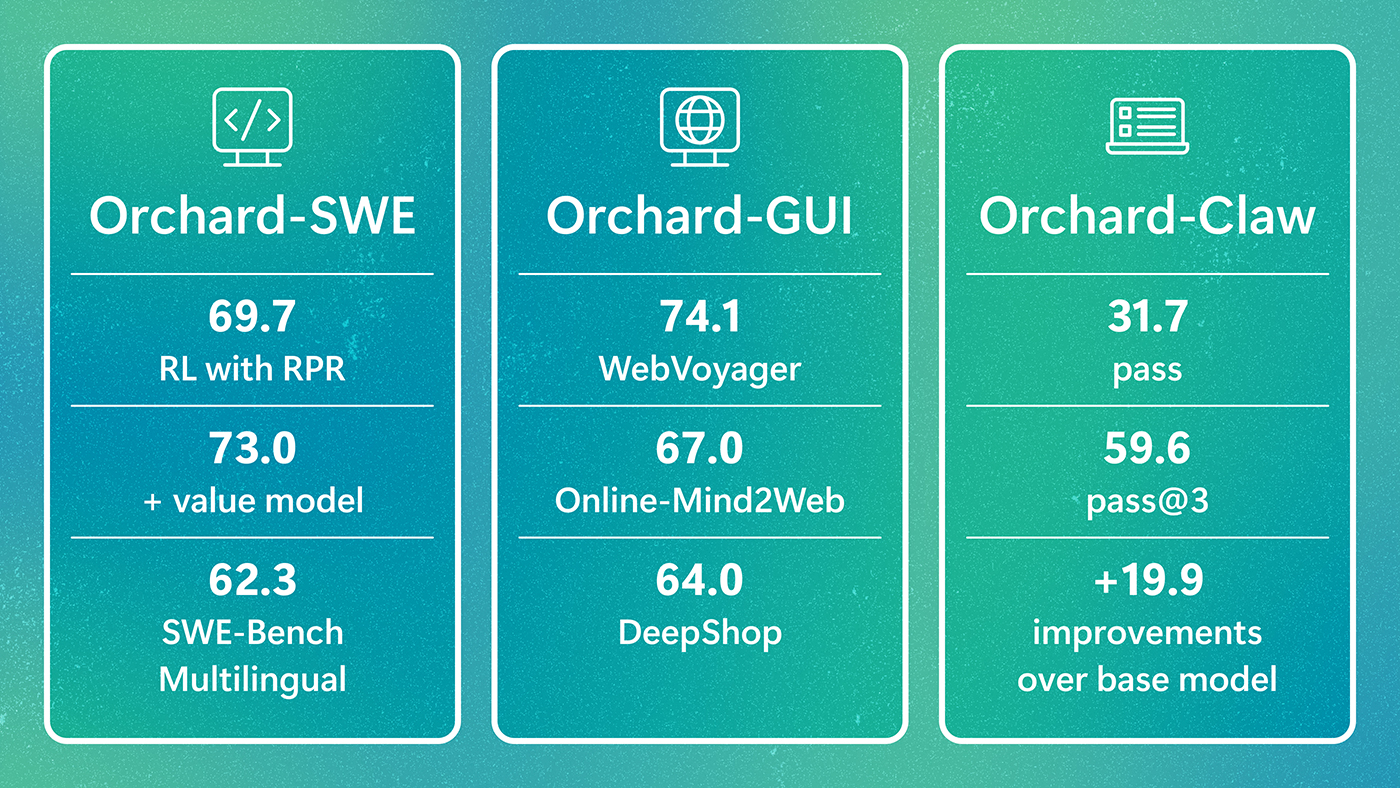
Microsoft Research has announced the development of Orchard, an open framework specifically designed to address the challenges of scalable agentic AI. Authored by a prominent research team including Baolin Peng and Jianfeng Gao, the project focuses on providing a robust infrastructure for autonomous AI agents. As the industry shifts from simple conversational models to complex, multi-agent systems, Orchard aims to provide the necessary scalability and openness required for broad implementation. The framework represents a strategic move by Microsoft to standardize the development of agent-based architectures, ensuring that AI systems can operate efficiently at scale while remaining accessible to the global research and development community through an open-source approach.

Microsoft Research