Microsoft Research Unveils Orchard: A New Open Framework for Scalable Agentic AI Systems
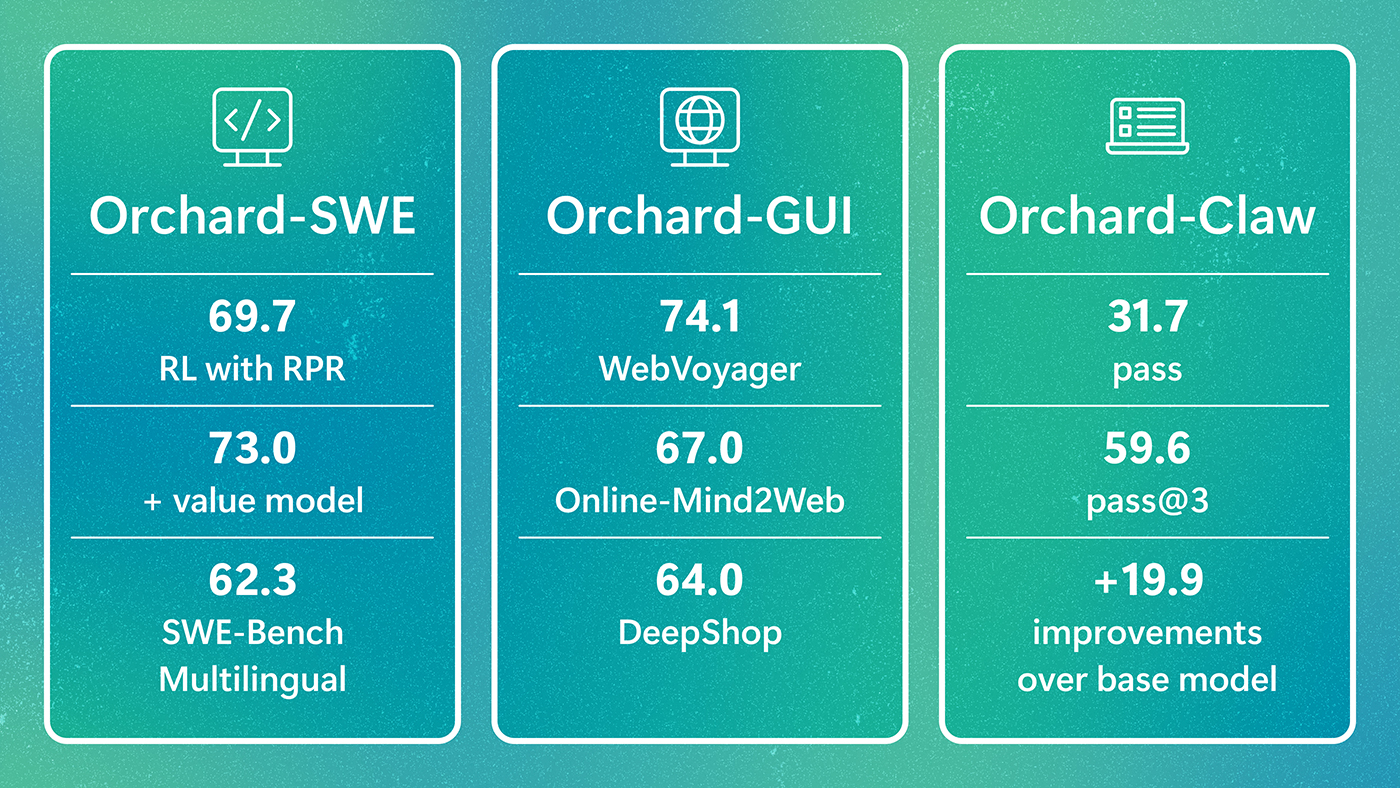
Microsoft Research has announced the development of Orchard, an open framework specifically designed to address the challenges of scalable agentic AI. Authored by a prominent research team including Baolin Peng and Jianfeng Gao, the project focuses on providing a robust infrastructure for autonomous AI agents. As the industry shifts from simple conversational models to complex, multi-agent systems, Orchard aims to provide the necessary scalability and openness required for broad implementation. The framework represents a strategic move by Microsoft to standardize the development of agent-based architectures, ensuring that AI systems can operate efficiently at scale while remaining accessible to the global research and development community through an open-source approach.
Key Takeaways
- Introduction of Orchard: Microsoft Research has officially announced a new framework titled "Orchard," dedicated to the advancement of agentic AI.
- Focus on Scalability: A core pillar of the Orchard framework is its ability to handle scalable AI operations, addressing a major bottleneck in current agent deployments.
- Open Framework Model: By designating Orchard as an "open framework," Microsoft emphasizes accessibility and collaborative development within the AI ecosystem.
- Expert Leadership: The project is led by a distinguished team of researchers, including Baolin Peng and Jianfeng Gao, who are known for their contributions to large language models and autonomous systems.
In-Depth Analysis
The Evolution Toward Agentic AI Frameworks
The announcement of Orchard by Microsoft Research signals a pivotal shift in the artificial intelligence landscape. While previous years focused heavily on the capabilities of individual Large Language Models (LLMs), the current frontier has moved toward "Agentic AI." This paradigm involves AI systems that do not merely respond to prompts but act as autonomous agents capable of planning, using tools, and executing multi-step tasks. The introduction of Orchard suggests a recognized need for a formalized framework to manage these complex behaviors. By providing a structured environment, Orchard likely aims to simplify the orchestration of these agents, allowing developers to move beyond ad-hoc scripts toward a more standardized architectural approach.
Addressing the Scalability Bottleneck
One of the most significant descriptors in the announcement is the focus on "scalable" systems. In the context of agentic AI, scalability refers to the ability of a framework to manage multiple agents simultaneously, handle increasing computational loads, and maintain performance as the complexity of tasks grows. Many existing experimental agent frameworks struggle when moved from controlled environments to enterprise-level production. Orchard’s emphasis on scalability indicates that Microsoft Research is targeting the infrastructure required to support large-scale deployments, where dozens or hundreds of agents might need to interact, share memory, and collaborate on high-level objectives without systemic failure or prohibitive latency.
The Strategic Importance of Open Frameworks
By labeling Orchard as an "open framework," Microsoft Research continues its trend of contributing to the open-source and research communities. This strategy serves multiple purposes: it accelerates innovation through community feedback, establishes Microsoft's methodologies as industry standards, and lowers the barrier to entry for developers looking to build sophisticated agent-based applications. In an era where proprietary silos are common, an open framework for agentic AI could become a foundational layer for the next generation of software, much like how open-source libraries transformed the fields of deep learning and data science over the past decade.
Industry Impact
The release of Orchard is poised to have a substantial impact on the AI industry by providing a blueprint for autonomous system development. For enterprises, a scalable framework means the potential to integrate AI agents into complex workflows that were previously too difficult to manage. For the research community, the involvement of authors like Jianfeng Gao—a leading figure in natural language processing—lends significant credibility to the framework, likely encouraging widespread adoption and academic exploration. Furthermore, Orchard may force competitors to accelerate their own framework releases, leading to a more robust and standardized ecosystem for autonomous AI agents across the tech sector.
Frequently Asked Questions
What is Orchard in the context of AI?
Orchard is an open framework developed by Microsoft Research designed to support the creation and management of scalable agentic AI systems. It provides the infrastructure necessary for AI agents to operate autonomously and efficiently at scale.
Who are the primary contributors to the Orchard project?
The project is authored by a team of researchers from Microsoft Research, including Baolin Peng, Wenlin Yao, Qianhui Wu, Hao Cheng, and Jianfeng Gao.
Why is scalability important for agentic AI?
Scalability is crucial because as AI agents become more integrated into business processes, they must be able to handle complex tasks, interact with other agents, and process large amounts of data without a degradation in performance or an exponential increase in resource costs.