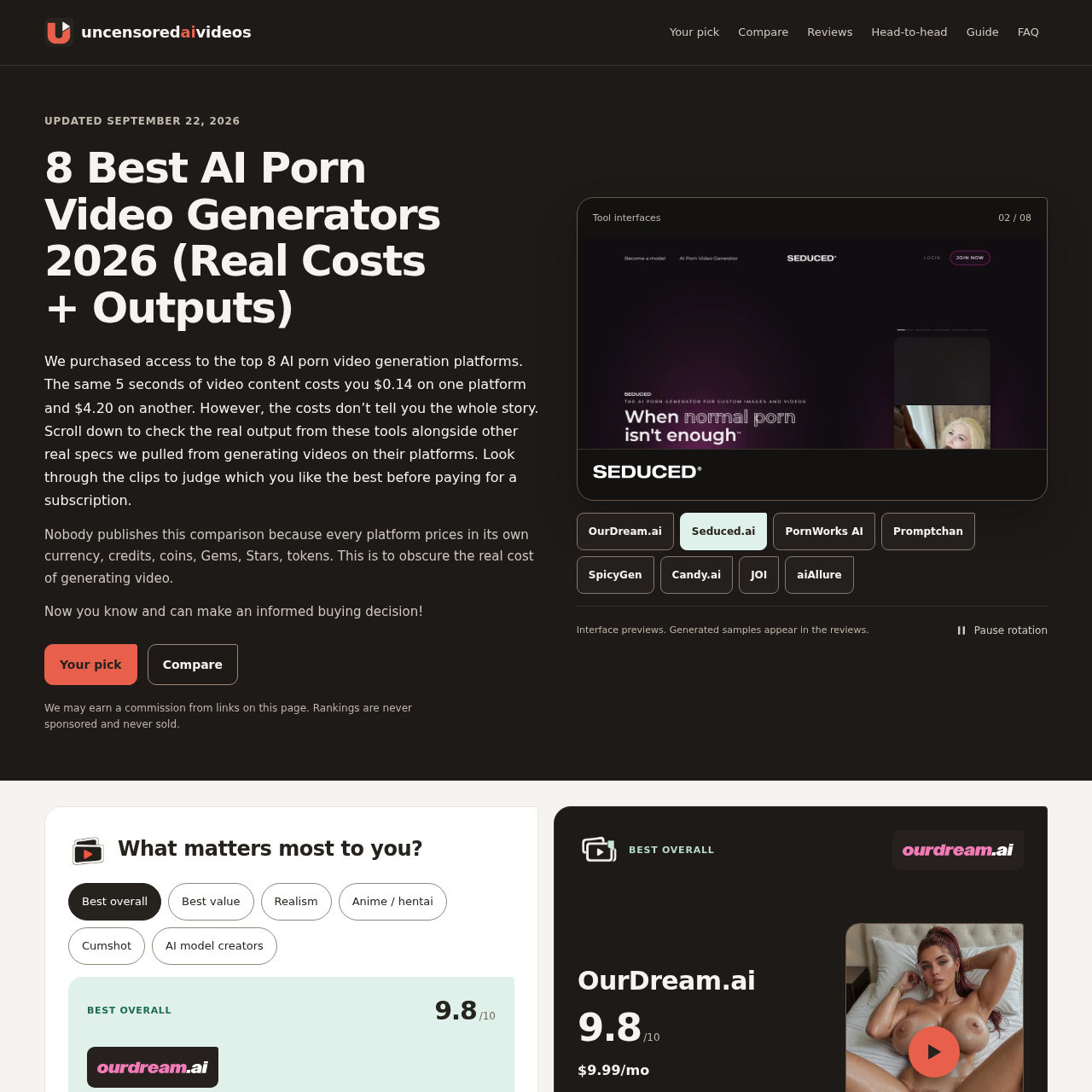
Uncensored AI Videos is an informational comparison resource that evaluates adult AI video generation platforms, presenting head-to-head feature analyses, technical parameter breakdowns, and an educational glossary.
VideoComparing technical specificationsDocumenting supported generation modes…Detailing character consistency mechanismsProviding side-by-side trade-off…uncensored ai video generatornsfw ai videoai video reviewsunfiltered ai video generatorai xxx video generatoradult ai toolsai prompt benchmarks
Listed on AIToolly
What Is Uncensored AI Videos? Product Overview
What the product does and how it is positioned
Uncensored AI Videos is an independent review hub dedicated to testing and ranking the best uncensored AI video platforms. We analyze top video generators based on motion fidelity, rendering speed, prompt compliance, resolution, and uncensored content allowances.
Instead of relying on vendor marketing claims, we run standardized prompt benchmarks across commercial platforms and open-source models (including SVD, Wan2.1, and cloud-hosted engines) to evaluate real-world render quality.
Visitors can compare subscription costs, credit burn rates, free trial availability, and platform restrictions side-by-side to select the right tool for their specific creative workflow.
Uncensored AI Videos serves as a comparative reference directory focused on uncensored artificial intelligence video creation tools. The platform indexes third-party generation services and organizes their documented features into side-by-side matrices, individual platform profiles, and head-to-head comparison pages.
The resource catalogs technical specifications across listed platforms, including generation modes such as text-to-video and image-to-video, maximum supported clip durations, aspect ratios, native video resolutions, and audio capabilities, alongside a technical glossary clarifying generative video concepts.
What Can You Use Uncensored AI Videos For?
Source-supported ways to use the product
Evaluating AI Video Capabilities
Prospective creators can compare technical capabilities such as text-to-video, image-to-video, and resolution ceilings across multiple platforms before choosing a service.
Researching Character Consistency Features
Users interested in consistent AI personas can assess which platforms support seed locking, likeness training, or character persistence.
Understanding Generative Video Terminology
Creators and researchers can reference the technical glossary to understand concepts such as LoRA adapters, temporal coherence, frame interpolation, and diffusion models.
Comparative Evaluation and Specification Tracking
Uncensored AI Videos compiles technical data across specialized generative media tools, categorizing platforms by their functional parameters and architecture support. The resource examines whether platforms offer text-to-video synthesis, image-to-video animation, clip extensions, or multi-clip sequence stitching.
The directory also tracks underlying media specifications, highlighting differences between native rendering resolutions and post-render upscaling. It details additional capabilities including audio integration, supported aspect ratios, frame rate standards, and multi-prompt workflow options.
Tracks native resolution benchmarks and differentiates them from interpolated or upscaled outputs.
Documents supported input methods including text prompts, reference images, and audio tracks.
Monitors creative workflow features such as seed control, scene extension, and multi-clip stitching.
Uncensored AI Videos Pricing
Human-maintained commercial information
unknownfree
Pricing can change. Confirm the current plan and billing terms on the official site before purchasing.
What to Test Before Choosing Uncensored AI Videos
Checks to run with your own material and workflow
Verify that a candidate platform supports required input modes such as text-to-video or image-to-video before committing to a workflow.
Confirm whether a generator renders video at native resolution or relies on post-process upscaling.
Check if character consistency features such as seed locking or likeness training are supported for serialized content.
Review platform content restrictions to ensure intended creative workflows comply with legal policies regarding fictional depictions.
Answers based on the source-checked product record
Are uncensored AI video generators legally permitted?+
Generative tools are generally legal when content depicts fictional adults. Generating non-consensual imagery of real individuals or depicting minors is strictly illegal and banned across platforms.
Can listed platforms be used to generate depictions of real people?+
No, all evaluated platforms prohibit depicting real people without consent. Uploading imagery requires appropriate rights, and creating non-consensual depictions is illegal in multiple jurisdictions.
What is the difference between text-to-video and image-to-video generation?+
Image-to-video animates an existing image, providing greater control over visual elements. Text-to-video generates video directly from descriptive prompts, offering broader creative range but requiring more prompt refinement.
How do AI video platforms maintain character consistency across clips?+
Platforms achieve character consistency through features such as seed control, saved character models, or dedicated likeness training, which help preserve facial and physical features across multiple generations.
Do uncensored AI video generators support audio generation?+
Several platforms support synchronized or background stereo audio, with availability depending on the specific platform settings and underlying generation model selected.
More Video AI tools
Explore other recently added tools in the same category.