Spacefast by Automattic
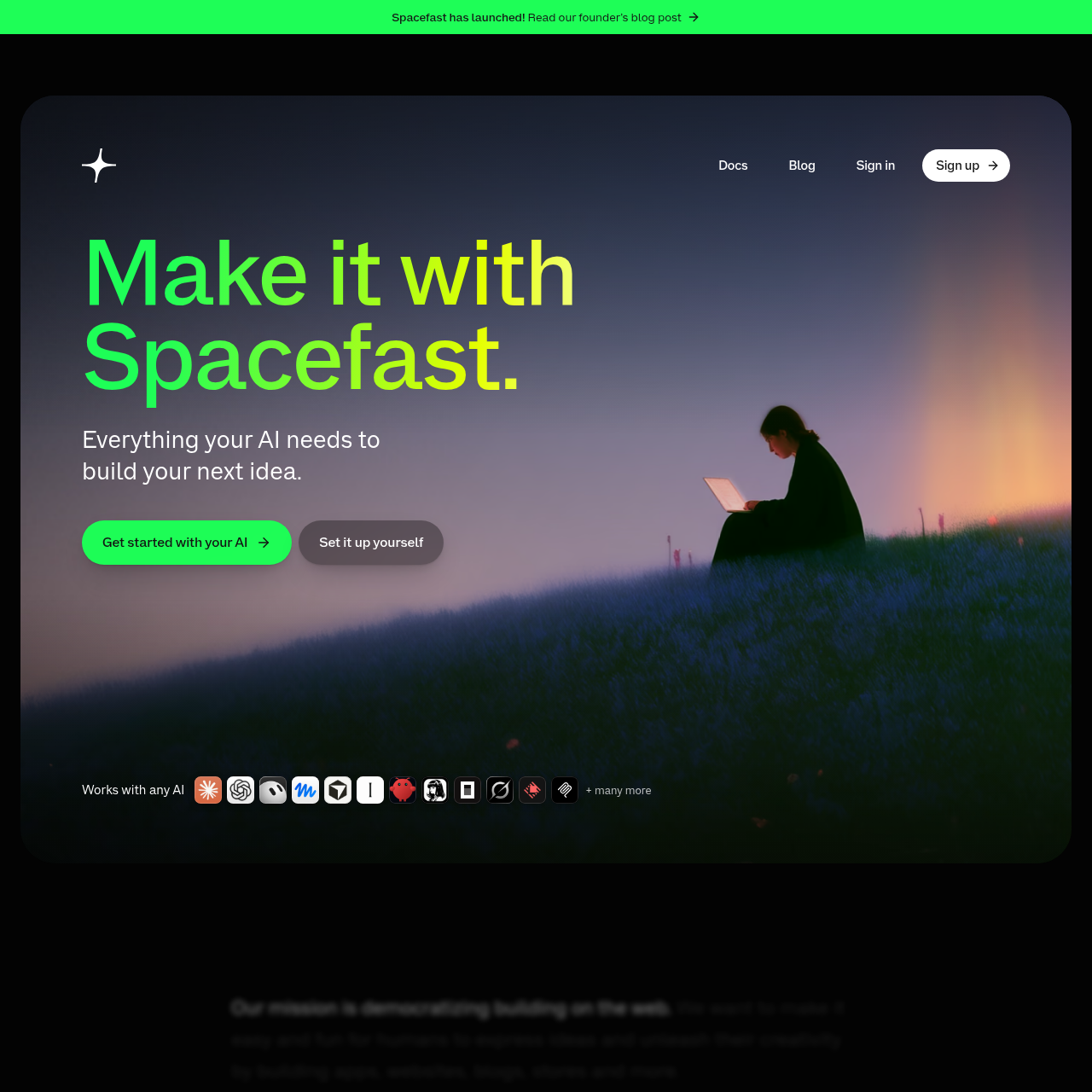
Spacefast by Automattic provides hosting infrastructure and backend tools that allow AI agents and developers to deploy websites, web applications, and static files via MCP, Git, or command-line workflows.
What the product does and how it is positioned
Spacefast by Automattic is a hosting and deployment platform designed to provide infrastructure, databases, and operational tools for AI agents and web developers. Rather than functioning as an AI site generator itself, the platform connects to external AI assistants and MCP clients to convert conversational outputs into live, shareable web environments.
Every deployed Space includes native capabilities such as built-in data storage, file upload handling, automated version history with rollback support, visitor analytics, and on-page commenting. Deployments can be initiated directly within conversational AI sessions, through a command-line interface, by connecting Git repositories, or by uploading files in a web browser.
Source-supported ways to use the product
Users prompt connected AI assistants to generate and publish web pages or slide decks directly to a live address.
Developers connect code repositories to automatically deploy main branch updates to production while generating preview links for feature branches.
Users drag and drop project folders or zip archives into a browser upload interface to obtain temporary live links without registering an account.
The documented workflow, where available
Instruct a connected AI assistant or MCP client to publish a project using Spacefast.
The AI deploys the project files and returns a live web link directly within the chat interface.
Set access controls by creating a viewer link, inviting collaborators, setting passwords, or making the space public.
Issue updates through subsequent AI prompts or scriptable CLI tools, with all changes tracked in a restorable version history.
Spacefast supports multiple deployment pathways tailored to both conversational AI workflows and conventional development environments. Through the Model Context Protocol, connected AI agents can package and upload files directly from a chat prompt, returning a live address without manual server setup. Alternatively, developers can publish via terminal commands, automated Git branch integrations, or web-based drag-and-drop archive uploads.
The platform provides hosting for static HTML, slide presentations, games, and web applications built with frameworks such as Next.js, Astro, TanStack Start, and PHP. Runtime feature availability depends on the chosen deployment path and framework specifications. To facilitate collaboration, each Space incorporates pinned on-page feedback threads, an embedded database, file upload endpoints, and native visitor analytics without requiring external tracking scripts.
Checks to run with your own material and workflow
What was checked and when
Answers based on the source-checked product record
An account is not required to publish initially. Users receive a live address and a claim link upon publishing, though unclaimed spaces expire after 33 hours and 20 minutes unless claimed by signing up.
Spacefast supports static HTML, presentations, games, and applications built with Next.js, Astro, TanStack Start, and PHP. Runtime feature support varies depending on the specific deployment path.
New spaces are private by default, meaning access is restricted until the user invites individuals, generates a share link, adds password protection, or explicitly enables public access and search indexing.
Yes. Publishing changes updates the existing web address while preserving previous iterations in a version history, allowing users to inspect file diffs and restore earlier deployment states at any time.
Users can download project files from any retained version in their history. While static sites can typically migrate unchanged, applications using platform-specific runtime features require code adjustments, and application databases export separately.