OpenCode 2.0 favicon

OpenCode 2.0

OpenCode is an open-source coding agent that operates across terminal, desktop, and IDE environments, supporting parallel multi-session agents and integrations with over 75 model providers without storing context data.

Code & ITAutomatically loads relevant Language…Runs concurrent coding agent sessions…Integrates with existing GitHub Copilot…Connects to local models and over 75…
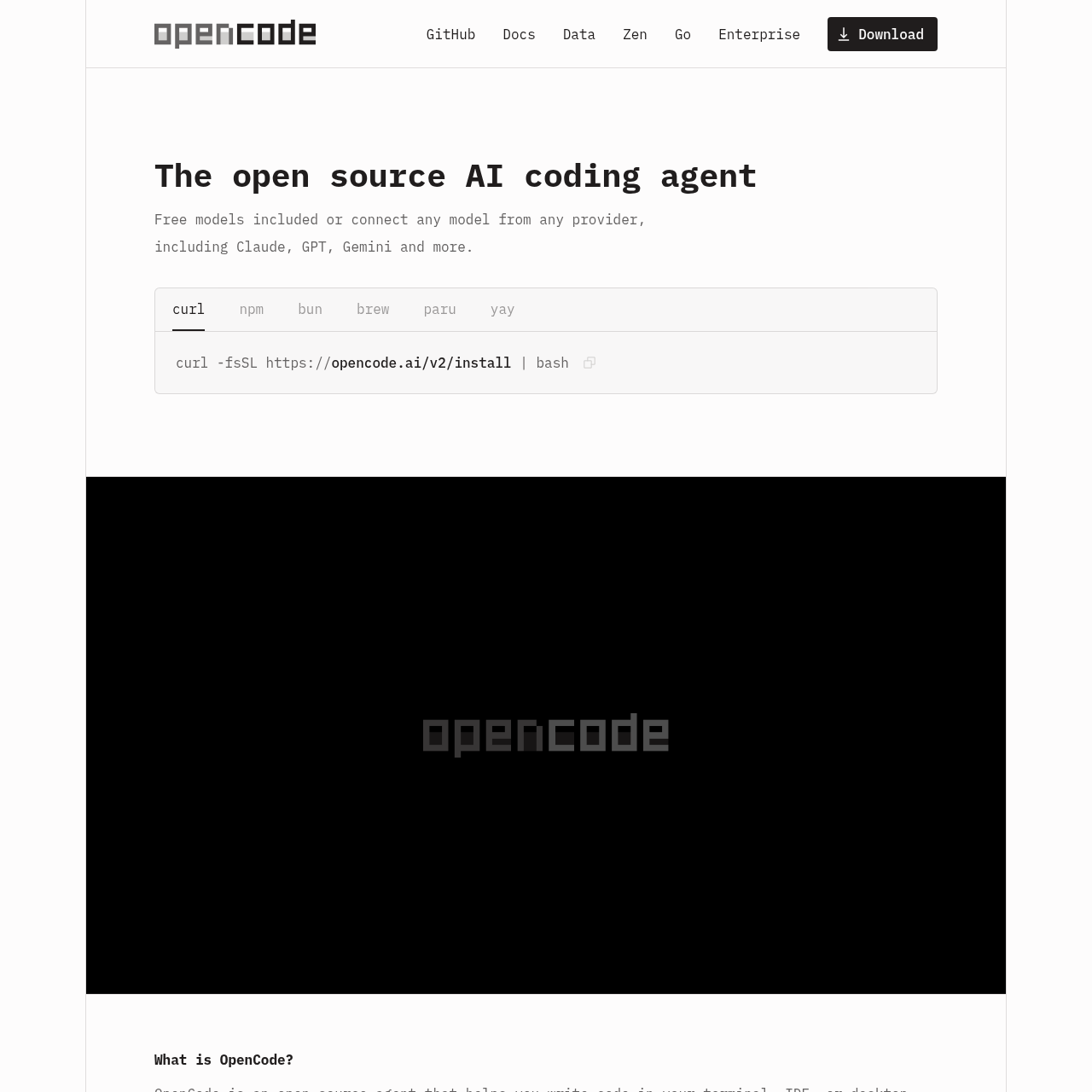
OpenCode 2.0 product interface screenshot
Estimated monthly visits
13.3M
Data period:
Listed on AIToolly

What Is OpenCode 2.0? Product Overview

What the product does and how it is positioned

OpenCode functions as an open-source coding agent built to assist developers in writing code across terminal interfaces, desktop applications, and IDE extensions. It automatically detects and loads the relevant Language Server Protocols needed to supply context to the language model.

The tool allows developers to link existing accounts like GitHub Copilot and ChatGPT Plus or Pro, or connect to more than 75 external and local model providers. OpenCode is architected for privacy-conscious workflows and does not retain source code or session context data.

What Can You Use OpenCode 2.0 For?

Source-supported ways to use the product

Concurrent Task Execution

Developers can execute multiple coding agents simultaneously on the same codebase to address distinct tasks in parallel.

Collaborative Session Debugging

Engineering team members can generate and share session links to inspect agent execution steps and troubleshoot coding issues.

Agent Architecture and Model Ecosystem

OpenCode provides flexibility in how developers interact with coding agents by offering terminal, desktop, and IDE interfaces. The environment enhances model accuracy by automatically loading the appropriate Language Server Protocols for the programming language in use.

Through Models.dev integration, the agent connects with over 75 model providers, local model setups, and commercial subscriptions like GitHub Copilot and ChatGPT Plus or Pro. A handpicked model selection under Zen is also benchmarked and tested specifically for coding agent operations.

  • Automatic Language Server Protocol loading based on language context.
  • Parallel multi-agent execution within a single project directory.
  • Shareable session links for collaborative inspection and debugging.
  • Zero persistent storage of user code or context data.

What to Test Before Choosing OpenCode 2.0

Checks to run with your own material and workflow

  • Confirm that the automatic Language Server Protocol loader covers the primary programming languages required by the project.
  • Verify connectivity and authentication requirements when using external accounts like GitHub Copilot or ChatGPT Plus.
  • Review whether local model runtimes or external provider connections through Models.dev meet organizational latency requirements.
  • Check compatibility with preferred development environments across terminal, desktop, and IDE extension workflows.

OpenCode 2.0 Sources and Last Checked

What was checked and when

Official source
https://opencode.ai/
Last checked
Category
Code & IT

OpenCode 2.0 Frequently Asked Questions

Answers based on the source-checked product record

What interfaces does OpenCode support?

OpenCode is available for use as a terminal interface, a standalone desktop application, and an IDE extension.

How does OpenCode handle user code and context privacy?

OpenCode does not store any user code or context data, allowing it to function within privacy-sensitive development settings.

Can existing AI subscriptions be connected to OpenCode?

Yes, users can log in with GitHub to use an existing GitHub Copilot account or log in with OpenAI to use a ChatGPT Plus or Pro account.

Which language models can be used with OpenCode?

OpenCode supports more than 75 model providers through Models.dev, accommodating local models, validated Zen models, and external providers such as Claude, GPT, and Gemini.

Does OpenCode support running multiple agents simultaneously?

Yes, OpenCode provides multi-session capabilities that allow developers to launch and manage multiple agents in parallel on the same project.

Explore other recently added tools in the same category.