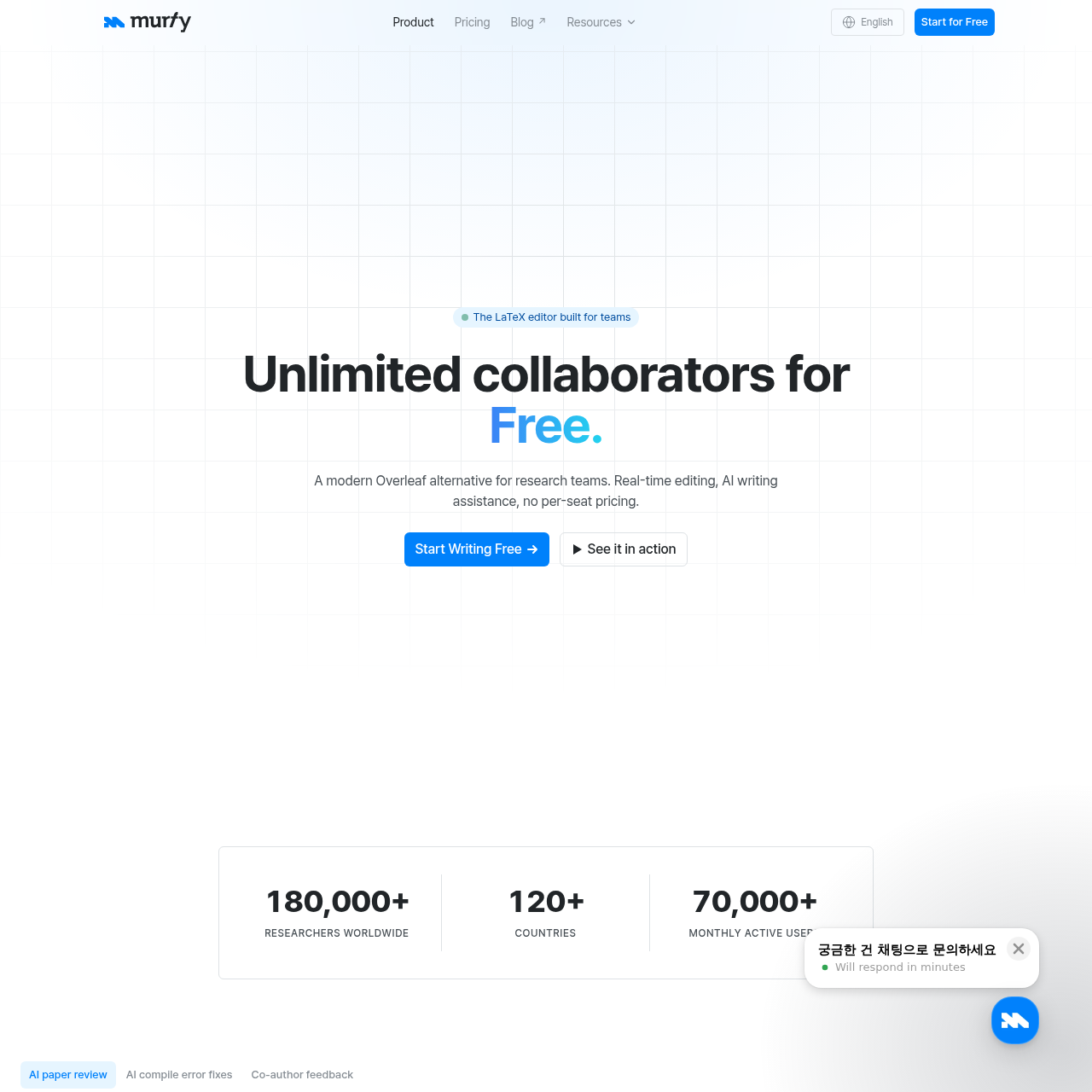
Murfy AI is a web-based, AI-native LaTeX editor designed for research teams, offering real-time collaboration, AI-assisted error resolution, and integrated paper review tools to streamline the academic publishing workflow.
Research AssistantAI-driven paper review simulating venue…Real-time multi-user collaboration…Template-based document creationLaTeX Editor
Estimated monthly visits
80K
Data period:
Listed on AIToolly
What Is Murfy AI? Product Overview
What the product does and how it is positioned
Murfy AI provides a collaborative environment for researchers to draft, edit, and compile LaTeX documents. It integrates AI capabilities to assist with technical writing, error debugging, and peer-style feedback.
The platform is designed to support academic workflows by offering unlimited collaborator access and a template library for various document types, including conference papers, journals, and theses.
What Can You Use Murfy AI For?
Source-supported ways to use the product
Academic Paper Drafting
Researchers use the platform to write, format, and compile complex LaTeX documents for submission to journals and conferences.
AI Paper Review
Authors can use AI paper review to identify weaknesses in a draft.
How to Use Murfy AI
The documented workflow, where available
1
Document Setup
Users initiate projects by selecting from a library of templates tailored for conference papers, journals, or theses.
2
AI-Assisted Editing
Authors write content while utilizing AI tools to resolve compilation errors, query document information, and manage citations.
AI-Assisted Research Workflow
Murfy AI integrates artificial intelligence directly into the document editing process to reduce manual formatting and debugging tasks. The system is designed to handle common LaTeX challenges through AI-driven interventions.
Paper Review: The tool employs multiple models to simulate a venue review process, identifying potential weaknesses in the draft.
Contextual Assistance: Users can query the AI regarding document content, formatting requirements, or citation management.
What to Test Before Choosing Murfy AI
Checks to run with your own material and workflow
Confirm that the platform's template library meets the specific formatting requirements for your target journal or conference.
Review the AI-generated compile error suggestions to ensure they align with your document's specific LaTeX structure and requirements.