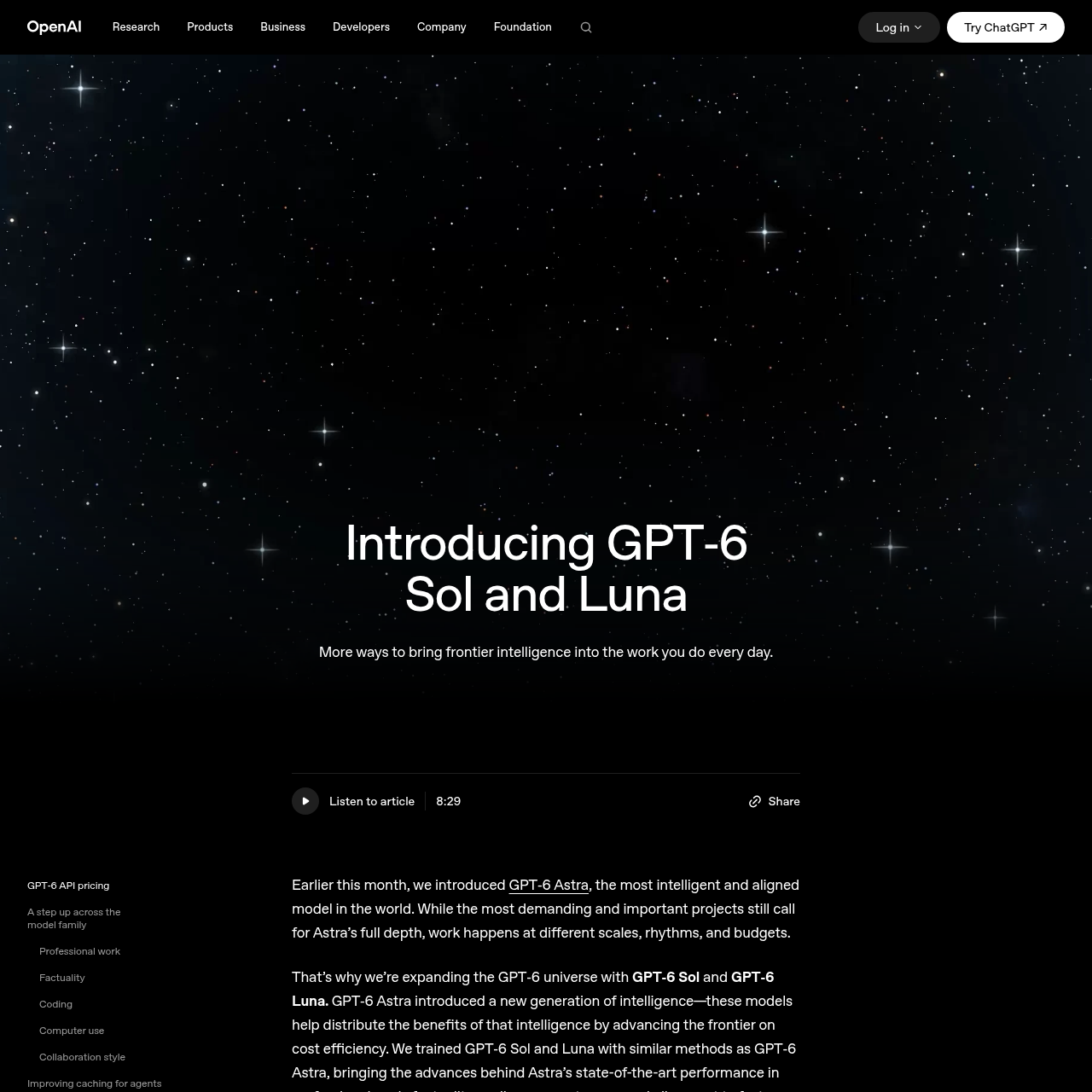
GPT-6 Sol & Luna
GPT-6 Sol and Luna are frontier AI models designed for complex professional workflows, code generation, and computer use with enhanced prompt caching controls and aligned communication.
What the product does and how it is positioned
GPT-6 Sol and GPT-6 Luna expand the GPT-6 model family to deliver high intelligence for professional tasks, coding, and computer use.
Available through the OpenAI API, ChatGPT Work, Codex, and the desktop application, the models incorporate updated alignment training and prompt caching infrastructure.
Source-supported ways to use the product
Automating multi-step workflows across operations, finance, support, human resources, sales, and marketing tools.
Producing repository changes that adhere to codebase standards, test quality requirements, and mergeability guidelines.
Performing long-horizon computer-use tasks across applications and standard desktop operating environments.
The models feature default prompt caching improvements designed to accelerate responses and maximize context reuse in multi-turn agent sessions.
Developers can inspect performance via the Prompt Caching Dashboard and diagnostic tools to detect missed caching opportunities across runs.
Checks to run with your own material and workflow
What was checked and when
Answers based on the source-checked product record
In the OpenAI API, the models are available under the identifiers gpt-6-sol and gpt-6-luna.
GPT-6 Sol and Luna are available in ChatGPT Work and Codex for Plus, Pro, Business, Enterprise, and Edu users, while Free and Go users can access Luna in the desktop app.
According to the release documentation, the models are not yet available in standard Chat.
Prompt caching preserves earlier context even when adjusting reasoning effort levels or enabling and disabling tools during an agent session.
The models feature clearer technical phrasing, less jargon, fewer low-value details, and slightly shorter responses without omitting substantive information.