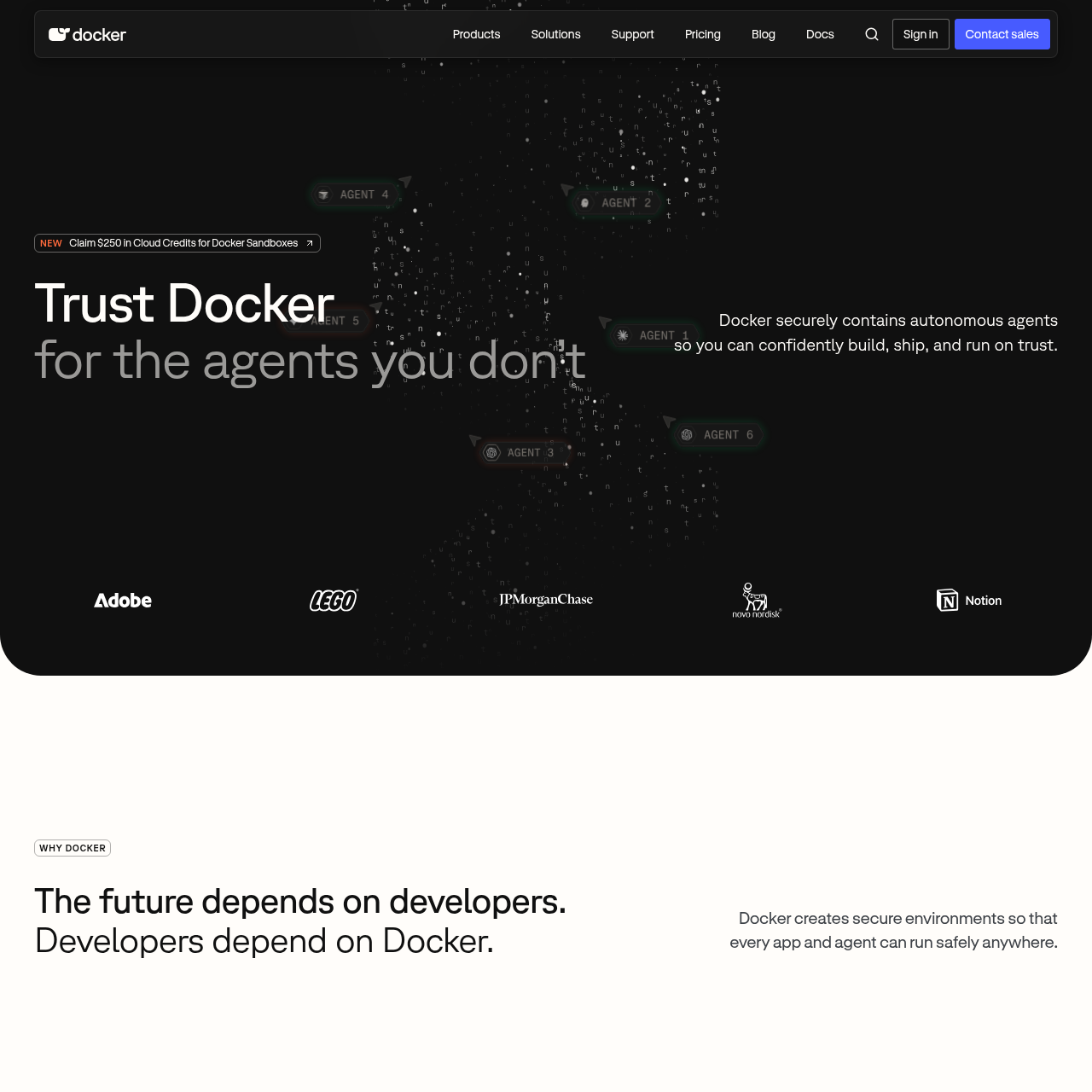
Docker combines containers for building and running applications with MicroVM-based sandboxes for autonomous coding agents.
Code & ITDevelopers can give each sandbox access…Developers can push a new image tag to…Application containersDocker Sandboxes
Estimated monthly visits
7.1M
Data period:
Listed on AIToolly
What Is Docker? Product Overview
What the product does and how it is positioned
Docker supports container-based application development on Mac, Windows, and Linux. Docker Hub provides repositories for publishing tagged images.
Docker Sandboxes run autonomous coding agents locally or in the cloud. Developers can choose which MCP servers each sandbox can access.
What Can You Use Docker For?
Source-supported ways to use the product
Develop and run an application
Developers can use containers to build and run an application, then publish a tagged image to a Docker Hub repository.
Run a coding agent in isolation
Developers can run an autonomous coding agent in a local or cloud sandbox and give it access only to the MCP servers needed for the task.
Isolation and tool access for coding agents
Docker Sandboxes use MicroVMs to isolate coding agents during autonomous runs. Developers can choose which MCP servers each sandbox can access while keeping their keys on the host.
Sandboxes can run locally or in the cloud.
MCP server access can be selected per sandbox.
What to Test Before Choosing Docker
Checks to run with your own material and workflow
Confirm that local or cloud sandbox execution matches where the coding agent needs to run.
Verify that per-sandbox MCP server selection matches the intended tool access.
Review the signed software bill of materials and verifiable provenance included with Docker Hardened Images.