Anomalo
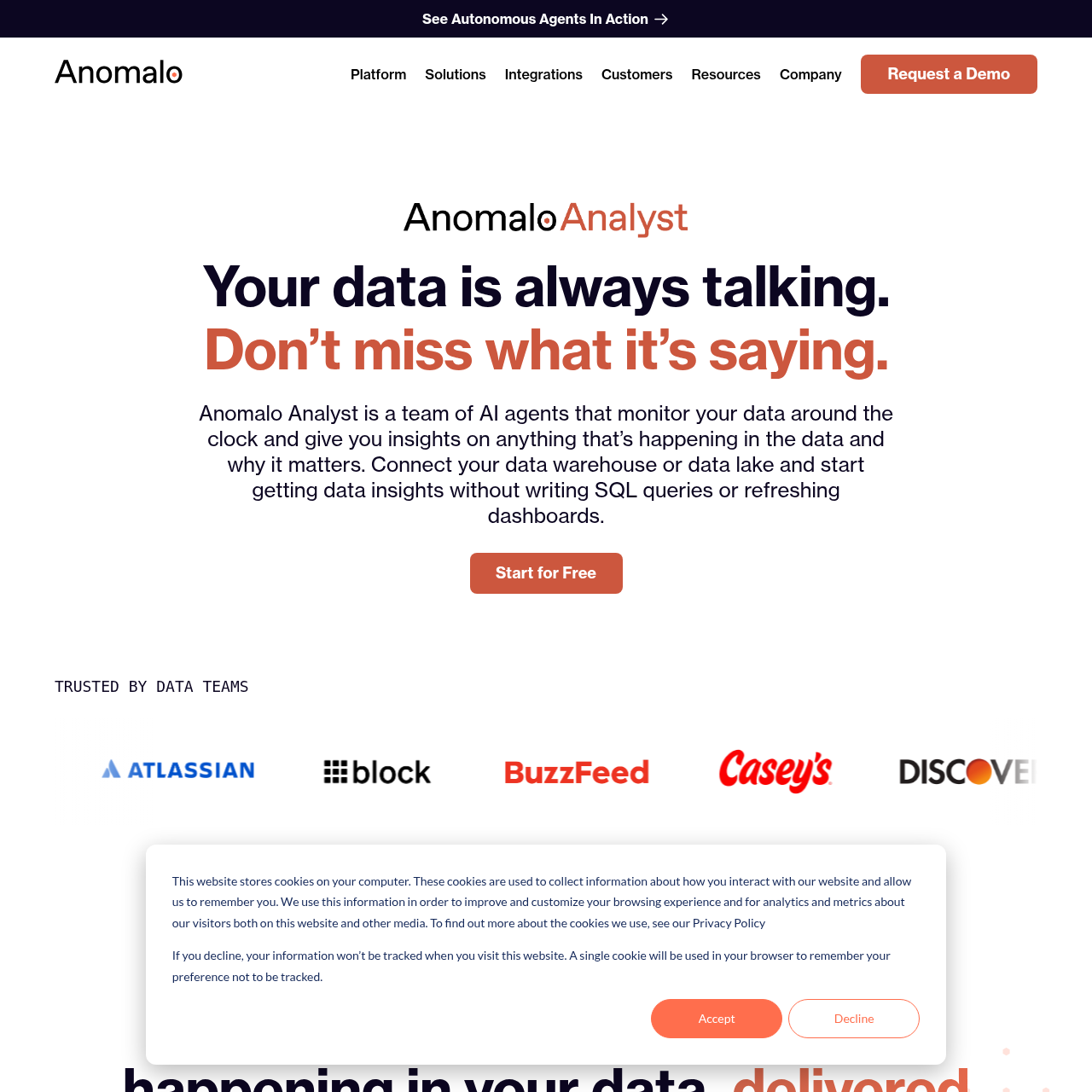
Anomalo Analyst uses statistical modeling and autonomous AI agents to monitor data warehouses, detect anomalies, verify report claims against data, and deliver proactive insights without SQL.
What the product does and how it is positioned
Anomalo Analyst is an autonomous data monitoring system designed to surface trends, anomalies, and structural shifts across connected data warehouses and data lakes. It combines statistical modeling for anomaly detection with specialized AI agents that write context-rich explanatory reports without requiring users to write SQL queries or maintain dashboards.
The platform features a multi-step analysis architecture where detected shifts are prioritized by magnitude, drafted into narrative explanations, and verified line by line against source data by a dedicated verification agent. Users receive proactive digests via an on-platform feed or inbox and can explore findings further using natural language follow-up queries.
Source-supported ways to use the product
Teams connect warehouse tables to identify drift, trend reversals, and new values without manual SQL query authoring.
Data professionals share specific analytical findings and conversation links with colleagues who do not possess warehouse credentials.
The documented workflow, where available
Link the platform to a data warehouse or data lake and select the specific tables to monitor.
The system automatically profiles table contents and collects user focus areas to tailor report delivery.
Statistical modeling scans tables to locate drift, new values, or trend shifts, ranking each by magnitude.
AI agents draft narrative reports from historical context, while a verification agent verifies claims against source data.
Users review proactive digests on their homepage or inbox and submit natural language follow-up queries to drill down.
Anomalo Analyst isolates metric detection from generative reporting by relying on statistical modeling rather than large language models to identify initial anomalies. The statistical models scan tables continuously for structural drift, reversed trends, and novel data values, assigning magnitude scores to build a prioritized queue of material changes.
Once candidate anomalies are ranked, specialized AI agents analyze historical context to produce narrative summaries explaining what occurred and why the data shifted. Before publication, a separate verification agent reviews every statement against the raw data line by line, correcting inaccuracies and hallucinations before findings reach user digests.
Checks to run with your own material and workflow
What was checked and when
Answers based on the source-checked product record
The platform uses statistical modeling rather than large language models to scan tables for new values, reversed trends, and data drift, ranking each detected change with a magnitude score.
A dedicated verification agent reads every generated report line by line and cross-checks each claim against the underlying table data before the insight is published.
No, recipients can view shared insights and conversation threads via a link after signing in, without requiring direct access to the underlying data warehouse.
Findings are proactively delivered through an insights feed on the homepage and via personalized digests sent directly to the user's inbox without requiring manual prompting.
Yes, users can investigate specific insights and data changes further by asking follow-up questions and requesting deeper analyses using natural language.