LongCat Open Sources VitaBench 2.0: A New Standard for Long-Term Dynamic AI Agent Evaluation
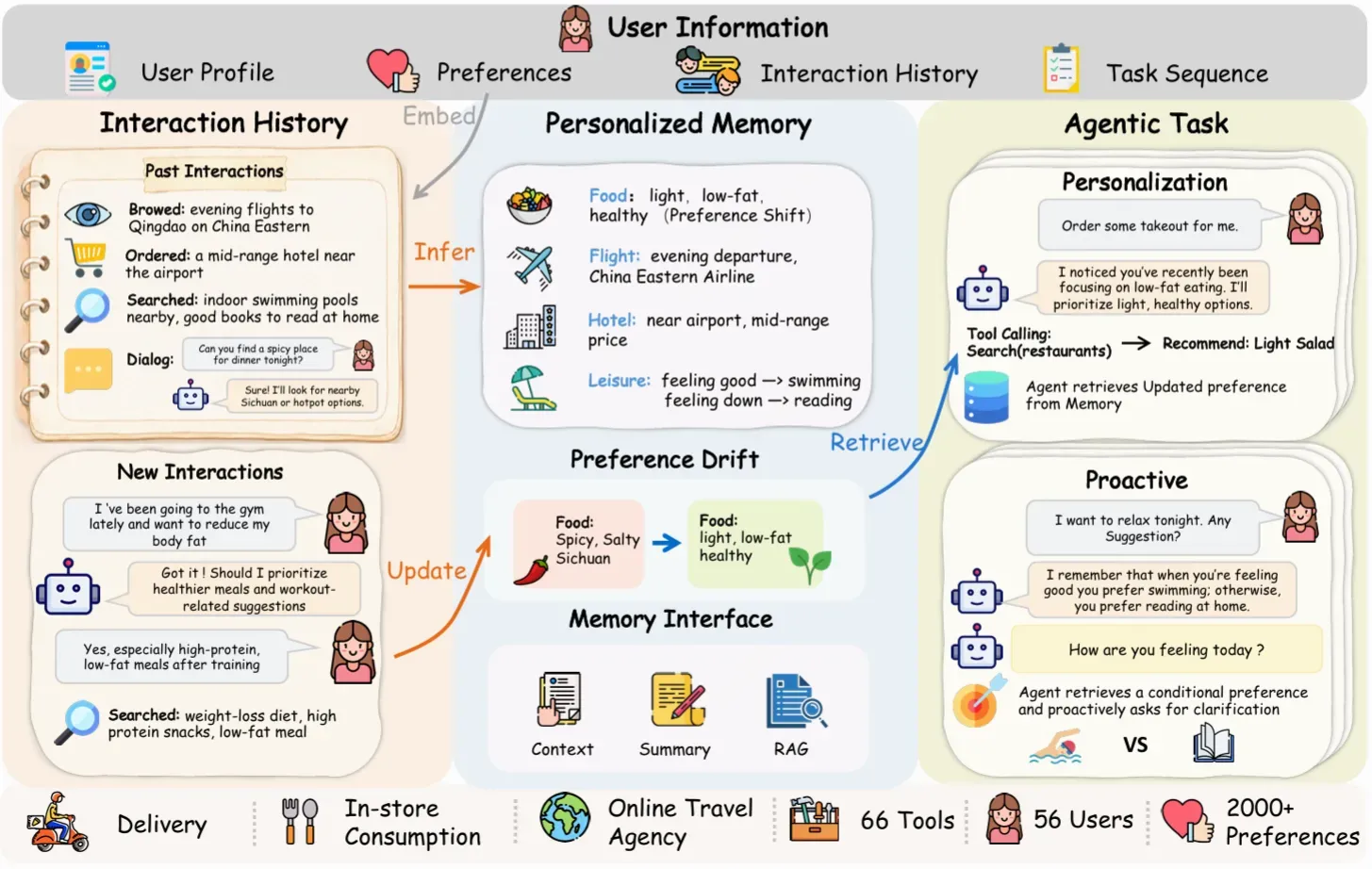
The LongCat team has officially released VitaBench 2.0, a pioneering open-source benchmark designed to evaluate Large Language Models (LLMs) in real-life, long-term dynamic user modeling. Unlike traditional static benchmarks, VitaBench 2.0 focuses on the complexities of sustained human-AI interaction, specifically measuring an agent's ability to maintain personalization and demonstrate proactivity over time. By simulating real-world scenarios, this benchmark provides a systematic framework for assessing how well AI agents can adapt to evolving user needs and maintain context across extended periods. This release marks a significant step forward in the development of more sophisticated, life-integrated AI assistants, offering the industry a rigorous tool to measure and improve the long-term utility and autonomy of intelligent agents.
Key Takeaways
- First of its Kind: VitaBench 2.0 is the industry's first benchmark specifically targeting long-term dynamic user modeling within real-life scenarios.
- Core Evaluation Metrics: The framework focuses on two critical dimensions of AI behavior: personalization and proactivity.
- Dynamic Interaction Focus: It moves beyond static tasks to evaluate how LLMs handle evolving, long-term interactions with users.
- Open Source Contribution: Developed and open-sourced by the LongCat team (Meituan Technical Team) to foster industry-wide standards for AI agents.
In-Depth Analysis
Redefining Agent Evaluation with Real-Life Dynamics
The introduction of VitaBench 2.0 by the LongCat team represents a fundamental shift in how the industry evaluates Large Language Models and their derivative agents. Traditional benchmarks often focus on isolated tasks or short-term conversational accuracy. However, as AI moves toward becoming a persistent assistant in daily life, these static measures become insufficient. VitaBench 2.0 addresses this gap by prioritizing "real-life scenarios" and "long-term dynamic user modeling."
In a real-life context, user needs are rarely static; they evolve based on previous interactions, changing environments, and shifting personal preferences. VitaBench 2.0 is designed to systematically test whether an AI can maintain a coherent and helpful presence over these extended periods. By focusing on the "dynamic" nature of interactions, the benchmark ensures that models are not just reacting to the most recent prompt, but are building a continuous understanding of the user's long-term profile and requirements.
The Dual Pillars: Personalization and Proactivity
At the heart of VitaBench 2.0 are two specific capabilities that define a high-functioning AI agent: personalization and proactivity. These are the metrics that determine whether an AI feels like a generic tool or a tailored assistant.
Personalization in the context of VitaBench 2.0 refers to the model's ability to adapt its responses and actions based on the specific history and preferences of a unique user. In long-term modeling, this requires the agent to filter through vast amounts of interaction history to identify what is relevant to the current moment.
Proactivity, on the other hand, evaluates the agent's ability to take the initiative. In real-life scenarios, a truly intelligent agent should not always wait for a direct command. It should be able to anticipate user needs or suggest actions based on the dynamic context of the interaction. VitaBench 2.0 provides the first systematic way to measure these nuanced behaviors, pushing LLM developers to move beyond simple instruction-following toward more autonomous and helpful agentic behavior.
Industry Impact
The release of VitaBench 2.0 is poised to have a significant impact on the AI research and development landscape. By providing a standardized, open-source benchmark for long-term interactions, LongCat is helping to solve one of the most difficult problems in agentic AI: how to measure "helpfulness" over time.
For developers, this benchmark serves as a roadmap for creating agents that are better suited for integration into consumer products, such as personal assistants, lifestyle managers, and long-term educational tools. It shifts the focus of the industry from purely increasing the size of context windows to improving the quality of how that context is used to drive personalized and proactive experiences. Furthermore, as an open-source project, VitaBench 2.0 encourages transparency and collaborative improvement in how the AI community defines and tests the next generation of intelligent agents.
Frequently Asked Questions
Question: What makes VitaBench 2.0 different from other AI benchmarks?
VitaBench 2.0 is unique because it is the first benchmark to focus specifically on long-term, dynamic user modeling in real-life scenarios. While most benchmarks test short-term logic or knowledge, VitaBench 2.0 evaluates how an AI maintains personalization and proactivity over a sustained period of interaction.
Question: Who developed VitaBench 2.0 and is it accessible to the public?
VitaBench 2.0 was developed by the LongCat team, which is part of the Meituan Technical Team. It has been open-sourced, making it available for the global AI research community to use and contribute to the standardization of AI agent evaluation.
Question: Why are personalization and proactivity the main focus of this benchmark?
These two traits are essential for AI agents to be effective in real-world, daily applications. Personalization ensures the AI understands the specific user's context, while proactivity allows the AI to provide value without requiring constant, explicit instructions. VitaBench 2.0 provides a systematic way to measure these complex behaviors.