Meituan Open Sources AIGC Poster Generation System Featuring a Comprehensive Generation-Editing-Evaluation Technical Closed Loop
The Meituan Intelligent Creation Team has officially announced the development and open-sourcing of a complete technical system for AIGC (Artificial Intelligence Generated Content) poster generation. This innovative framework is built around a "Generation-Editing-Evaluation" technical closed loop, designed to streamline the entire lifecycle of visual content creation. The system has already seen successful implementation in high-demand scenarios, including Meituan Waimai (food delivery) and various Brand IP projects. By open-sourcing the entire technical stack, Meituan aims to provide the industry with a proven model for integrating generative AI into practical marketing and branding workflows, ensuring both creative efficiency and quality control through its structured evaluation mechanisms.
Key Takeaways
- Comprehensive Technical System: Meituan has established a full-stack AIGC framework specifically for poster generation.
- Technical Closed Loop: The system operates on a unique "Generation-Editing-Evaluation" workflow to ensure high-quality outputs.
- Real-World Application: The technology is currently deployed within Meituan Waimai and Brand IP scenarios to support marketing efforts.
- Open Source Commitment: Meituan has made the entire technical system available to the public as an open-source project.
In-Depth Analysis
The Architecture of the Generation-Editing-Evaluation Loop
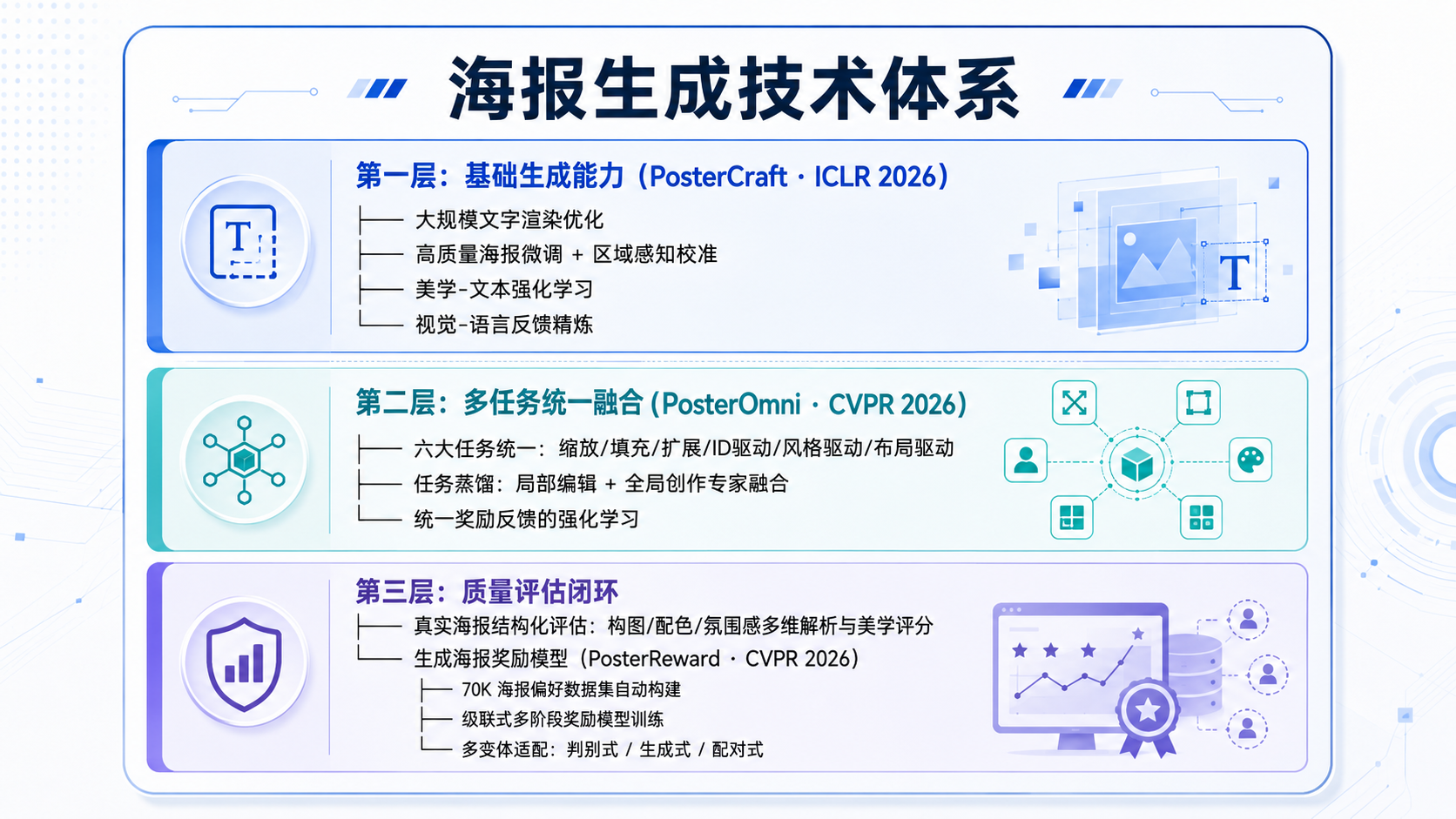
Meituan's Intelligent Creation Team has moved beyond simple image generation by constructing a sophisticated "Generation-Editing-Evaluation" technical closed loop. This structure addresses the common limitations of standalone AIGC tools by providing a holistic workflow.
The first stage, Generation, focuses on the initial creation of the poster assets. This involves leveraging AIGC to produce visual content based on specific inputs. However, recognizing that raw AI output often requires fine-tuning, the Editing component provides the necessary tools for refinement. This allows for the adjustment of elements to align with specific promotional goals or aesthetic requirements.
The final and perhaps most critical stage is Evaluation. By incorporating a dedicated evaluation phase into the loop, Meituan ensures that the generated and edited posters meet professional standards. This stage acts as a quality control mechanism, assessing the visual and functional effectiveness of the posters before they are deployed in live environments. This closed-loop approach ensures that the system is not just a creative tool, but a reliable production pipeline.
Strategic Implementation in Meituan Waimai and Brand IP
The practical value of Meituan's AIGC system is evidenced by its integration into the company's core business units. Meituan Waimai, one of the world's largest food delivery platforms, requires a massive volume of visual content to support its diverse range of merchants and promotional campaigns. The AIGC poster generation system allows for the rapid production of these materials, significantly reducing the time and resources typically required for manual design.
Furthermore, the system's application in Brand IP scenarios highlights its versatility. Managing brand identity requires strict adherence to visual standards and consistency across various media. Meituan's framework demonstrates the capability to handle these complex requirements, providing a scalable solution for maintaining brand integrity while benefiting from the speed of AI-driven creation. The successful rollout in these scenarios serves as a proof of concept for the system's robustness and efficiency in high-pressure commercial settings.
Industry Impact
The decision by the Meituan technical team to open-source this AIGC poster generation system marks a significant contribution to the AI and marketing technology sectors. By sharing a complete "Generation-Editing-Evaluation" framework, Meituan provides a blueprint for other organizations looking to implement AIGC at scale.
This move is likely to accelerate the adoption of intelligent creation tools across the industry. It offers a structured approach to solving the "quality gap" often found in generative AI by emphasizing the importance of editing and evaluation. As more developers and companies adopt and contribute to this open-source project, it could lead to standardized workflows for AI-driven visual marketing, ultimately lowering the barrier to entry for high-quality automated design.
Frequently Asked Questions
Question: What makes Meituan's AIGC poster generation system different from other AI image generators?
Unlike standalone generators, Meituan's system is a complete technical closed loop that includes "Generation, Editing, and Evaluation." This means it doesn't just create an image; it provides the tools to refine it and a mechanism to judge its quality for professional use.
Question: In which business areas has Meituan successfully applied this technology?
The technology has been fully implemented in Meituan Waimai (food delivery) and various Brand IP scenarios, where it helps automate the creation of marketing posters and visual assets.
Question: Is the code for this AIGC system available to the public?
Yes, the Meituan technical team has announced that the entire technical system for AIGC poster generation has been open-sourced, allowing other developers and researchers to utilize and build upon their work.