Meituan Open-Sources LongCat-2.0: A 1.6T Parameter Model Optimized for Agentic Coding and Domestic GPU Inference
Meituan's technical team has officially open-sourced LongCat-2.0, a massive model featuring 1.6 trillion total parameters with an average activation of approximately 48 billion. Specifically engineered for "Agentic Coding" tasks, the model introduces significant architectural innovations, including LongCat Sparse Attention and N-gram Embedding. These advancements are designed to enhance long-context processing efficiency and token-level representation. Furthermore, the release includes specialized inference code for domestic Chinese computing cards, aiming to strengthen code understanding, generation, and execution through dynamic activation mechanisms. This move marks a significant contribution to the open-source community, providing high-scale modeling capabilities tailored for complex programming environments and localized hardware ecosystems.
Key Takeaways
- Massive Scale with Efficient Activation: LongCat-2.0 features 1.6 trillion total parameters while maintaining an average activation of 48 billion, balancing high capacity with operational efficiency.
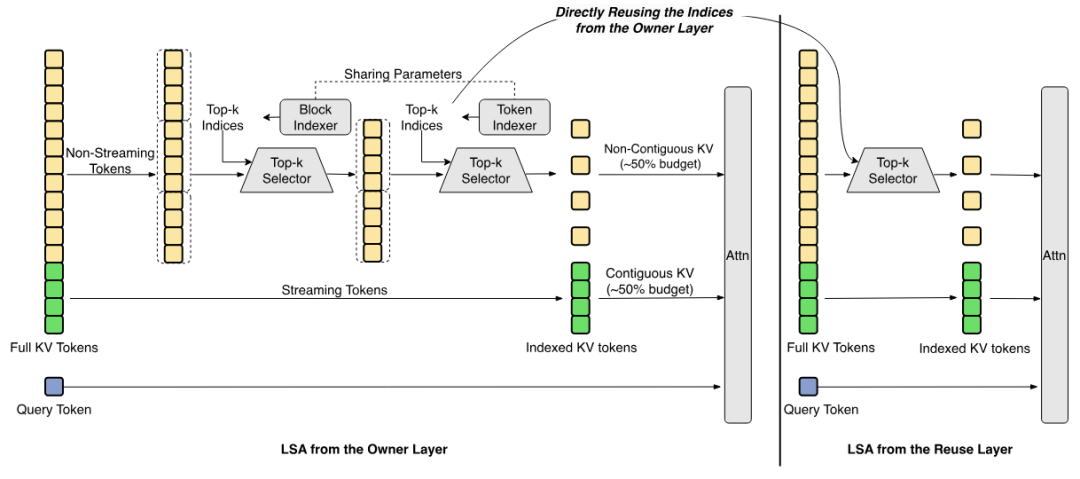
- Architectural Innovations: The model introduces LongCat Sparse Attention and N-gram Embedding to optimize long-context handling and token representation.
- Specialized for Agentic Coding: Designed specifically for autonomous coding tasks, improving performance in code understanding, generation, and execution.
- Domestic Hardware Support: Meituan has released inference code specifically optimized for domestic (Chinese) computing cards, promoting hardware diversity.
- Dynamic Activation: Utilizes dynamic activation strategies to further refine the model's ability to process complex programming logic.
In-Depth Analysis
Architectural Evolution: Sparse Attention and N-gram Embedding
Meituan's LongCat-2.0 represents a significant shift in how large-scale models handle the specific requirements of programming languages. By implementing LongCat Sparse Attention, the model addresses the computational bottleneck typically associated with long-context windows. In coding tasks, where a single project may span thousands of lines of interconnected files, the ability to maintain context without exponential increases in compute cost is critical. This sparse attention mechanism allows the model to focus on relevant code segments, enhancing efficiency during both training and inference.
Complementing this is the introduction of N-gram Embedding. Traditional tokenization often struggles with the highly structured and repetitive nature of code. By incorporating N-gram embeddings, LongCat-2.0 improves its token-level representation, allowing the model to better capture the syntactic patterns and recurring structures inherent in programming. This dual-layered architectural approach ensures that the model does not just "see" code as a sequence of text, but understands the structural dependencies required for high-level software engineering.
Optimized for the Era of Agentic Coding
The transition from simple code completion to "Agentic Coding" requires a model that can act as an autonomous or semi-autonomous agent. LongCat-2.0 is built for this specific purpose. With 1.6 trillion parameters and an average activation of 48 billion, the model possesses the depth required to reason through complex execution paths. The integration of dynamic activation further empowers the model to adapt its computational resources based on the complexity of the task at hand.
In practical terms, this means LongCat-2.0 is better equipped to handle the full lifecycle of a coding task—from initial understanding of a prompt to the generation of functional code and the eventual simulation or execution logic. By focusing on these "Agentic" capabilities, Meituan is positioning LongCat-2.0 as a tool for developers who need more than just a snippet generator, but rather a partner capable of navigating entire codebases and understanding the implications of changes across a system.
Strategic Hardware Compatibility and Open Source Impact
A standout feature of this release is the inclusion of inference code for domestic computing cards. As the global hardware landscape becomes increasingly complex, providing optimized paths for localized hardware is a strategic necessity. By ensuring that LongCat-2.0 runs efficiently on domestic Chinese GPUs, Meituan is lowering the barrier to entry for local enterprises and researchers who may not have access to mainstream international hardware.
This open-source move does more than just share a model; it provides a framework for high-performance inference in diverse hardware environments. The combination of a massive 1.6T parameter scale and the practical accessibility of domestic card support suggests a commitment to building a robust, localized AI ecosystem. This approach ensures that the benefits of state-of-the-art coding agents are available across different infrastructure tiers.
Industry Impact
The release of LongCat-2.0 is likely to influence the AI industry in several key ways:
- Benchmarking Coding Agents: By focusing specifically on "Agentic Coding," Meituan is pushing the industry to move beyond general LLM benchmarks and toward specialized evaluations for software engineering autonomy.
- Efficiency at Scale: The 1.6T/48B parameter-to-activation ratio demonstrates a sophisticated use of Mixture-of-Experts (MoE) or similar conditional computation strategies, providing a blueprint for other organizations looking to scale models without linear increases in inference costs.
- Hardware Democratization: By providing native support for domestic GPUs, Meituan is accelerating the decoupling of AI software from specific hardware vendors, fostering a more resilient and diverse technological supply chain.
Frequently Asked Questions
Question: What makes LongCat-2.0 different from standard large language models?
LongCat-2.0 is specifically optimized for "Agentic Coding" tasks. Unlike general-purpose models, it uses LongCat Sparse Attention and N-gram Embedding to better handle the long contexts and structural nuances of programming code, while maintaining a massive 1.6T parameter scale with efficient 48B activation.
Question: Does LongCat-2.0 support hardware other than standard international GPUs?
Yes. One of the key highlights of this open-source release is the inclusion of inference code specifically optimized for domestic (Chinese) computing cards, ensuring the model can be deployed across a variety of hardware platforms.
Question: How does the model improve code generation and execution?
Through the use of dynamic activation and improved token-level representation (via N-gram Embedding), the model can more accurately understand complex logic and generate code that is not only syntactically correct but also contextually aware of the broader project requirements.