Meituan Open Sources Comprehensive AIGC Poster Generation System Featuring a Generation-Editing-Evaluation Technical Closed Loop
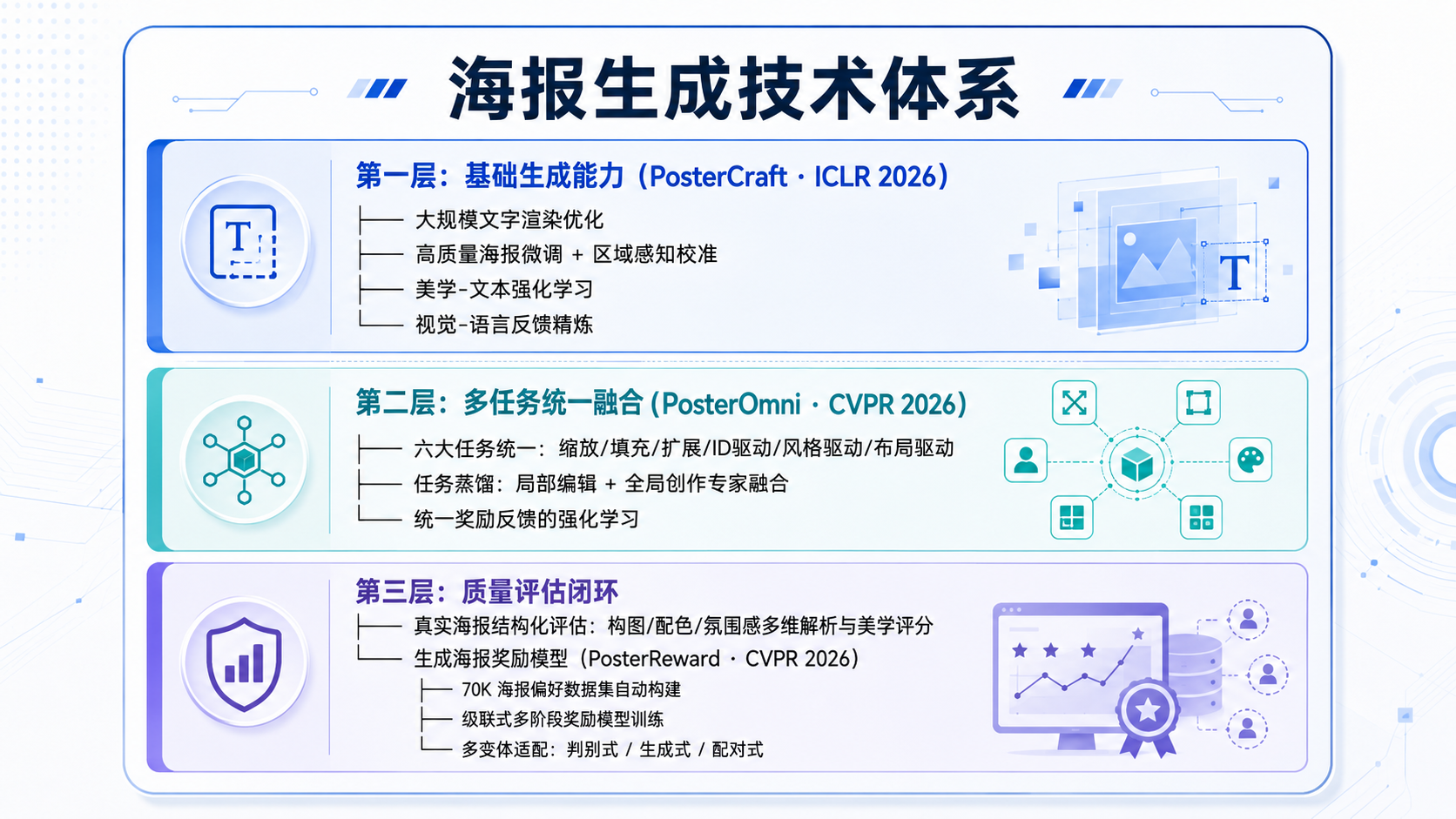
Meituan's Intelligent Creation Team has officially announced the development and open-sourcing of a complete technical system dedicated to AIGC-driven poster generation. The framework is built upon a sophisticated "Generation-Editing-Evaluation" closed loop, designed to streamline the production of high-quality visual marketing materials. Currently, this technology has been successfully implemented within Meituan Waimai (food delivery) and various Brand IP scenarios, demonstrating its practical utility in high-traffic commercial environments. By open-sourcing the entire system, Meituan aims to contribute to the broader AI community, providing a structured methodology for automated content creation that balances creative generation with rigorous quality assessment and editing capabilities.
Key Takeaways
- Complete Technical Framework: Meituan has established a full-stack AIGC system specifically for poster generation, covering the entire lifecycle from creation to quality control.
- The GEE Closed Loop: The system operates on a "Generation-Editing-Evaluation" (GEE) model, ensuring that AI-generated content is both editable and meets professional standards.
- Real-World Application: The technology is already operational within Meituan Waimai and Brand IP scenarios, proving its scalability in the food delivery and branding sectors.
- Open Source Commitment: Meituan has fully open-sourced this technical system, allowing external developers and researchers to utilize and build upon their AIGC innovations.
In-Depth Analysis
The Architecture of the Generation-Editing-Evaluation Closed Loop
At the core of Meituan's AIGC breakthrough is the "Generation-Editing-Evaluation" technical closed loop. This structure addresses one of the primary challenges in AI-driven design: the gap between raw AI output and production-ready marketing assets.
The "Generation" phase focuses on the initial synthesis of visual elements based on specific prompts or data inputs. However, because AI generation can sometimes produce unpredictable results, the "Editing" component is crucial. This allows for the refinement and adjustment of generated posters, ensuring that brand guidelines and specific layout requirements are met. Finally, the "Evaluation" phase acts as a quality gate, using automated or semi-automated metrics to judge the effectiveness, aesthetic quality, and brand consistency of the final product. By linking these three stages, Meituan has created a self-reinforcing system that minimizes manual intervention while maximizing output quality.
Strategic Implementation in Food Delivery and Brand IP
Meituan has strategically deployed this AIGC system in two high-impact areas: Meituan Waimai and Brand IP development. In the context of food delivery, the demand for localized and time-sensitive promotional posters is immense. The AIGC system allows for the rapid generation of diverse marketing materials that can cater to different merchant needs and consumer preferences.
In Brand IP scenarios, maintaining visual consistency is paramount. The "Generation-Editing-Evaluation" loop ensures that any AI-generated content featuring Meituan's brand assets remains true to the established visual identity. The successful implementation in these scenarios suggests that the system is capable of handling complex design tasks that require both high volume and high precision, effectively reducing the workload on human design teams while maintaining a high standard of visual communication.
Industry Impact
The decision by Meituan to open-source its AIGC poster generation system marks a significant contribution to the industrial application of generative AI. While many companies keep their internal AIGC tools proprietary, Meituan’s move provides the industry with a blueprint for a "closed-loop" technical architecture.
This open-source initiative is likely to accelerate the adoption of AIGC in the e-commerce and digital marketing sectors. By providing a framework that includes not just generation, but also editing and evaluation, Meituan is offering a solution to the "black box" problem of AI, where users often struggle to control or assess the quality of generated images. This transparency and utility could set a new standard for how enterprises integrate generative AI into their creative workflows, fostering a more collaborative environment for AI development in the visual arts.
Frequently Asked Questions
Question: What is the "Generation-Editing-Evaluation" loop mentioned by Meituan?
It is a technical framework where the system first generates a poster, provides tools or processes for editing and refining that generation, and finally evaluates the output against quality and brand standards to ensure it is ready for use.
Question: In which specific Meituan services is this AIGC technology currently used?
According to the announcement, the technology is currently implemented in Meituan Waimai (the company's food delivery service) and various Brand IP marketing scenarios.
Question: Is Meituan's AIGC poster generation technology available to the public?
Yes, Meituan has announced that the complete technical system for their AIGC poster generation has been fully open-sourced for the community.