LongCat Releases VitaBench 2.0: A Pioneering Benchmark for Long-Term Dynamic AI Agent Evaluation
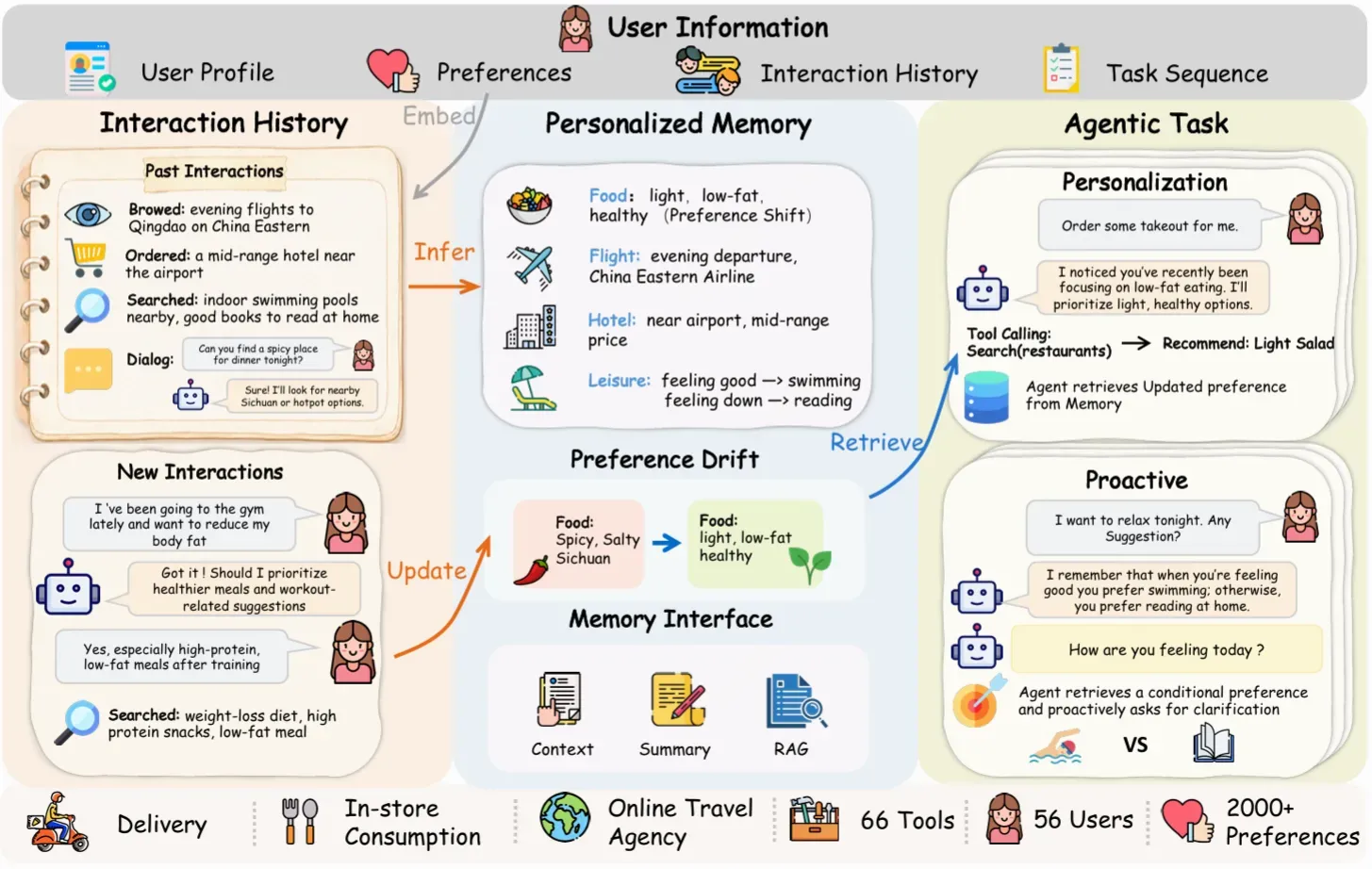
The LongCat team has officially released VitaBench 2.0, marking a significant milestone in the evaluation of artificial intelligence agents. As the first benchmark specifically designed for long-term dynamic user modeling in real-life scenarios, VitaBench 2.0 provides a systematic framework to assess Large Language Models (LLMs). The benchmark focuses on two critical dimensions: personalization and proactivity. By simulating authentic, evolving user interactions over extended periods, VitaBench 2.0 aims to bridge the gap between laboratory testing and real-world application, ensuring that AI agents can effectively adapt to individual user needs and take initiative in complex, dynamic environments.
Key Takeaways
- First-of-its-kind Benchmark: VitaBench 2.0 is the inaugural evaluation tool focused on long-term dynamic user modeling within authentic life scenarios.
- Focus on Personalization: The benchmark systematically measures how well Large Language Models can tailor interactions based on long-term user data.
- Evaluation of Proactivity: It assesses the ability of AI agents to take initiative during dynamic user interactions rather than just responding to prompts.
- Real-Life Simulation: Unlike static benchmarks, it emphasizes the importance of real-world, evolving user environments for testing AI capabilities.
In-Depth Analysis
Advancing Beyond Static Evaluation with Long-Term Dynamics
VitaBench 2.0 represents a paradigm shift in how the industry evaluates AI agents. Traditional benchmarks often focus on isolated tasks or short-term interactions, which do not fully capture the complexity of human-AI relationships. LongCat's new framework introduces "long-term dynamic user modeling," which requires the AI to maintain and update its understanding of a user over time. This approach ensures that the evaluation reflects the agent's ability to handle the fluidity of real-life situations, where user preferences and contexts are constantly changing. By focusing on these long-term dynamics, VitaBench 2.0 sets a higher standard for the development of truly intelligent and adaptive digital assistants.
Systematizing Personalization and Proactivity
The core strength of VitaBench 2.0 lies in its systematic evaluation of two sophisticated AI traits: personalization and proactivity. Personalization in this context goes beyond simple name recognition; it involves the model's capacity to integrate historical interaction data to provide relevant, context-aware support. Simultaneously, the benchmark tests proactivity—the agent's ability to anticipate user needs and act without explicit instruction. These capabilities are essential for moving AI from a reactive tool to a proactive partner. By providing a structured way to measure these attributes in dynamic settings, VitaBench 2.0 offers developers a clear roadmap for improving the user experience in LLM-powered applications.
Industry Impact
The release of VitaBench 2.0 by the LongCat team is poised to influence the AI industry by highlighting the necessity of long-term memory and proactive behavior in Large Language Models. As AI agents become more integrated into daily life, the ability to model users accurately over time becomes a competitive necessity. This benchmark provides a standardized metric for companies and researchers to gauge their progress in creating more human-like, reliable agents. Furthermore, by focusing on real-life scenarios, it encourages the development of AI that is not only technically proficient but also practically useful in navigating the nuances of human behavior and dynamic environments.
Frequently Asked Questions
Question: What is the primary focus of VitaBench 2.0?
Answer: VitaBench 2.0 focuses on evaluating Large Language Models in the context of long-term dynamic user modeling, specifically measuring their personalization and proactivity in real-life scenarios.
Question: Who developed VitaBench 2.0 and why is it significant?
Answer: It was developed by the LongCat team (Meituan Technical Team). It is significant because it is the first benchmark to systematically assess AI agents based on long-term, authentic, and evolving user interactions rather than static tasks.
Question: How does VitaBench 2.0 measure an AI agent's proactivity?
Answer: The benchmark evaluates the agent's ability to take initiative and provide assistance within dynamic user interactions, assessing whether the model can act effectively without being solely dependent on direct user prompts.