AI News on August 14, 2026

The Expansion of Flock ALPR Systems: AI-Driven Vehicle Surveillance and the Growing Privacy Debate
Industry News

The Expansion of Flock ALPR Systems: AI-Driven Vehicle Surveillance and the Growing Privacy Debate

Flock Safety has deployed more than 120,000 automatic license plate reader (ALPR) cameras across the United States, marking a significant shift in AI-powered surveillance. These devices utilize advanced artificial intelligence to identify and track vehicles based on a variety of characteristics, including license plate numbers, make, model, and color. By networking these cameras together, the system can monitor the movements of vehicles and individuals throughout the day and across various locations. This widespread implementation has sparked a growing controversy regarding the balance between technological monitoring and personal privacy, as the scale of tracking reaches unprecedented levels in the public sphere.

The Verge
Microsoft Retires Mico Character from Copilot Voice Mode as AI Assistant Shifts Toward Professional Branding
Industry News

Microsoft Retires Mico Character from Copilot Voice Mode as AI Assistant Shifts Toward Professional Branding

Microsoft has officially announced the removal of Mico, the emotive yellow blob character, from its Copilot voice mode interface. Originally introduced to provide a visual personality for the AI's voice interactions, Mico is being transitioned to Microsoft's Learn Live platform. According to a Microsoft support page and initial reports from GeekWire, the company believes the character will have "more to react to" in its new environment. This move marks a significant change in the user experience for Copilot, as the assistant moves away from the playful, Clippy-like mascot that defined its early voice mode. The transition reflects an evolving strategy in how Microsoft manages its AI visual identity and the placement of interactive avatars within its broader ecosystem of digital tools and educational platforms.

The Verge
Writer Launches New AI Model Based on GLM-5.2 to Reduce Token Costs and Enhance Deployment Efficiency
Product Launch

Writer Launches New AI Model Based on GLM-5.2 to Reduce Token Costs and Enhance Deployment Efficiency

Writer has announced the release of a new AI model alongside an upgraded harness designed specifically to manage and contain token costs. This new system is developed as a post-training variation of Z.ai’s open-source model, GLM-5.2. By leveraging this foundation, Writer aims to offer enterprises deployment-ready AI capabilities at a significantly lower price point than previous iterations. The focus of this update is to address the growing concern of operational expenses in AI implementation, providing a more cost-effective solution for businesses looking to integrate advanced language models into their workflows without the high overhead typically associated with large-scale token usage. The announcement highlights a shift toward optimizing existing open-source architectures to deliver specialized, budget-friendly enterprise tools.

TechCrunch AI
Databricks Secures $5 Billion Funding Round at $190 Billion Valuation Amid Massive Investor Demand
Funding

Databricks Secures $5 Billion Funding Round at $190 Billion Valuation Amid Massive Investor Demand

Databricks has successfully closed a massive $5 billion funding round, achieving a staggering $190 billion valuation. Originally seeking only $1 billion, the company faced overwhelming investor interest totaling $15 billion. CEO Ali Ghodsi explained that the decision to accept $5 billion—five times the original target—was driven by the high costs associated with AI development and the intense desire from investors to participate in the round. This significant capital injection underscores the current market's aggressive appetite for AI-centric infrastructure and data management platforms, positioning Databricks as a dominant force in the evolving tech landscape. The move highlights the capital-intensive nature of the AI industry and the premium investors are willing to pay for established leaders in the space.

TechCrunch AI
HP OmniBook X Flip Deal: Save $300 on This School-Friendly Laptop at Best Buy Today
Industry News

HP OmniBook X Flip Deal: Save $300 on This School-Friendly Laptop at Best Buy Today

Best Buy has announced a significant price reduction on the HP OmniBook X Flip, a laptop specifically positioned as a school-friendly solution for students and budget-conscious users. Currently discounted by $300, the device's price has been lowered to $699.99. This promotion is particularly noteworthy given the current economic climate where memory prices remain high with no immediate signs of decline. The HP OmniBook X Flip comes equipped with an Intel Core Ultra series processor and is highlighted for offering an adequate amount of RAM despite the rising costs of components. This deal represents a strategic move to provide high-performance hardware at a mid-range price point, addressing the needs of the educational sector during a period of hardware price volatility.

The Verge
OpenAI Leadership Transition: Chief Revenue Officer Denise Dresser Departs as Dali Rajic Steps In
Industry News

OpenAI Leadership Transition: Chief Revenue Officer Denise Dresser Departs as Dali Rajic Steps In

OpenAI is undergoing a significant shift in its executive ranks following the announcement that Denise Dresser, the company’s Chief Revenue Officer, will be leaving her position in the coming weeks. Dresser, who transitioned to OpenAI in December after serving as the CEO of Slack, shared her decision to pursue new opportunities via a LinkedIn update. This departure marks the second high-profile executive exit for OpenAI within a single week, signaling a period of rapid leadership turnover. To fill the vacancy, OpenAI has appointed Dali Rajic, the current President and COO of the cloud security firm Wiz, to take over the responsibilities. The transition highlights a pivotal moment for OpenAI as it navigates internal changes while maintaining its commercial growth trajectory.

The Verge
Why Human Understanding is the New Bottleneck in the Era of AI-Driven Code Generation
Industry News

Why Human Understanding is the New Bottleneck in the Era of AI-Driven Code Generation

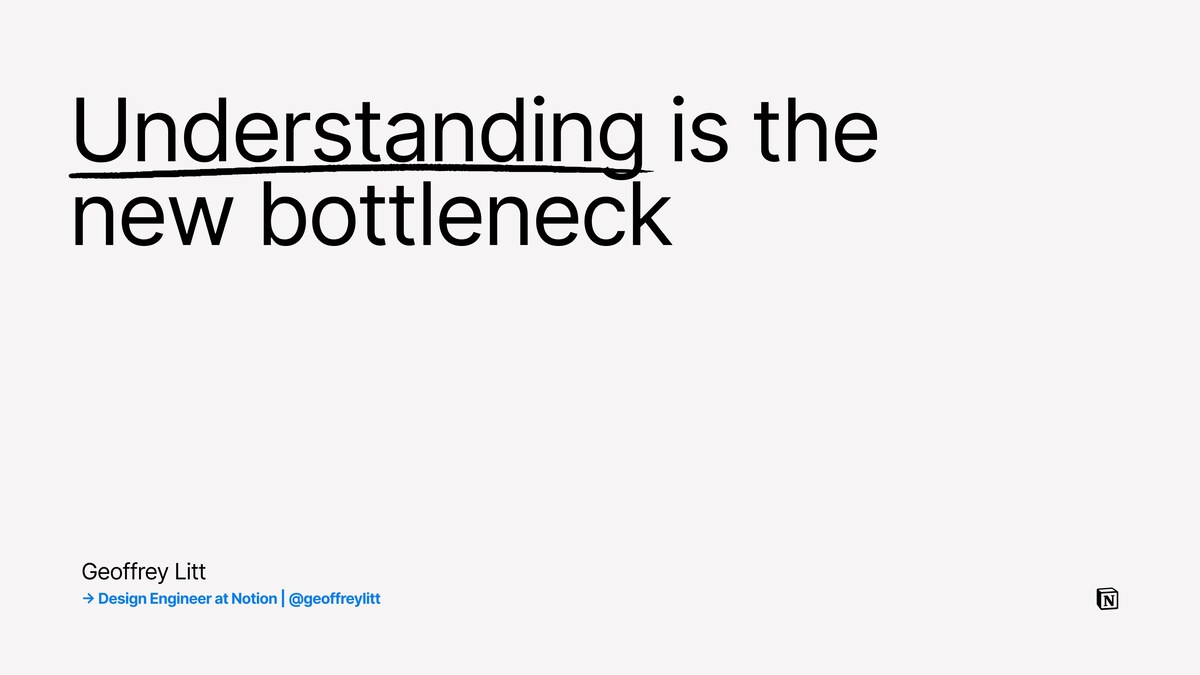
In a July 2026 talk at the AI Engineer conference, Geoffrey Litt argues that as AI agents increasingly automate code production, human understanding has become the primary bottleneck in software development. While agents are becoming proficient at self-verification—checking for architectural soundness and spec compliance—Litt suggests that human involvement remains vital. The core argument shifts from understanding code for 'verification' (a binary correct/incorrect check) to understanding for 'participation' in the creative process. To bridge this gap, Litt proposes moving beyond line-by-line diff reading toward more efficient comprehension methods, including code explainer documentation, self-assessment quizzes, and interactive micro-worlds. This shift ensures that humans remain active participants in the iterative loops of project development rather than being sidelined by automated systems.

Hacker News
The Evolution of Autonomous Lawn Care: Why Modern Robot Mowers Still Require Human Oversight
Industry News

The Evolution of Autonomous Lawn Care: Why Modern Robot Mowers Still Require Human Oversight

The robotic lawnmower industry has reached a significant milestone where devices are now reliable enough to substantially reduce yard maintenance labor. However, as highlighted by recent evaluations of leading brands such as Segway, Mammotion, Husqvarna, Roborock, and Dreame, these machines have not yet achieved true 'set-it-and-forget-it' status. Despite technological advancements, users must continue to monitor these autonomous cutters to prevent them from damaging turf or crossing property boundaries. This analysis explores the current state of the market, the persistent need for human supervision, and the technical challenges that prevent full autonomy in residential lawn care.

The Verge
OpenAI and Cerebras Launch GPT-5.6 Sol Ultrafast: A New Frontier in 750 Tokens Per Second AI Performance
Product Launch

OpenAI and Cerebras Launch GPT-5.6 Sol Ultrafast: A New Frontier in 750 Tokens Per Second AI Performance

OpenAI and Cerebras have announced the launch of "Ultrafast Mode," a groundbreaking service tier for the OpenAI API. Powered by Cerebras hardware, this new tier features GPT-5.6 Sol, a frontier model capable of delivering an unprecedented 750 output tokens per second without sacrificing quality. The model is designed to resolve the long-standing tradeoff between AI intelligence and processing speed, making it ideal for mission-critical and time-sensitive workflows. In comparative benchmarks, GPT-5.6 Sol Ultrafast runs 11x faster than Fable 5 and 5x faster than Opus 4.8 on Fast mode. Furthermore, it completed the rigorous "Humanity's Last Exam"—a set of 2,500 PhD-level questions—in just over 11 hours, nearly seven times faster than its closest competitors. Currently, access is limited to a select group of customers via the OpenAI API.

Hacker News
Matic Cues Update: Revolutionizing Home Cleaning with Gesture and Voice Control Integration
Product Launch

Matic Cues Update: Revolutionizing Home Cleaning with Gesture and Voice Control Integration

Matic has officially launched a significant upgrade for its robot vacuum cleaner titled "Matic Cues." This new feature set introduces advanced interaction capabilities, specifically voice and gesture control, to the device. Users can now interact with the robot through direct verbal commands or by using physical gestures, such as pointing at a specific mess to initiate spot-cleaning. This update represents a shift toward more natural human-robot interaction, allowing the vacuum to respond to real-time environmental cues rather than relying solely on automated schedules or manual app controls. The introduction of Matic Cues aims to streamline the cleaning process, making it more intuitive for users to address immediate cleaning needs as they occur in the household.

The Verge
Google Unveils Gemini 3.7 Flash: A High-Performance AI Workhorse Optimized for Coding, Agents, and Web Development
Product Launch

Google Unveils Gemini 3.7 Flash: A High-Performance AI Workhorse Optimized for Coding, Agents, and Web Development

Google has officially introduced Gemini 3.7 Flash, its most advanced "workhorse" model to date, specifically engineered for coding tasks and agentic workflows. Released just three weeks after the debut of Gemini 3.6 Flash, this new iteration represents a significant leap in algorithmic innovation and developer-centric design. Gemini 3.7 Flash delivers substantial performance gains in software engineering, knowledge-dense fields like law and finance, and web development. Notably, the model is launched with an introductory price that is 50% lower than the original cost of 3.6 Flash per million tokens. With improved accuracy in benchmarks such as FrontierCode 1.1 and DeepSWE v1.1, Gemini 3.7 Flash is positioned as a highly efficient, cost-effective solution for developers building complex, production-ready applications and automated agents.

Hacker News
Streamlining Robotics Development: Record, Train, and Deploy with Strands Agents, LeRobot, and Hugging Face Storage Buckets
Product Launch

Streamlining Robotics Development: Record, Train, and Deploy with Strands Agents, LeRobot, and Hugging Face Storage Buckets

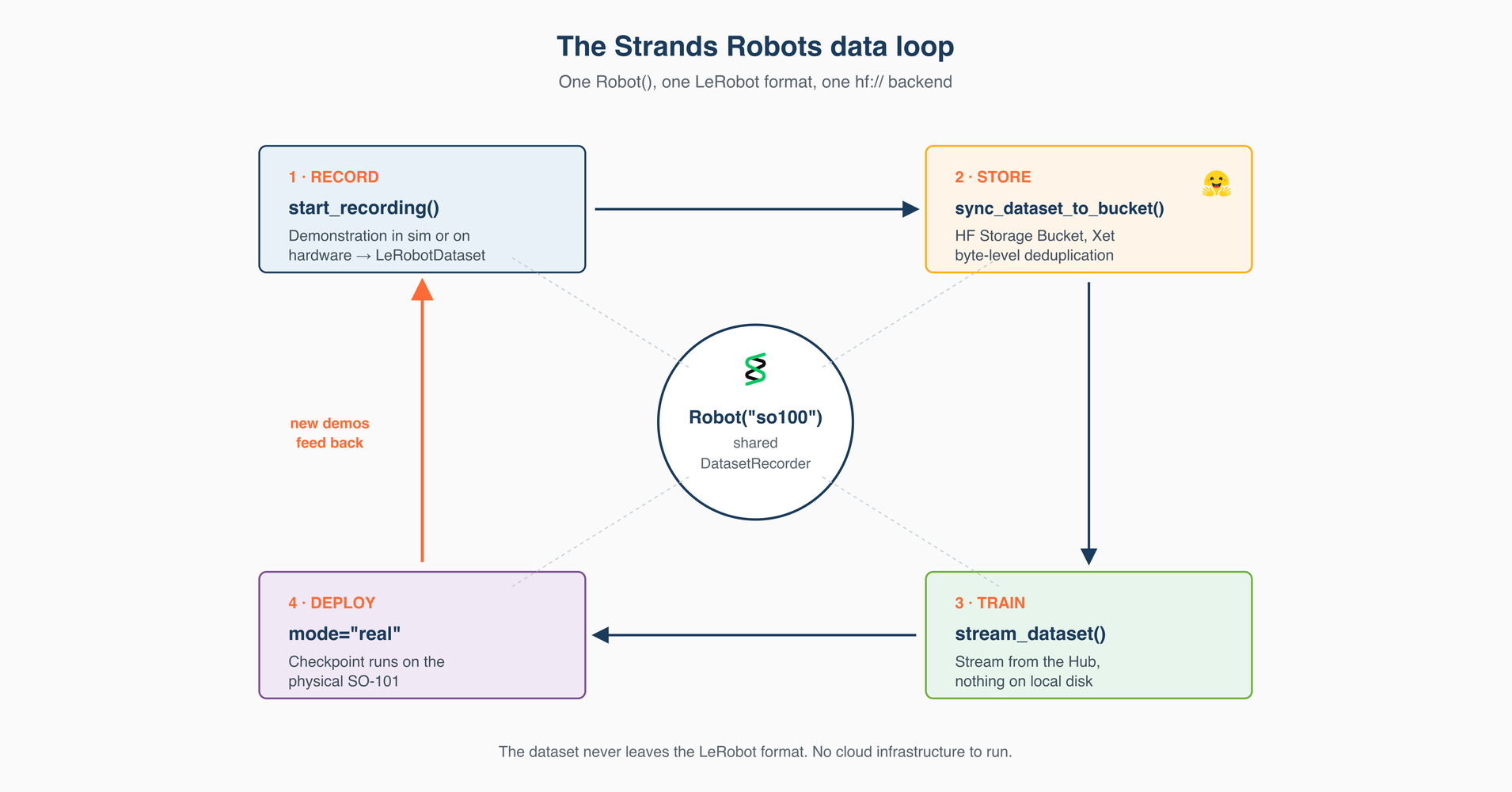
Hugging Face has announced a unified robotics workflow that integrates Strands Agents, the LeRobot library, and Hugging Face Storage Buckets. This end-to-end solution allows developers to manage the entire lifecycle of embodied AI—from initial data recording to model training and final deployment—within a single ecosystem. By leveraging Strands Agents for interaction, LeRobot for specialized robotics training, and Storage Buckets for scalable data management, Hugging Face aims to simplify the complexities of robotics engineering. This integration represents a significant step toward standardizing the robotics pipeline, providing a cohesive environment for researchers and developers to build and scale intelligent physical agents.

Hugging Face Blog
Google DeepMind Introduces Gemini 3.7 Flash: The Latest Evolution in the Gemini Model Family
Product Launch

Google DeepMind Introduces Gemini 3.7 Flash: The Latest Evolution in the Gemini Model Family

On August 13, 2026, Google DeepMind officially announced the introduction of Gemini 3.7 Flash via its official blog. This new model represents the latest iteration in the Gemini series, specifically within the 'Flash' category designed for optimized performance and speed. While the initial announcement serves as a formal introduction to the model, it marks a significant milestone in Google's ongoing development of high-efficiency artificial intelligence. The release follows the established lineage of the Gemini family, continuing the trend of providing scalable AI solutions for various applications.

DeepMind Blog
Google Workspace Unveils Sheets Canvas: Transforming Spreadsheet Data into Interactive Visuals with Simple Prompts
Product Launch

Google Workspace Unveils Sheets Canvas: Transforming Spreadsheet Data into Interactive Visuals with Simple Prompts

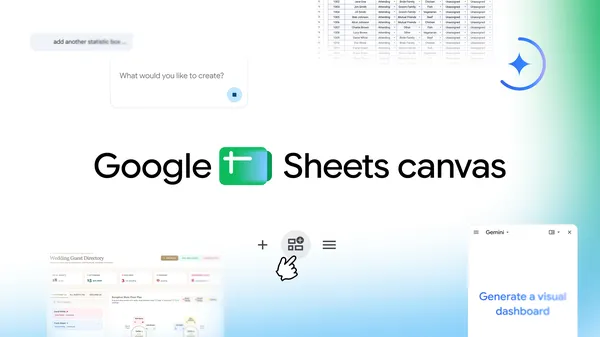
Google has announced the launch of "Sheets canvas," a new feature within Google Sheets designed to revolutionize how users interact with spreadsheet data. By utilizing simple natural language prompts, Sheets canvas allows users to transform static rows and columns into dynamic, interactive formats such as dashboards, custom study trackers, and seating charts. This update marks a significant shift in the Google Workspace ecosystem, moving beyond traditional grid-based data management toward a more visual and intuitive user experience. The feature aims to simplify the creation of complex organizational tools, making data more actionable and visually engaging for users across various sectors, from education to business management.

Google AI Blog
NVIDIA GeForce NOW Launches Native Linux App and Enhances Frame Generation Responsiveness for Performance Members
Product Launch

NVIDIA GeForce NOW Launches Native Linux App and Enhances Frame Generation Responsiveness for Performance Members

NVIDIA has announced a significant series of updates for its GeForce NOW cloud gaming service, timed perfectly for the back-to-school season. The most notable development is the official release of the native Linux app, which has successfully transitioned out of its beta phase, offering a more stable experience for Linux and Chromebook users. In addition to platform expansions, NVIDIA is introducing advanced cloud optimizations specifically designed to improve the responsiveness of Frame Generation during streaming sessions. Furthermore, subscribers within the Performance membership tier will benefit from increased frame rates, enhancing the overall visual fluidity and gameplay quality. these updates represent a strategic effort to refine the cloud gaming experience across a broader range of hardware and operating systems.

NVIDIA Newsroom
Product Launch

DeepSeek Launches Harness Developer Preview: A Fully Modular Plugin-Based Framework for AI Agent Development

DeepSeek has officially released the developer preview of DeepSeek Harness, an open-source framework designed to bridge the gap between AI models and real-world environments. Built on the Cordis kernel, the platform adopts an "everything is a plugin" philosophy, allowing developers to swap or recompose every capability—from models and tools to UI and scheduling—via configuration. With a focus on traceability, DeepSeek Harness records every interaction in an append-only session log, providing a transparent "Trajectory view" of agent reasoning and actions. This release includes source code and developer documentation, aiming to empower the global community to build highly customizable and reliable AI agents by providing a robust infrastructure that manages dependencies and environment interactions.

Hacker News
Product Launch

The Builder’s Guide to GPT-5.6: Optimizing AI Agents with Smarter Model Selection and API Updates

OpenAI has released a comprehensive guide tailored for startups and developers looking to harness the power of GPT-5.6. The guide focuses on the creation of faster and more cost-efficient AI agents, addressing two of the most significant hurdles in AI deployment: performance speed and operational expenses. Central to this update are the introduction of smarter model selection techniques and enhanced capabilities within the Responses API. These tools are designed to empower builders to create more autonomous and reliable agents by providing better control over how models are utilized and how data is processed. By streamlining the development process, OpenAI aims to help startups scale their AI solutions more effectively while maintaining high standards of efficiency.

OpenAI Blog
Industry News

OpenAI Announces Ultrafast Mode for GPT-5.6 Sol Featuring 14x Speed Increase via Cerebras Hardware

OpenAI has introduced a preview of its new "Ultrafast" API service tier, specifically optimized for the GPT-5.6 Sol model. This new offering leverages specialized hardware from Cerebras to deliver a performance boost of up to 14 times the standard processing speed, reaching a throughput of 750 output tokens per second. This advancement represents a significant leap in AI inference capabilities, focusing on high-velocity output for developers and enterprises. By integrating Cerebras technology, OpenAI aims to minimize latency and maximize efficiency for its latest model iteration, setting a new benchmark for real-time generative AI performance and responsiveness in the professional AI landscape.

OpenAI Blog
Industry News

OpenAI Appoints Dali Rajic as Chief Revenue Officer to Lead Global Revenue and AI Value Realization

OpenAI has announced the appointment of Dali Rajic as its Chief Revenue Officer (CRO). In this strategic leadership role, Rajic is tasked with heading OpenAI's global revenue organization. The appointment is centered on a clear mission: to assist businesses in realizing the full value of artificial intelligence. By bringing Rajic on board, OpenAI aims to strengthen its commercial operations and provide the necessary guidance for enterprises to successfully integrate and benefit from AI technologies. This move highlights OpenAI's transition toward a more robust global business structure, focusing on bridging the gap between advanced AI research and practical, value-driven business applications on a worldwide scale.

OpenAI Blog
DeepSeek-V4-Pro-0813 AI Model Faces Challenges with Mixed Benchmark Results in Technical and Financial Tasks
Industry News

DeepSeek-V4-Pro-0813 AI Model Faces Challenges with Mixed Benchmark Results in Technical and Financial Tasks

DeepSeek has reported mixed benchmark results for its latest AI model, the DeepSeek-V4-Pro-0813. According to the company, the model encountered significant difficulties when performing tasks within sandboxed terminal environments. Additionally, the AI struggled with the generation of complex financial models in Microsoft Excel. These findings indicate that while the model is a new entry in the DeepSeek lineup, it faces specific performance hurdles in specialized technical and financial applications. The mixed results highlight the ongoing complexity of developing AI models that can reliably handle intricate, multi-step logical tasks and restricted computing environments, marking a critical area for future refinement in DeepSeek's development roadmap.

Tech in Asia
Y Combinator CEO Garry Tan Explains Why Corporate Friction and Slowness are Strategic Gifts for AI Startups
Industry News

Y Combinator CEO Garry Tan Explains Why Corporate Friction and Slowness are Strategic Gifts for AI Startups

Y Combinator CEO Garry Tan provides a strategic perspective for AI founders, suggesting that the bureaucratic friction inherent in large corporations is a significant advantage for startups. Tan advises entrepreneurs to ignore fleeting industry trends and instead focus on the automation of processes they already understand. By capitalizing on the slow pace of established companies, startups can iterate and deploy solutions with a speed that incumbents cannot match. This strategic focus on practical automation over market hype allows small teams to solve real-world problems and gain a foothold in competitive industries where corporate inertia creates massive opportunities for innovation. Ultimately, Tan views the inefficiency of large organizations as a catalyst for startup growth and market entry.

Tech in Asia
Lenovo Achieves 43% Revenue Growth as AI-Related Sales Surge to $9.3 Billion
Industry News

Lenovo Achieves 43% Revenue Growth as AI-Related Sales Surge to $9.3 Billion

Lenovo has reported a significant 43% increase in total revenue, a surge primarily attributed to the growing demand for Artificial Intelligence (AI) and personal computers. A standout highlight from the financial results is the performance of AI-related sectors, which saw a 60% revenue increase, reaching US$9.3 billion. This AI segment now accounts for 35% of Lenovo's total revenue, signaling a major shift in the company's business composition. Following the announcement of these strong financial figures, Lenovo's shares experienced a notable surge, climbing as much as 17%. The results underscore the critical role AI is playing in the hardware and PC market recovery, reflecting a strong alignment between the company's product strategy and current market demands for advanced computing capabilities.

Tech in Asia
FluidDocs CLI: A New HTML Deck Builder Tool Launched by Nishant Aggarwal on Product Hunt
Product Launch

FluidDocs CLI: A New HTML Deck Builder Tool Launched by Nishant Aggarwal on Product Hunt

FluidDocs CLI, a specialized HTML deck builder developed by Nishant Aggarwal, officially debuted on Product Hunt on August 13, 2026. This command-line interface (CLI) tool is designed to streamline the creation of presentation decks using web-based technologies. By focusing on an HTML-centric approach, FluidDocs CLI targets developers and technical professionals who prefer programmatic and text-based workflows over traditional graphical user interface (GUI) presentation software. The launch marks a significant addition to the developer productivity ecosystem, emphasizing the growing trend of 'presentation-as-code.' While the initial announcement focuses on its core identity as a CLI-driven builder, the project represents a shift toward more portable and version-control-friendly presentation formats within the tech community.

Product Hunt
Kin Health Debuts on Product Hunt: A New Entry in the 2026 Health-Tech Landscape
Product Launch

Kin Health Debuts on Product Hunt: A New Entry in the 2026 Health-Tech Landscape

On August 13, 2026, a new project titled Kin Health was officially launched on the product discovery platform Product Hunt. Authored by Arpan Parikh, the listing marks the initial public appearance of the entity within the digital health ecosystem. While the primary source provides limited functional details regarding the specific features or underlying technology of Kin Health, its presence on a major launch platform signifies a strategic move to gain visibility among early adopters and industry professionals. This report examines the metadata surrounding the launch, the significance of the timing, and the role of the Product Hunt platform in the current health-tech market, adhering strictly to the available information provided in the initial announcement.

Product Hunt
MediaCrawler: A Comprehensive Open-Source Tool for Scraping Major Chinese Social Media Platforms and Content
Open Source

MediaCrawler: A Comprehensive Open-Source Tool for Scraping Major Chinese Social Media Platforms and Content

MediaCrawler, an open-source project developed by NanmiCoder, has gained significant attention on GitHub for its robust capabilities in data extraction across the Chinese social media landscape. The tool supports a wide array of platforms, including Xiaohongshu, Douyin, Kuaishou, Bilibili, Weibo, Baidu Tieba, and Zhihu. It is designed to scrape various content types such as notes, videos, posts, and detailed comment threads. By providing a unified solution for accessing public data from these diverse and often fragmented ecosystems, MediaCrawler serves as a vital resource for developers and researchers. The project also highlights its commercial viability through partnerships, featuring BrowserAct as a platinum sponsor. This tool represents a growing trend in the developer community to streamline data collection for market analysis, sentiment tracking, and AI model training.

GitHub Trending
Diagram Design for Claude Code: 29 Editorial-Grade HTML and SVG Templates for High-Quality Visual Documentation
Open Source

Diagram Design for Claude Code: 29 Editorial-Grade HTML and SVG Templates for High-Quality Visual Documentation

The 'diagram-design' repository, recently trending on GitHub and authored by Cathryn Lavery, introduces a collection of 29 editorial-grade diagram types specifically tailored for Claude Code. This project distinguishes itself by offering independent HTML and SVG files, intentionally avoiding the common 'bloat' associated with Mermaid-generated content. By focusing on a clean aesthetic—devoid of shadows and unnecessary complexity—the repository provides a solution that professional designers can embrace. These templates are designed to bridge the gap between automated AI-generated logic and high-fidelity visual communication, offering a streamlined, lightweight alternative for developers and technical writers who prioritize design quality in their documentation workflows.

GitHub Trending
Orca: A New ADE for Collaborative Parallel Agent Clusters Across Desktop, Mobile, and VPS
Product Launch

Orca: A New ADE for Collaborative Parallel Agent Clusters Across Desktop, Mobile, and VPS

Orca, a project developed by stablyai, has surfaced as a specialized Agent Deployment Environment (ADE) designed for the collaborative management of parallel agent clusters. The platform distinguishes itself by supporting the execution of various programming agents through a user's own subscriptions, ensuring both flexibility and cost-control. With a focus on accessibility, Orca is engineered to run across multiple environments, including desktop, mobile, and Virtual Private Servers (VPS). This development marks a significant step in the orchestration of multi-agent systems, providing a unified framework for developers to deploy and coordinate intelligent agents regardless of the underlying hardware. By bridging the gap between different platforms, Orca facilitates a more integrated approach to agentic workflows and parallel processing in the AI ecosystem.

GitHub Trending
Macro: A Unified AI-Powered Workspace Integrating Team Communication and Shared Memory
Product Launch

Macro: A Unified AI-Powered Workspace Integrating Team Communication and Shared Memory

Macro has introduced a comprehensive unified workspace designed to centralize team operations by integrating several critical business functions into a single platform. The system combines email, chat, documents, tasks, AI agents, calls, and CRM into one cohesive environment. The standout feature of Macro is its "shared AI memory," which enables users to create associations across different data types using @ mentions. By bridging the gap between disparate tools like CRM and internal chat, Macro aims to eliminate information silos and provide a streamlined workflow where AI agents and human team members operate within the same contextual framework. This development represents a significant step toward AI-native productivity environments that prioritize data connectivity and accessibility.

GitHub Trending
Semantica: Developing Graph-Native Infrastructure for Context-Oriented and Accountable Artificial Intelligence Systems
Open Source

Semantica: Developing Graph-Native Infrastructure for Context-Oriented and Accountable Artificial Intelligence Systems

Semantica, a project by semantica-agi, has introduced a graph-native infrastructure specifically designed to support context-oriented and accountable AI systems. As AI models become increasingly complex, the need for data structures that can handle intricate relationships and provide transparency is paramount. Semantica addresses these needs by utilizing a graph-native approach, which allows for better contextual understanding and traceability within AI workflows. This initiative, recently highlighted on GitHub, represents a move toward more robust and responsible AI development, focusing on the underlying infrastructure required to make AI systems both contextually aware and fully accountable for their outputs. By positioning itself as a foundational layer for the next generation of AI, Semantica aims to solve critical challenges in data relationship management and system reliability.

GitHub Trending
PPT-Master: An AI-Driven Tool for Converting Documents into Native PowerPoint Presentations with Animations and Audio
Open Source

PPT-Master: An AI-Driven Tool for Converting Documents into Native PowerPoint Presentations with Animations and Audio

PPT-Master, a new project developed by Hugo He and featured on GitHub Trending, offers a sophisticated solution for transforming documents or specific topics into professional PowerPoint presentations. Unlike standard conversion tools, PPT-Master generates native .pptx files, ensuring that all shapes, transitions, and animations remain fully editable within the Microsoft PowerPoint environment. The tool goes beyond simple text-to-slide conversion by incorporating data-backed charts and tables, as well as integrated audio narration derived directly from speaker notes. Additionally, it provides high levels of customization by allowing users to apply their own .pptx templates, making it a versatile asset for creators who require both AI efficiency and brand consistency in their presentation workflows.

GitHub Trending
Agency-Agents: A Comprehensive AI Agency Framework Featuring Specialized Experts and Mature Deliverables
Open Source

Agency-Agents: A Comprehensive AI Agency Framework Featuring Specialized Experts and Mature Deliverables

Agency-Agents, a project by msitarzewski recently highlighted on GitHub Trending, introduces a sophisticated ecosystem of specialized AI agents designed to function as a full-service professional agency. The framework moves beyond generic AI interactions by providing a diverse team of experts, including technical roles like the "Frontend Wizard" and social engagement specialists such as the "Reddit Community Ninja." A unique aspect of this project is the inclusion of balancing roles like the "Whim Injector" for creative sparks and the "Reality Checker" for feasibility assessments. Each agent is built with a distinct personality, structured professional processes, and a focus on producing mature deliverables. This structured approach aims to provide users with a ready-to-use, professional-grade AI workforce capable of handling complex, multi-faceted tasks across various domains.

GitHub Trending
Kronos: A New Foundation Model Specifically Designed for the Language of Financial Markets
Industry News

Kronos: A New Foundation Model Specifically Designed for the Language of Financial Markets

Kronos has emerged as a specialized foundation model tailored for the intricate "language" of financial markets. Developed by shiyu-coder and hosted on GitHub, this project represents a significant step toward domain-specific artificial intelligence. Unlike general-purpose models, Kronos focuses on the unique linguistic and data patterns found within global finance, aiming to provide a foundational architecture for market analysis. The release highlights a growing trend in the AI industry where foundation models are being customized for high-stakes sectors that require deep contextual understanding. By positioning itself as a model for the "language" of markets, Kronos suggests a comprehensive approach to interpreting financial data, sentiment, and structural trends, offering a new resource for developers and researchers in the fintech space.

GitHub Trending
Product Launch

Google Pixel 11 Surfaces on Product Hunt: A Preliminary Look at the 2026 Flagship Listing

On August 13, 2026, a new entry for the Google Pixel 11 was officially published on the product discovery platform Product Hunt. Authored by Zac Zuo, the listing marks a significant early appearance for Google's next-generation flagship smartphone. While the original listing currently lacks detailed technical specifications or a feature breakdown, its presence on a major industry platform serves as a formal marker for the device's upcoming lifecycle. This analysis examines the timing of the publication, the role of the author in the product's discovery, and the implications of this listing for the broader smartphone market as Google prepares for its 2026 hardware rollout. The absence of specific data in the initial post highlights the early-stage nature of this announcement.

Product Hunt