AI News on April 22, 2026

Thunderbolt by Thunderbird: A New AI Framework for User-Controlled Models and Data Sovereignty
Open Source

Thunderbolt by Thunderbird: A New AI Framework for User-Controlled Models and Data Sovereignty

Thunderbolt, a new project from the Thunderbird team, introduces a user-centric approach to artificial intelligence. The initiative focuses on three core pillars: allowing users to choose their own AI models, ensuring complete ownership of personal data, and eliminating the risks associated with vendor lock-in. By prioritizing sovereignty and flexibility, Thunderbolt aims to shift the power dynamic from service providers back to the individual user. This project, hosted on GitHub, represents a significant step toward open-source AI integration where the user maintains full control over the underlying technology and the information it processes, addressing growing concerns regarding privacy and platform dependency in the modern AI landscape.

GitHub Trending
DeepSeek-AI Releases DeepGEMM: A High-Performance FP8 GEMM Library for Modern Large Language Models
Open Source

DeepSeek-AI Releases DeepGEMM: A High-Performance FP8 GEMM Library for Modern Large Language Models

DeepSeek-AI has introduced DeepGEMM, a specialized library designed to optimize General Matrix Multiplications (GEMMs) for modern Large Language Models (LLMs). This open-source repository, hosted on GitHub, focuses on providing clean and efficient FP8 GEMM kernels. By utilizing fine-grained scaling, DeepGEMM serves as a unified high-performance Tensor Core kernel library. It addresses the critical computational primitives required for advanced AI models, specifically targeting the efficiency of FP8 operations. The release highlights DeepSeek's commitment to enhancing the underlying performance of LLM architectures through streamlined, high-speed matrix multiplication kernels that leverage modern hardware capabilities.

GitHub Trending
OpenAI Releases OpenAI Agents SDK: A Lightweight and Powerful Multi-Agent Workflow Framework for Python
Open Source

OpenAI Releases OpenAI Agents SDK: A Lightweight and Powerful Multi-Agent Workflow Framework for Python

OpenAI has officially introduced the OpenAI Agents SDK, a specialized Python-based framework designed to streamline the development of multi-agent workflows. This lightweight yet powerful tool aims to provide developers with a robust infrastructure for managing complex interactions between multiple AI agents. By focusing on a minimalist design that does not sacrifice performance, the SDK allows for the creation of sophisticated, interconnected AI systems. As a GitHub Trending project, it represents OpenAI's latest contribution to the developer ecosystem, offering a standardized approach to building agentic applications. The framework is specifically tailored for the Python environment, ensuring compatibility with the most widely used language in the artificial intelligence and machine learning sectors.

GitHub Trending
WorldMonitor: A New AI-Powered Real-Time Global Intelligence Dashboard for Geopolitical and Infrastructure Tracking
Product Launch

WorldMonitor: A New AI-Powered Real-Time Global Intelligence Dashboard for Geopolitical and Infrastructure Tracking

WorldMonitor, a new open-source project developed by user koala73, has emerged as a comprehensive real-time global intelligence dashboard. The platform is designed to provide users with a unified situational awareness interface, integrating AI-driven news aggregation with specialized monitoring capabilities. By focusing on geopolitical shifts and infrastructure tracking, WorldMonitor aims to streamline how information is consumed and analyzed in a rapidly changing global landscape. The project, recently trending on GitHub, offers a centralized solution for professionals and enthusiasts needing to maintain a high-level overview of international developments and critical system statuses through a single, cohesive digital environment.

GitHub Trending
Paperless-ngx: A Community-Driven Document Management System for Seamless Scanning, Indexing, and Archiving
Open Source

Paperless-ngx: A Community-Driven Document Management System for Seamless Scanning, Indexing, and Archiving

Paperless-ngx is a community-supported, enhanced document management system designed to streamline the digitization of physical paperwork. By providing robust tools for scanning, indexing, and archiving, the project aims to help users transition to a paperless environment. As an open-source solution hosted on GitHub, it leverages community contributions to maintain and improve its features. The system focuses on organizing digital documents efficiently, ensuring that all archived materials are easily searchable and securely stored. This project represents a significant development in personal and professional document organization, offering a modern approach to managing the lifecycle of digital assets through a community-backed framework.

GitHub Trending
Meta Introduces Internal Tool to Train AI Models Using Employee Keystrokes and Mouse Movements
Industry News

Meta Introduces Internal Tool to Train AI Models Using Employee Keystrokes and Mouse Movements

Meta has announced the implementation of a new internal tool designed to capture employee interactions for artificial intelligence development. According to reports, the system records mouse movements and button clicks, converting these physical actions into data points to train the company's AI models. This initiative represents a direct approach to data collection within the corporate environment, leveraging the granular behavioral patterns of its own workforce to refine machine learning algorithms. While the specific applications of the resulting models have not been detailed, the tool signifies a shift toward utilizing internal operational data as a primary resource for AI training and optimization within the organization.

TechCrunch AI
Anthropic Investigates Claims of Unauthorized Access to Exclusive Mythos Cyber Tool
Industry News

Anthropic Investigates Claims of Unauthorized Access to Exclusive Mythos Cyber Tool

Anthropic, a leading artificial intelligence safety and research company, is currently investigating reports that an unauthorized group has gained access to its exclusive internal cyber tool, known as Mythos. The situation came to light following a report claiming a security breach involving the proprietary technology. In a statement provided to TechCrunch, Anthropic confirmed it is looking into these claims to determine their validity. However, the company emphasized that, at this stage of the investigation, there is no evidence to suggest that its internal systems have been compromised or impacted by the alleged incident. The investigation remains ongoing as the company seeks to verify the security of its specialized cybersecurity assets.

TechCrunch AI
SpaceX Announces Potential $60 Billion Acquisition of AI Coding Platform Cursor Amid IPO Preparations
Industry News

SpaceX Announces Potential $60 Billion Acquisition of AI Coding Platform Cursor Amid IPO Preparations

SpaceX has entered into a unique and significant agreement to potentially acquire Cursor, an automated programming platform, for $60 billion. According to reports, the deal includes a contingency where SpaceX would alternatively pay a $10 billion fee if the acquisition does not proceed. This move comes as Elon Musk’s conglomerate of companies, including SpaceX, xAI, and X, prepares for a looming Initial Public Offering (IPO). The integration of Cursor’s AI-driven coding technology is expected to bolster xAI’s suite of tools, positioning them to compete more effectively in the rapidly evolving artificial intelligence market. The arrangement highlights a strategic push to consolidate advanced AI capabilities within Musk's ecosystem of technology ventures.

The Verge
Anthropic Reportedly Removes Claude Code from $20 Monthly Pro Subscription Tier
Industry News

Anthropic Reportedly Removes Claude Code from $20 Monthly Pro Subscription Tier

Recent observations of Anthropic's official pricing page suggest a significant change to the Claude Pro subscription model. Reports indicate that Claude Code, a specialized tool previously associated with the service, is no longer listed as part of the $20-a-month Pro tier. The shift was highlighted by industry observer Ed Zitron, who noted the discrepancy on the official Claude pricing site. This potential removal marks a pivot in how Anthropic packages its developer-centric tools versus its standard consumer subscription. While the Pro plan continues to offer other features, the apparent exclusion of Claude Code raises questions regarding Anthropic's future monetization strategy for its coding-specific AI capabilities and whether these features will be moved to a higher-cost or specialized tier.

Hacker News
John Ternus to Lead Apple: Navigating the Challenges of Running a Global Powerhouse
Industry News

John Ternus to Lead Apple: Navigating the Challenges of Running a Global Powerhouse

Apple has officially designated John Ternus to take the helm of one of the world's most influential and powerful companies. While the position offers unparalleled authority and significant financial rewards, the transition comes at a time when the role is described as a metaphorical 'minefield.' According to reports, the top job at Apple carries substantial 'baggage' alongside its prestige. Ternus inherits a legacy of immense success but must now navigate the complex internal and external pressures associated with leading a tech giant of this magnitude. This leadership change marks a pivotal moment for Apple as it balances its global dominance with the inherent difficulties of maintaining its market position and corporate culture.

TechCrunch AI
NeoCognition Secures $40M Seed Funding to Develop AI Agents with Human-Like Learning Capabilities
Funding

NeoCognition Secures $40M Seed Funding to Develop AI Agents with Human-Like Learning Capabilities

NeoCognition, a newly established AI research lab founded by an Oregon State University (OSU) researcher, has successfully raised $40 million in seed funding. The startup is dedicated to pioneering a new generation of AI agents designed to mimic human learning processes. Unlike traditional specialized models, NeoCognition's technology aims to create versatile agents capable of achieving expertise across any given domain. This significant early-stage investment underscores the growing industry interest in autonomous agents that can adapt and master complex tasks through generalized learning frameworks, potentially shifting the landscape of domain-specific AI development.

TechCrunch AI
Public Backlash Against AI Intensifies as Election Season Approaches Amid Data Center and Job Concerns
Industry News

Public Backlash Against AI Intensifies as Election Season Approaches Amid Data Center and Job Concerns

As the United States approaches a critical election period, public sentiment toward artificial intelligence is shifting toward significant concern and active resistance. Recent reports indicate that American communities are increasingly opposing the expansion of AI infrastructure, leading to the stalling of data center projects across the country. This growing friction is not limited to physical infrastructure; it has permeated social media platforms, where discourse regarding AI companies and their executives has become increasingly hostile. While political campaigns continue to navigate various traditional issues, the underlying tension regarding AI's impact on jobs and local resources is creating a volatile environment. The disconnect between corporate AI ambitions and public apprehension suggests a looming confrontation that could influence the upcoming political landscape.

The Verge
OpenAI Launches ChatGPT Images 2.0 Featuring Web Search Integration and Enhanced Thinking Capabilities
Product Launch

OpenAI Launches ChatGPT Images 2.0 Featuring Web Search Integration and Enhanced Thinking Capabilities

OpenAI has officially announced the rollout of ChatGPT Images 2.0, a significant update to its AI-powered image generation technology. This latest version introduces advanced "thinking capabilities" that enable the model to search the web for information, allowing it to generate multiple images from a single prompt with higher accuracy. According to OpenAI, the update focuses on creating more sophisticated visuals while significantly improving the generator's ability to follow complex instructions. By integrating real-time web data, the tool aims to provide more contextually relevant and detailed imagery, marking a shift in how generative AI handles visual content creation and instruction preservation.

The Verge
OpenAI Launches ChatGPT Images 2.0: Significant Advancements in AI-Generated Text Within Imagery
Product Launch

OpenAI Launches ChatGPT Images 2.0: Significant Advancements in AI-Generated Text Within Imagery

OpenAI has officially introduced its latest image-generation model, ChatGPT Images 2.0. This new iteration marks a significant milestone in the evolution of artificial intelligence capabilities over the past few years. A standout feature of this model is its surprising proficiency in generating accurate text within images, a task that has historically challenged previous AI image generators. The release highlights OpenAI's ongoing progress in refining visual outputs and enhancing the overall utility of its creative tools. As the industry observes these advancements, ChatGPT Images 2.0 serves as a testament to the rapid pace of innovation within the AI landscape, demonstrating how much the technology has matured in a relatively short period.

TechCrunch AI
Framework Unveils Laptop 13 Pro Featuring Intel Core Ultra Series 3 and LPCAMM2 Memory
Product Launch

Framework Unveils Laptop 13 Pro Featuring Intel Core Ultra Series 3 and LPCAMM2 Memory

Framework has announced the Framework Laptop 13 Pro, a high-performance device specifically marketed as the ultimate developer laptop. This new professional-grade model introduces significant hardware upgrades, including the Intel Core Ultra Series 3 processors and high-speed LPCAMM2 memory. Designed with a refined CNC aluminum chassis, the laptop boasts an impressive 20-hour battery life and a new haptic touchpad. True to Framework's core mission, the Laptop 13 Pro remains fully repairable, upgradeable, and customizable. Furthermore, the company emphasizes excellent Linux support, ensuring that software developers and open-source enthusiasts have a reliable, high-performance platform for their workflows. The device aims to remove hardware limitations while maintaining the modularity the brand is known for.

Hacker News
Cal.diy Launched as MIT-Licensed Open-Source Community Fork of Cal.com for Self-Hosters
Open Source

Cal.diy Launched as MIT-Licensed Open-Source Community Fork of Cal.com for Self-Hosters

Cal.diy has been introduced as a community-driven, fully open-source scheduling platform, serving as a fork of Cal.com. Unlike the original platform, Cal.diy removes all enterprise and commercial code, offering a 100% MIT-licensed solution without proprietary features. It is specifically designed for individual self-hosters who require full control over their scheduling infrastructure without commercial dependencies or license keys. The project is strictly recommended for personal, non-production use and requires advanced technical knowledge in server and database management. Built with a modern stack including Next.js, tRPC, and Prisma, Cal.diy operates entirely on user-owned infrastructure with no managed or hosted version available from the developers.

Hacker News
Vercel OAuth Supply Chain Breach: How Platform Environment Variables Amplified Security Risks
Industry News

Vercel OAuth Supply Chain Breach: How Platform Environment Variables Amplified Security Risks

A significant OAuth supply chain compromise at Vercel has exposed critical vulnerabilities in how modern Platforms-as-a-Service (PaaS) manage third-party integrations and environment variables. The attack leveraged a compromised third-party OAuth application to gain long-lived, password-independent access to Vercel’s internal systems, bypassing traditional perimeter defenses. The breach's impact was significantly amplified by Vercel’s environment variable model, which allowed credentials not explicitly marked as sensitive to be readable via internal access. This incident highlights a growing 2026 trend of attackers targeting developer-stored credentials across CI/CD pipelines and deployment platforms. As the investigation continues, the breach underscores the urgent need for architectural shifts in how platforms handle OAuth trust relationships and secret management to mitigate the blast radius of provider-side compromises.

Hacker News
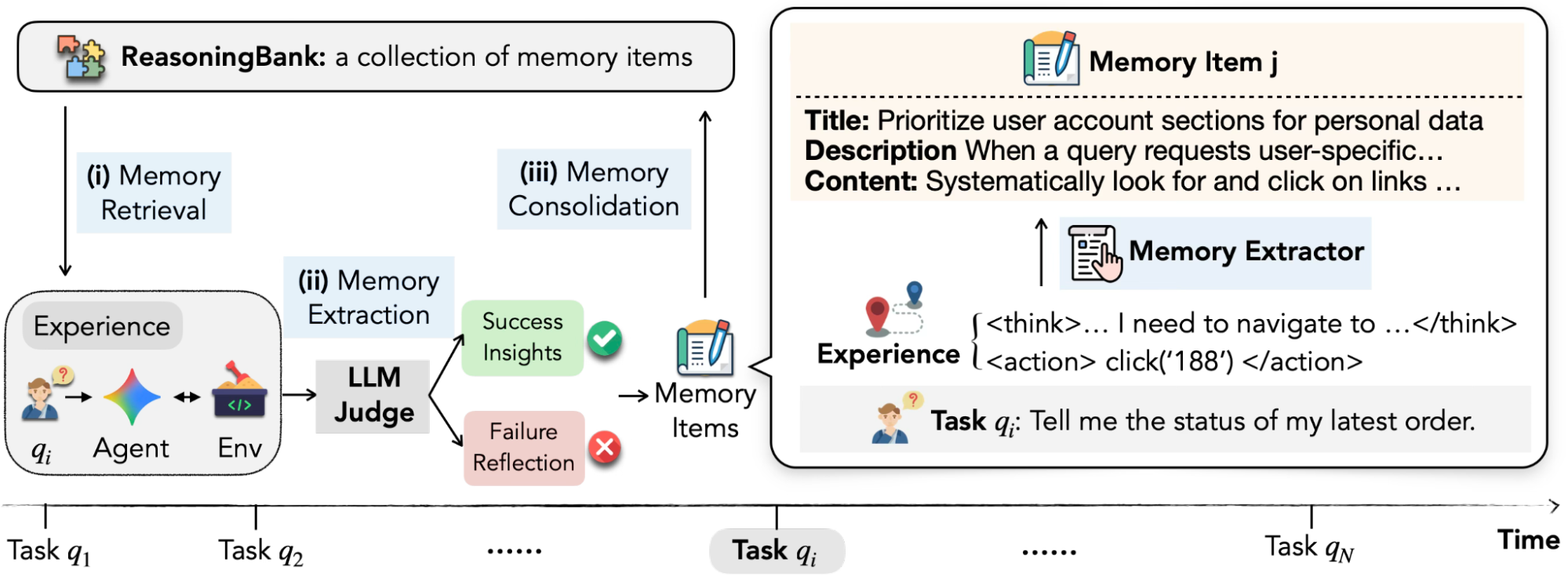
ReasoningBank: Google Research Explores New Methods for Enabling AI Agents to Learn from Experience
Research Breakthrough

ReasoningBank: Google Research Explores New Methods for Enabling AI Agents to Learn from Experience

Google Research has introduced ReasoningBank, a development focused on the evolution of generative AI agents. According to the publication, this initiative aims to enable agents to learn more effectively from their experiences. While the specific technical architecture and detailed performance metrics remain within the scope of Google Research's broader generative AI initiatives, the announcement highlights a shift toward more autonomous learning capabilities in artificial intelligence. This development represents a significant step in the field of generative AI, focusing on how agents can refine their reasoning processes over time. The project underscores Google's ongoing commitment to advancing the boundaries of how AI systems interact with and learn from the data and environments they encounter.

Google Research Blog
Latitude Launches Voyage: A New AI-Native Platform for Creating Custom Role-Playing Games
Product Launch

Latitude Launches Voyage: A New AI-Native Platform for Creating Custom Role-Playing Games

Latitude, the innovative developer behind AI Dungeon, has officially unveiled Voyage, a specialized AI-native platform designed to empower gamers in the creation of their own role-playing games (RPGs). Building on the company's experience with generative storytelling, Voyage serves as a dedicated environment where users can craft unique gaming experiences. The platform focuses on leveraging artificial intelligence to streamline the development of custom RPGs, allowing for a more accessible approach to game design. While specific technical details remain limited, the launch signals Latitude's commitment to expanding the boundaries of AI-driven interactive entertainment and user-generated content within the gaming industry.

TechCrunch AI