AI News on April 21, 2026

Evolver: A New Self-Evolution Engine for AI Agents Based on Genome Evolution Protocol
Open Source

Evolver: A New Self-Evolution Engine for AI Agents Based on Genome Evolution Protocol

Evolver, a project developed by EvoMap, has emerged as a significant development in the field of autonomous AI. The project introduces a self-evolution engine specifically designed for AI agents, utilizing what is termed the Genome Evolution Protocol (GEP). Hosted on GitHub, Evolver aims to provide a framework where AI entities can undergo iterative improvement and adaptation. While technical specifics remain focused on the core protocol, the project represents a shift toward more biological-inspired methodologies in artificial intelligence development. By leveraging GEP, the engine facilitates a structured approach to agent evolution, positioning itself as a foundational tool for developers looking to build self-improving AI systems within the EvoMap ecosystem.

GitHub Trending
RuView: Transforming Commercial WiFi Signals into Real-Time Human Pose Estimation and Vital Sign Monitoring
Research Breakthrough

RuView: Transforming Commercial WiFi Signals into Real-Time Human Pose Estimation and Vital Sign Monitoring

RuView is an innovative technology developed by ruvnet that leverages standard commercial WiFi signals to perform complex human sensing tasks. By utilizing WiFi DensePose, the system can achieve real-time human pose estimation, life sign monitoring, and presence detection without the need for traditional video cameras or pixel-based sensors. This breakthrough allows for high-fidelity tracking of human activity while maintaining privacy, as it operates entirely through signal processing rather than visual recording. The project, hosted on GitHub, demonstrates the potential of using existing wireless infrastructure for advanced spatial intelligence and health monitoring applications, marking a significant step forward in non-invasive sensing technology.

GitHub Trending
Thunderbolt by Thunderbird: Empowering Users with Sovereign AI and Data Control
Open Source

Thunderbolt by Thunderbird: Empowering Users with Sovereign AI and Data Control

Thunderbolt, a new project from the Thunderbird team, has emerged on GitHub with a focus on user-controlled artificial intelligence. The project emphasizes three core pillars: allowing users to choose their own AI models, maintaining absolute control over personal data, and eliminating the risks associated with vendor lock-in. By providing a framework where the user remains in command of the underlying technology, Thunderbolt aims to shift the power dynamic in the AI landscape. While the project is in its early stages, its presence on GitHub Trending highlights a growing demand for open, flexible, and privacy-centric AI solutions that prioritize individual sovereignty over proprietary constraints.

GitHub Trending
OpenAI Releases Lightweight Python SDK for Advanced Multi-Agent AI Workflows
Product Launch

OpenAI Releases Lightweight Python SDK for Advanced Multi-Agent AI Workflows

OpenAI has introduced 'openai-agents-python,' a new lightweight yet powerful framework designed specifically for orchestrating multi-agent workflows. Released as an official SDK, this tool aims to simplify the development of complex AI systems where multiple agents interact to complete tasks. The framework is currently available as a PyPI package, signaling OpenAI's commitment to providing developers with robust, standardized tools for agentic orchestration. By focusing on a lightweight architecture, the SDK allows for high performance without the overhead often found in more complex orchestration libraries. This release marks a significant step in the evolution of the OpenAI ecosystem, moving beyond simple API calls toward integrated multi-agent intelligence.

GitHub Trending
T3 Code: A Minimalist Web Interface for Programming Agents Supporting Codex and Claude
Open Source

T3 Code: A Minimalist Web Interface for Programming Agents Supporting Codex and Claude

T3 Code, a new open-source project by pingdotgg, has emerged as a minimalist web-based graphical user interface specifically designed for programming agents. Currently hosted on GitHub, the tool provides a streamlined environment for developers to interact with advanced AI models, specifically supporting Codex and Claude at launch. The project aims to simplify the interface between users and coding assistants, with the developer signaling that support for additional models is currently in development. As a trending repository, T3 Code focuses on providing a clean, functional web UI to enhance the accessibility of AI-driven programming workflows.

GitHub Trending
Paperless-ngx: A Community-Driven Document Management System for Scanning and Archiving Digital Files
Open Source

Paperless-ngx: A Community-Driven Document Management System for Scanning and Archiving Digital Files

Paperless-ngx has emerged as a prominent community-supported document management system designed to streamline the digitization of physical paperwork. The platform focuses on three core pillars: scanning, indexing, and archiving documents to help users transition to a paperless environment. As an enhanced version of its predecessors, it leverages community contributions to provide a robust framework for managing digital assets. The project, hosted on GitHub, emphasizes accessibility and organization, allowing users to transform their physical documents into a searchable, indexed digital library. This analysis explores its core functionality and its role in the modern movement toward digital document sovereignty and efficient information retrieval.

GitHub Trending
Amazon Invests $5 Billion in Anthropic as AI Startup Pledges $100 Billion in AWS Cloud Spending
Industry News

Amazon Invests $5 Billion in Anthropic as AI Startup Pledges $100 Billion in AWS Cloud Spending

Amazon has expanded its strategic partnership with AI startup Anthropic through a significant new investment and long-term service agreement. According to recent reports, Amazon is injecting an additional $5 billion into Anthropic, further solidifying its stake in the developer of the Claude AI models. In a reciprocal arrangement, Anthropic has committed to spending $100 billion on Amazon Web Services (AWS) infrastructure over an unspecified period. This deal highlights the growing trend of circular investments within the artificial intelligence sector, where cloud providers provide capital to AI firms that, in turn, commit to massive spending on the provider's cloud computing resources to train and deploy large-scale language models.

TechCrunch AI
Google Expands Gemini Integration in Chrome Across Seven New Countries Including Australia and Singapore
Product Launch

Google Expands Gemini Integration in Chrome Across Seven New Countries Including Australia and Singapore

Google has officially announced the expansion of its Gemini AI integration within the Chrome browser to seven additional countries. The rollout includes Australia, Indonesia, Japan, the Philippines, Singapore, South Korea, and Vietnam. This strategic move aims to bring Google's advanced AI capabilities directly into the browsing experience for users in these regions. Notably, the feature is being deployed across both desktop and iOS platforms in most of these locations, though the iOS rollout excludes Japan at this time. This expansion represents a significant step in Google's effort to globalize its AI tools and enhance user productivity within its flagship web browser across the Asia-Pacific region.

TechCrunch AI
Silicon Valley's Disconnect: Why Tech Insiders Are Losing Touch with the Needs of Average Users
Industry News

Silicon Valley's Disconnect: Why Tech Insiders Are Losing Touch with the Needs of Average Users

In a critical observation of the current technology landscape, Elizabeth Lopatto explores the growing divide between Silicon Valley's internal enthusiasm and the practical realities of the general public. The narrative centers on the 'mortifying' experience of witnessing tech insiders present basic realizations—often facilitated by Large Language Models (LLMs)—as groundbreaking discoveries. This phenomenon highlights a recurring pattern where industry figures become deeply immersed in niche trends like NFTs, the Metaverse, and now AI, often failing to recognize that these innovations may not align with what 'normal people' actually want or need. The article suggests that the tech elite's excitement over technical capabilities frequently overlooks the fundamental human experience and common-sense utility.

The Verge
Soul Player C64: Implementing a Real 25,000 Parameter Transformer on a 1 MHz Commodore 64
Research Breakthrough

Soul Player C64: Implementing a Real 25,000 Parameter Transformer on a 1 MHz Commodore 64

Soul Player C64 is a groundbreaking project that brings modern AI architecture to vintage hardware. It features a 2-layer decoder-only transformer, the same architecture powering ChatGPT and Claude, running on an unmodified 1 MHz Commodore 64. Implemented in hand-written 6502/6510 assembly, the model utilizes ~25,000 int8 parameters and fits entirely on a floppy disk. Despite the hardware limitations, it performs real multi-head causal self-attention, softmax, and RMSNorm. A key technical breakthrough in softmax score normalization allows the model to produce meaningful attention weights on 8-bit hardware. While processing takes approximately 60 seconds per token, the project demonstrates that the fundamental principles of Large Language Models can be scaled down to the most constrained computing environments.

Hacker News
The Rise of Repetitive AI Syntax: How the 'It's Not Just This, It's That' Construction Signals Synthetic Content
Industry News

The Rise of Repetitive AI Syntax: How the 'It's Not Just This, It's That' Construction Signals Synthetic Content

A specific linguistic pattern has emerged as a definitive hallmark of AI-generated text. The sentence construction "It's not just this — it's that" has seen such widespread adoption by large language models that it now serves as a primary indicator of synthetic writing. According to reports, this phraseology has transitioned from a simple stylistic preference to a near-guarantee that a piece of content was produced by artificial intelligence rather than a human author. This phenomenon highlights the predictable nature of current AI writing styles and the identifiable markers that distinguish machine-generated prose from human-centric narratives.

TechCrunch AI
Google Photos Launches New Subtle Face Touch-Up Tools for Enhanced Portrait Editing on Android
Product Launch

Google Photos Launches New Subtle Face Touch-Up Tools for Enhanced Portrait Editing on Android

Google has officially introduced a new suite of touch-up tools within the Google Photos image editor, specifically designed to provide subtle enhancements and refinements to faces. These features allow users to perform delicate fixes, such as whitening teeth and smoothing skin blemishes, directly within the app. The rollout began on April 20, 2026, and is being deployed globally to the Google Photos app. However, access to these new editing capabilities is restricted to specific hardware and software requirements: users must be operating devices running Android 9.0 or higher equipped with at least 4GB of RAM. This update represents Google's ongoing commitment to integrating sophisticated yet user-friendly editing features into its mobile photography ecosystem.

The Verge
Industry News

Kimi Open-Sources Vendor Verifier to Ensure Accuracy Across AI Inference Providers and Rebuild Ecosystem Trust

Following the release of the Kimi K2.6 model, Kimi has open-sourced the Kimi Vendor Verifier (KVV) to address systemic accuracy issues in open-source model deployments. The project was born from community feedback regarding benchmark anomalies, which Kimi traced back to improper decoding parameters and engineering implementation deviations among third-party infrastructure providers. By providing a tool to distinguish between inherent model defects and infrastructure failures, Kimi aims to rebuild the 'Chain of Trust' in the open-source ecosystem. The KVV suite includes six critical benchmarks designed to validate API parameter constraints and ensure that inference implementations align with official standards, preventing the erosion of trust caused by inconsistent performance across diverse deployment channels.

Hacker News
Microsoft Research Explores the Intersection of Artificial Intelligence and Global Environmental Sustainability
Research Breakthrough

Microsoft Research Explores the Intersection of Artificial Intelligence and Global Environmental Sustainability

In a recent podcast episode from Microsoft Research, experts Doug Burger, Amy Luers, and Ishai Menache discuss the critical question of whether artificial intelligence can be leveraged to create a more sustainable world. Published on April 20, 2026, the discussion features insights from leading researchers on the potential role of AI technologies in addressing environmental challenges. The conversation explores the balance between AI's computational demands and its capacity to optimize global systems for sustainability. While the original source provides the framework for this high-level dialogue among industry experts, it highlights Microsoft's ongoing commitment to researching technological solutions for ecological preservation and resource management in an increasingly digital era.

Microsoft Research
How Noetik Uses Autoregressive Transformers to Address the 95% Failure Rate in Cancer Clinical Trials
Industry News

How Noetik Uses Autoregressive Transformers to Address the 95% Failure Rate in Cancer Clinical Trials

The pharmaceutical industry faces a staggering 95% failure rate in cancer treatment clinical trials. Noetik, led by Ron Alfa and Daniel Bear, is tackling this challenge by reframing the issue as a 'matching problem.' By utilizing advanced autoregressive transformers, specifically their TARIO-2 model, Noetik aims to bridge the gap between experimental treatments and successful clinical outcomes. This approach suggests that the high failure rate may not stem from the treatments themselves, but from a lack of precision in matching therapies to the right biological contexts. This innovation represents a significant shift in how AI is applied to oncology and drug development, potentially transforming the efficiency of bringing life-saving treatments to market.

Latent Space
How to Crawl an Entire Documentation Site with Olostep: Transforming Web Data into AI-Ready Output
Technical Tutorial

How to Crawl an Entire Documentation Site with Olostep: Transforming Web Data into AI-Ready Output

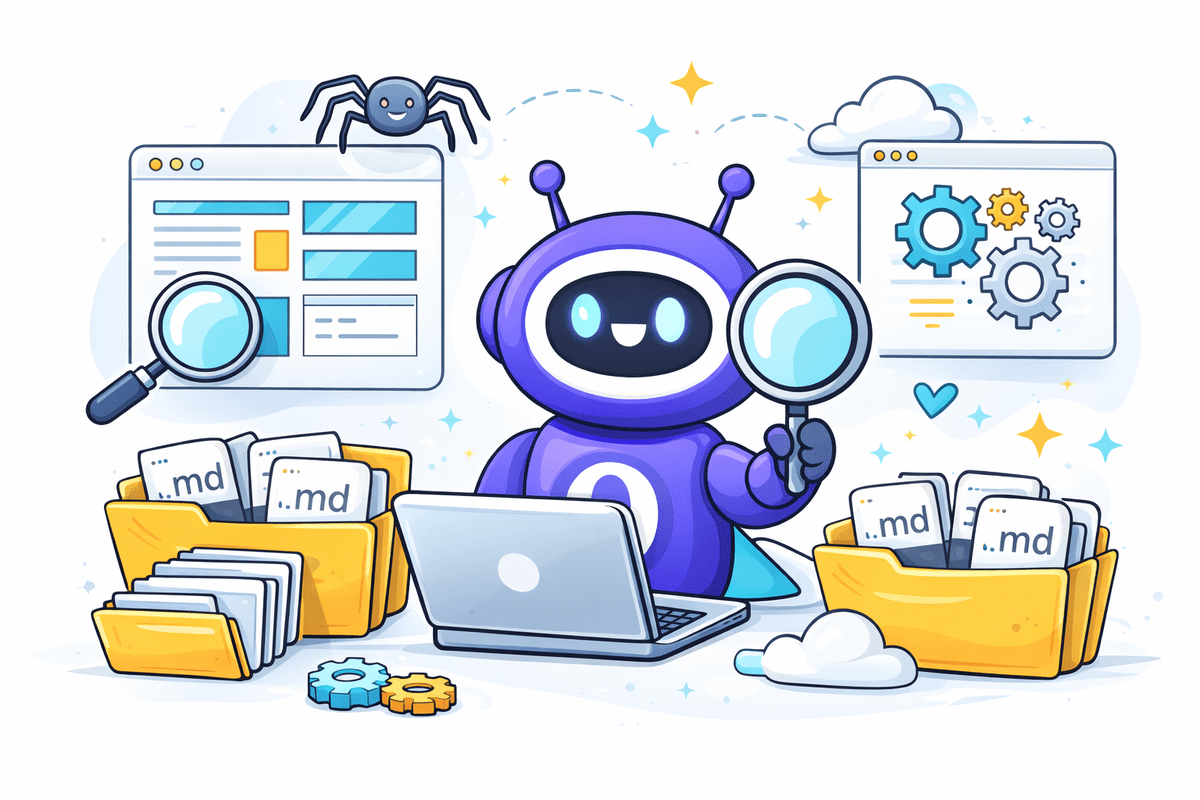
The latest technical guide from KDnuggets explores the capabilities of Olostep, a tool designed to automate the collection and structuring of documentation pages. By utilizing just a few lines of code, users can crawl entire documentation sites, ensuring the content is cleaned and formatted specifically for AI applications. This process simplifies the transition from raw website data to structured, AI-ready output, addressing a critical need for developers and data scientists who require high-quality datasets for training or fine-tuning models. The article highlights the efficiency of Olostep in handling complex documentation structures while maintaining data integrity, providing a streamlined workflow for modern AI development requirements.

KDnuggets