
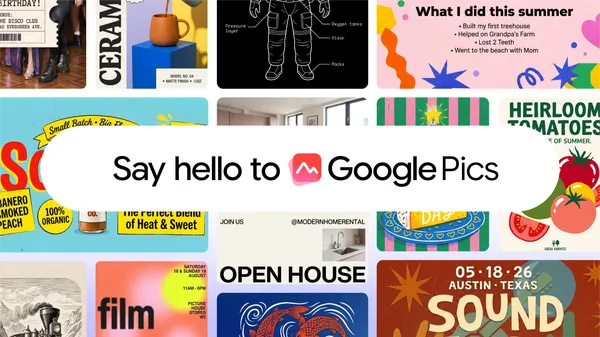
Google Launches Google Pics: AI-Powered Image Creation and Editing for Google Workspace
Google has officially introduced Google Pics, a new integrated tool designed for image creation and editing within the Google Workspace ecosystem. Built upon the foundation of the latest Nano Banana model, this tool is now available to users, marking a significant expansion of Google's generative AI capabilities. The launch emphasizes ease of use, aiming to streamline the process of generating and modifying visual content directly within productivity applications. By leveraging the Nano Banana architecture, Google Pics represents the latest evolution in Google's efforts to embed advanced AI models into everyday workflow tools, providing Workspace users with native access to sophisticated image manipulation and generation features.
Key Takeaways
- Official Launch: Google Pics is now officially available as an image creation and editing tool within Google Workspace.
- Model Foundation: The tool is powered by Google's latest AI architecture, specifically the Nano Banana model.
- Core Functionality: The tool focuses on providing users with an easy-to-use interface for both generating new images and editing existing ones.
- Ecosystem Integration: As a part of Google Workspace, the tool is designed to enhance productivity workflows by bringing creative capabilities directly into the suite.
In-Depth Analysis
The Debut of Google Pics in the Workspace Ecosystem
The introduction of Google Pics marks a pivotal moment for Google Workspace, transitioning the platform from a text and data-centric suite into a more robust multimedia environment. By integrating "easy image creation and editing" directly into the Workspace framework, Google is addressing a growing demand for native visual content tools. The availability of Google Pics suggests a strategic move to reduce the friction between content ideation and visual execution. Users no longer need to rely on external third-party software to generate or refine imagery; instead, they can leverage these capabilities within the familiar environment of their productivity tools. This integration is designed to facilitate a more seamless creative process, allowing for rapid prototyping and visual communication without leaving the Workspace ecosystem.
Powering Creativity with the Nano Banana Model
At the heart of Google Pics lies the Nano Banana model, Google's latest advancement in AI architecture. While the specific technical specifications of the Nano Banana model are part of Google's internal development roadmap, its application in Google Pics highlights a focus on efficiency and accessibility. The "Nano" designation typically suggests a model optimized for performance and speed, which aligns with the goal of providing an "easy" and responsive user experience. By utilizing this specific model, Google Pics is positioned to handle complex image generation and editing tasks while maintaining the performance standards required for a cloud-based productivity suite. The deployment of the Nano Banana model into a consumer-facing product like Google Pics indicates that the model has reached a level of maturity suitable for widespread professional and personal use within Google Workspace.
Industry Impact
The release of Google Pics has significant implications for the broader AI and productivity software industry. First, it intensifies the competition among major tech providers to offer comprehensive, AI-driven creative tools within their established ecosystems. By embedding image generation and editing directly into Workspace, Google is setting a new standard for what users expect from a productivity suite. This move likely signals a shift where generative AI is no longer a standalone feature but a fundamental component of digital work environments.
Furthermore, the focus on "easy" creation and editing suggests a democratization of design. By lowering the barrier to entry for high-quality visual content creation, Google Pics allows users without specialized graphic design training to produce professional-grade visuals. This could lead to a shift in how businesses approach internal communications, presentations, and collaborative projects, placing a higher premium on integrated AI tools that can deliver immediate visual results. The reliance on the Nano Banana model also underscores the importance of proprietary model development in maintaining a competitive edge in the rapidly evolving AI landscape.
Frequently Asked Questions
Question: What is Google Pics and where can I find it?
Google Pics is a newly launched image creation and editing tool. It is integrated directly into Google Workspace, making it available for users to enhance their productivity and creative workflows within the Google ecosystem.
Question: What technology powers the image generation in Google Pics?
Google Pics is built on Google's latest AI model known as the Nano Banana model. This model is designed to facilitate easy and efficient image creation and editing tasks for Workspace users.
Question: Is Google Pics currently available for use?
Yes, according to the official announcement from the Google AI Blog, Google Pics is now available for users to try within Google Workspace.
