
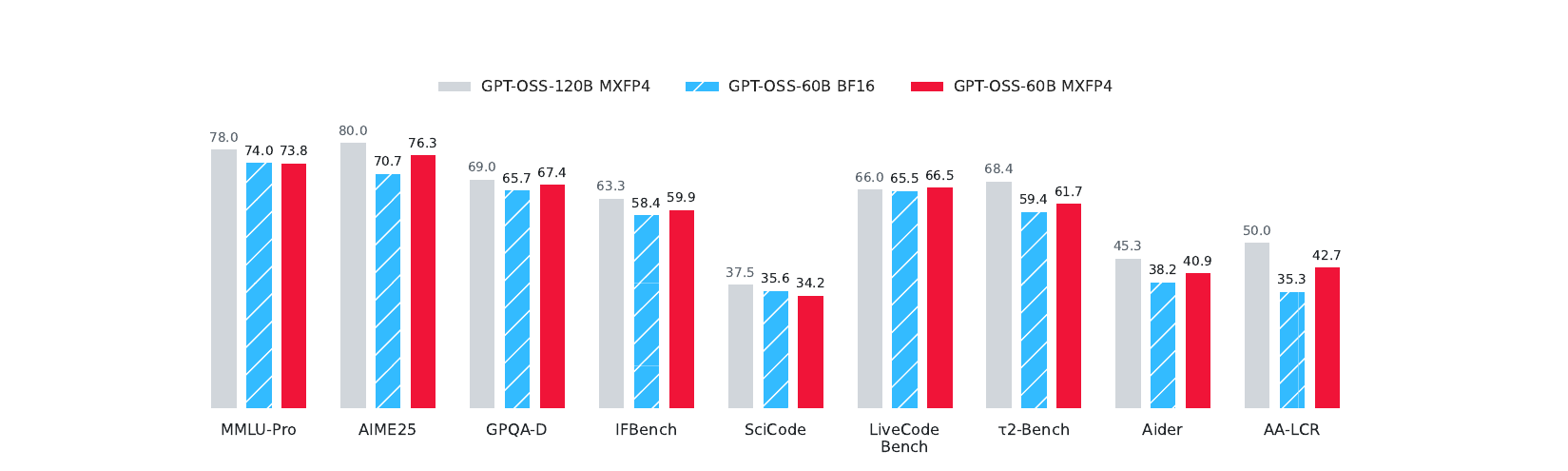
Quantization-Aware Healing: How 4-Bit Models Are Now Outperforming Full-Precision Originals
A groundbreaking development featured on the Hugging Face Blog introduces 'Quantization-Aware Healing,' a technique that enables highly compressed 4-bit models to exceed the performance of their original full-precision counterparts. Traditionally, model quantization—the process of reducing the bit-depth of neural network weights—has been viewed as a trade-off between efficiency and accuracy, typically resulting in a slight degradation of model capabilities. However, this new approach suggests that through 'healing' mechanisms, the compression process can actually enhance model performance. This shift marks a significant milestone in AI research, potentially redefining how large language models are optimized for deployment on consumer-grade hardware without sacrificing, and indeed improving, their analytical precision.
Key Takeaways
- Performance Breakthrough: The 'Quantization-Aware Healing' technique allows 4-bit compressed models to outperform their original full-precision versions.
- Efficiency Without Loss: This method challenges the long-standing industry assumption that model compression inevitably leads to a reduction in accuracy or reasoning capabilities.
- Hugging Face Publication: The research, highlighted by the Hugging Face community, signals a major shift in how the industry approaches model optimization and deployment.
- New Optimization Paradigm: The concept of 'healing' suggests a corrective or additive process during quantization that compensates for—and exceeds—the original model's precision.
In-Depth Analysis
Understanding Quantization-Aware Healing
The core of this development lies in the transition from standard quantization to what is termed "Quantization-Aware Healing." In the traditional lifecycle of a Large Language Model (LLM), quantization is the final step where high-precision weights (typically 16-bit or 32-bit) are converted into lower-precision formats like 4-bit to save memory and increase processing speed. Historically, this process was "lossy," meaning that the rounding of numbers led to a loss of nuance in the model's internal representations.
"Quantization-Aware Healing" implies a more sophisticated intervention. Based on the title's claim, this technique does not merely minimize the error introduced by bit-reduction but actively "heals" the model. This suggests that the optimization process identifies weaknesses or noise within the full-precision original and uses the quantization phase as an opportunity to refine the model's weights. By being "quantization-aware," the model is likely trained or fine-tuned with the knowledge of its lower-bit constraints, allowing it to find a more robust set of parameters that the original full-precision training might have overlooked.
Breaking the Full-Precision Ceiling
The most significant aspect of this news is the claim that a 4-bit model can actually outperform its original. In the field of machine learning, full-precision models (FP32 or BF16) have long been considered the "gold standard" or the upper bound of a specific architecture's potential. Any compression was expected to be an approximation of that peak performance.
By surpassing the original, Quantization-Aware Healing suggests that the original full-precision model may contain redundancies or suboptimal weight distributions that are corrected during the healing process. This effectively positions 4-bit quantization not just as a compression tool for edge deployment, but as a superior refinement step for model performance. This could lead to a future where the "compressed" version of a model becomes the preferred version for both speed and accuracy, fundamentally altering the development pipeline of AI researchers.
Industry Impact
Redefining Hardware Requirements
If 4-bit models can consistently outperform full-precision originals, the hardware requirements for "state-of-the-art" AI performance will drop dramatically. This allows complex, high-performing models to run on consumer-grade GPUs and mobile devices with greater efficacy than previously thought possible. The industry may see a shift away from the need for massive VRAM overhead to achieve top-tier results.
Acceleration of Edge AI
The ability to deploy a model that is both smaller and smarter is the "holy grail" of edge computing. Quantization-Aware Healing could accelerate the adoption of local AI in privacy-sensitive sectors like healthcare and finance, where data cannot leave the device but high precision is non-negotiable.
Economic and Environmental Efficiency
Training and running full-precision models is computationally expensive and energy-intensive. If the industry adopts healing-based quantization as a standard, the carbon footprint of AI inference could be significantly reduced. Furthermore, the cost of serving these models at scale would decrease, as providers can achieve better-than-original performance using a fraction of the traditional computational resources.
Frequently Asked Questions
Question: What is the difference between standard quantization and Quantization-Aware Healing?
Standard quantization typically involves a post-training reduction in bit-depth that often results in a slight loss of accuracy. Quantization-Aware Healing, as described, is a technique where the model is optimized in a way that the 4-bit version actually exceeds the performance of the original full-precision model, likely by correcting errors or redundancies during the compression process.
Question: Why is it significant that a 4-bit model outperforms a full-precision original?
It is significant because it contradicts the traditional understanding of information theory in AI, which assumes that reducing precision reduces information. This breakthrough suggests that lower-precision models can be more efficient and more accurate if the quantization process is handled as a "healing" or refinement stage rather than just a compression stage.
Question: Will this technique work for all types of AI models?
While the current focus is on the models discussed in the Hugging Face Blog, the principles of Quantization-Aware Healing could theoretically be applied to various architectures. However, the extent of the performance boost may depend on the specific architecture and the initial state of the full-precision original.

