AI News on June 30, 2026

Meituan Open-Sources LongCat-Next: A Native Multimodal Model Integrating Vision and Speech for Physical World AI
Open Source

Meituan Open-Sources LongCat-Next: A Native Multimodal Model Integrating Vision and Speech for Physical World AI

Meituan's technical team has officially released and open-sourced LongCat-Next, a native multimodal model designed to advance AI's interaction with the physical world. By treating vision and speech as native components rather than peripheral inputs, LongCat-Next aims to provide a more integrated approach to environmental perception and understanding. The release includes both the core model and its specialized discrete tokenizer, offering developers the foundational tools necessary to build AI systems that can perceive, comprehend, and act within real-world scenarios. This move highlights Meituan's commitment to fostering an open-source ecosystem for physical-world AI applications.

美团技术团队
Meituan Open Sources Innovative AIGC Poster Generation System with Integrated Generation-Editing-Evaluation Closed Loop
Open Source

Meituan Open Sources Innovative AIGC Poster Generation System with Integrated Generation-Editing-Evaluation Closed Loop

Meituan's Intelligent Creation Team has announced the development and open-sourcing of a comprehensive AIGC technical system dedicated to poster generation. This framework is built upon a unique "Generation-Editing-Evaluation" technical closed loop, designed to streamline the creative process from initial design to final quality assessment. Currently, the technology has been successfully implemented in high-traffic commercial scenarios, including Meituan Waimai (food delivery) and various brand IP projects. In a significant move for the global developer community, Meituan has fully open-sourced this technical stack, providing a robust foundation for automated visual design and marketing efficiency. This initiative highlights Meituan's commitment to advancing AIGC practical applications and fostering collaborative innovation within the AI industry.

美团技术团队
Meituan Open Sources LongCat-Video-Avatar 1.5: Transitioning Digital Human Video Models to Commercial-Grade Applications
Open Source

Meituan Open Sources LongCat-Video-Avatar 1.5: Transitioning Digital Human Video Models to Commercial-Grade Applications

Meituan's technical team has officially announced the open-source release of LongCat-Video-Avatar 1.5, a significant evolution in digital human video modeling. Moving beyond experimental State-of-the-Art (SOTA) benchmarks, this version is specifically engineered for commercial-grade usability. The update introduces comprehensive improvements in lip-syncing accuracy, physical rationality, and long-term video stability. Furthermore, it addresses complex requirements such as multi-person interaction and high-efficiency inference. By focusing on stable and natural output in diverse commercial scenarios, LongCat-Video-Avatar 1.5 aims to move digital human technology from controlled environments to real-world, large-scale applications, providing a robust tool for high-quality content generation.

美团技术团队
Meituan LongCat Team Releases General 365 Benchmark Revealing Significant Reasoning Gaps in Leading AI Models
Research Breakthrough

Meituan LongCat Team Releases General 365 Benchmark Revealing Significant Reasoning Gaps in Leading AI Models

The Meituan LongCat team has officially introduced General 365, a new benchmark designed to evaluate the reasoning capabilities of large language models (LLMs). In a comprehensive assessment of 26 mainstream models, the results indicate a challenging landscape for current AI technology. Even Gemini 3 Pro, currently regarded as one of the most powerful models available, achieved an accuracy rate of only 62.8%. The benchmark results further reveal that the vast majority of tested models failed to reach a 60% accuracy threshold, which is often considered a basic passing grade. This release by Meituan's technical team establishes a rigorous new standard for measuring AI reasoning, highlighting that most current models still struggle with complex logical tasks.

美团技术团队
Meituan LongCat Team Unveils WBench: The First Systematic Multi-Round Benchmark for Interactive Video World Models
Research Breakthrough

Meituan LongCat Team Unveils WBench: The First Systematic Multi-Round Benchmark for Interactive Video World Models

The Meituan LongCat team has officially introduced and open-sourced WBench, a pioneering evaluation benchmark designed to measure the capabilities of interactive video world models. As the first systematic framework for multi-round interaction assessment, WBench serves as a diagnostic tool—likened to a 'CT scanner'—to identify the specific technical hurdles AI models face when transitioning from passive observation to active, multi-stage interaction. By testing models across diverse scenarios ranging from lunar environments to futuristic urban settings, WBench establishes a new standard for defining the boundaries of world models. This release marks a significant step in providing the AI research community with the tools necessary to pinpoint and resolve the bottlenecks currently limiting the development of truly interactive artificial intelligence.

美团技术团队
Managing AI Coding with Agent Evaluation Logic: Lessons from a 310,000-Line Code Refactoring Project
Industry News

Managing AI Coding with Agent Evaluation Logic: Lessons from a 310,000-Line Code Refactoring Project

Meituan's technical team has introduced a novel approach to managing AI-driven development by applying Agent evaluation logic to a massive 310,000-line code refactoring initiative. With AI now capable of generating over 90% of code, the primary challenge has shifted from production speed to the management of system complexity and chaos. By implementing a structured framework—including technical debt sorting, rule construction, a standardized refactoring SOP, and a Pre-PR mechanism—the team has successfully transitioned refactoring from a high-cost, periodic task into a continuous, iterative daily action. This methodology ensures that AI's capabilities are constrained by unified standards, preventing the amplification of technical debt and ensuring long-term system stability in an AI-native development environment.

美团技术团队
LARYBench Launch: Defining the ImageNet for Embodied Action Representations and Measuring Generalization from Human Video Data
Research Breakthrough

LARYBench Launch: Defining the ImageNet for Embodied Action Representations and Measuring Generalization from Human Video Data

The Meituan Technical Team has introduced LARYBench (Latent Action Representation Yielding Benchmark), a systematic evaluation framework designed to guide the learning of general latent action representations from large-scale visual data. This benchmark serves as a foundational tool, akin to ImageNet for computer vision, but specifically tailored for embodied intelligence. Experimental results from the benchmark reveal a significant discovery: general vision models demonstrate superior performance in action generalization and control precision compared to specialized action expert models designed specifically for embodied AI. This indicates that sophisticated embodied action representations can emerge naturally from training on extensive human video datasets, suggesting a new pathway for developing robotic control systems through general-purpose visual learning.

美团技术团队
Meituan LongCat Team Unveils LongCat-AudioDiT: Revolutionizing Zero-Shot TTS Voice Cloning via Waveform Latent Space Diffusion
Research Breakthrough

Meituan LongCat Team Unveils LongCat-AudioDiT: Revolutionizing Zero-Shot TTS Voice Cloning via Waveform Latent Space Diffusion

The Meituan LongCat team has officially released LongCat-AudioDiT, a pioneering model designed to overcome the technical limitations of zero-shot Text-to-Speech (TTS) voice cloning. By fundamentally redesigning the synthesis pipeline, the model abandons traditional intermediate representations such as Mel-spectrograms. Instead, it operates directly within the waveform latent space using a diffusion-based framework. This strategic shift is intended to eliminate cascade errors caused by multi-stage data conversion, allowing the AI to learn the inherent laws of sound directly from the source. LongCat-AudioDiT represents a significant advancement in audio synthesis, offering a more streamlined and high-fidelity approach to replicating human voices without the need for extensive target-specific training, thereby setting a new benchmark for the industry.

美团技术团队
LongCat-Flash-Prover: Meituan Technical Team Releases Open-Source AI Model for Rigorous Mathematical Theorem Proving
Open Source

LongCat-Flash-Prover: Meituan Technical Team Releases Open-Source AI Model for Rigorous Mathematical Theorem Proving

The Meituan Technical Team has officially introduced LongCat-Flash-Prover, a specialized open-source AI model designed to bridge the gap between simple mathematical calculation and rigorous theorem proving. While traditional AI models often focus on reaching a correct numerical result, LongCat-Flash-Prover prioritizes the construction of strict logical chains required for formal mathematical verification. By addressing the inherent ambiguities of natural language that often lead to the failure of complex proofs, this model aims to transition AI from "guessing answers" to providing verifiable, rigorous evidence. This release marks a significant step in the field of mathematical formalization, offering a tool specifically tailored for complex reasoning tasks where precision is paramount.

美团技术团队
FluidVoice: The Fastest Offline Speech-to-Text Dictation Application for macOS Users
Open Source

FluidVoice: The Fastest Offline Speech-to-Text Dictation Application for macOS Users

FluidVoice, a new open-source project by altic-dev, has emerged as a high-performance offline dictation tool specifically designed for macOS. By prioritizing local processing, the application ensures that speech-to-text conversion happens entirely on the user's device, enhancing both speed and privacy. As a trending repository on GitHub, FluidVoice aims to provide the fastest dictation experience without requiring an internet connection. This analysis explores its positioning as a localized solution for macOS users seeking efficient transcription tools while maintaining data sovereignty and avoiding the latency associated with cloud-based services.

GitHub Trending
openpilot: The Robotics Operating System Revolutionizing Driver Assistance for 300+ Vehicle Models
Industry News

openpilot: The Robotics Operating System Revolutionizing Driver Assistance for 300+ Vehicle Models

openpilot, developed by commaai, has positioned itself as a pivotal operating system specifically designed for the robotics sector. Its current primary application is the enhancement and upgrading of driver assistance systems across a vast range of automotive hardware. With compatibility extending to over 300 supported car models, openpilot demonstrates a unique approach to scalable automation. By functioning as a foundational operating system rather than a standalone application, it provides the necessary infrastructure to bridge complex robotic software with diverse vehicle hardware. This development signifies a major step in the democratization of advanced driving technologies, offering a standardized platform for robotic control that can be integrated into a wide variety of existing consumer vehicles, thereby extending their functional capabilities through software-driven innovation.

GitHub Trending
CuPy: Empowering High-Performance Computing as the GPU-Accelerated Alternative to NumPy and SciPy
Open Source

CuPy: Empowering High-Performance Computing as the GPU-Accelerated Alternative to NumPy and SciPy

CuPy has recently gained significant traction as a specialized open-source library designed to bring GPU acceleration to the NumPy and SciPy ecosystems. By providing a compatible interface for multidimensional arrays and scientific routines, CuPy allows developers to leverage the massive parallel processing power of GPUs while maintaining the familiar syntax of standard Python scientific libraries. This development is particularly relevant for researchers and engineers who require high-performance numerical computation. The project, hosted on GitHub, serves as a bridge between traditional CPU-based scientific computing and modern hardware acceleration, ensuring that the transition to GPU-intensive tasks is seamless for the existing Python community. As a trending repository, CuPy highlights the ongoing industry demand for efficient, hardware-optimized versions of foundational data science tools.

GitHub Trending
AI Berkshire: A Value Investment Research Framework Powered by Claude Code and Multi-Agent Analysis
Open Source

AI Berkshire: A Value Investment Research Framework Powered by Claude Code and Multi-Agent Analysis

AI Berkshire is an emerging open-source project that introduces a specialized value investment research framework designed for the artificial intelligence era. Built on the capabilities of Claude Code and Codex, the project integrates the proven investment methodologies of four legendary figures: Warren Buffett, Charlie Munger, Duan Yongping, and Li Lu. The framework distinguishes itself by employing a multi-agent architecture that supports both parallel research and adversarial analysis. By digitizing the wisdom of these investment masters, AI Berkshire aims to provide a structured, automated approach to fundamental analysis, allowing for a more rigorous and multi-faceted evaluation of investment opportunities through the lens of traditional value investing principles enhanced by modern LLM workflows.

GitHub Trending
LingBot-Map: Advancing Scene Reconstruction with a Feed-Forward 3D Foundation Model for Streaming Data
Research Breakthrough

LingBot-Map: Advancing Scene Reconstruction with a Feed-Forward 3D Foundation Model for Streaming Data

LingBot-Map, a new project developed by Robbyant and featured on GitHub Trending, introduces a feed-forward 3D foundation model designed for scene reconstruction. The model specifically targets the processing of streaming data, allowing for the dynamic reconstruction of environments. By utilizing a feed-forward architecture, LingBot-Map aims to streamline the transition from raw data input to structured 3D scenes, moving away from traditional, computationally intensive iterative methods. As a foundation model, it represents a generalized approach to spatial intelligence, providing a framework that can potentially be adapted for various 3D tasks. This development highlights a growing trend in the AI industry toward real-time, scalable spatial understanding and the integration of foundation models into the field of computer vision and robotics.

GitHub Trending
Codebase-Memory-MCP: High-Performance Code Intelligence Server for Knowledge Graph Indexing and Token Efficiency
Open Source

Codebase-Memory-MCP: High-Performance Code Intelligence Server for Knowledge Graph Indexing and Token Efficiency

DeusData has introduced codebase-memory-mcp, a high-performance Model Context Protocol (MCP) server designed to index codebases into persistent knowledge graphs. This tool stands out for its extreme efficiency, offering millisecond-level processing for repositories and sub-millisecond query response times. A critical feature for developers using Large Language Models (LLMs) is its ability to reduce token consumption by 99%, significantly lowering operational costs. With support for 158 programming languages and a zero-dependency, single static binary architecture, codebase-memory-mcp provides a streamlined, high-speed solution for integrating deep code intelligence into AI-driven development environments. By transforming raw code into a structured knowledge graph, it enables AI models to navigate complex codebases with unprecedented speed and precision.

GitHub Trending
Asia’s Most Active AI Investors: A Comprehensive Analysis of Regional Capital Inflow
Industry News

Asia’s Most Active AI Investors: A Comprehensive Analysis of Regional Capital Inflow

Tech in Asia has released a significant report identifying the most active investors currently directing capital toward the artificial intelligence sector within Asia. The report highlights a major trend where substantial financial resources are being poured into AI startups across the continent. This compilation serves as a critical guide for understanding which entities are driving the growth of the Asian AI ecosystem. By focusing on the most active participants, the list provides a clear picture of the investment landscape, emphasizing the high level of interest and financial commitment from the investment community toward Asian AI innovation. This influx of capital is a defining characteristic of the current technological and financial environment in the region.

Tech in Asia
Israeli AI Testing Startup Arato Secures $10 Million Seed Funding for Multi-Modal Interaction Platform
Industry News

Israeli AI Testing Startup Arato Secures $10 Million Seed Funding for Multi-Modal Interaction Platform

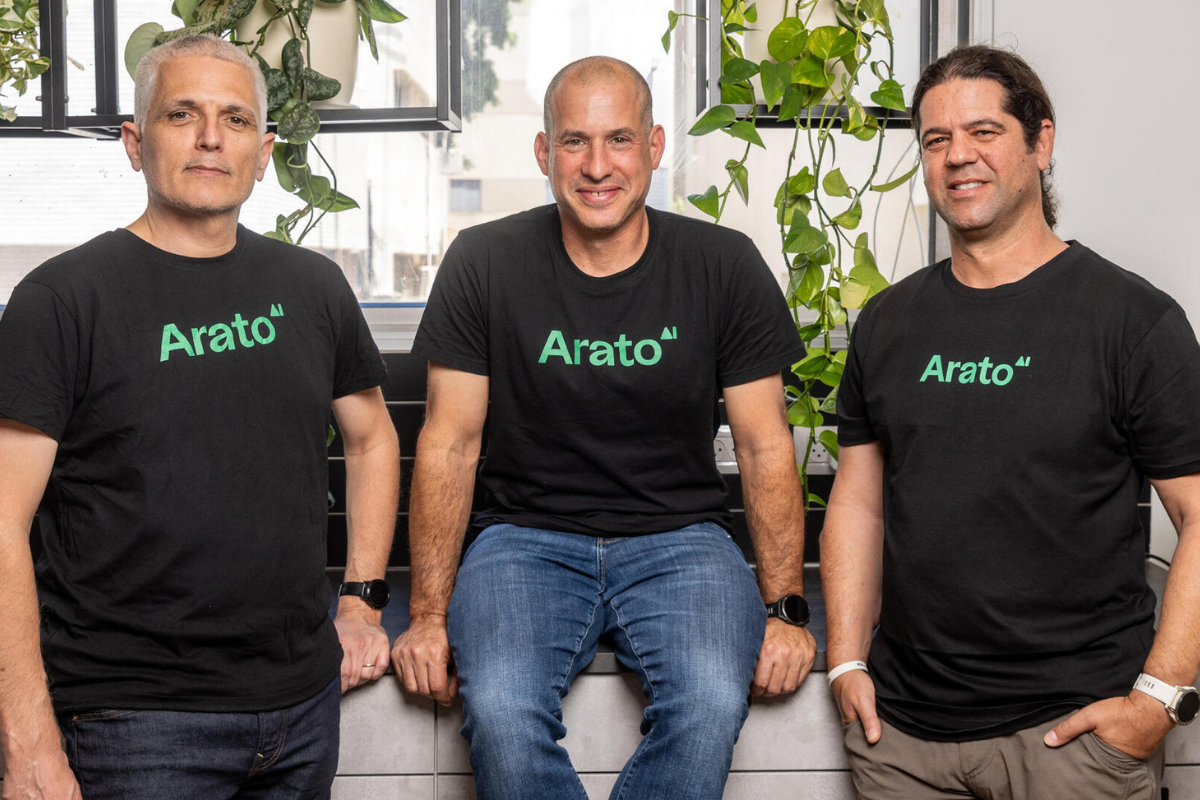
Arato, an Israeli-based startup specializing in AI testing, has successfully raised $10 million in a seed funding round. The company's platform is designed to enhance the reliability of AI systems by running thousands of simulated user interactions. These simulations are comprehensive, covering multiple modalities including text, voice, image, and data. By providing a scalable environment for testing, Arato addresses the critical need for robust quality assurance in the rapidly evolving AI sector. The $10 million investment highlights the growing importance of specialized infrastructure tools that can validate AI performance across diverse input types before deployment. This funding will support Arato's mission to provide deep, automated insights into how AI models handle complex, real-world user scenarios.

Tech in Asia
ByteDance Sets Sights on Next-Generation AI CPU Development with Target Completion Date by Early 2027
Industry News

ByteDance Sets Sights on Next-Generation AI CPU Development with Target Completion Date by Early 2027

ByteDance, the parent company of TikTok, is significantly advancing its semiconductor roadmap by targeting the production of a next-generation AI CPU by early 2027. This strategic move follows the successful internal deployment of an earlier iteration of its custom silicon, which has been in active use since late last year. By developing proprietary hardware, ByteDance aims to optimize its internal infrastructure for specialized AI workloads. This shift toward custom silicon highlights the company's commitment to vertical integration and hardware independence, potentially reducing its reliance on external chip providers as it prepares for the future computational demands of the global AI sector.

Tech in Asia
Samsung Electronics Commits $17.3 Billion to Accelerate Semiconductor Manufacturing Expansion in South Korea
Industry News

Samsung Electronics Commits $17.3 Billion to Accelerate Semiconductor Manufacturing Expansion in South Korea

Samsung Electronics has announced a massive $17.3 billion investment strategy aimed at significantly expanding its semiconductor manufacturing footprint within South Korea. A central pillar of this expansion is the development of a new semiconductor plant in Gwangju, which involves a dedicated investment of 4 trillion won. This project is integrated into Samsung's broader strategic initiative for the Honam region. The move represents a major capital commitment to domestic high-tech infrastructure, focusing on enhancing production capabilities. By prioritizing regional development in areas like Gwangju, Samsung aims to distribute its manufacturing strength across South Korea while reinforcing its global leadership in the semiconductor sector. The investment underscores the company's long-term vision for domestic industrial growth and technological advancement.

Tech in Asia
Microsoft Research Unveils Memora: A New Paradigm for Balancing Abstraction and Specificity in AI Memory
Research Breakthrough

Microsoft Research Unveils Memora: A New Paradigm for Balancing Abstraction and Specificity in AI Memory

Microsoft Research has introduced 'Memora,' a novel harmonic memory representation framework designed to address the fundamental tension between data abstraction and specificity in artificial intelligence. Developed by a multi-disciplinary team including Xuchao Zhang, Molly Xia, and others, Memora proposes a system where AI can maintain high-level conceptual generalizations without losing the granular details necessary for precision. This research marks a significant step in evolving how machine learning models store and retrieve information, moving toward a 'harmonic' balance that mirrors complex cognitive processes. By optimizing this trade-off, Memora aims to enhance the reliability and reasoning capabilities of large-scale AI systems, ensuring they remain both contextually aware and factually accurate across diverse applications.

Microsoft Research
Google Gemini Expands Personalized AI Image Generation to Eligible Free Users Across the United States
Product Launch

Google Gemini Expands Personalized AI Image Generation to Eligible Free Users Across the United States

Google has officially announced the expansion of its personalized AI image generation capabilities within Gemini, now reaching eligible free users located in the United States. This strategic update allows the Gemini chatbot to synthesize visual content that is specifically tailored to an individual's interests. A core component of this feature is its ability to leverage data integrated from various connected Google applications, creating a more cohesive and customized user experience. By moving this functionality beyond restricted tiers, Google is broadening access to advanced generative tools that utilize ecosystem-wide data to inform creative outputs. This development marks a significant step in the integration of personal context into mainstream AI image generation for the general public.

TechCrunch AI
Tidal to Demonetize AI-Generated Music: A Strategic Shift to Protect Artists and Inform Listeners
Industry News

Tidal to Demonetize AI-Generated Music: A Strategic Shift to Protect Artists and Inform Listeners

Tidal has announced a significant policy change regarding AI-generated content on its streaming platform. Moving to address the rise of machine-made tracks, the service has officially ceased royalty payments for any music identified as being 100 percent AI-generated, effective immediately. While Tidal is stopping short of an outright ban, it is prioritizing transparency and artist compensation. Starting July 15th, the platform will also implement a visual labeling system, using specific icons to alert listeners when a track is entirely AI-produced. These dual measures—demonetization and identification—are designed to safeguard the financial interests of human creators while ensuring that subscribers are fully informed about the nature of the content they are consuming.

The Verge
OpenAI Teases New Hardware for Codex: A Physical Shortcut Device for AI-Powered Coding
Product Launch

OpenAI Teases New Hardware for Codex: A Physical Shortcut Device for AI-Powered Coding

OpenAI has officially teased a new hardware device designed specifically for its AI coding tool, Codex, with a scheduled release date of July 15th. Revealed through a teaser video on X, the device features a square-shaped design equipped with several physical buttons, accompanied by the tagline, "Your favorite Codex shortcuts are getting an upgrade." This announcement marks a strategic expansion for OpenAI into the hardware space, specifically targeting the developer community. While OpenAI is known to be working on other hardware projects, the company has clarified that this specific device is dedicated to Codex and is distinct from its more mysterious, broader AI hardware initiatives. The move suggests a focus on enhancing the tactile workflow of programmers by bridging the gap between software-based AI assistance and physical hardware interfaces.

The Verge
South Korean Tech Giants Commit $550 Billion to Build Memory Fabs and Combat RAMageddon
Industry News

South Korean Tech Giants Commit $550 Billion to Build Memory Fabs and Combat RAMageddon

In a landmark move to secure its position in the global artificial intelligence landscape, South Korea's two largest memory chip manufacturers have pledged an investment exceeding $550 billion. This massive capital injection is specifically targeted at constructing new memory laboratory fabrication plants (fabs) to address the escalating global memory shortage, referred to as 'RAMageddon.' By expanding their production and research capabilities, these industry leaders aim to stabilize the supply chain for critical AI components. This strategic initiative is a core component of South Korea's broader ambition to establish itself as a preeminent AI technology powerhouse, ensuring that the infrastructure required for next-generation computing is robust and scalable to meet future demands.

TechCrunch AI
DiScoFormer: AllenAI Introduces a Unified Transformer for Density and Score Estimation Across Distributions
Research Breakthrough

DiScoFormer: AllenAI Introduces a Unified Transformer for Density and Score Estimation Across Distributions

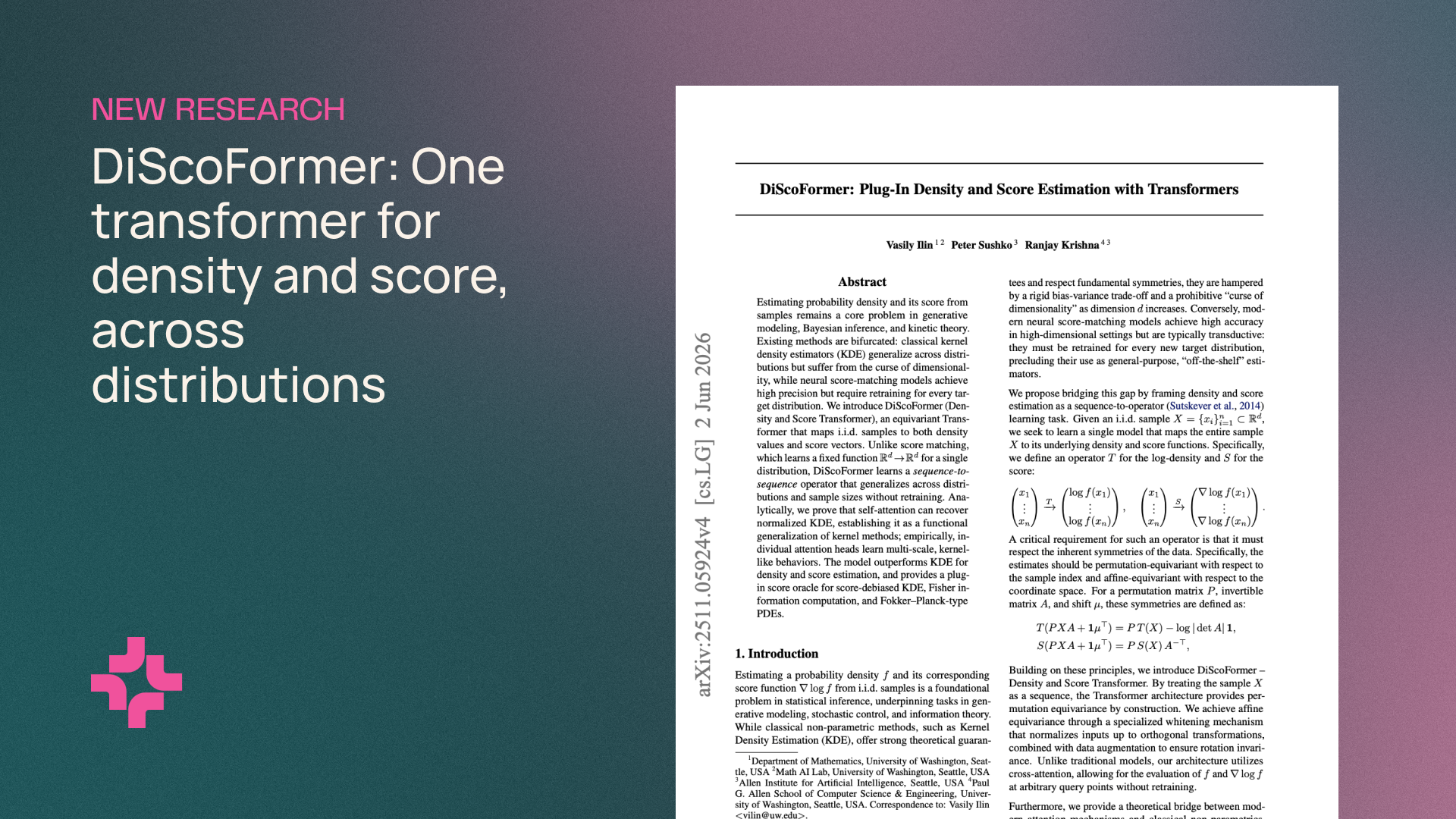
AllenAI has announced the development of DiScoFormer, a novel transformer architecture designed to unify density and score estimation within a single model. Published on the Hugging Face Blog on June 29, 2026, this research marks a significant step in generative modeling by enabling a single transformer to operate across various distributions. The project, a collaboration involving AllenAI, focuses on the dual capabilities of density (likelihood-based) and score (gradient-based) estimation. By bridging these two fundamental approaches to probabilistic modeling, DiScoFormer aims to provide a more versatile framework for AI researchers and developers working with complex data distributions. While specific performance metrics were not detailed in the initial announcement, the model's ability to handle both tasks simultaneously suggests a move toward more efficient and integrated AI architectures.

Hugging Face Blog
Arena AI Leaderboard Evolves into $100 Million Business Following Commercial Launch
Industry News

Arena AI Leaderboard Evolves into $100 Million Business Following Commercial Launch

Arena, the startup behind the widely utilized free AI leaderboard, has officially reached a $100 million business milestone. This significant valuation follows the company's strategic move to introduce commercial services in September, transitioning from a purely community-focused benchmarking tool to a high-value enterprise. As a central figure in the AI evaluation space, Arena's rapid growth underscores the critical demand for standardized performance metrics in the artificial intelligence sector. The transition highlights a successful monetization strategy for platforms that provide essential industry transparency. This development marks a pivotal moment for Arena as it solidifies its position as both a popular public resource and a major commercial player in the global AI ecosystem.

TechCrunch AI
Ornith-1.0: New Open-Source Self-Improving Models Set State-of-the-Art Benchmarks for Agentic Coding Tasks
Product Launch

Ornith-1.0: New Open-Source Self-Improving Models Set State-of-the-Art Benchmarks for Agentic Coding Tasks

Ornith-1.0 has been introduced as a suite of self-improving open-source models specifically engineered for agentic coding. Developed by deepreinforce-ai, these models range from 9B-Dense to 397B-MoE architectures, post-trained on top of Gemma 4 and Qwen 3.5. By utilizing a Reinforcement Learning (RL) framework that jointly optimizes solution rollouts and the scaffolds that drive them, Ornith-1.0 achieves state-of-the-art performance on major benchmarks like SWE-bench and Terminal-Bench 2.1. The project is released under the MIT license, ensuring global accessibility and freedom from regional limitations. The models demonstrate significant improvements over existing baselines in complex coding tasks, repository-level understanding, and multilingual support, marking a significant advancement for open-source AI agents in the software engineering domain.

Hacker News
Qwen 3.6 27B: The New Benchmark for Local AI Development and General Intelligence
Industry News

Qwen 3.6 27B: The New Benchmark for Local AI Development and General Intelligence

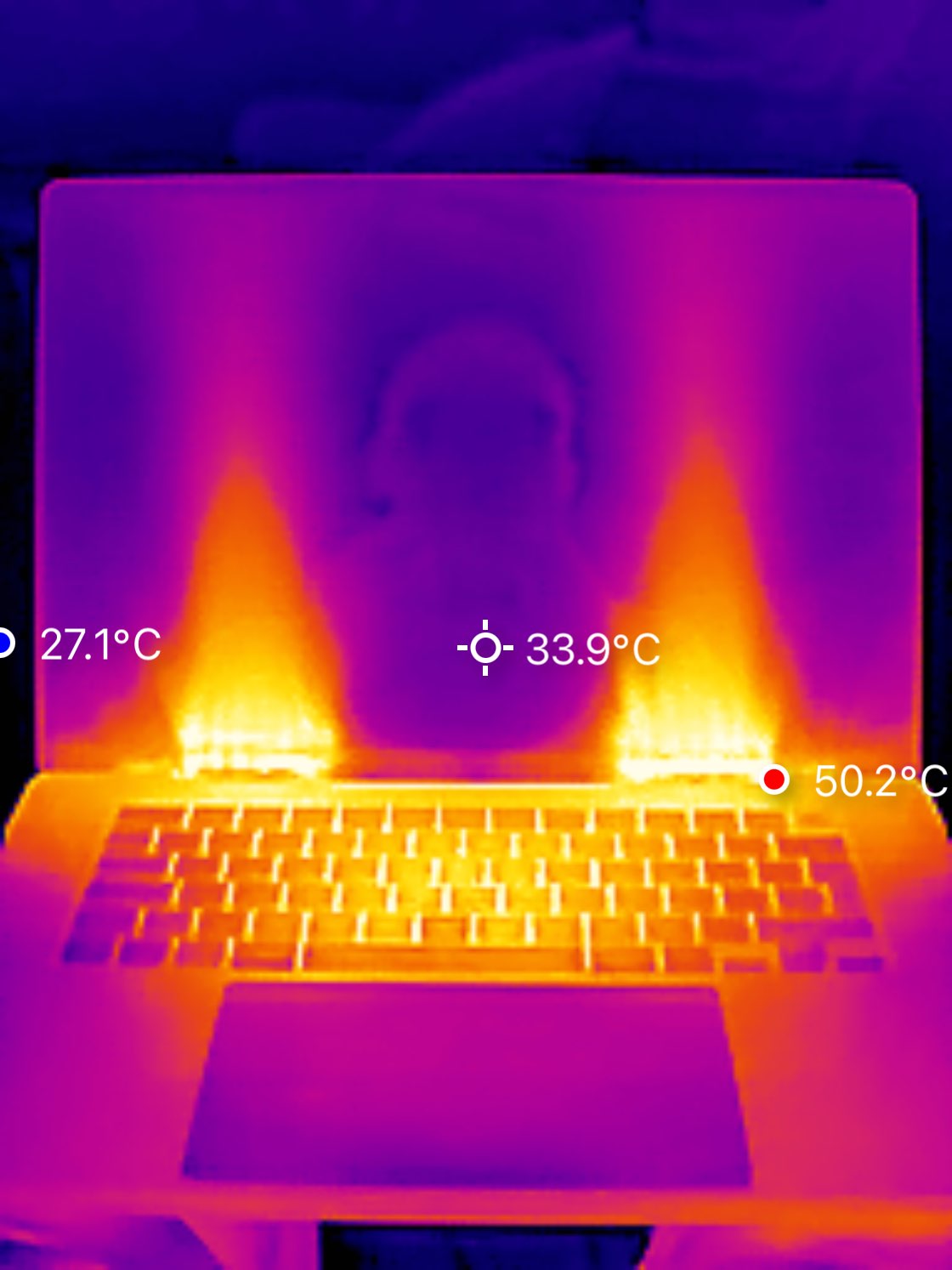
The release of Qwen 3.6 27B marks a significant turning point for local AI development, positioning itself as the "sweet spot" for developers seeking high-tier general intelligence without relying on cloud-based APIs. According to industry analysis and hands-on testing by Piotr Migdał, the 27B dense model offers a superior balance of power and instruction-following capabilities compared to its Mixture-of-Experts (MoE) counterpart, the Qwen 3.6 35B A3B. While the model demands significant hardware resources—notably generating high thermal output during operation—it demonstrates a remarkable ability to handle complex tasks such as constrained creative writing and sophisticated coding. From generating functional hexagonal minesweeper games to synthesizing quantum physics with dance poetry, Qwen 3.6 27B proves that local models can now rival the performance of previous state-of-the-art proprietary systems like GPT-4.5.

Hacker News
Cursor Launches New Mobile App for Remote Oversight of AI Coding Agents on the Go
Product Launch

Cursor Launches New Mobile App for Remote Oversight of AI Coding Agents on the Go

Cursor has officially expanded its ecosystem with the launch of a dedicated mobile application designed for the remote oversight of AI coding agents. This strategic move allows developers to maintain control and provide guidance to their autonomous coding agents while away from their primary workstations. By enabling "on the go" management, Cursor addresses the growing need for continuous monitoring in agentic software development workflows. The app focuses specifically on the oversight aspect, ensuring that human developers can intervene, direct, and supervise the progress of AI-driven tasks from any location. This development marks a significant transition for Cursor, moving beyond the traditional desktop IDE environment and into a more flexible, mobile-integrated approach to AI-assisted programming and agent management.

TechCrunch AI
Anthropic Claude Models Now Generally Available on NVIDIA GB300 Blackwell Ultra GPUs via Microsoft Azure Foundry
Industry News

Anthropic Claude Models Now Generally Available on NVIDIA GB300 Blackwell Ultra GPUs via Microsoft Azure Foundry

Anthropic's Claude models have reached general availability on Microsoft Azure, specifically utilizing the Microsoft Foundry platform powered by NVIDIA GB300 Blackwell Ultra GPUs. This collaboration provides Azure-native enterprises with the high-performance computing infrastructure necessary to develop and deploy autonomous, domain-specific AI agents. As agentic AI becomes a central driver of enterprise innovation, the integration of Anthropic’s advanced models with NVIDIA’s Blackwell Ultra architecture on the Azure cloud offers a scalable solution for organizations seeking to enhance their AI capabilities. The announcement highlights the growing necessity for robust hardware to support increasingly autonomous AI systems, marking a significant milestone for enterprises operating within the Microsoft ecosystem.

NVIDIA Newsroom
TIDAL Implements Strict Policy Against AI Music by Terminating Monetization and Removing Impersonation Content
Industry News

TIDAL Implements Strict Policy Against AI Music by Terminating Monetization and Removing Impersonation Content

TIDAL has announced a significant policy shift targeting AI-generated content on its platform. The music streaming service is moving to cut off monetization for AI music and will deploy automated tools to identify and remove tracks that attempt to impersonate established artists or groups. This move marks a decisive stance in the ongoing debate over AI's role in the music industry, focusing on protecting artist identity and ensuring that financial rewards are reserved for human creators or authorized content. By leveraging automation, TIDAL aims to streamline the detection of deepfake audio and unauthorized AI clones that threaten the integrity of the music ecosystem. This crackdown reflects a growing industry-wide effort to regulate the influx of artificial content and maintain the value of authentic musical works.

TechCrunch AI
Understanding the Full-Stack AI Approach: Why Google Experts Consider it the Foundation of Modern Innovation
Industry News

Understanding the Full-Stack AI Approach: Why Google Experts Consider it the Foundation of Modern Innovation

This analysis explores the concept of the "full-stack" approach to artificial intelligence as presented by Google AI experts. The original report highlights that this integrated methodology has served as the essential foundation for Google's AI initiatives over an extended period. By focusing on the full stack, the approach encompasses every layer of AI development, ensuring a cohesive strategy from infrastructure to application. The expert insights clarify how this foundational perspective allows for sustained innovation and technological consistency. This structured overview examines the significance of the full-stack model, its role in long-term AI strategy, and the broader implications for an industry increasingly focused on scalable and integrated artificial intelligence solutions.

Google AI Blog