Anthropic Claude Models Now Generally Available on NVIDIA GB300 Blackwell Ultra GPUs via Microsoft Azure Foundry
Anthropic's Claude models have reached general availability on Microsoft Azure, specifically utilizing the Microsoft Foundry platform powered by NVIDIA GB300 Blackwell Ultra GPUs. This collaboration provides Azure-native enterprises with the high-performance computing infrastructure necessary to develop and deploy autonomous, domain-specific AI agents. As agentic AI becomes a central driver of enterprise innovation, the integration of Anthropic’s advanced models with NVIDIA’s Blackwell Ultra architecture on the Azure cloud offers a scalable solution for organizations seeking to enhance their AI capabilities. The announcement highlights the growing necessity for robust hardware to support increasingly autonomous AI systems, marking a significant milestone for enterprises operating within the Microsoft ecosystem.
Key Takeaways
- General Availability: Anthropic’s Claude models are now officially available to enterprises through Microsoft Foundry on the Azure platform.
- Advanced Hardware: The deployment is powered by NVIDIA GB300 Blackwell Ultra GPUs, offering high-performance compute for demanding AI workloads.
- Focus on Agentic AI: The integration is specifically designed to support the creation of autonomous and domain-specific AI agents.
- Enterprise Integration: The service is tailored for Azure-native organizations, allowing them to build AI solutions within their existing cloud environment.
- Innovation Driver: The collaboration addresses the increasing need for massive computing power as AI becomes more autonomous and central to enterprise operations.
In-Depth Analysis
The Synergy of Claude and Blackwell Ultra Infrastructure
The general availability of Anthropic’s Claude models on NVIDIA GB300 Blackwell Ultra GPUs represents a significant technical alignment between high-performance hardware and sophisticated large language models. By hosting these models within Microsoft Foundry on Azure, the partnership provides a streamlined path for enterprises to access cutting-edge AI capabilities. The use of the Blackwell Ultra architecture is particularly noteworthy, as it is designed to handle the intensive computational requirements of modern AI. As organizations move toward more complex implementations, the underlying hardware becomes a critical factor in determining the speed, efficiency, and scalability of AI deployments. This setup ensures that Claude models can perform at the levels required by large-scale enterprise applications.
Empowering Azure-Native Enterprises via Microsoft Foundry
For organizations already deeply integrated into the Microsoft Azure ecosystem, this announcement provides a native pathway to leverage Anthropic’s technology. Microsoft Foundry serves as the hosting environment, ensuring that enterprises can maintain their existing security, compliance, and data management frameworks while exploring new AI functionalities. The focus on "Azure-native" enterprises suggests a push toward seamless integration, where businesses can build and deploy AI without the friction of moving between disparate platforms. This accessibility is crucial for domain-specific applications where data residency and platform consistency are paramount. By bringing Claude to the Blackwell-powered Azure infrastructure, Microsoft and Anthropic are lowering the barrier to entry for high-end AI development.
The Strategic Shift Toward Autonomous AI Agents
A core theme of this release is the enablement of "agentic AI." Unlike traditional AI models that respond to prompts in isolation, agentic AI refers to systems capable of more autonomous operation and domain-specific tasks. The original news highlights that as AI becomes more autonomous, the demand for specialized computing power grows. Enterprises are no longer just looking for chatbots; they are seeking to build agents that can navigate specific business domains and perform tasks with minimal human intervention. The combination of Claude’s reasoning capabilities and the raw power of NVIDIA’s GB300 GPUs provides the necessary foundation for these autonomous systems to function effectively in real-world enterprise environments.
Industry Impact
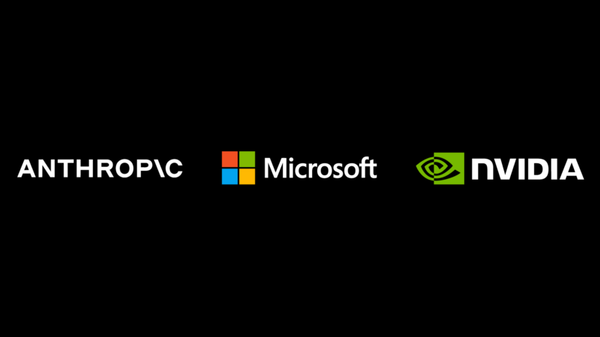
The collaboration between Anthropic, NVIDIA, and Microsoft signals a tightening integration between model providers, hardware manufacturers, and cloud service providers. This "triple-threat" approach is likely to set a new standard for how enterprise AI is delivered. By optimizing Claude for the Blackwell Ultra architecture, the industry is moving away from generic cloud compute toward highly specialized, performance-tuned environments. This shift is essential for the next phase of AI evolution—agentic AI—which requires significantly more resources than previous generations of technology. Furthermore, this move strengthens Microsoft Azure’s position as a leading destination for high-performance AI, potentially influencing how competitors structure their own hardware-software partnerships.
Frequently Asked Questions
Question: What specific hardware is powering Claude on Microsoft Azure?
Answer: Anthropic’s Claude models on Microsoft Azure are running on NVIDIA GB300 Blackwell Ultra GPUs, which are hosted within the Microsoft Foundry environment.
Question: Who is the primary target audience for this new availability?
Answer: The service is primarily aimed at Azure-native enterprises that are looking to build autonomous and domain-specific AI agents using high-performance infrastructure.
Question: Why is the Blackwell Ultra GPU significant for this deployment?
Answer: As AI moves toward more autonomous and agentic functions, organizations require access to the advanced computing power provided by the Blackwell Ultra architecture to drive innovation and handle complex, domain-specific tasks.