AI News on April 3, 2026

Prompts.chat: The Open-Source Community Hub for Discovering and Sharing High-Quality ChatGPT Prompts
Open Source

Prompts.chat: The Open-Source Community Hub for Discovering and Sharing High-Quality ChatGPT Prompts

Prompts.chat, originally known as Awesome ChatGPT Prompts, has emerged as a leading community-driven repository dedicated to the collection and discovery of effective AI prompts. The project offers a free, open-source platform where users can share their best prompt engineering techniques. A standout feature of the repository is its commitment to data security, providing a self-hosted solution that ensures complete privacy for organizations. By centralizing community-sourced prompts, Prompts.chat serves as a vital resource for individuals and businesses looking to optimize their interactions with Large Language Models while maintaining control over their internal data environments.

GitHub Trending
Microsoft Unveils VibeVoice: A New Frontier in Open-Source Speech Artificial Intelligence Technology
Open Source

Microsoft Unveils VibeVoice: A New Frontier in Open-Source Speech Artificial Intelligence Technology

Microsoft has officially introduced VibeVoice, a cutting-edge open-source speech artificial intelligence project. Hosted on GitHub, this initiative represents a significant step forward in the accessibility of advanced voice AI technologies. While specific technical specifications remain limited in the initial release, the project is positioned as a front-runner in the speech AI domain. By providing a dedicated project page and open-sourcing the repository, Microsoft aims to foster community-driven innovation in voice synthesis and processing. This release highlights the ongoing trend of major tech leaders contributing to the open-source ecosystem to accelerate the development of sophisticated AI tools for developers and researchers worldwide.

GitHub Trending
Google Research Unveils TimesFM: A New Pre-trained Foundation Model for Advanced Time Series Forecasting
Research Breakthrough

Google Research Unveils TimesFM: A New Pre-trained Foundation Model for Advanced Time Series Forecasting

Google Research has introduced TimesFM (Time Series Foundation Model), a specialized pre-trained foundation model designed specifically for time series forecasting. As a significant development in the field of predictive analytics, TimesFM leverages the architecture of foundation models to address complex temporal data patterns. Developed by the Google Research team, this model represents a shift toward using large-scale pre-training techniques—similar to those used in natural language processing—to improve the accuracy and efficiency of time series analysis. The project, currently hosted on GitHub, provides a framework for researchers and developers to utilize a pre-trained approach for various forecasting tasks, potentially reducing the need for extensive task-specific training data.

GitHub Trending
Claude-Howto: A Comprehensive Visual and Example-Driven Guide for Claude Code Implementation
Technical Tutorial

Claude-Howto: A Comprehensive Visual and Example-Driven Guide for Claude Code Implementation

The 'claude-howto' repository, authored by luongnv89 and featured on GitHub Trending, serves as a specialized guide for Claude Code. This resource is designed to be visual and example-driven, bridging the gap between basic concepts and advanced AI agent development. It provides users with a structured approach to understanding Claude's capabilities through ready-to-use templates that offer immediate value. By focusing on practical application, the guide covers a full spectrum of content, ensuring that developers can transition from foundational knowledge to complex agentic workflows. The project emphasizes accessibility through its 'copy-and-paste' template format, making it a significant resource for those looking to integrate Claude's intelligence into their technical projects efficiently.

GitHub Trending
OpenAI Codex CLI: A Lightweight Terminal-Based Programming Assistant for Developers
Product Launch

OpenAI Codex CLI: A Lightweight Terminal-Based Programming Assistant for Developers

OpenAI has introduced Codex CLI, a lightweight programming assistant designed to operate directly within the user's terminal. This tool aims to streamline the development workflow by integrating AI-powered coding assistance into the command-line environment. According to the release details, the tool can be easily installed via popular package managers such as npm and Homebrew. By offering a terminal-centric approach, Codex CLI provides developers with a specialized interface for coding tasks without the need for a full graphical IDE. This release highlights the ongoing trend of embedding AI capabilities into foundational developer tools to enhance productivity and accessibility across different operating systems and environments.

GitHub Trending
Anthropic Launches Claude Code: A Terminal-Based AI Tool for Streamlined Development and Git Workflow
Product Launch

Anthropic Launches Claude Code: A Terminal-Based AI Tool for Streamlined Development and Git Workflow

Anthropic has introduced Claude Code, a specialized intelligent programming tool designed to operate directly within the terminal environment. This new tool is engineered to enhance developer productivity by providing a deep understanding of local codebases. Through simple natural language instructions, Claude Code can execute routine programming tasks, provide detailed explanations for complex code segments, and manage Git workflows. By integrating directly into the command-line interface, it offers a seamless experience for developers looking to leverage AI capabilities without leaving their primary development environment, effectively bridging the gap between high-level natural language processing and low-level system operations.

GitHub Trending
Granola Privacy Alert: AI Notes Viewable via Link and Used for Training by Default
Industry News

Granola Privacy Alert: AI Notes Viewable via Link and Used for Training by Default

Users of the AI-powered note-taking application Granola are being advised to review their privacy settings following revelations regarding data accessibility and usage. Although the company markets its service as 'private by default,' the platform currently allows anyone with a specific link to view notes. Furthermore, Granola utilizes user notes for internal AI training purposes unless individuals manually opt out of the process. Positioned as an AI notepad for professionals, these default configurations have raised concerns regarding the actual level of privacy provided to its user base. This report explores the discrepancy between the marketing claims and the functional reality of Granola's data handling policies as reported by The Verge.

The Verge
Chinese AI Firms Shift Strategy: Alibaba Launches Proprietary Qwen Models Exclusively via Cloud Platforms
Product Launch

Chinese AI Firms Shift Strategy: Alibaba Launches Proprietary Qwen Models Exclusively via Cloud Platforms

Alibaba has recently introduced three new proprietary Qwen models, signaling a strategic shift toward closed-source distribution. These models, which include the specialized Qwen3.6-Plus designed for coding tasks, are not being released as open-source software. Instead, they are accessible only through Alibaba's dedicated cloud platform or its official chatbot website. This move highlights a growing trend among Chinese AI developers to leverage high-performance models to drive cloud service demand. By keeping these advanced iterations within their own ecosystems, firms like Alibaba aim to capitalize on the increasing enterprise need for sophisticated AI capabilities while maintaining control over their most advanced intellectual property.

Tech in Asia
OpenClaw Enhances AI Agent Capabilities Through Integration with Tencent's QQ Messaging Platform
Product Launch

OpenClaw Enhances AI Agent Capabilities Through Integration with Tencent's QQ Messaging Platform

OpenClaw has officially announced the integration of Tencent's QQ platform into its ecosystem to facilitate AI agent operations. By bundling QQBot as a specialized plug-in and merging the corresponding code directly into its main repository, OpenClaw has expanded its functional reach. This technical update introduces several key features, most notably the enablement of multi-account setups. This strategic move allows developers and users to leverage one of China's most prominent messaging services within the OpenClaw framework, streamlining the deployment of AI agents across social communication channels. The integration signifies a step forward in cross-platform AI agent interoperability, focusing on ease of use and expanded account management capabilities for its user base.

Tech in Asia
India’s Sarvam AI Nears $1.6 Billion Valuation as Bessemer and Nvidia Join Funding Round
Funding

India’s Sarvam AI Nears $1.6 Billion Valuation as Bessemer and Nvidia Join Funding Round

Sarvam AI, an Indian artificial intelligence startup, is reportedly approaching a valuation of $1.6 billion in its latest funding round. According to sources familiar with the matter, the investment is expected to be led by Bessemer Venture Partners. The round also features participation from major global technology players and venture firms, including Nvidia, Amazon, and Prosperity7 Ventures. This significant capital injection underscores the growing investor interest in India's domestic AI landscape and the strategic importance of localized AI development. The involvement of high-profile backers like Nvidia and Amazon highlights the competitive nature of the current AI funding environment as firms seek to secure stakes in emerging regional leaders.

Tech in Asia
OpenAI Expands Media Footprint with Acquisition of Technology Talk Show TBPN
Industry News

OpenAI Expands Media Footprint with Acquisition of Technology Talk Show TBPN

OpenAI has officially acquired the technology talk show TBPN, marking a strategic move into the media and content space. While the acquisition has been confirmed, OpenAI has not disclosed the financial terms of the deal. Furthermore, the future of TBPN’s existing distribution channels remains uncertain, as the company has not yet clarified whether the show will continue its current presence on major platforms including YouTube, X (formerly Twitter), and various podcast networks. This acquisition highlights OpenAI's growing interest in controlling tech-centric narratives and engaging directly with audiences through established media properties, though specific integration plans and the long-term status of the show's accessibility are currently unavailable.

Tech in Asia
Cursor 3 Launch: Introducing a Unified Workspace for Autonomous AI Agent Software Development
Product Launch

Cursor 3 Launch: Introducing a Unified Workspace for Autonomous AI Agent Software Development

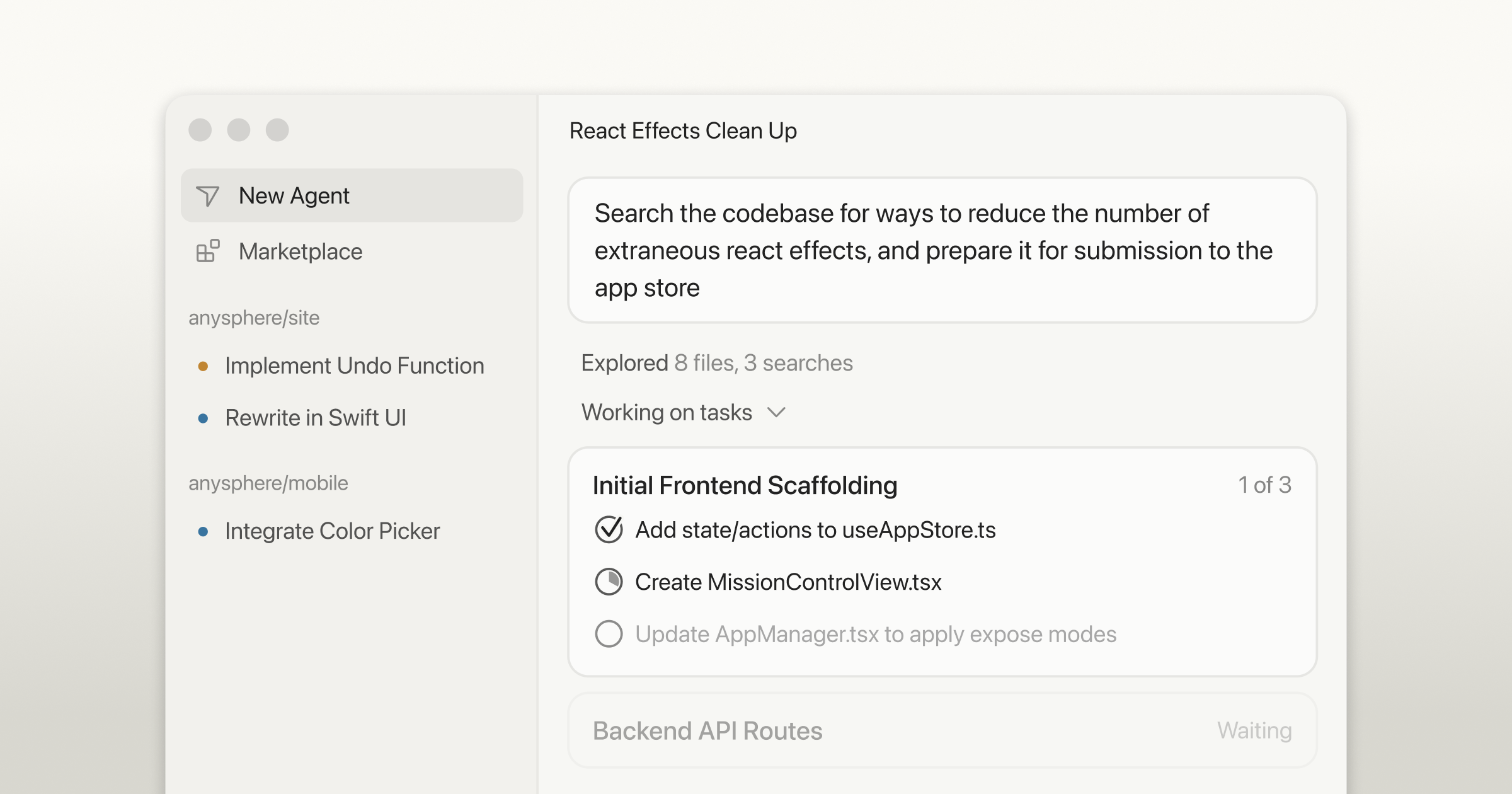
Cursor has announced the launch of Cursor 3, a significant evolution in its software development platform designed for the era of autonomous AI agents. Moving beyond manual file editing, Cursor 3 introduces a unified workspace that allows engineers to manage fleets of agents across multiple repositories. The new version features a custom-built interface designed from scratch to reduce the need for micromanagement and context-switching between tools. Key updates include a multi-repo layout, parallel agent execution, and a seamless handoff system between local and cloud environments. By pulling developers to a higher level of abstraction while maintaining the ability to dive into details, Cursor 3 aims to streamline the transition from human-led coding to agent-driven software engineering.

Hacker News
Moonlake Unveils Causal World Models: A Multimodal and Interactive Approach with Chris Manning and Fan-yun Sun
Research Breakthrough

Moonlake Unveils Causal World Models: A Multimodal and Interactive Approach with Chris Manning and Fan-yun Sun

In a recent exploration of the evolving AI landscape, Latent Space highlights Moonlake, a pioneering approach to world models. Featuring insights from Chris Manning and Fan-yun Sun, the project emphasizes that causal world models must be multimodal, interactive, and efficient. The initiative focuses on long-running, multiplayer environments where world models are constructed using agents bootstrapped directly from game engines. This methodology represents a significant shift in how AI systems understand and interact with complex environments, moving beyond static data to dynamic, agent-driven simulations. By leveraging the robust frameworks of game engines, Moonlake aims to create more sophisticated and responsive AI architectures that can navigate and influence interactive digital spaces effectively.

Latent Space
Open Models Reach Parity with Closed Frontier Models in Core AI Agent Tasks and Efficiency
Industry News

Open Models Reach Parity with Closed Frontier Models in Core AI Agent Tasks and Efficiency

A recent evaluation by LangChain reveals that open models, specifically GLM-5 and MiniMax M2.7, have crossed a significant performance threshold. These models now match the capabilities of closed frontier models in critical agent-related functions, including file operations, tool utilization, and instruction following. Beyond performance parity, these open-source alternatives offer substantial advantages in cost-effectiveness and reduced latency. This shift marks a turning point for developers and enterprises looking to deploy sophisticated AI agents without the high overhead typically associated with proprietary closed-source systems. The findings suggest that the gap between open and closed models is closing rapidly in the domain of functional AI tasks.

LangChain
Microsoft AI Unit Unveils Three New Foundational Models for Audio, Image, and Voice Processing
Product Launch

Microsoft AI Unit Unveils Three New Foundational Models for Audio, Image, and Voice Processing

Six months after its initial formation, Microsoft's AI division (MAI) has officially entered the competitive landscape of foundational models with the release of three distinct AI systems. These new models are designed to handle diverse multimodal tasks, including the transcription of voice into text, the generation of high-quality audio, and the creation of synthetic images. This strategic move marks a significant milestone for the group as it seeks to establish a stronger foothold against industry rivals. By expanding its capabilities into audio and visual synthesis alongside traditional transcription, Microsoft aims to provide a comprehensive suite of tools for developers and enterprises looking to integrate advanced generative AI into their workflows.

TechCrunch AI
NVIDIA and Google Partner to Accelerate Gemma 4 for Local Agentic AI on RTX Systems
Product Launch

NVIDIA and Google Partner to Accelerate Gemma 4 for Local Agentic AI on RTX Systems

NVIDIA has announced a significant collaboration to optimize Google’s latest Gemma 4 family of open models for local execution. Designed to move AI innovation from the cloud to everyday devices, these small, fast, and omni-capable models are engineered for efficient performance on RTX-powered systems. The initiative focuses on leveraging local, real-time context to transform insights into actionable outcomes through agentic AI. By prioritizing on-device processing, the partnership aims to enhance responsiveness and privacy while enabling a new class of AI agents that operate directly on user hardware. This shift represents a pivotal moment in the evolution of open models, emphasizing the importance of local hardware acceleration in delivering high-performance, context-aware AI experiences.

NVIDIA Newsroom
Product Launch

Google Unveils Gemma 4 Open Models: High-Efficiency Intelligence for Mobile and IoT Devices

Google has officially announced the release of Gemma 4, the latest iteration of its open model family. This release introduces the E2B and E4B model variants, which are specifically engineered to achieve maximum compute and memory efficiency. Designed to bring a new level of intelligence to edge computing, Gemma 4 focuses on optimizing performance for mobile and IoT devices. By prioritizing resource efficiency without compromising on intelligence, Google aims to empower developers to deploy advanced AI capabilities directly on hardware with limited computational power. The launch marks a significant step in making high-performance AI more accessible for portable and integrated technology ecosystems.

Hacker News
Google DeepMind Unveils Gemma 4: High-Intelligence Open Models Optimized for Advanced Reasoning and Agentic Workflows
Product Launch

Google DeepMind Unveils Gemma 4: High-Intelligence Open Models Optimized for Advanced Reasoning and Agentic Workflows

Google DeepMind has officially announced Gemma 4, marking its most intelligent release within the open model family to date. These models have been specifically engineered to excel in advanced reasoning tasks and to support complex agentic workflows. By prioritizing high-performance intelligence relative to model size, Gemma 4 aims to provide developers with the most capable open-source tools available for sophisticated AI applications. The release underscores a strategic focus on enabling autonomous agents and deep logical processing within the open-weights ecosystem, maintaining the "byte-for-byte" efficiency that the Gemma series is known for. This announcement highlights a significant step forward in making high-tier reasoning capabilities accessible to the broader research and development community.

DeepMind Blog
Inside the Erosion of Trust in Azure: A Former Core Engineer Reveals Costly Strategic Missteps
Industry News

Inside the Erosion of Trust in Azure: A Former Core Engineer Reveals Costly Strategic Missteps

Axel Rietschin, a former senior engineer within Microsoft's Azure Core team, has begun a series detailing the internal decisions and complacency that he claims eroded trust in the Azure cloud platform. Rietschin, who contributed to foundational technologies like the Azure Boost offload card and the Windows Container platform, suggests that these failures led to Microsoft nearly losing its largest customer, OpenAI, and damaging its relationship with the US government. Drawing on over a decade of experience within the Windows and Core OS teams, the author provides an insider's perspective on the technical and organizational mishaps that he characterizes as some of the most preventable and costly errors of the 21st century, potentially impacting trillions in value.

Hacker News
Just-in-Time World Modeling: A New Framework for Enhancing Human Planning and Simulation-Based Reasoning
Research Breakthrough

Just-in-Time World Modeling: A New Framework for Enhancing Human Planning and Simulation-Based Reasoning

A recent study featured on KDnuggets introduces a state-of-the-art framework known as "just-in-time" world modeling. This innovative approach focuses on simulation-based reasoning to significantly improve predictive accuracy in complex scenarios. By providing a structured method for world modeling, the framework is designed to support human planning and reasoning processes. The research explores how real-time or situational modeling can bridge the gap between raw data and actionable human insights. This development marks a shift toward more dynamic AI systems that assist users in navigating decision-making tasks through enhanced simulation capabilities, ensuring that reasoning is both timely and contextually relevant to the user's immediate planning needs.

KDnuggets
Google Enhances Vids App with New Prompt-Based Avatar Direction and Customization Features
Product Launch

Google Enhances Vids App with New Prompt-Based Avatar Direction and Customization Features

Google has announced a significant update to its Vids application, introducing a new capability that allows users to direct and customize digital avatars through text prompts. This enhancement aims to streamline the video creation process by giving creators more granular control over how avatars behave and appear within their projects. By integrating prompt-based instructions, Google is simplifying the workflow for producing professional-grade video content, allowing for more personalized and directed digital performances. This update reflects Google's ongoing commitment to expanding the creative tools available within its productivity suite, specifically targeting the growing demand for efficient, AI-driven video production solutions in professional environments.

TechCrunch AI
Google Introduces New Flex and Priority Inference Options to Balance Cost and Reliability in Gemini API
Product Launch

Google Introduces New Flex and Priority Inference Options to Balance Cost and Reliability in Gemini API

Google has announced new updates to the Gemini API aimed at providing developers with greater control over their AI deployments. The introduction of Flex and Priority inference models offers a strategic approach to balancing operational costs with system reliability. By allowing users to choose between different inference tiers, Google addresses the diverse needs of developers who require either high-performance priority access for mission-critical tasks or cost-effective flexible options for less time-sensitive processing. These updates represent a significant step in making large-scale AI integration more sustainable and customizable for businesses of all sizes, ensuring that the Gemini API can cater to a wider range of budgetary and performance requirements.

Google AI Blog
Google Vids Introduces High-Quality AI Video Generation Powered by Lyria 3 and Veo 3.1 at No Cost
Product Launch

Google Vids Introduces High-Quality AI Video Generation Powered by Lyria 3 and Veo 3.1 at No Cost

Google has announced significant updates to Google Vids, integrating advanced AI capabilities to enhance video creation, editing, and sharing. Powered by the latest Lyria 3 and Veo 3.1 models, these updates enable users to generate high-quality video content directly within the platform. A standout feature of this announcement is that these AI-driven video generation tools are being made available at no cost to users. This strategic move aims to streamline the creative workflow within Google Workspace, allowing for seamless collaboration and professional-grade output without additional financial barriers. The integration of Lyria and Veo models signifies a major step forward in making sophisticated AI video production accessible to a broader audience of creators and professionals.

Google AI Blog