NVIDIA Launches Nemotron 3.5 Lightning and NeMo Switchyard to Power High-Efficiency Autonomous AI Agent Systems
NVIDIA has announced the expansion of its Nemotron 3 model family with the release of Nemotron 3.5 Lightning and the NeMo Switchyard open-source library. Nemotron 3.5 Lightning is a 30-billion-parameter mixture-of-experts (MoE) model specifically engineered for high-efficiency, long-running agentic AI workloads. Complementing this, NeMo Switchyard provides a smart routing mechanism that allows enterprises to direct AI requests to the most appropriate models—whether open, proprietary, or NVIDIA-hosted—without the need for application rewrites. These tools are designed to support a "system of models" architecture, where specialized models handle targeted tasks like code review and security monitoring, while frontier models orchestrate workflows. This release emphasizes NVIDIA's commitment to providing developers with greater control over AI deployment across PCs, workstations, data centers, and the cloud.
Key Takeaways
- New Model Release: NVIDIA has introduced Nemotron 3.5 Lightning, a 30-billion-parameter mixture-of-experts (MoE) model designed for maximum efficiency in agentic AI workflows.
- Smart Routing Library: The new NeMo Switchyard is an open-source library that enables intelligent request routing across a mix of open, proprietary, and NVIDIA models.
- System of Models Architecture: NVIDIA is promoting a shift toward multi-agent systems where specialized models (like Nemotron 3.5 Lightning) perform targeted tasks while frontier models (like Nemotron 3 Ultra or GPT-5.6) handle orchestration.
- Deployment Versatility: These tools provide enterprises with full control over AI deployment, supporting environments ranging from local PCs and workstations to data centers and the cloud.
In-Depth Analysis
The Evolution of Agentic AI with Nemotron 3.5 Lightning
As the artificial intelligence landscape shifts from simple chatbots to complex autonomous agents, there is an increasing market demand for models that offer full control over deployment and evolution. NVIDIA's Nemotron 3.5 Lightning is positioned as a direct response to this need. As a 30-billion-parameter mixture-of-experts (MoE) model, it is characterized as the highest-efficiency model in its class for long-running agentic AI workloads. This release follows the Nemotron 3 Nano, continuing NVIDIA’s trajectory of improving open models to achieve higher accuracy and speed.
Nemotron 3.5 Lightning is specifically built for specialized tasks within larger multi-agent systems. By utilizing a mixture-of-experts architecture, the model can deliver frontier-level intelligence while remaining small and customizable. This makes it particularly suitable for high-volume agentic workflows where efficiency is paramount. The model is designed to help developers create smarter agentic applications that can run continuously and handle complex, specialized operations without the overhead of larger, general-purpose models.
NeMo Switchyard: Orchestrating the Multi-Model Ecosystem
Alongside the new model, NVIDIA has released NeMo Switchyard, an open-source library designed for smart routing within popular agent tools. In modern enterprise environments, developers often use a mix of different AI models, including their own open-source deployments, proprietary models, and NVIDIA-hosted services. NeMo Switchyard acts as an intelligent intermediary, directing each specific request to the most capable and suitable model for that particular job.
A critical advantage of NeMo Switchyard is that it allows enterprises to build custom routers based on their specific needs without requiring developers to rewrite their existing applications. This flexibility ensures that as new models are developed or as task requirements change, the routing logic can be updated independently of the core application code. This tool is essential for managing the complexity of modern AI systems that rely on diverse model ensembles to achieve their goals.
The "System of Models" Framework for Always-On Agents
NVIDIA’s strategy centers on the concept of "always-on agents" that operate as systems of models or model ensembles. In this architecture, different models are specialized for different tasks rather than relying on a single model to handle every request. NVIDIA Nemotron open models are specifically designed to fit into this modular architecture.
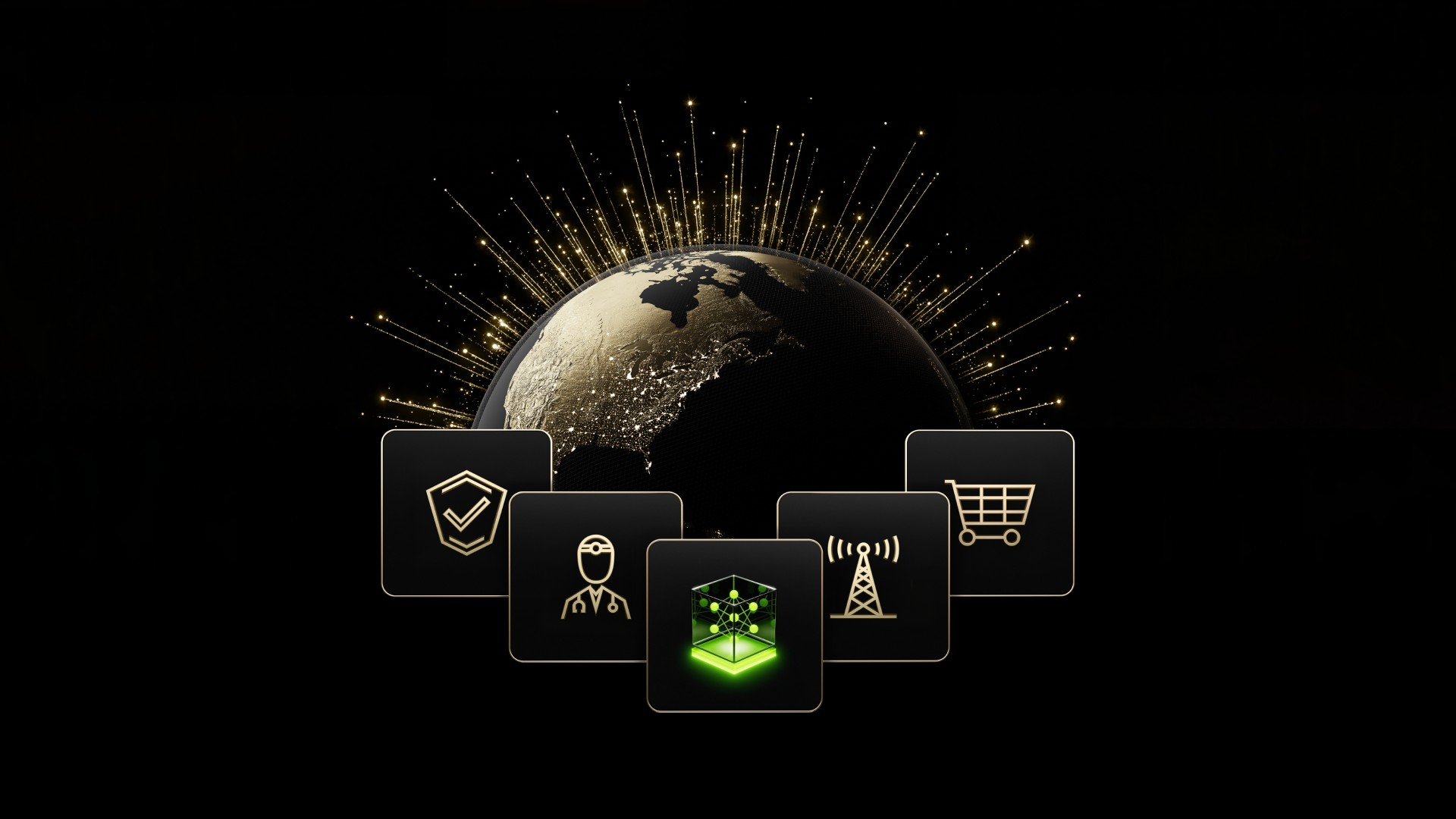
In a typical workflow, a frontier reasoning model—such as Nemotron 3 Ultra or GPT-5.6—might serve as the primary orchestrator, planning the workflow and managing the high-level logic. Meanwhile, smaller, specialized models like Nemotron 3.5 Lightning are deployed to perform targeted, high-volume tasks. The original news identifies several specific areas where these specialized models excel, including:
- Code Review: Analyzing and optimizing programming code.
- Tool Use: Interacting with external software and APIs.
- Security Alert Monitoring: Continuously scanning for and identifying potential security threats.
- Answering Billing Questions: Handling specific customer service inquiries related to financial transactions.
By distributing these tasks across a system of models, enterprises can achieve a balance of high-level reasoning and task-specific efficiency, ensuring that the most cost-effective and performant model is used for every step of an autonomous process.
Industry Impact
The introduction of Nemotron 3.5 Lightning and NeMo Switchyard signals a significant move toward the democratization of autonomous agent technology. By providing high-efficiency open models and the tools to route tasks between them, NVIDIA is empowering enterprises to maintain full control over their AI infrastructure. This is particularly relevant for industries that require strict data sovereignty or those operating across diverse hardware environments, from edge PCs to massive cloud data centers.
Furthermore, the emphasis on a "system of models" architecture reflects a maturing AI industry that is moving away from "one-size-fits-all" solutions. By enabling specialized models to handle high-volume tasks, NVIDIA is helping to reduce the computational costs and latency associated with autonomous agents, making "always-on" AI more viable for a wider range of business applications. The integration of NeMo Switchyard also simplifies the management of hybrid AI environments, allowing for a more seamless blend of open-source and proprietary technologies.
Frequently Asked Questions
Question: What makes Nemotron 3.5 Lightning different from previous models in the family?
Nemotron 3.5 Lightning is a 30-billion-parameter mixture-of-experts (MoE) model designed specifically for high efficiency in long-running agentic AI workloads. It follows Nemotron 3 Nano and focuses on providing frontier-level intelligence in a small, customizable format for high-volume tasks.
Question: How does NeMo Switchyard benefit developers using multiple AI models?
NeMo Switchyard is an open-source library that provides smart routing. It allows developers to direct requests to the most suitable model—whether it is an open model, a proprietary one, or an NVIDIA model—without needing to rewrite their applications. This provides greater control over deployment and operational efficiency.
Question: What are some examples of tasks that specialized models like Nemotron 3.5 Lightning can perform?
In a multi-agent system, specialized models can handle targeted tasks such as code review, tool use, monitoring security alerts, and answering billing-related questions, while a larger frontier model orchestrates the overall workflow.