Baseten Secures $13 Billion Series F Funding to Lead the Global AI Inference Engineering Market
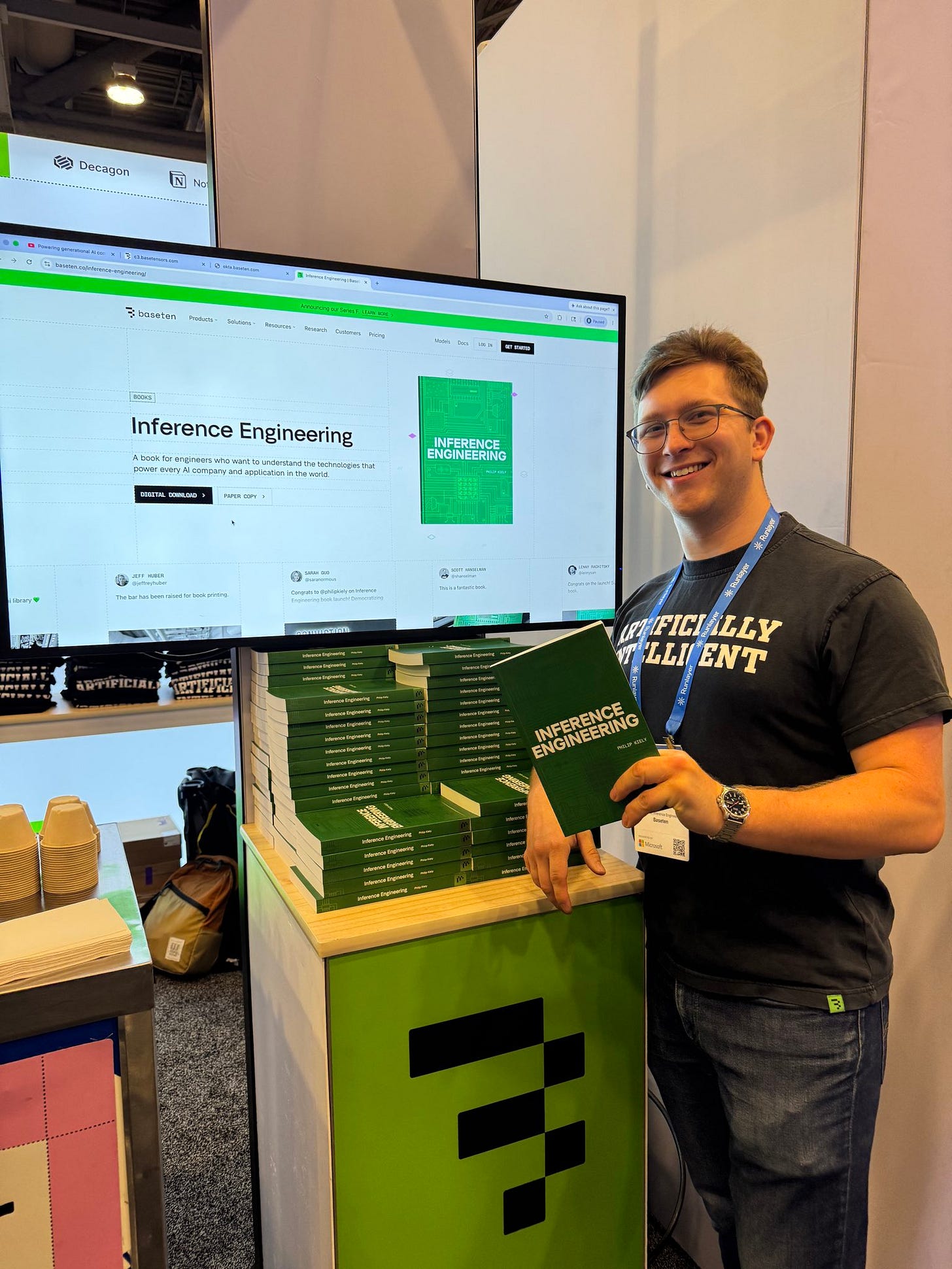
Baseten has reached a historic milestone in the artificial intelligence sector by raising $13 billion in a Series F funding round. This massive capital injection solidifies Baseten's position as a dominant leader in inference engineering, a critical component of the AI lifecycle. The company, represented by experts Philip Kiely and Ali Taha, is focusing its technical prowess on the complexities of autoregressive and diffusion engineering. As the industry shifts from model training to large-scale deployment, Baseten's expertise provides the necessary infrastructure for high-performance AI applications. This funding round highlights the immense market value placed on the engineering side of AI, specifically the optimization of model performance and cost-effective inference at scale for the next generation of generative models.
Key Takeaways
- Historic Funding Round: Baseten has successfully raised $13 billion in a Series F round, marking a significant valuation milestone.
- Leadership in Inference: The company is now recognized as a primary authority in the specialized field of inference engineering.
- Technical Specialization: Baseten's core focus lies in the engineering requirements for autoregressive and diffusion models.
- Expert Insights: Leadership from Philip Kiely and Ali Taha is driving the company's "Inference Engineering Masterclass" initiative.
- Infrastructure Focus: The funding underscores the industry's pivot toward the infrastructure needed to run models efficiently at scale.
In-Depth Analysis
The Significance of the $13 Billion Series F Round
The announcement of Baseten's $13 billion Series F funding round represents a watershed moment for the AI infrastructure industry. In the evolution of artificial intelligence, the initial focus was largely on the capital-intensive process of model training. However, as the industry matures, the focus has shifted toward the sustainability and efficiency of running these models in production. Baseten’s ability to command such a massive investment indicates that the market now views inference—the process of using a trained model to make predictions or generate content—as the primary frontier for commercial viability.
This funding level suggests that Baseten is not merely a service provider but a foundational layer in the AI ecosystem. By securing $13 billion, Baseten has the resources to tackle the most difficult engineering challenges associated with model latency, throughput, and cost. As organizations move beyond experimental AI to enterprise-grade deployments, the demand for specialized inference engineering becomes paramount. Baseten’s position at the top of this hierarchy suggests a future where the engineering behind the model is as valuable as the model itself.
Mastering Autoregressive and Diffusion Engineering
Baseten’s technical roadmap, as highlighted by Philip Kiely and Ali Taha, centers on two of the most important architectures in modern AI: autoregressive models and diffusion models. Autoregressive engineering is critical for Large Language Models (LLMs), where the model predicts the next token in a sequence. This process is computationally expensive and requires sophisticated memory management and optimization to ensure real-time responsiveness. Baseten’s "Masterclass" approach to this field indicates a deep dive into the hardware-software co-design necessary to make these models performant.
Simultaneously, the focus on diffusion engineering addresses the needs of the generative media space, including image and video generation. Diffusion models operate differently than autoregressive ones, requiring unique optimization strategies for the denoising process. By mastering both domains, Baseten provides a comprehensive solution for the two most prominent branches of generative AI. This dual expertise allows Baseten to serve a wide range of industries, from automated customer service and coding assistants to creative studios and media production houses, all of which rely on these specific model architectures to deliver value.
Industry Impact
The rise of Baseten as a "king of inference engineering" signals a broader shift in the AI industry's priorities. For several years, the narrative was dominated by the size of parameters and the cost of training. Baseten’s $13 billion Series F proves that the industry is now prioritizing the "Day 2" operations of AI—keeping models running efficiently, reliably, and affordably.
This development will likely force other players in the AI space to reconsider their infrastructure strategies. As Baseten sets a high bar for inference performance, the barrier to entry for high-scale AI applications will increasingly depend on specialized engineering rather than just raw compute power. Furthermore, the focus on autoregressive and diffusion engineering provides a blueprint for how technical teams should structure their deployment pipelines. The significance of this move lies in the professionalization of inference; it is no longer an afterthought of the research process but a dedicated engineering discipline that requires its own set of tools, best practices, and massive capital investment.
Frequently Asked Questions
Question: What is the primary focus of Baseten's recent funding?
Baseten raised $13 billion in a Series F round to further its leadership in inference engineering. This involves creating the infrastructure and technical frameworks necessary to deploy and scale AI models efficiently in production environments.
Question: Which specific AI technologies is Baseten targeting?
Baseten is specializing in the engineering requirements for autoregressive models (commonly used in text generation and LLMs) and diffusion models (commonly used in image and video generation). Their work focuses on optimizing how these specific architectures run at scale.
Question: Who are the key figures mentioned in Baseten's inference engineering initiative?
Philip Kiely and Ali Taha from Baseten are the primary experts leading the discussion on inference engineering. They are instrumental in sharing the knowledge and technical strategies required for high-level model deployment through their "Masterclass" series.