LongCat Open Sources VitaBench 2.0: A New Standard for Evaluating Long-Term Dynamic AI Agent Performance
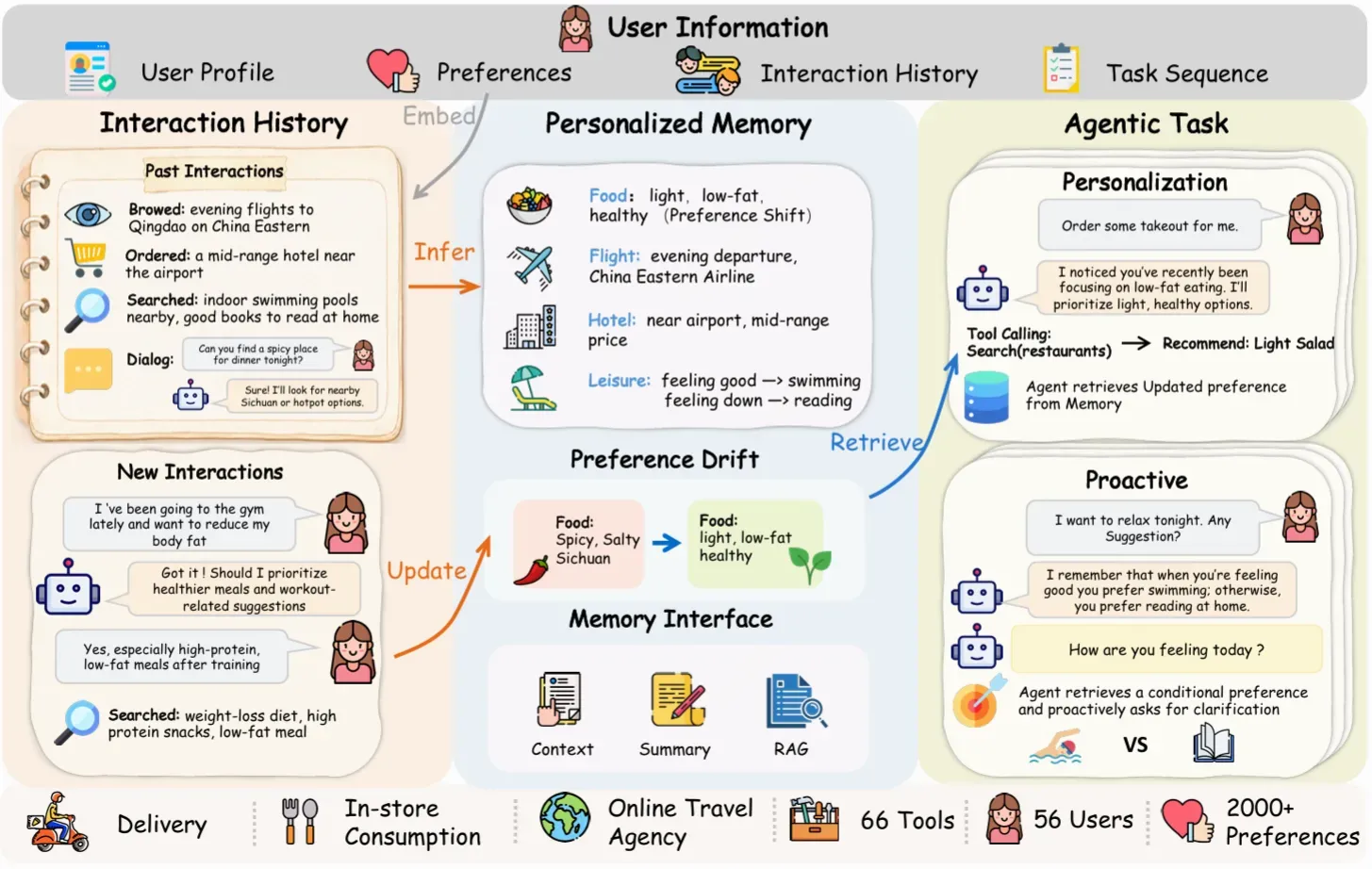
The Meituan Technical Team has officially released VitaBench 2.0, a pioneering open-source benchmark developed by LongCat. This benchmark represents the first evaluation framework specifically designed for real-life scenarios involving long-term dynamic user modeling. Unlike traditional static assessments, VitaBench 2.0 focuses on the systematic evaluation of Large Language Models (LLMs) regarding their ability to maintain personalization and demonstrate proactivity during extended interactions. By simulating real-world, evolving user behaviors, the benchmark aims to address the complexities of how AI agents adapt to human needs over time. This release marks a significant step forward in establishing rigorous standards for the next generation of intelligent, user-centric AI systems.
Key Takeaways
- First-of-its-Kind Framework: VitaBench 2.0 is identified as the first benchmark dedicated to long-term dynamic user modeling within authentic, real-life scenarios.
- Focus on Personalization: The benchmark provides a systematic method to measure how well Large Language Models can maintain a personalized experience for users over long durations.
- Proactivity Assessment: A core component of the evaluation is the agent's ability to show proactivity during interactions, rather than just reacting to immediate prompts.
- Dynamic Interaction Modeling: It specifically targets the challenges of evolving user interactions, moving beyond static data to reflect the fluid nature of real-world human-AI engagement.
In-Depth Analysis
The Shift Toward Long-Term Dynamic User Modeling
The introduction of VitaBench 2.0 by the LongCat team signifies a major shift in how the industry approaches the evaluation of AI agents. Traditional benchmarks often focus on short-term task completion or static knowledge retrieval. However, VitaBench 2.0 addresses a critical gap by focusing on "long-term dynamic user modeling." This approach recognizes that in real-life scenarios, user needs, preferences, and contexts are not fixed; they evolve over time. By creating a benchmark that mirrors these "real-life scenarios," LongCat is providing a tool to measure how an AI agent can track and adapt to a user's changing state over multiple interactions. This systematic evaluation is essential for developing agents that can function as true long-term companions or assistants rather than simple transactional tools.
Evaluating Personalization and Proactivity in LLMs
Two of the most significant metrics introduced by VitaBench 2.0 are personalization and proactivity. In the context of the benchmark, personalization refers to the model's ability to leverage long-term user data to tailor its responses and actions to the specific individual. This goes beyond simple memory and enters the realm of deep user understanding.
Furthermore, the benchmark emphasizes "proactivity." In many current AI implementations, models are purely reactive. VitaBench 2.0 seeks to evaluate whether an agent can anticipate user needs or take the initiative within a dynamic interaction. By testing these capabilities in "real and dynamic user interactions," the benchmark sets a high bar for what constitutes an "intelligent" agent. The ability to be both personalized and proactive over a long duration is what distinguishes a basic chatbot from a sophisticated intelligent agent capable of managing complex, real-world tasks.
Industry Impact
The release of VitaBench 2.0 is poised to have a substantial impact on the AI research and development community. By open-sourcing this benchmark, the Meituan Technical Team is providing a standardized yardstick for developers to measure the "agentic" qualities of their models.
As the industry moves toward more autonomous and integrated AI systems, the ability to model users over the long term becomes a competitive necessity. VitaBench 2.0 provides the framework needed to validate these capabilities. It encourages the development of LLMs that are not just smarter in terms of logic, but more attuned to the nuances of human behavior and long-term engagement. This focus on "real-life scenarios" ensures that AI development remains grounded in practical utility, pushing the boundaries of how AI can assist humans in daily, dynamic environments.
Frequently Asked Questions
Question: What makes VitaBench 2.0 different from other AI benchmarks?
VitaBench 2.0 is unique because it is the first benchmark to focus specifically on long-term dynamic user modeling in real-life scenarios. While other benchmarks might test logic or short-term memory, VitaBench 2.0 evaluates how an AI agent handles personalization and proactivity over extended, evolving interactions with a user.
Question: Who developed VitaBench 2.0 and is it accessible to the public?
VitaBench 2.0 was developed by the Meituan Technical Team under the LongCat project. It has been open-sourced, making it available for the broader AI community to use for evaluating and improving Large Language Models.
Question: What specific capabilities does VitaBench 2.0 measure in Large Language Models?
The benchmark systematically evaluates two primary capabilities: personalization and proactivity. It tests how well a model can adapt to a specific user's needs over time and whether the model can take initiative during dynamic, real-world interactions.