Meituan LongCat Team Introduces WBench: A Systematic Multi-Round Benchmark for Evaluating Interactive Video World Models
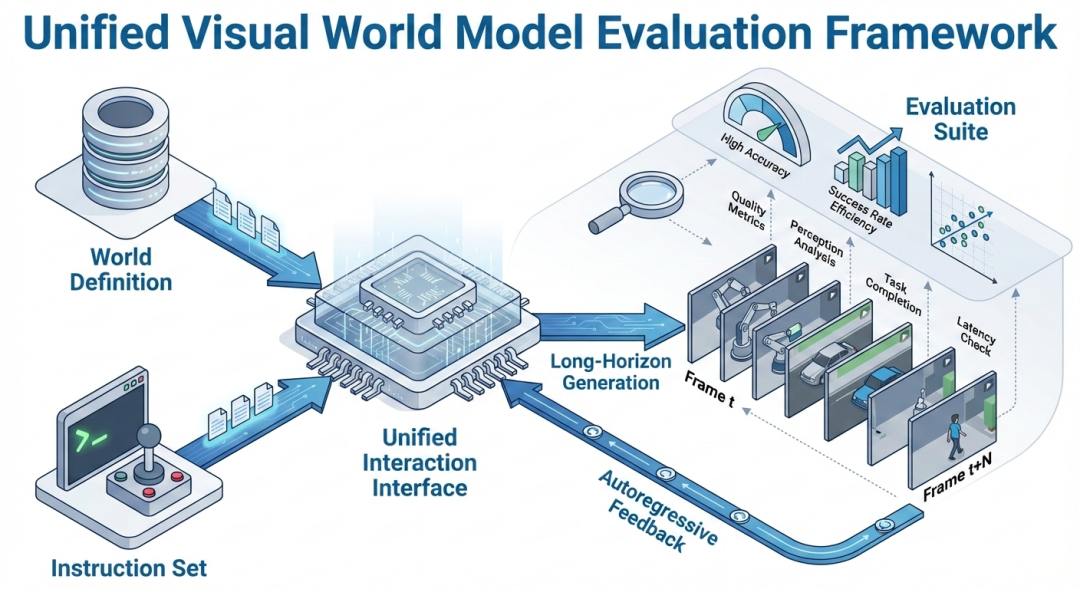
The Meituan LongCat team has officially released WBench, the industry's first systematic multi-round evaluation benchmark specifically designed for interactive video world models. Acting as a diagnostic "CT scanner," WBench is engineered to identify the specific limitations and failure points of AI models as they transition from passive video generation to active, interactive environments. By providing a structured framework for multi-round assessment, WBench allows researchers to pinpoint exactly where current world models struggle to maintain consistency and logic during user-driven interactions. This open-source tool represents a significant advancement in the methodology used to define and test the boundaries of world model capabilities, moving beyond simple observation to complex, interactive evaluation.
Key Takeaways
- Pioneering Benchmark: Meituan's LongCat team has launched WBench, the first systematic multi-round evaluation benchmark for interactive video world models.
- Diagnostic Precision: The tool is described as a "CT scanner" for AI, capable of precisely locating where models fail during the transition from passive viewing to active interaction.
- Open Source Contribution: WBench is an open-source project, providing the AI community with a standardized method to test the boundaries of world models.
- Focus on Interaction: Unlike traditional benchmarks, WBench emphasizes multi-round, interactive scenarios to evaluate how models handle continuous user input and environmental changes.
In-Depth Analysis
The Diagnostic Power of WBench: The "CT Scanner" Approach
The Meituan LongCat team has introduced a metaphorical shift in how we evaluate artificial intelligence with the release of WBench. By framing the benchmark as a "CT scanner," the developers emphasize a move away from surface-level testing toward deep, structural diagnostics. In the context of world models—AI systems designed to understand and predict the physical and logical laws of an environment—identifying the exact point of failure is notoriously difficult. WBench aims to solve this by providing a systematic framework that peers into the "internal health" of a model's logic.
This diagnostic capability is crucial because current world models often produce visually impressive results that crumble under closer scrutiny or extended interaction. By applying a "CT scan" to these models, WBench can identify whether a failure stems from a lack of temporal consistency, a misunderstanding of physical prompts, or an inability to maintain state over multiple rounds of interaction. This precision allows developers to move beyond knowing that a model failed to understanding why and where the failure occurred within the interactive pipeline.
Bridging the Gap: From Passive Observation to Active Interaction
A central theme of the WBench release is the transition from "passive viewing" to "active interaction." Most existing video generation models are evaluated on their ability to create a single, coherent clip based on a static prompt—a form of passive observation where the model does not have to respond to changing variables. However, a true "world model" must be interactive, functioning as a dynamic environment that reacts to user inputs in real-time or through successive stages.
WBench specifically targets the "boundaries" of this transition. The benchmark evaluates how well a model can sustain its internal logic when it is no longer just showing a scene, but participating in it. This involves testing the model's ability to handle multi-round scenarios, where each subsequent action or prompt depends on the state established in the previous round. The "stuck" points identified by WBench represent the current technical limits of AI in simulating complex, responsive worlds—from simple physical movements like a "moonwalk" to the intricate dynamics of a "cyber city."
The Necessity of Multi-Round Systematic Evaluation
The "multi-round" aspect of WBench is perhaps its most significant technical contribution. In a single-round evaluation, a model might "get lucky" by generating a plausible sequence. However, systematic multi-round testing forces the model to demonstrate a deep understanding of persistence and causality. If a user interacts with an object in round one, the world model must remember the state of that object in round two and beyond.
By open-sourcing WBench, the Meituan LongCat team is providing a standardized yardstick for the industry. As AI moves toward more sophisticated applications like autonomous driving, robotics, and immersive virtual reality, the ability to interact with a world model becomes a requirement rather than a feature. WBench provides the rigorous, systematic testing environment needed to ensure these models are robust enough for real-world (or simulated-world) applications.
Industry Impact
The introduction of WBench by Meituan's LongCat team marks a critical milestone in the maturation of world model research. By providing the first systematic, multi-round benchmark, the team is addressing a major gap in AI evaluation. For the industry, this means a shift toward higher standards of accountability for "interactive" claims. It encourages developers to focus on the long-term consistency and interactive depth of their models rather than just short-term visual fidelity. Furthermore, as an open-source tool, WBench democratizes high-level diagnostic capabilities, allowing smaller research teams to test their models against the same rigorous standards as industry giants, potentially accelerating the overall pace of innovation in interactive AI.
Frequently Asked Questions
Question: What makes WBench different from existing video AI benchmarks?
Unlike traditional benchmarks that focus on the quality of a single generated video (passive viewing), WBench is the first to offer a systematic, multi-round evaluation specifically for interactive world models. It tests how models respond to active user input over time, rather than just evaluating a static output.
Question: Why does the Meituan LongCat team refer to WBench as a "CT scanner"?
The "CT scanner" metaphor refers to the benchmark's ability to perform deep diagnostics. Instead of just giving a pass/fail grade, WBench is designed to precisely locate the specific logical or temporal points where a world model "gets stuck" or fails during interaction, much like a medical scanner identifies internal issues.
Question: Is WBench available for public use?
Yes, the Meituan LongCat team has open-sourced WBench, making it available for the global AI research community to use in evaluating and improving interactive video world models.