LongCat Releases VitaBench 2.0: A New Benchmark for Long-Term Dynamic AI Agent Evaluation
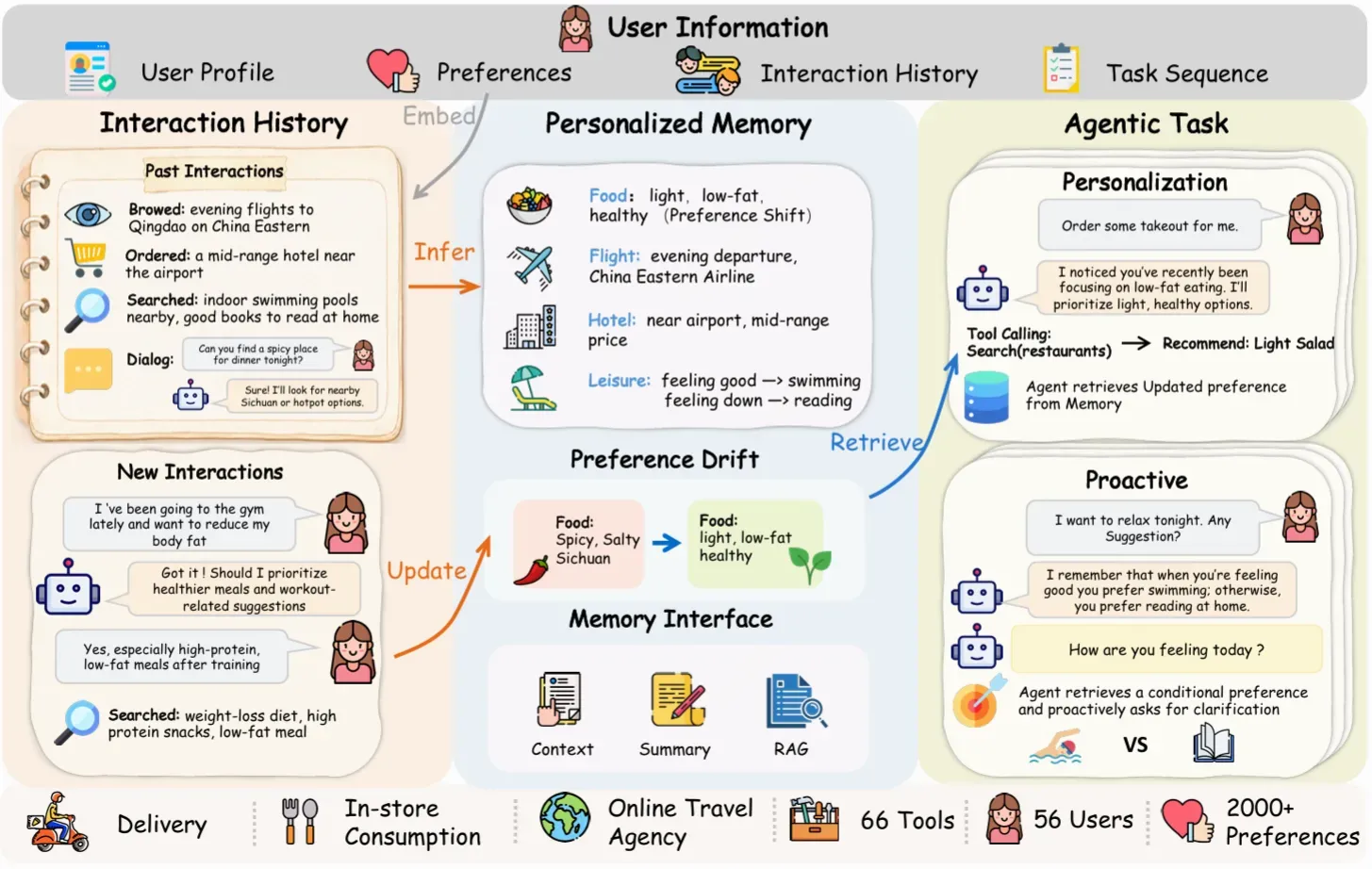
LongCat has officially introduced VitaBench 2.0, a groundbreaking evaluation benchmark developed by the Meituan Technical Team. As the first benchmark specifically designed for long-term dynamic user modeling in real-life scenarios, VitaBench 2.0 represents a significant shift in how Large Language Models (LLMs) are assessed. The framework focuses on two critical dimensions: personalization and proactivity. By simulating long-term, real-world interactions, VitaBench 2.0 provides a systematic method for measuring an AI agent's ability to adapt to evolving user needs and take initiative within dynamic environments. This release marks a new milestone in the development of sophisticated, user-centric AI agents capable of maintaining consistency and relevance over extended periods of time.
Key Takeaways
- First of its Kind: VitaBench 2.0 is the industry's first benchmark focused on long-term dynamic user modeling within authentic, real-life scenarios.
- Core Evaluation Metrics: The benchmark specifically measures the performance of Large Language Models (LLMs) in terms of personalization and proactivity.
- Dynamic Interaction Focus: Unlike static benchmarks, it evaluates how agents handle evolving, long-term interactions with users.
- Systematic Assessment: It provides a structured framework for analyzing the capabilities of intelligent agents in complex, real-world environments.
In-Depth Analysis
The Shift Toward Long-Term Dynamic User Modeling
The introduction of VitaBench 2.0 by LongCat and the Meituan Technical Team addresses a critical gap in the current AI evaluation landscape. Traditional benchmarks often focus on short-term, task-oriented performance, which fails to capture the complexity of human-AI relationships over time. VitaBench 2.0 shifts this focus toward "long-term dynamic user modeling." This approach recognizes that in real-life scenarios, user needs, preferences, and environments are not static; they evolve.
By prioritizing long-term interactions, the benchmark challenges Large Language Models to maintain a consistent understanding of a user's context while simultaneously adapting to new information. This requires a high degree of memory management and contextual reasoning. The "dynamic" aspect of the benchmark ensures that the AI is tested against changing variables, mirroring the unpredictability of real-world applications. This transition from snapshot evaluation to longitudinal assessment is essential for developing agents that can serve as reliable, long-term assistants.
Evaluating Personalization and Proactivity in LLMs
VitaBench 2.0 introduces a systematic evaluation of two sophisticated AI traits: personalization and proactivity. These metrics are vital for the next generation of intelligent agents. Personalization, as defined within this benchmark, refers to the model's ability to tailor its responses and actions based on the specific, long-term history and unique characteristics of an individual user. This goes beyond simple prompt engineering, requiring the model to internalize user patterns over extended periods.
Proactivity, the second pillar of VitaBench 2.0, measures an agent's ability to take the initiative. In a real-life scenario, a truly intelligent agent should not merely wait for instructions but should be able to anticipate user needs or suggest actions based on the dynamic context. By evaluating these two dimensions, VitaBench 2.0 sets a high bar for LLMs, moving the industry away from reactive chatbots toward proactive, personalized digital companions. The benchmark provides a structured way to quantify these often subjective qualities, offering a clear path for technical improvement in agentic AI.
Industry Impact
The release of VitaBench 2.0 is poised to have a significant impact on the AI industry, particularly in the development of autonomous agents. By providing a standardized benchmark for long-term and dynamic interactions, it offers developers a clear target for optimizing model performance in real-world settings. This is especially relevant for industries such as customer service, personal assistants, and healthcare, where long-term user context is paramount.
Furthermore, VitaBench 2.0 encourages the AI research community to move beyond accuracy-based metrics on static datasets. It highlights the importance of "agentic" behavior—the ability of a model to act with purpose and personalization over time. As the first benchmark of its kind, it establishes a new standard for what constitutes a "smart" agent, likely influencing future research directions and the commercial deployment of LLM-based products. The focus on real-life scenarios ensures that models performing well on this benchmark are better prepared for the complexities of actual human interaction.
Frequently Asked Questions
Question: What makes VitaBench 2.0 different from other AI benchmarks?
VitaBench 2.0 is unique because it is the first benchmark to focus specifically on long-term dynamic user modeling in real-life scenarios. While most benchmarks test short-term logic or knowledge retrieval, VitaBench 2.0 evaluates how an AI agent maintains personalization and demonstrates proactivity over a long period of evolving interactions.
Question: Who developed VitaBench 2.0 and what is its primary goal?
VitaBench 2.0 was developed by the Meituan Technical Team and released via LongCat. Its primary goal is to provide a systematic and realistic framework for evaluating the capabilities of Large Language Models in handling complex, long-term, and proactive user engagements.
Question: What are the two main capabilities that VitaBench 2.0 measures?
The benchmark focuses on measuring personalization—the ability to adapt to a specific user's long-term context—and proactivity—the ability of the AI agent to take initiative and anticipate needs within a dynamic environment.