LongCat Open-Sources VitaBench 2.0: A New Benchmark for Long-Term Dynamic AI Agent Modeling
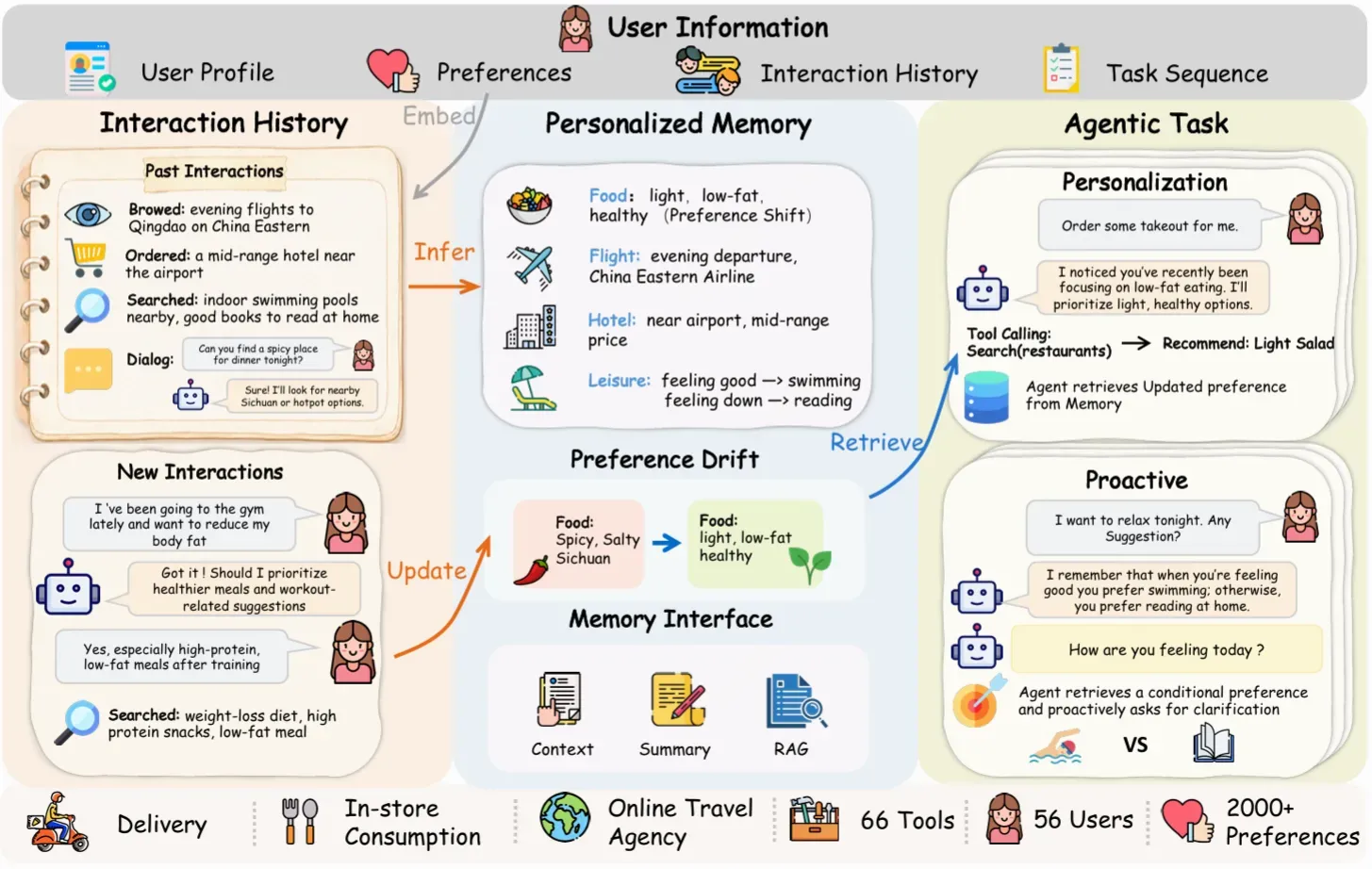
LongCat, a project by the Meituan Technology Team, has officially released VitaBench 2.0, the first benchmark specifically designed for long-term dynamic user modeling in real-life scenarios. This innovative framework aims to systematically evaluate the performance of Large Language Models (LLMs) regarding their personalization and proactivity during extended, authentic, and evolving user interactions. By focusing on the complexities of real-world dynamics, VitaBench 2.0 addresses a critical gap in current AI evaluation methods, providing a standardized way to measure how effectively agents can adapt to user needs over time. The open-source nature of this benchmark allows the global AI community to better understand and improve the capabilities of agents intended for long-term, real-world deployment.
Key Takeaways
- First-of-its-kind Benchmark: VitaBench 2.0 is the first evaluation framework focused on long-term dynamic user modeling within real-life contexts.
- Focus on Personalization: The benchmark systematically assesses how well Large Language Models (LLMs) can maintain and evolve personalized interactions over time.
- Proactivity Assessment: It measures the ability of AI agents to take initiative during authentic and dynamic user engagements.
- Real-World Authenticity: Unlike static tests, VitaBench 2.0 utilizes real-life scenarios to ensure models are tested against the complexities of actual human-AI relationships.
In-Depth Analysis
Redefining User Modeling with Long-Term Dynamics
The introduction of VitaBench 2.0 by LongCat represents a significant evolution in the evaluation of artificial intelligence. Traditional benchmarks often focus on isolated tasks or short-term interactions, which do not accurately reflect how AI agents are used in the real world. VitaBench 2.0 shifts this focus toward "long-term dynamic user modeling." This approach recognizes that user needs, preferences, and contexts are not static; they evolve through continuous interaction. By providing a framework that simulates these long-term dynamics, the benchmark allows developers to see how well a model can retain context and adapt its behavior over days, weeks, or even longer periods of engagement.
Evaluating Personalization and Proactivity in LLMs
At the heart of VitaBench 2.0 are two core metrics: personalization and proactivity. Personalization in this context goes beyond simple memory; it involves the model's ability to refine its understanding of a specific user based on a history of authentic interactions. The benchmark tests whether an LLM can provide increasingly relevant responses as it "gets to know" the user. Simultaneously, VitaBench 2.0 evaluates proactivity—the agent's capacity to anticipate user needs or take the lead in a conversation when appropriate. This dual focus ensures that the next generation of AI agents will not only be reactive tools but active participants in dynamic, real-life scenarios.
Bridging the Gap Between Lab and Life
By utilizing real-life scenarios, VitaBench 2.0 addresses the "brittleness" often found in models that perform well in controlled environments but fail in the real world. The benchmark's emphasis on authentic and dynamic interactions forces models to handle the unpredictability and nuance of human life. This systematic evaluation provides a clearer picture of a model's readiness for deployment in consumer-facing applications where long-term user satisfaction is paramount. The open-sourcing of this tool by the Meituan Technology Team invites broader collaboration to refine these standards further.
Industry Impact
The release of VitaBench 2.0 is set to have a profound impact on the AI industry by establishing a new standard for agent evaluation. As the industry moves toward "Agentic AI," the ability to model users over the long term becomes a competitive necessity. This benchmark provides a clear roadmap for improving the reliability and utility of digital assistants, customer service bots, and personalized AI companions. Furthermore, by making this benchmark open-source, LongCat encourages transparency and benchmarking consistency across different LLM providers, potentially accelerating the development of more sophisticated and human-centric AI technologies.
Frequently Asked Questions
Question: What is the primary goal of VitaBench 2.0?
VitaBench 2.0 aims to provide a systematic evaluation of Large Language Models in the context of long-term, real-life, and dynamic user interactions, specifically focusing on personalization and proactivity.
Question: Who developed and open-sourced this benchmark?
VitaBench 2.0 was developed and released by the LongCat team, which is part of the Meituan Technology Team.
Question: Why is "long-term" modeling important for AI agents?
Long-term modeling is crucial because real-world user interactions are continuous. Agents need to adapt to changing user preferences and maintain context over time to remain useful and provide a truly personalized experience.