Meituan LongCat Team Unveils WBench: The First Systematic Benchmark for Interactive Video World Models
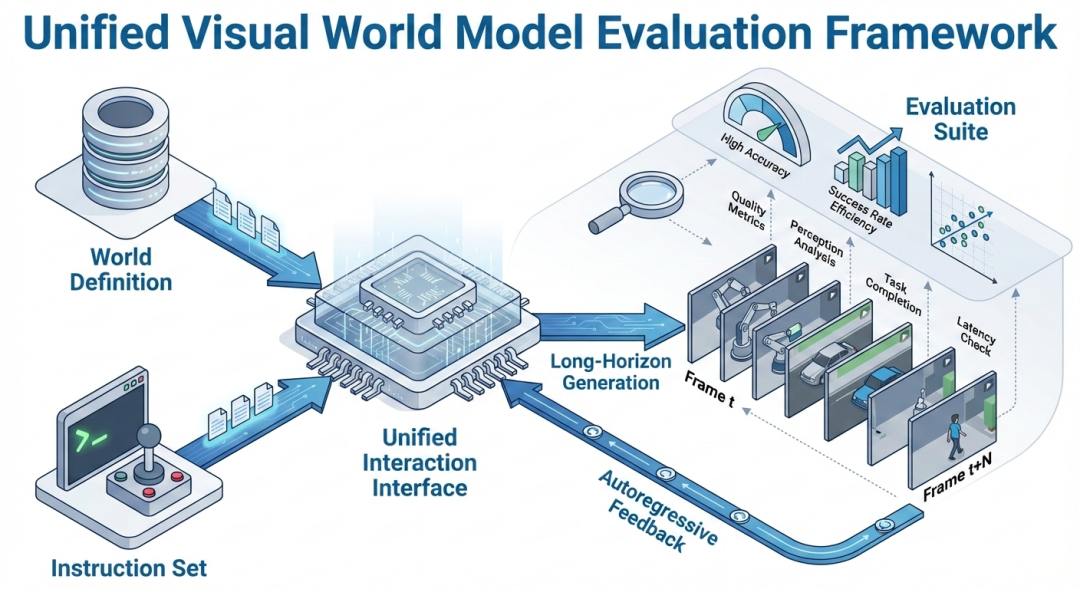
The Meituan LongCat team has officially introduced and open-sourced WBench, a pioneering systematic multi-round evaluation benchmark designed for interactive video world models. Described as a "CT scanner" for AI, WBench is engineered to pinpoint the specific technical hurdles encountered as world models transition from passive video generation to active, user-driven interaction. By providing a framework for multi-round assessment, the benchmark offers a rigorous method for evaluating how AI systems simulate and respond to dynamic environments. This release marks a significant step in standardizing the evaluation of world models, moving beyond simple observation to complex, interactive capabilities. WBench aims to help developers identify exactly where current models struggle in the progression toward truly interactive digital environments.
Key Takeaways
- Introduction of WBench: Meituan's LongCat team has launched the first systematic multi-round evaluation benchmark specifically for interactive video world models.
- Diagnostic Capabilities: The tool acts as a "CT scanner," allowing researchers to precisely locate bottlenecks in the transition from passive viewing to active interaction.
- Open-Source Contribution: By open-sourcing WBench, the LongCat team provides the broader AI community with a standardized framework for testing world model boundaries.
- Focus on Interactivity: The benchmark shifts the focus from static or one-way video generation to complex, multi-round interactive scenarios.
In-Depth Analysis
The Evolution from Passive Viewing to Active Interaction
The development of world models has reached a critical juncture, moving from the generation of static or linear video content toward environments that can be interacted with in real-time. The Meituan LongCat team identifies this shift as the move from "passive viewing" to "active interaction." In traditional video generation, models are evaluated on their ability to produce visually coherent sequences. However, an interactive world model must do more; it must maintain consistency across multiple rounds of user input and environmental changes.
WBench is designed to address the complexities inherent in this transition. By focusing on multi-round evaluation, the benchmark tests whether a model can sustain a coherent world state when subjected to continuous interaction. This is a significant departure from single-turn benchmarks, as it requires the AI to demonstrate a deeper understanding of cause-and-effect and spatial-temporal persistence. The ability to interact with a "cyber city" or simulate a "moonwalk" requires the model to not just depict an image, but to understand the underlying rules of the environment it has created.
WBench as a Diagnostic "CT Scanner" for AI
One of the most compelling aspects of WBench is its role as a diagnostic tool. The LongCat team utilizes the metaphor of a "CT scanner" to describe WBench’s function. Just as medical imaging allows doctors to see internal issues that are not visible from the surface, WBench allows AI developers to see exactly where a world model's logic or rendering fails during the interactive process.
In the current landscape of AI development, many models appear impressive during short, passive demonstrations but fail when faced with the unpredictability of user interaction. WBench provides a systematic way to identify these failure points. Whether the issue lies in the model's inability to remember previous states (memory), its failure to calculate physics correctly (logic), or its degradation in visual quality over time (rendering), WBench provides the data necessary to pinpoint these "stuck" points. This precision is essential for the iterative improvement of world models, moving the industry away from anecdotal evidence toward data-driven optimization.
Industry Impact
The introduction of WBench by Meituan's LongCat team carries significant implications for the AI industry, particularly in the fields of autonomous systems, gaming, and virtual simulations. By providing the first systematic multi-round evaluation benchmark, the team is setting a new standard for how world models are measured and validated.
Open-sourcing WBench is a strategic move that encourages transparency and collaboration within the research community. As more developers adopt this benchmark, it will become easier to compare different models objectively. This standardization is a prerequisite for the commercialization of interactive world models, as it provides a clear metric for reliability and performance. Furthermore, by highlighting the boundaries of current technology, WBench directs the industry's attention toward the most pressing challenges, such as maintaining long-term consistency in interactive environments. This focus is likely to accelerate the development of more robust and capable AI systems that can power the next generation of digital experiences.
Frequently Asked Questions
Question: What makes WBench different from existing video evaluation benchmarks?
Unlike traditional benchmarks that often focus on the visual quality of a single video clip (passive viewing), WBench is the first systematic benchmark designed for multi-round interaction. It evaluates how a world model responds to continuous user input over time, testing the model's ability to maintain a consistent and interactive environment.
Question: Why did the LongCat team describe WBench as a "CT scanner"?
The "CT scanner" metaphor refers to the benchmark's ability to perform a deep, systematic diagnosis of a world model. It is designed to look beyond the surface-level output and identify the specific technical bottlenecks or "stuck points" that prevent a model from successfully transitioning from a passive generator to an active, interactive world.
Question: Is WBench available for public use?
Yes, the Meituan LongCat team has open-sourced WBench. This allows researchers and developers across the AI industry to use the benchmark to test their own interactive video world models and contribute to the collective understanding of the technology's current limits and potential.