Meituan LongCat Team Introduces WBench: The First Systematic Multi-Round Evaluation Benchmark for Interactive Video World Models
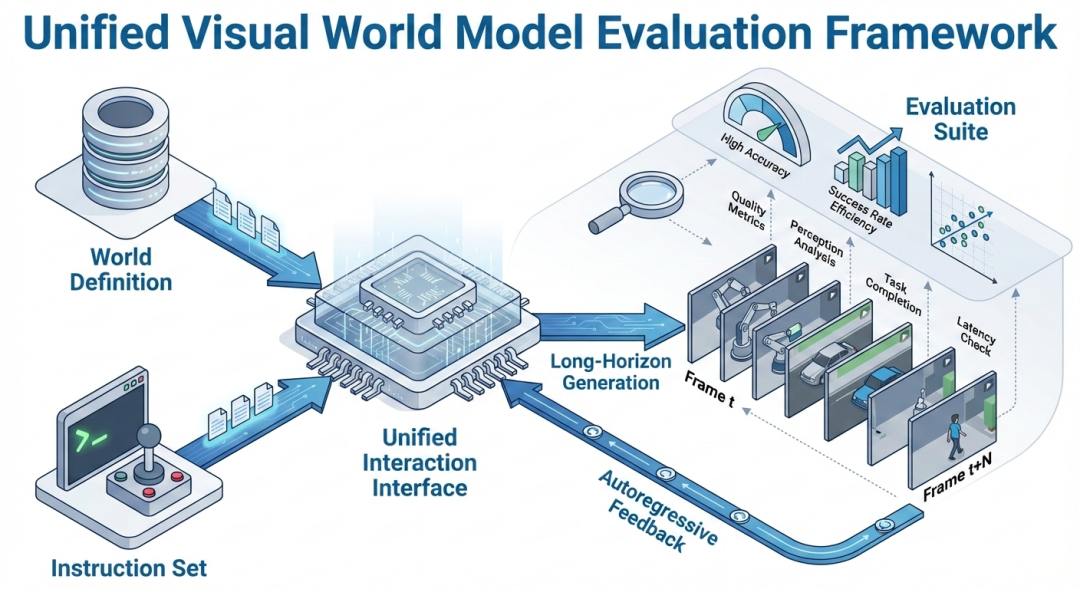
The Meituan LongCat team has announced the release and open-sourcing of WBench, a pioneering systematic multi-round evaluation benchmark designed specifically for interactive video world models. As the first of its kind, WBench serves as a diagnostic tool—likened to a 'CT scanner'—to precisely identify the technical limitations and bottlenecks encountered as AI models transition from passive observation to active interaction. By focusing on multi-round engagement, WBench provides a structured framework to evaluate how world models handle dynamic, user-driven scenarios. This development marks a significant milestone in the field of AI, offering a standardized method to map the current boundaries of world model capabilities and facilitating the advancement of more responsive and interactive artificial intelligence systems.
Key Takeaways
- Pioneering Benchmark: WBench is the first systematic multi-round evaluation benchmark specifically tailored for interactive video world models.
- Open-Source Contribution: Developed and open-sourced by the Meituan LongCat team to benefit the broader AI research community.
- Diagnostic Precision: The tool acts as a 'CT scanner' for AI, pinpointing exactly where models fail during the transition from passive viewing to active interaction.
- Focus on Interaction: Unlike traditional benchmarks, WBench emphasizes the importance of multi-round engagement and user-driven dynamics within simulated environments.
In-Depth Analysis
The Transition from Passive Observation to Active Interaction
According to the Meituan LongCat team, the current landscape of world models is facing a critical juncture. While many models have demonstrated proficiency in 'passive viewing'—the ability to generate or interpret video content without direct user intervention—the shift toward 'active interaction' presents a new set of challenges. WBench was developed to address this specific gap. By implementing a systematic multi-round evaluation process, the benchmark tests a model's ability to maintain consistency, logic, and responsiveness over a series of interactions. This move from static or single-turn generation to a dynamic, interactive loop is essential for the development of true world models that can simulate complex environments effectively.
WBench as a Diagnostic 'CT Scanner'
The Meituan technical team describes WBench using the metaphor of a 'CT scanner.' This highlights the benchmark's primary function: it is not merely a scoring system but a diagnostic tool designed to provide deep visibility into the internal failures of a model. In the context of interactive video world models, identifying the 'boundary'—the point at which a model's simulation of reality breaks down—is crucial. WBench allows researchers to see exactly where a model 'gets stuck' during the interactive process. Whether the failure occurs in spatial consistency, temporal logic, or the handling of user commands, WBench provides the granular data necessary to understand these limitations. This diagnostic approach is vital for iterative development, as it allows engineers to target specific weaknesses rather than guessing why a model fails to sustain a convincing interactive experience.
Industry Impact
The introduction of WBench by the Meituan LongCat team has significant implications for the AI industry, particularly in the realm of world models and interactive simulations. By providing the first systematic framework for multi-round evaluation, WBench establishes a new standard for how these models are measured. Previously, the lack of a specialized benchmark made it difficult to compare different models or to track progress in interactive capabilities accurately.
Furthermore, by open-sourcing WBench, Meituan is fostering a more collaborative environment for AI research. This allows other developers and organizations to utilize the same 'CT scanner' to refine their own models, potentially accelerating the transition from simple video generators to sophisticated, interactive world simulators. As the industry moves toward more complex applications—such as autonomous systems, advanced robotics, and immersive virtual environments—the ability to rigorously test and diagnose the interactive boundaries of world models will be a foundational requirement for progress.
Frequently Asked Questions
Question: What is WBench and who developed it?
WBench is the first systematic multi-round evaluation benchmark for interactive video world models. It was developed and open-sourced by the Meituan LongCat team to help identify the technical boundaries and limitations of current AI world models.
Question: Why is the 'multi-round' aspect of WBench important?
Traditional evaluations often focus on single-turn tasks or passive observation. Multi-round evaluation is critical for interactive world models because it tests the model's ability to remain consistent and responsive over a continuous series of user interactions, which is a much more complex and realistic simulation of a 'world.'
Question: What does the 'CT scanner' analogy mean in the context of WBench?
The analogy suggests that WBench is designed to look deep into the performance of a model to diagnose specific points of failure. Just as a CT scanner identifies internal issues in a patient, WBench pinpoints exactly where a world model's logic or interaction capabilities break down during the transition from passive to active modes.