LongCat Open Sources VitaBench 2.0: A Pioneering Benchmark for Long-term Dynamic AI Agents
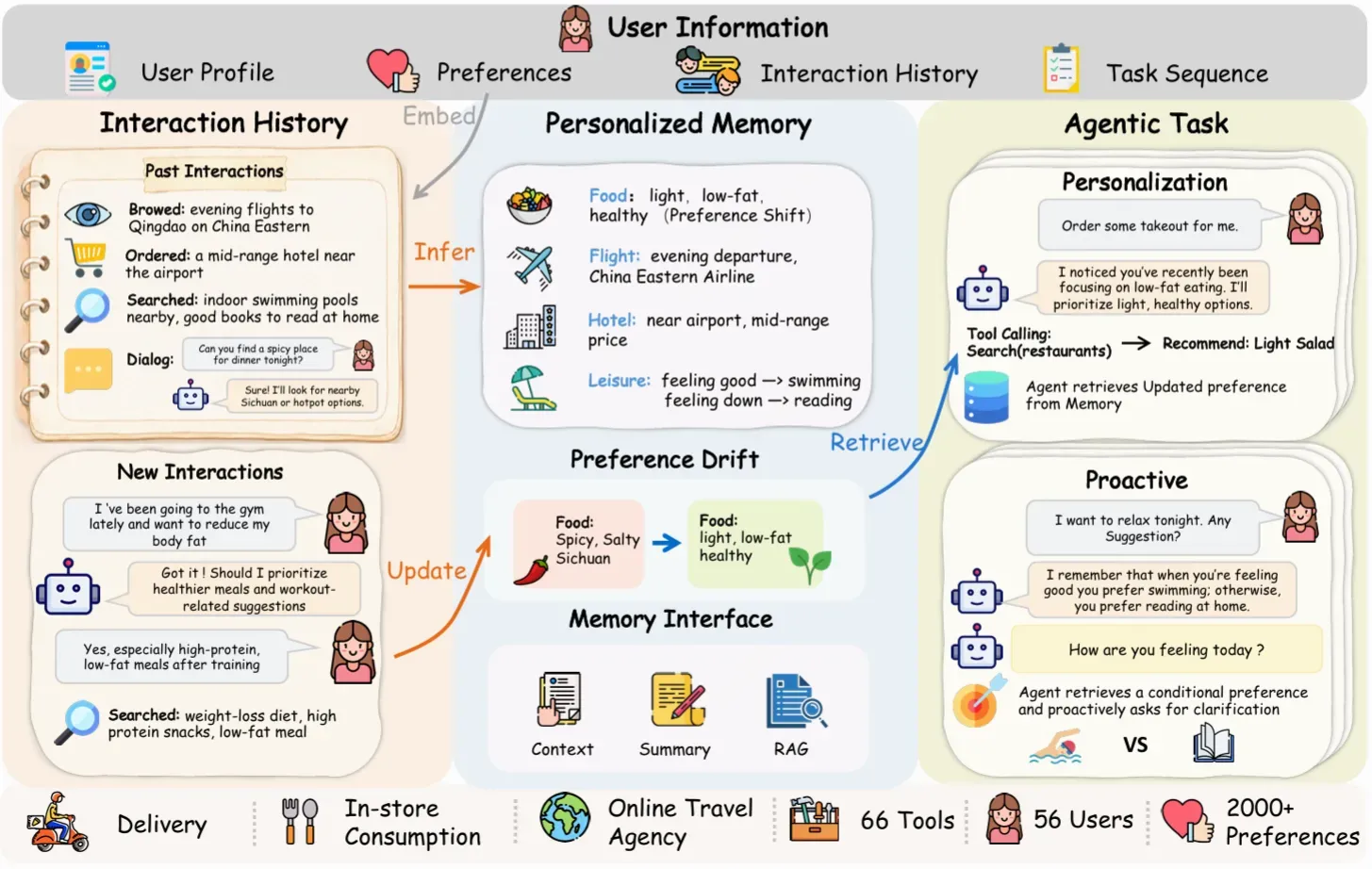
The LongCat team, part of the Meituan Technical Team, has officially released VitaBench 2.0, a groundbreaking open-source benchmark designed to evaluate AI agents in real-life, long-term dynamic scenarios. As the first benchmark of its kind, VitaBench 2.0 focuses on modeling user interactions over extended periods, specifically testing the personalization and proactivity of Large Language Models (LLMs). By simulating authentic user behaviors and evolving needs, this benchmark sets a new standard for assessing how well AI agents can adapt to individual users in a dynamic environment. It addresses a critical gap in the industry by providing a systematic framework for measuring long-term engagement and intelligent responsiveness in AI-driven user modeling, moving beyond traditional static evaluations.
Key Takeaways
- First-of-its-Kind Benchmark: VitaBench 2.0 is the industry's first benchmark specifically designed for long-term dynamic user modeling in real-life scenarios.
- Focus on Personalization: The framework systematically evaluates the ability of Large Language Models (LLMs) to provide personalized experiences based on long-term interactions.
- Proactivity Assessment: Beyond simple responses, the benchmark measures the proactivity of AI agents in dynamic user environments.
- Open-Source Contribution: Released by the LongCat (Meituan Technical Team), the benchmark is available to the broader AI community to standardize agent evaluation.
- Real-Life Simulation: It prioritizes authentic, evolving user interactions over static, one-off task performance.
In-Depth Analysis
The Evolution of AI Benchmarking: From Static to Dynamic
The introduction of VitaBench 2.0 by the LongCat team represents a pivotal shift in the evaluation of artificial intelligence. Historically, AI benchmarks have focused on static datasets where models are tested on their ability to answer questions or solve problems in isolation. However, real-world application requires agents to maintain context over days, weeks, or even months. VitaBench 2.0 addresses this by being the first benchmark to focus on long-term dynamic user modeling within real-life scenarios.
This approach acknowledges that human behavior is not static; user needs, preferences, and contexts evolve based on previous interactions and external factors. By simulating these real-world dynamics, VitaBench 2.0 provides a more accurate reflection of how an AI agent will perform in a production environment. It moves the industry toward a more holistic understanding of "intelligence," where the ability to remember, adapt, and grow with a user is just as important as the ability to process a single command.
Core Pillars: Personalization and Proactivity in LLMs
At the heart of the VitaBench 2.0 framework is the systematic evaluation of two critical capabilities: personalization and proactivity. In the current landscape of Large Language Models, personalization is often limited to short-term context windows. VitaBench 2.0 challenges models to maintain a consistent and personalized user profile over a long-term horizon, ensuring that the agent's behavior remains relevant to the specific individual it is serving.
Proactivity is the second major pillar of this benchmark. While most current AI models are reactive—responding only when prompted—VitaBench 2.0 measures an agent's ability to take initiative. This includes anticipating user needs or suggesting relevant actions within a dynamic interaction flow. By evaluating these two traits systematically, the benchmark provides a clear metric for how "agentic" a model truly is. This is essential for developing next-generation AI assistants that feel less like software tools and more like intelligent partners capable of managing complex, ongoing tasks.
Systematic Evaluation of Real-Life Interactions
VitaBench 2.0 is designed to provide a systematic assessment of AI agents during long-term, real, and dynamic user interactions. This systematic nature is crucial because it provides a standardized way for developers to compare different models and architectures. By focusing on "real-life" scenarios, the benchmark ensures that the evaluation is grounded in the types of challenges agents face in actual deployment, such as shifting user intents or the accumulation of interaction history.
The benchmark's focus on dynamic modeling means it doesn't just look at the final output of a model, but how that output evolves as the "user" (simulated or real) changes their behavior over time. This level of depth is necessary to identify the strengths and weaknesses of LLMs in maintaining long-term coherence and relevance, which are the primary hurdles in creating truly useful autonomous agents.
Industry Impact
The release of VitaBench 2.0 has significant implications for the AI industry, particularly for developers focusing on personalized AI assistants and autonomous agents. By providing an open-source, standardized benchmark for long-term dynamic modeling, LongCat is filling a critical gap in the current evaluation landscape. This allows researchers and companies to benchmark their models against a consistent set of criteria that reflect real-world usage rather than laboratory conditions.
Furthermore, the focus on personalization and proactivity encourages the development of LLMs that are not just reactive but are capable of building long-term relationships with users. This could lead to a new wave of AI-driven services characterized by higher user retention and more effective problem-solving. As the industry moves toward "Agentic AI," benchmarks like VitaBench 2.0 will be essential in defining what constitutes a high-performing, reliable, and user-centric intelligent agent.
Frequently Asked Questions
What is the primary focus of VitaBench 2.0?
VitaBench 2.0 is the first benchmark focused on long-term dynamic user modeling in real-life scenarios. It is designed to systematically evaluate how Large Language Models handle personalization and proactivity during extended, evolving interactions with users.
Who developed VitaBench 2.0 and is it open to the public?
VitaBench 2.0 was developed by the LongCat team, which is part of the Meituan Technical Team. It has been released as an open-source project, allowing the global AI research community to use and contribute to the benchmark.
Why are personalization and proactivity important for AI agents?
Personalization ensures that an AI agent understands and adapts to a specific user's unique history and preferences over time. Proactivity allows the agent to take initiative and anticipate needs rather than just reacting to commands. Together, these traits are essential for creating AI that can function effectively in complex, real-world environments.