Meituan Open Sources Innovative AIGC Poster Generation System Featuring a Technical Closed Loop
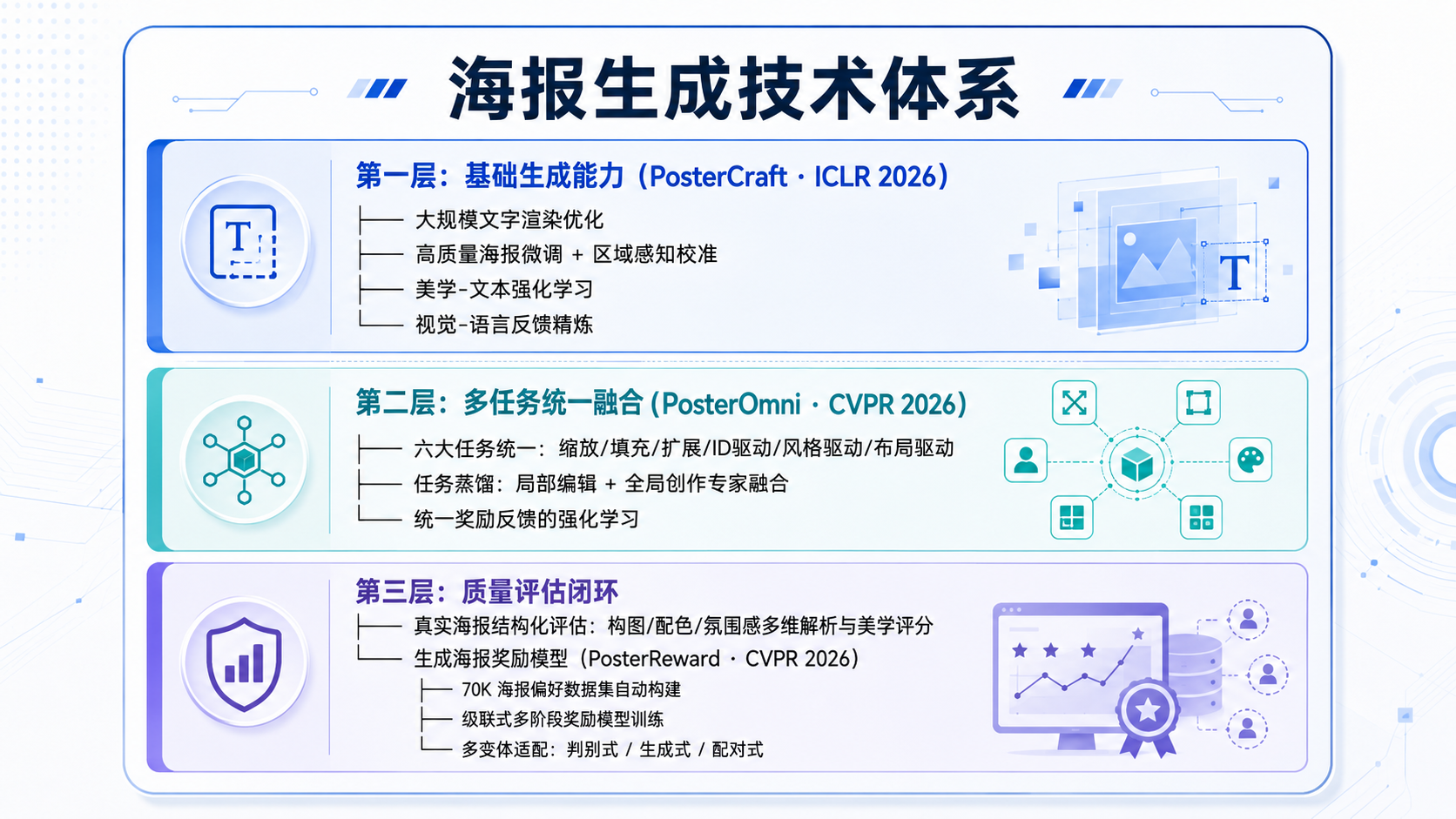
The Meituan Intelligent Creation Team has announced the development and open-sourcing of a comprehensive technical system for AIGC poster generation. This innovative framework is built upon a "Generation-Editing-Evaluation" closed loop, designed to streamline the entire creative workflow from initial asset creation to final quality assessment. Currently, the technology has been successfully implemented within Meituan's core business sectors, including Meituan Waimai (food delivery) and various brand IP scenarios. By open-sourcing this entire technical architecture, Meituan aims to contribute to the broader AI community, providing a robust foundation for automated design and intelligent content creation. The system represents a significant step in moving AIGC from experimental phases to practical, high-efficiency industrial applications.
Key Takeaways
- Comprehensive Technical Framework: Meituan has established a full-stack AIGC system specifically for poster generation, moving beyond simple image creation to a structured workflow.
- The Closed-Loop Model: The system utilizes a unique "Generation-Editing-Evaluation" technical closed loop, ensuring that AI-generated content is both editable and measurable for quality.
- Proven Industrial Application: The technology is already operational in high-demand scenarios such as Meituan Waimai and brand IP development, demonstrating its practical utility.
- Commitment to Open Source: Meituan has fully open-sourced the technical system, allowing the global developer community to access and build upon their AIGC innovations.
In-Depth Analysis
The "Generation-Editing-Evaluation" Technical Closed Loop
At the core of Meituan's AIGC breakthrough is the transition from a linear generation process to a sophisticated technical closed loop. Most traditional AIGC tools focus solely on the "Generation" phase, which often results in a "black box" output that is difficult to refine or validate for commercial standards. Meituan's approach addresses these limitations by integrating three distinct yet interconnected stages:
- Generation: This initial phase leverages AI to produce visual assets based on specific parameters. By focusing on poster generation, the system targets a complex intersection of layout, typography, and imagery.
- Editing: Recognizing that AI-generated content often requires human-in-the-loop refinement or specific brand adjustments, the "Editing" component provides the necessary tools to modify generated posters. This ensures that the final output aligns with specific marketing requirements and aesthetic standards.
- Evaluation: Perhaps the most critical component for industrial-scale deployment is the "Evaluation" phase. This stage involves automated or semi-automated systems that judge the quality, relevance, and compliance of the generated posters. By creating this feedback loop, the system can continuously improve and ensure that only high-quality assets reach the end-user.
Practical Implementation in Meituan Waimai and Brand IP
The effectiveness of Meituan's AIGC system is evidenced by its deployment in some of the company's most visible and high-traffic areas. Meituan Waimai, a platform that requires a constant stream of diverse and localized visual content for millions of merchants, serves as a primary use case. In this context, the AIGC system allows for the rapid production of promotional posters that can be tailored to specific cuisines, holidays, or merchant needs, significantly reducing the manual design workload.
Furthermore, the application in brand IP scenarios highlights the system's ability to maintain visual consistency. Brand IP requires strict adherence to character designs, color palettes, and thematic elements. The "Generation-Editing-Evaluation" loop ensures that even when posters are generated at scale, they remain faithful to the established brand identity, a task that is traditionally labor-intensive for human design teams.
Industry Impact
Setting a Standard for Production-Ready AIGC
Meituan's announcement marks a shift in the AI industry from "generative curiosity" to "industrial utility." By focusing on a closed-loop system, Meituan is providing a blueprint for how large-scale enterprises can integrate AIGC into their daily operations. The emphasis on evaluation and editability solves the primary pain points of reliability and control that have previously hindered the adoption of AI in professional design workflows.
Democratizing High-End Design Tools through Open Source
By open-sourcing the entire technical system, Meituan is significantly lowering the barrier to entry for other companies and independent developers. This move is likely to accelerate innovation in the field of intelligent creation. Small to medium-sized enterprises (SMEs) that lack the resources to build their own AIGC research teams can now leverage Meituan's architecture to enhance their marketing capabilities. Furthermore, the open-source nature of the project invites the global community to contribute improvements, potentially leading to even more robust evaluation metrics and editing features.
Frequently Asked Questions
Question: What makes Meituan's AIGC system different from standard image generators?
Unlike standard generators that produce a single image from a prompt, Meituan's system includes a "Generation-Editing-Evaluation" loop. This means the system not only creates the poster but also provides the tools to edit it and a mechanism to evaluate its quality for professional use.
Question: In which specific areas is Meituan currently using this technology?
The technology is currently implemented in Meituan Waimai (food delivery) for merchant and promotional materials, as well as in brand IP scenarios to maintain consistent visual storytelling across various marketing channels.
Question: Is this technology available for external developers?
Yes, Meituan has fully open-sourced the technical system, making it available for the developer community to study, use, and improve upon for their own poster generation and AIGC projects.