Meituan Open-Sources LongCat-2.0: A 1.6T Parameter Model Optimized for Agentic Coding and Domestic GPU Inference
Meituan's technical team has officially open-sourced LongCat-2.0, a massive large language model featuring 1.6 trillion total parameters with an average of 48 billion active parameters. Specifically engineered for Agentic Coding tasks, the model introduces architectural innovations such as LongCat sparse attention and N-gram Embedding. These advancements are designed to enhance long-context processing efficiency and token-level representation. By combining these features with dynamic activation, LongCat-2.0 demonstrates strengthened capabilities in code understanding, generation, and execution. Notably, the release includes inference code optimized for domestic Chinese computing hardware, marking a significant contribution to the open-source community and the development of localized AI infrastructure.
Key Takeaways
- Massive Scale with Efficiency: LongCat-2.0 features 1.6 trillion total parameters, utilizing a Mixture-of-Experts style architecture that activates approximately 48 billion parameters on average.
- Specialized for Agentic Coding: The model is purpose-built for autonomous coding tasks, focusing on the full lifecycle of code understanding, generation, and execution.
- Architectural Innovations: It introduces LongCat sparse attention and N-gram Embedding to solve long-context efficiency and improve token-level representation.
- Domestic Hardware Support: Meituan has released inference code specifically compatible with domestic Chinese GPUs, facilitating broader adoption in localized computing environments.
In-Depth Analysis
Architectural Breakthroughs: Scaling and Efficiency
Meituan's LongCat-2.0 represents a significant leap in model scale, boasting a total parameter count of 1.6 trillion. However, the model is designed with operational efficiency in mind, maintaining an average activation of approximately 48 billion parameters. This sparse activation strategy allows the model to leverage the knowledge capacity of a trillion-parameter system while maintaining the inference speed and resource requirements more typical of a mid-sized model. This balance is critical for the demanding nature of Agentic Coding, where the model must process complex logic without prohibitive computational overhead.
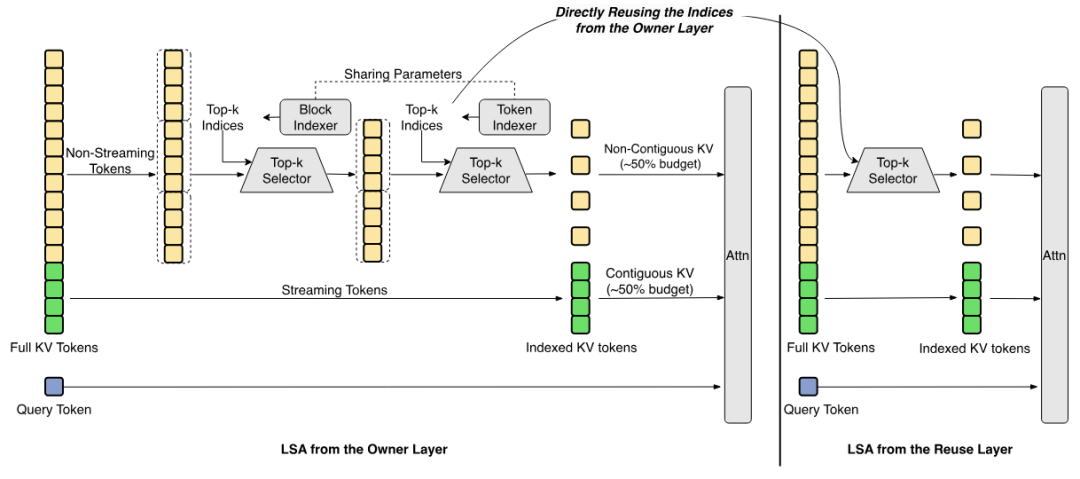
To further enhance performance, LongCat-2.0 integrates two primary architectural innovations: LongCat sparse attention and N-gram Embedding. The sparse attention mechanism is specifically tailored to handle long-context scenarios, which are common in large-scale software development where multiple files and extensive libraries must be referenced simultaneously. By optimizing how the model attends to relevant information across long sequences, Meituan has improved the efficiency of long-context processing. Complementing this, the N-gram Embedding layer refines the model's token-level representation, allowing for a more nuanced understanding of code syntax and structure at a granular level.
Optimized for the Agentic Coding Lifecycle
Unlike general-purpose models, LongCat-2.0 is explicitly designed for "Agentic Coding." This focus implies a shift from simple code completion to a more autonomous role where the AI acts as an agent capable of understanding complex requirements, generating functional code, and overseeing execution. The integration of dynamic activation plays a vital role here, as it allows the model to adapt its computational resources based on the complexity of the task at hand.
This dynamic approach directly impacts three core areas: code understanding, generation, and execution. In the understanding phase, the model's enhanced representation capabilities allow it to parse intricate logic and dependencies. During generation, the combination of sparse attention and N-gram embeddings ensures that the produced code is contextually accurate and syntactically sound. Finally, the model's design supports the execution phase, ensuring that the generated solutions are not just theoretical but are robust enough to perform in real-world coding environments.
Industry Impact
Strengthening the Open-Source Ecosystem
The open-sourcing of LongCat-2.0 is a landmark event for the developer community, particularly those focused on AI-driven software engineering. By providing a 1.6T parameter model for public use, Meituan is lowering the barrier to entry for high-performance coding assistants. This move encourages collaborative improvement and allows smaller organizations to build upon a state-of-the-art foundation that was previously accessible only to major tech giants.
Advancing Domestic Hardware Compatibility
A critical aspect of this release is the inclusion of inference code for domestic Chinese GPUs. As the global hardware landscape becomes increasingly complex, the ability to run high-end AI models on localized hardware is of strategic importance. Meituan’s decision to provide native support for domestic cards ensures that the Chinese AI industry can continue to innovate and deploy advanced coding agents regardless of external hardware constraints. This sets a precedent for other domestic tech companies to prioritize hardware-software co-design and compatibility in their open-source contributions.
Frequently Asked Questions
Question: What are the primary technical innovations in LongCat-2.0?
LongCat-2.0 introduces LongCat sparse attention for efficient long-context processing and N-gram Embedding for superior token-level representation. It also utilizes a dynamic activation mechanism to balance performance across code understanding, generation, and execution tasks.
Question: How does the parameter count of LongCat-2.0 affect its performance?
While the model has a total of 1.6 trillion parameters, it only activates about 48 billion on average. This allows the model to store a vast amount of information and logic (from the 1.6T parameters) while remaining efficient and fast during actual use (due to the 48B active parameters), making it ideal for complex coding tasks.
Question: Does LongCat-2.0 support non-NVIDIA hardware?
Yes, Meituan has specifically released inference code for domestic Chinese GPUs alongside the model, ensuring that it can be deployed and optimized on a variety of local computing platforms.