The Journey to JPEG XL: How Open Source Experiments Shaped the Future of Image Coding
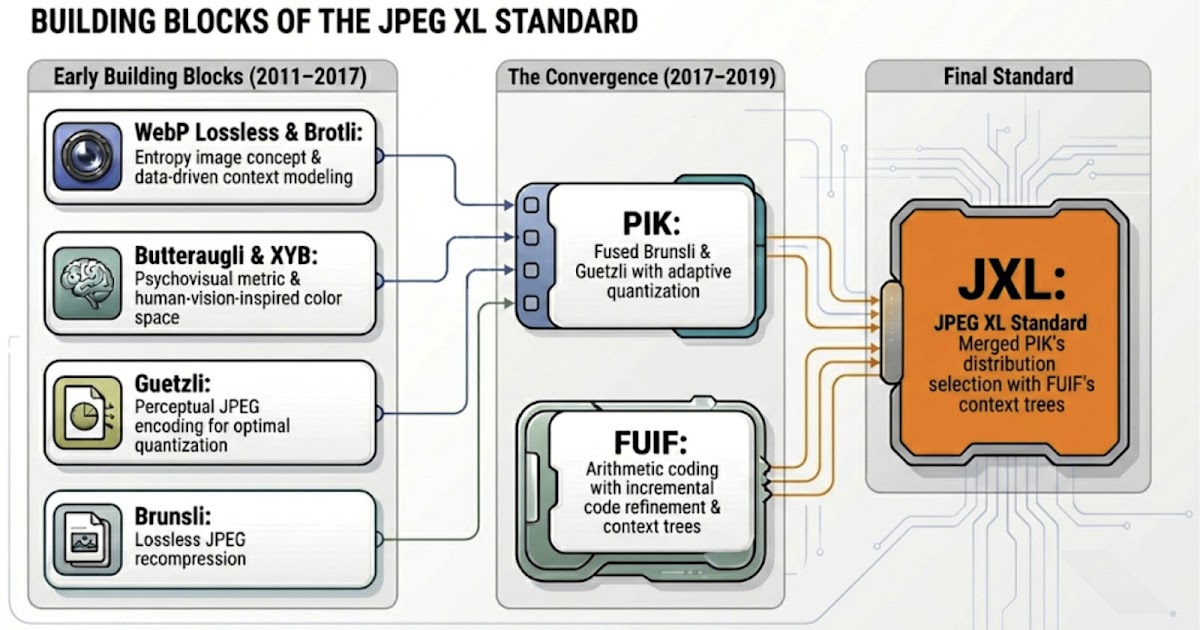
Google researchers have detailed the decade-long development of JPEG XL (JXL), a next-generation image standard designed to overcome the limitations of the traditional JPEG format. Driven by the need for higher visual fidelity on modern High Dynamic Range (HDR) and Wide Color Gamut (WCG) displays, the project evolved through a series of open-source experiments starting in 2011. Key milestones include the development of WebP Lossless and the Brotli compression algorithm, which introduced innovative concepts such as the "entropy image." By analyzing the constraints of existing technologies, the team created a flexible and efficient formalism that is now seeing rapid adoption across operating systems and professional standards. This retrospective highlights how radical ideas in psychovisual modeling and optimization have paved the way for the future of web imagery.
Key Takeaways
- Decade-Long Evolution: JPEG XL is the culmination of over ten years of research (2011–2017 and beyond) focused on testing radical ideas in image coding.
- Modern Display Support: The standard specifically addresses the limitations of legacy formats regarding High Dynamic Range (HDR) and Wide Color Gamut (WCG).
- Foundational Innovations: Projects like WebP Lossless and Brotli provided the architectural basis for JXL, introducing the "entropy image concept."
- Methodological Approach: The development team focused on understanding the limits of existing technology to build a more flexible and efficient successor.
- Rapid Adoption: JPEG XL is currently seeing significant uptake across various operating systems and professional industry standards.
In-Depth Analysis
Addressing the Fidelity-Bandwidth Tension
The internet's infrastructure relies heavily on images, creating a "relentless tension" between the desire for high visual fidelity and the necessity of bandwidth efficiency. For decades, the industry relied on the original JPEG standard to ensure that images loaded quickly across the web. While this served the industry well for a long period, the evolution of hardware eventually outpaced the format's capabilities. As consumer and professional displays transitioned to High Dynamic Range (HDR) and Wide Color Gamut (WCG), the traditional JPEG format began to show its technical limits. JPEG XL was developed as a direct response to this gap, aiming to provide a standard that could handle the complexities of modern color and light without compromising on the speed that defines the user experience on the web.
The Experimental Foundations: WebP Lossless and Brotli
The road to JPEG XL was not a linear progression but a series of milestone projects that allowed researchers to explore radical ideas in psychovisual modeling and entropy coding. A pivotal moment in this journey occurred between 2011 and 2017. While lossy WebP was rooted in video technology, the development of WebP Lossless (2011) represented a significant architectural departure. This project debuted the "entropy image concept," an innovative method that utilizes a secondary image to orchestrate the selection of static entropy codes. This experiment, alongside the development of the Brotli compression algorithm, allowed the team to test new formalisms for efficiency. By focusing on these open-source experiments, the researchers were able to identify the specific areas where existing standards were lacking, leading to a more flexible and robust design for JPEG XL.
A Methodology of Learning from Limitations
One of the defining characteristics of the journey to JPEG XL was the team's commitment to understanding the limits of current technology before attempting to define a new standard. Rather than starting from scratch, the researchers began by trying to improve existing standards and documenting their failures. This approach allowed them to make the new JPEG XL formalism more flexible and efficient in the areas that mattered most. The decade-long exploration involved rigorous testing of optimization techniques and psychovisual modeling—the science of how humans perceive digital images. This deep dive into the mechanics of image coding ensured that JPEG XL would not only be a technical improvement but a standard optimized for the way images are actually consumed on modern devices.
Industry Impact
The emergence of JPEG XL represents a major shift in the digital imaging landscape, offering a bridge between the legacy web and the high-fidelity requirements of modern displays. Its rapid adoption across operating systems and professional standards indicates a strong industry appetite for a format that supports HDR and WCG natively. By building on a foundation of open-source experiments like WebP Lossless and Brotli, JPEG XL demonstrates the power of long-term, collaborative research in solving fundamental internet infrastructure challenges. As professional standards continue to integrate JXL, the industry moves closer to a future where high-quality visual content is more accessible and efficient than ever before.
Frequently Asked Questions
What is the primary goal of the JPEG XL standard?
JPEG XL was designed to resolve the tension between visual fidelity and bandwidth, specifically providing support for modern display technologies like High Dynamic Range (HDR) and Wide Color Gamut (WCG) that the original JPEG format cannot efficiently handle.
How did WebP Lossless contribute to the creation of JPEG XL?
WebP Lossless introduced the "entropy image concept," which uses a secondary image to manage the selection of entropy codes. This was a major architectural departure from previous video-based coding methods and provided a foundational breakthrough for the efficiency seen in JPEG XL.
Why was the development of JPEG XL described as a "decade-long exploration"?
The researchers did not simply write a new standard; they spent years (starting in 2011) conducting open-source experiments to understand the limitations of existing technology. This involved testing radical ideas in psychovisual modeling and optimization through projects like Brotli and WebP Lossless before finalizing the JPEG XL formalism.