AI News on June 4, 2026

Headroom: Revolutionizing LLM Efficiency with 60-95% Token Consumption Reduction
Open Source

Headroom: Revolutionizing LLM Efficiency with 60-95% Token Consumption Reduction

Headroom, a new open-source utility, is making waves in the AI development community by offering a sophisticated compression layer for Large Language Models (LLMs). By targeting data before it reaches the model—specifically tool outputs, logs, files, and RAG (Retrieval-Augmented Generation) chunks—Headroom enables a massive reduction in token consumption, ranging from 60% to as high as 95%. Crucially, the tool maintains the integrity of the results, ensuring that the model's performance remains consistent despite the significantly smaller input size. With support for libraries, proxies, and Model Context Protocol (MCP) servers, Headroom provides a versatile solution for developers looking to optimize costs and manage context window constraints in modern AI applications.

GitHub Trending
Microsoft Releases MarkItDown: A New Python Tool for Converting Office Documents to Markdown
Product Launch

Microsoft Releases MarkItDown: A New Python Tool for Converting Office Documents to Markdown

Microsoft has introduced MarkItDown, a specialized Python-based utility designed to convert various file formats and Microsoft Office documents into Markdown. This tool aims to bridge the gap between proprietary document formats and the widely used, human-readable Markdown syntax. By leveraging the Python ecosystem, MarkItDown provides a streamlined approach for developers and content creators to migrate legacy documentation, automate report generation, and prepare data for modern web environments. The project, hosted on Microsoft's official GitHub repository, signifies a continued commitment to open-source tooling and interoperability, offering a programmatic solution for transforming complex Office files into structured, version-control-friendly text formats.

GitHub Trending
Machine Learning for Algorithmic Trading: Analyzing the Second Edition Code Repository by Stefan Jansen
Open Source

Machine Learning for Algorithmic Trading: Analyzing the Second Edition Code Repository by Stefan Jansen

This article explores the trending GitHub repository for the second edition of 'Machine Learning for Algorithmic Trading' by Stefan Jansen. As a comprehensive resource for the financial technology community, the repository provides the essential codebase for implementing advanced machine learning strategies in trading. The project's appearance on GitHub Trending underscores the growing demand for practical, data-driven investment frameworks. By offering a structured approach to algorithmic trading, the repository facilitates the integration of complex AI models and alternative data into modern financial workflows, serving as a vital bridge between theoretical machine learning and real-world market application.

GitHub Trending
Hermes WebUI: Enhancing Accessibility for Advanced Autonomous Hermes Agents on Web and Mobile Platforms
Product Launch

Hermes WebUI: Enhancing Accessibility for Advanced Autonomous Hermes Agents on Web and Mobile Platforms

Hermes WebUI, a project developed by nesquena and featured on GitHub Trending, introduces a streamlined interface for interacting with the Hermes Agent. As an advanced autonomous agent that operates on server-side infrastructure, the Hermes Agent requires a robust front-end to facilitate user interaction. Hermes WebUI fulfills this role by providing an optimized experience for both web browsers and mobile devices. This development marks a significant step in making sophisticated, server-bound autonomous agents more accessible to users who require flexibility in how they manage AI tasks. By bridging the gap between complex backend agentic logic and a user-friendly interface, Hermes WebUI positions itself as the premier method for engaging with the Hermes ecosystem, ensuring that the power of autonomous AI is available across various hardware platforms without compromising on functionality.

GitHub Trending
VoxCPM2: Advancing Speech Synthesis with Tokenizer-Free Multilingual Voice Design and Cloning
Open Source

VoxCPM2: Advancing Speech Synthesis with Tokenizer-Free Multilingual Voice Design and Cloning

OpenBMB has announced the release of VoxCPM2, a sophisticated Text-to-Speech (TTS) system designed to streamline the speech generation process. By utilizing a tokenizer-free architecture, VoxCPM2 aims to deliver more natural and fluid vocal outputs compared to traditional models. The system is distinguished by its comprehensive support for multilingual speech generation, allowing for seamless transitions across different languages. Furthermore, it introduces capabilities for creative voice design and highly realistic voice cloning, providing developers and creators with powerful tools for customized audio production. As an open-source project hosted on GitHub, VoxCPM2 represents a significant step forward in making high-fidelity, versatile speech synthesis technology accessible to the global AI community.

GitHub Trending
Scrapling: A New Adaptive Web Scraping Framework for Scalable Data Extraction and Automated Web Crawling
Open Source

Scrapling: A New Adaptive Web Scraping Framework for Scalable Data Extraction and Automated Web Crawling

Scrapling, a versatile and adaptive web scraping framework developed by D4Vinci, has gained significant traction on GitHub Trending. Designed to bridge the gap between simple data retrieval and complex, large-scale harvesting, Scrapling offers a unified solution for developers. The framework's primary value proposition lies in its adaptability, allowing it to handle tasks ranging from a single HTTP request to massive, distributed scraping operations. With comprehensive documentation hosted on ReadTheDocs, the project provides a structured approach to navigating the complexities of modern web architectures. As an open-source tool, Scrapling aims to streamline the data extraction process, making it more resilient to the frequent changes found in web environments while ensuring scalability for enterprise-level requirements.

GitHub Trending
ECC: A New Agent Governance and Performance Optimization System for AI Development Platforms
Industry News

ECC: A New Agent Governance and Performance Optimization System for AI Development Platforms

ECC has emerged as a specialized Agent governance and performance optimization system designed to enhance the capabilities of leading AI coding platforms. By providing a framework for skills, intuition, memory, and security, ECC aims to optimize the performance of agents within environments like Claude Code, Codex, Opencode, and Cursor. The project emphasizes a research-priority approach to development, addressing the critical need for structured management in the rapidly evolving field of AI-driven software engineering. This analysis explores how ECC integrates these advanced features to provide a more robust and secure development experience for users of modern AI coding assistants.

GitHub Trending
Lovable Secures Multiyear Google Cloud Expansion to Scale Infrastructure and Anthropic Claude Integration
Industry News

Lovable Secures Multiyear Google Cloud Expansion to Scale Infrastructure and Anthropic Claude Integration

Lovable has finalized a significant multiyear agreement with Google Cloud, aimed at dramatically increasing its operational capacity. According to industry sources, the deal features a fivefold expansion of Lovable's existing footprint on the Google Cloud platform. Furthermore, the partnership grants Lovable expanded access to Anthropic’s Claude, a suite of advanced large language models hosted on Google's infrastructure. This strategic expansion highlights Lovable's trajectory toward massive infrastructure scaling and its reliance on high-performance AI models to power its future growth. By deepening its relationship with Google Cloud, Lovable positions itself to leverage enterprise-grade cloud resources and cutting-edge generative AI technology to meet increasing demand.

TechCrunch AI
The Journey to JPEG XL: How Open Source Experiments Shaped the Future of Image Coding
Industry News

The Journey to JPEG XL: How Open Source Experiments Shaped the Future of Image Coding

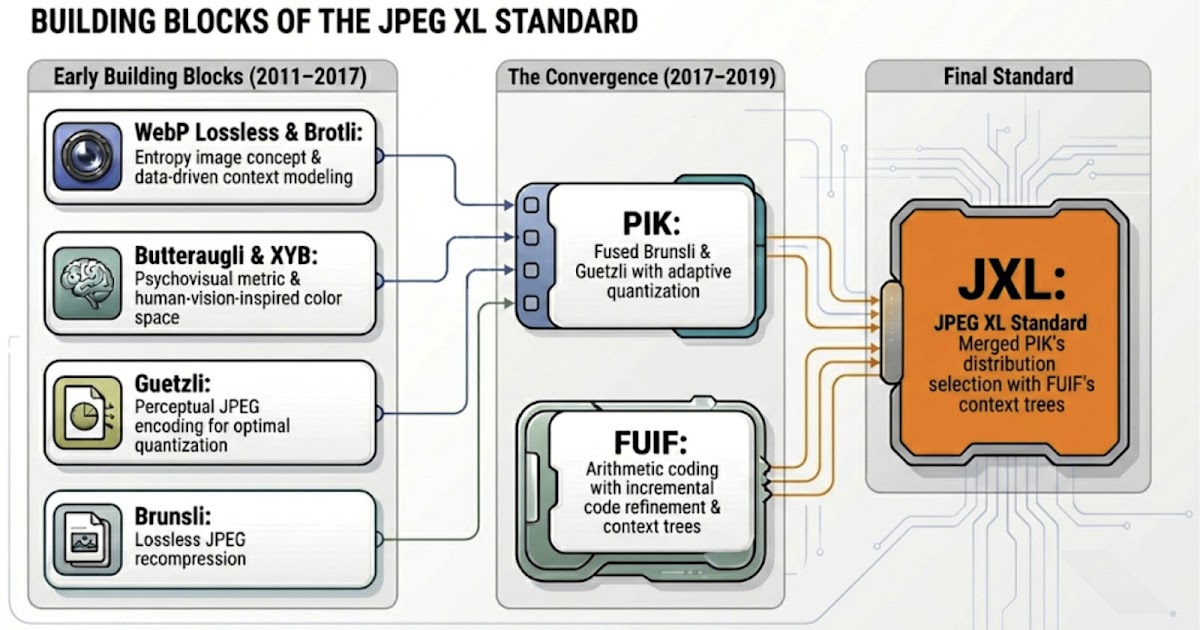
Google researchers have detailed the decade-long development of JPEG XL (JXL), a next-generation image standard designed to overcome the limitations of the traditional JPEG format. Driven by the need for higher visual fidelity on modern High Dynamic Range (HDR) and Wide Color Gamut (WCG) displays, the project evolved through a series of open-source experiments starting in 2011. Key milestones include the development of WebP Lossless and the Brotli compression algorithm, which introduced innovative concepts such as the "entropy image." By analyzing the constraints of existing technologies, the team created a flexible and efficient formalism that is now seeing rapid adoption across operating systems and professional standards. This retrospective highlights how radical ideas in psychovisual modeling and optimization have paved the way for the future of web imagery.

Hacker News
Nvidia Unveils Future RTX Spark Roadmap: N2X and N3X Chips Aim for Star Trek-Level Computing
Industry News

Nvidia Unveils Future RTX Spark Roadmap: N2X and N3X Chips Aim for Star Trek-Level Computing

At Computex 2026 in Taipei, Nvidia CEO Jensen Huang officially confirmed that the company's entry into the consumer laptop chip market is a long-term strategic commitment. The RTX Spark series is not a singular release but the beginning of a multi-generational roadmap, with the N2X and N3X chips already in development. This move establishes Nvidia as the fifth high-profile vendor in the consumer laptop processor space. Huang articulated a vision for these chips to eventually mirror the capabilities of the iconic 'Star Trek' computer, signaling a shift toward highly advanced, intelligent computing. The announcement underscores Nvidia's ambition to move beyond its traditional GPU dominance and become a primary provider of integrated processing power for the next generation of portable devices.

The Verge
Alphabet's Record-Breaking $85 Billion Stock Sale Signals Massive Investor Appetite for AI
Funding

Alphabet's Record-Breaking $85 Billion Stock Sale Signals Massive Investor Appetite for AI

Alphabet has successfully executed a monumental $85 billion stock sale, marking a record-breaking financial milestone specifically aimed at fueling Google’s artificial intelligence business. This massive capital raise serves as a powerful market indicator, revealing a robust and growing investor appetite for AI-centric offerings. According to recent reports, the scale of this transaction suggests that the investment community is highly confident in the long-term value and potential of AI technologies within Alphabet's ecosystem. The move not only strengthens Alphabet's financial position but also signals a significant shift in how large-scale AI developments are being funded. This "helluva good signal" suggests that investors are not just interested but are "ready to chow" on AI-related opportunities, setting a new benchmark for the entire technology industry.

TechCrunch AI
Scaling Past Informal AI: Carina Hong and the Evolution of Verified Generation at Axiom Math
Research Breakthrough

Scaling Past Informal AI: Carina Hong and the Evolution of Verified Generation at Axiom Math

This analysis explores the transition from informal artificial intelligence to structured, verified systems as discussed by Carina Hong of Axiom Math. The core focus lies on the shift toward 'Verified Generation' and the development of 'Compounding Intelligence.' By moving beyond the probabilistic nature of current informal AI models, Axiom Math aims to establish a framework where mathematical reasoning is not only generated but rigorously verified. This approach addresses the limitations of existing large language models in high-stakes reasoning tasks. The concept of compounding intelligence suggests a trajectory where AI systems build upon verified truths to reach higher levels of cognitive capability, marking a significant departure from traditional scaling laws that rely primarily on data volume and compute power.

Latent Space
Google Introduces Dreambeans: An AI Tool That Transforms Personal Account Data Into Illustrated Cartoon Stories
Product Launch

Google Introduces Dreambeans: An AI Tool That Transforms Personal Account Data Into Illustrated Cartoon Stories

Google has unveiled a new AI-powered tool named Dreambeans, which represents a unique departure in the company's branding and product strategy. The tool is designed to create a curated list of AI-illustrated "stories" by culling personal data directly from a user's Google account. By leveraging the vast amounts of information stored within its ecosystem, Google aims to turn digital footprints into visual, cartoon-like narratives. This development highlights a significant shift in how generative AI can be applied to personal data management, moving beyond simple organization to creative interpretation. While the name has been described as unconventional, the core functionality of Dreambeans focuses on providing users with an automated, illustrated chronicle of their lives based on their existing digital history.

TechCrunch AI
Google Open Sources Hydrology Framework to Enhance Global Flood Resilience and Climate Sustainability
Open Source

Google Open Sources Hydrology Framework to Enhance Global Flood Resilience and Climate Sustainability

Google Research has announced the open-sourcing of its proprietary hydrology framework, a pivotal move aimed at bolstering global flood resilience. By making this technology accessible to the public, Google intends to support the broader scientific and engineering communities in developing more effective flood forecasting and management tools. This initiative falls under Google’s Climate & Sustainability efforts, highlighting a commitment to using advanced data frameworks to address the escalating risks of climate-driven flooding. The open-source release is expected to facilitate collaborative research and empower local authorities with the technical infrastructure needed to protect vulnerable populations through improved hydrological modeling.

Google Research Blog
Ted Chiang Rejects AI Consciousness: A Critique of Anthropic’s Anthropomorphism and the Risks of Misplaced Moral Agency
Industry News

Ted Chiang Rejects AI Consciousness: A Critique of Anthropic’s Anthropomorphism and the Risks of Misplaced Moral Agency

In a provocative critique of the current AI landscape, author Ted Chiang argues against the notion that artificial intelligence, specifically large language models (LLMs) like Anthropic’s Claude, possesses consciousness. Chiang highlights a growing trend of anthropomorphism within AI companies, citing Anthropic’s 84-page "constitution" for Claude which treats the model as a moral agent capable of judgment and functional emotions. While Anthropic’s leadership expresses openness to AI consciousness and concerns over the model's "anxiety," Chiang asserts that LLMs are merely conventional technologies. He warns that confusing linguistic fluency with actual consciousness creates a dangerous "titanic magnitude" of error, potentially leading to the misassignment of responsibility when AI systems are utilized. The analysis emphasizes that understanding the mechanical nature of LLMs is crucial to maintaining human accountability.

Hacker News
Google's Gemini AI Agent Spark Demonstrates Uncanny Personal Knowledge Raising Critical Privacy and Value Questions
Industry News

Google's Gemini AI Agent Spark Demonstrates Uncanny Personal Knowledge Raising Critical Privacy and Value Questions

Google's latest advancement in artificial intelligence, a Gemini-powered agent named Spark, has surfaced through early hands-on evaluations by industry experts. Reviewers David Pierce and Jay Peters describe the agent's effectiveness as "scary," highlighting its ability to recall highly specific personal details—such as the names of pets and spouses—without being explicitly provided with that information during the interaction. While the technical proficiency of the Spark agent is undeniable, the emerging critique suggests a growing tension between the AI's increasing capabilities and the actual fulfillment of its technological promises. This analysis examines the implications of AI that knows its users too well and the potential "empty promise" that accompanies these rapid developments in personal AI assistance.

The Verge
Satya Nadella Features in Exclusive No Priors and Latent Space Crossover Special at Microsoft Build 2026
Industry News

Satya Nadella Features in Exclusive No Priors and Latent Space Crossover Special at Microsoft Build 2026

Microsoft CEO Satya Nadella has made a landmark appearance on the Latent Space podcast, marking his first-ever participation in the program. This special event is a high-profile crossover with the No Priors podcast, recorded during the Microsoft Build 2026 conference. The collaboration brings together one of the world's most influential tech leaders with two of the most prominent voices in the AI and developer media landscape. By choosing this platform during Microsoft's premier developer event, Nadella highlights the increasing importance of technical discourse and community engagement in the age of artificial intelligence. This crossover serves as a significant milestone for both podcast series and underscores Microsoft's ongoing focus on the developer ecosystem.

Latent Space
Amazon Integrates Generative AI into Search Bar to Visualize Custom Products for Enhanced Shopping Discovery
Product Launch

Amazon Integrates Generative AI into Search Bar to Visualize Custom Products for Enhanced Shopping Discovery

Amazon has announced a significant update to its search functionality, integrating generative AI directly into the search bar to assist users in their shopping journey. This new feature allows the app to generate AI-based images of products in real-time as users describe them. Currently focused on the clothing and home goods categories, the tool is designed to bridge the gap between a user's specific vision and the actual inventory available on the platform. By tapping on an AI-generated image that matches their description, shoppers can instantly search for similar-looking, purchasable items. This move represents a strategic shift toward visual-centric discovery, leveraging artificial intelligence to interpret descriptive language and translate it into actionable search results within the Amazon ecosystem.

The Verge
Google DeepMind Launches Gemma 4 12B: A Unified Encoder-Free Multimodal Model for Laptops
Product Launch

Google DeepMind Launches Gemma 4 12B: A Unified Encoder-Free Multimodal Model for Laptops

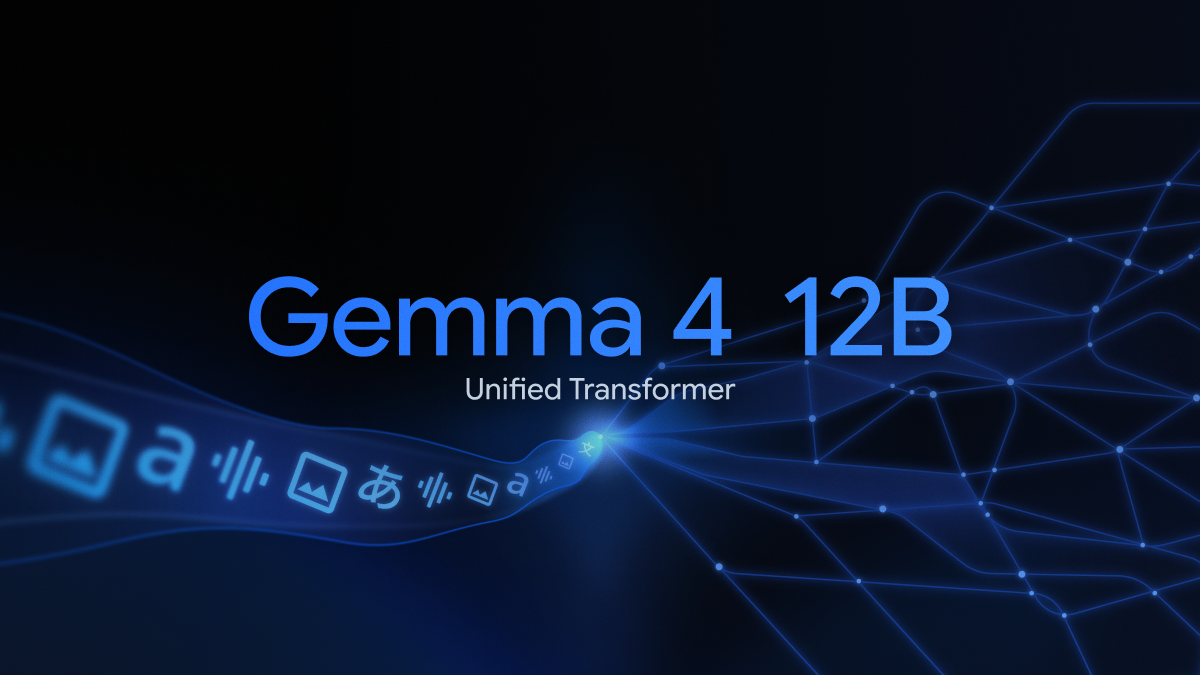
Google DeepMind has officially introduced Gemma 4 12B, a mid-sized multimodal model designed to deliver high-performance intelligence directly to local hardware. This new model features a novel unified architecture that eliminates separate multimodal encoders, allowing vision and audio inputs to flow directly into the LLM backbone. Positioned between the edge-focused E4B and the 26B Mixture of Experts (MoE) model, Gemma 4 12B is optimized for laptops with 16GB of memory. It is the first mid-sized model in the Gemma family to support native audio inputs and includes Multi-Token Prediction (MTP) drafters to reduce latency. Released under an Apache 2.0 license, it aims to empower developers to build agentic workflows and advanced AI applications on everyday devices.

Hacker News